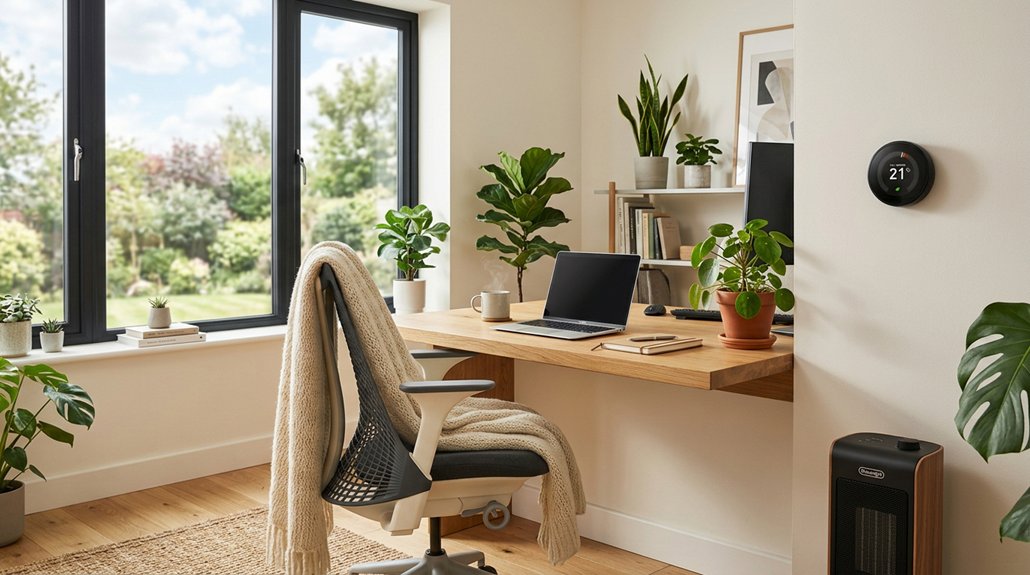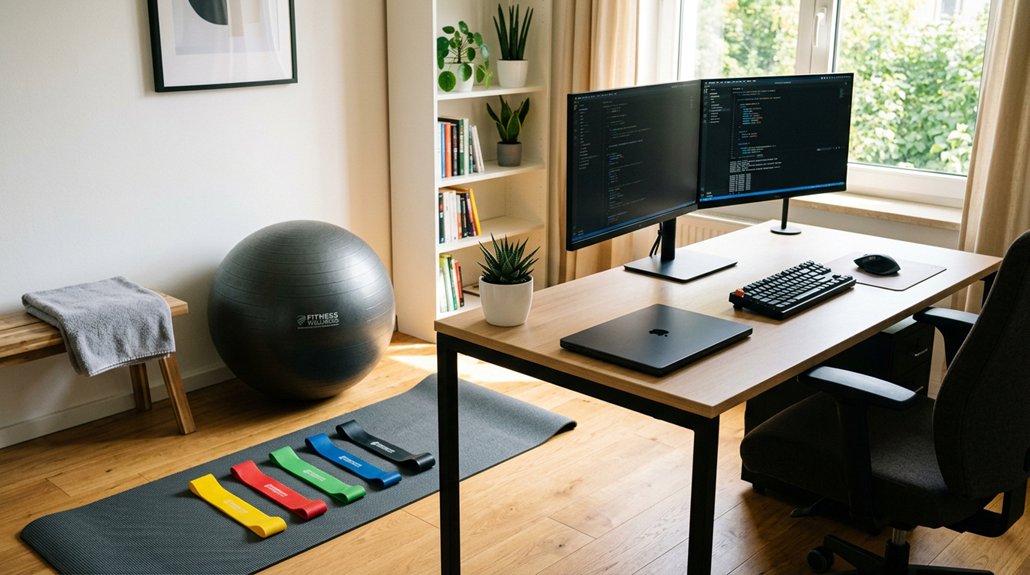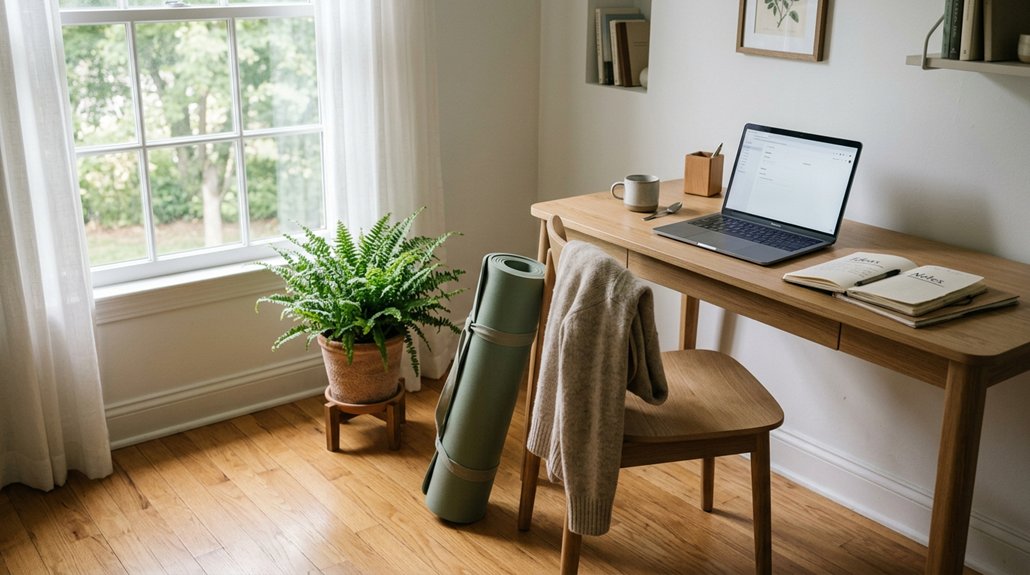
Taking quick full-body stretches between work sessions helps reduce muscle tension, improve circulation, and prevent discomfort from sitting too long. Focus on moves like shoulder rolls, neck stretches, hamstring pulls, and gentle back bends. Keep these sessions brief—about 1-3 minutes—and repeat every hour. Using tools like timers or reminders can keep you consistent. Keep going, and you’ll discover even more effective tips to stay active and comfortable throughout your day.
Why Stretching Breaks Are Essential for Your Health
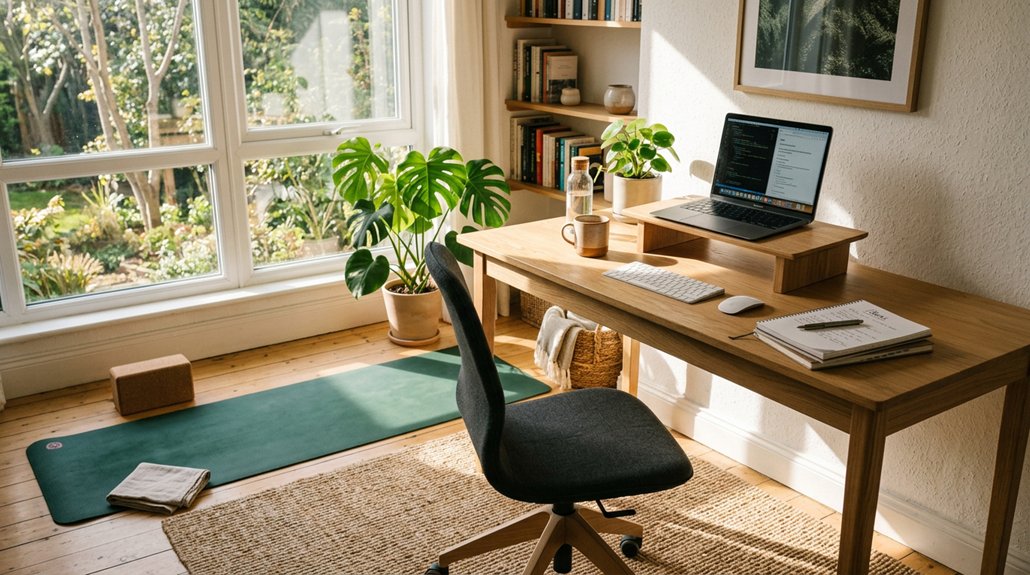
Taking regular stretching breaks is essential because they help reduce pain in your neck, shoulders, and lower back caused by sitting still for long periods. When you stretch, you improve your range of motion, making it easier to move comfortably throughout the day. A well-timed stretch can also prevent ergonomic discomfort from developing into more serious issues over time. Stretching also boosts blood circulation and oxygen flow, which decreases muscle stiffness and lessens tension in key areas. This not only relieves discomfort but also supports better posture, helping prevent strain and injury.
Even brief stretches held for 10–30 seconds can greatly improve movement and reduce tightness. Incorporating these breaks regularly keeps your muscles relaxed and your body aligned, ultimately enhancing your overall health, productivity, and comfort during long work hours.
Must-Do Desk Stretches to Ease Tension
When you’re at your desk, taking a few moments for targeted stretches can make a big difference.
Simple upper body moves like a triceps stretch or shoulder opener help relieve tension accumulated from sitting all day.
Incorporate these quick stretches to stay comfortable and prevent stiffness.
Focusing on proper adjustability range and ergonomic support during your breaks can further enhance comfort and reduce muscle fatigue.
Essential Seated Stretches
Seated stretches are essential for easing tension and promoting flexibility during long hours at your desk. Sit back comfortably and focus on small, deliberate movements.
To stretch your hamstrings, extend your left leg with the foot resting on a chair. Bend forward at the waist, hold the stretch for 10–30 seconds, and gently hold your breath to deepen the stretch. Switch to your right leg and repeat.
For your arms, raise your left arm and bend it toward your opposite shoulder, pulling the elbow toward your head. Hold for 10–30 seconds, then switch arms.
For your legs, extend your left leg and hold, then switch to the right. Repeat these stretches to reduce tension and improve circulation, keeping your body relaxed while working. Incorporating proper ergonomic supports can further enhance comfort and prevent stiffness during long sitting periods.
Upper Body Relief
To release tension built up in your upper body during long hours at your desk, incorporate simple stretching routines focused on the shoulders, arms, and neck.
One effective stretch involves bringing one arm across your body and holding your arm just above the elbow, gently pulling your elbow toward your chest to stretch your shoulder. Hold each stretch for about 30 seconds. For a deeper stretch, use a rolled towel: grasp it with both hands, pull upward with the top hand, and stretch the opposite shoulder.
To target your arms, bend one arm behind your head and pull your elbow toward your head, holding for 10–30 seconds. When done regularly, these stretches ease tension and improve upper body flexibility.
How to Create an Effective Stretch Routine at Work
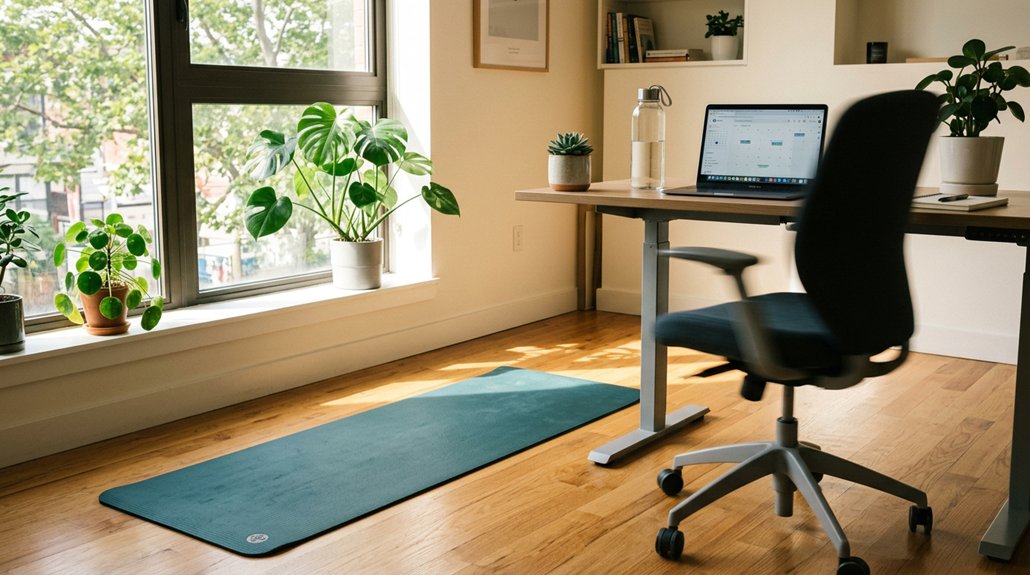
How can you build an effective stretch routine that fits seamlessly into your workday? Start by warming up with light movement like shoulder shrugs and neck rolls, holding each for 10–30 seconds to boost blood flow and ease tension.
Incorporate desk-friendly stretches such as triceps stretches, overhead reaches, and shoulder stretches, performing each 2–4 times on both sides.
Perform desk-friendly stretches like triceps, overhead reaches, and shoulder stretches, repeating each 2–4 times on both sides.
For lower body, include seated hamstring stretches and hip and knee flexion exercises, holding each for 10–30 seconds to prevent stiffness.
To target your back, hip, and body, include a stretch where you extend your left hand towards your right foot, then repeat.
Remember to set a timer to remind yourself hourly, and maintain controlled breathing to deepen each stretch safely.
Simple Tips for Safe and Comfortable Stretching at Your Desk
Practicing safe and comfortable stretching at your desk involves paying attention to your body’s signals and following simple guidelines. Begin with light activity or gentle movements for five minutes to warm up, reducing the risk of injury.
Keep your back straight during stretches and avoid bouncing; instead, perform slow, controlled motions and hold each pose for 10–30 seconds. Incorporate desk-friendly stretches like the overhead reach, shoulder pectoral stretch, and seated hamstring stretch to target tight areas.
When stretching one leg, keep knees slightly bent and hips forward for better alignment. Remember to breathe steadily—exhale to deepen each stretch—and relax your muscles. Position your feet shoulder-width apart for stability.
Set reminders every hour to stay active and prevent stiffness, ensuring your Full Body stays flexible and comfortable. Implementing ergonomic accessories like adjustable headrests can also support proper posture during long sitting sessions.
When and How Often to Stretch for Best Results
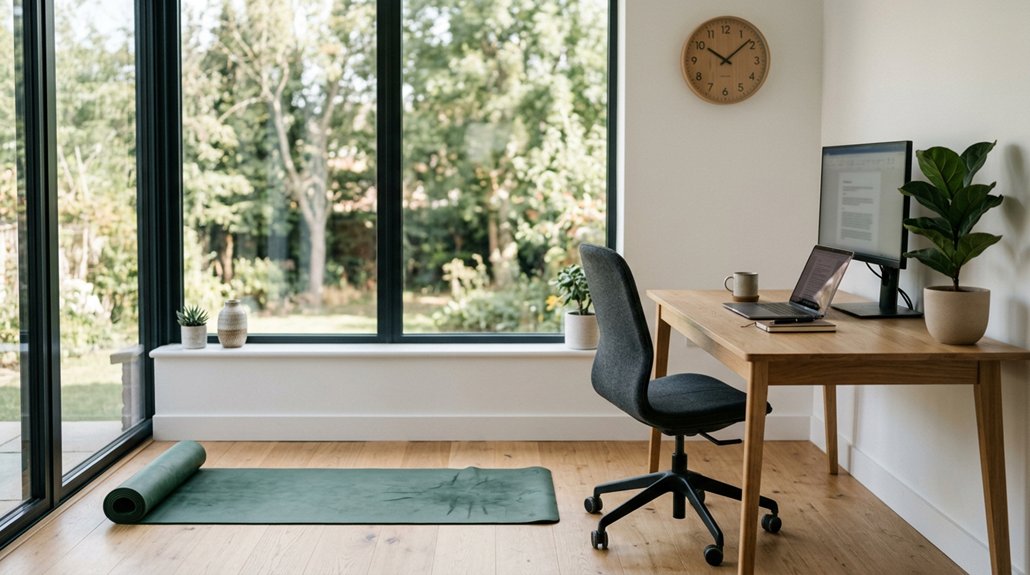
To get the best results, you should aim to stretch major muscle groups 2–3 times a week, especially if you’re sitting for long periods. Incorporating brief stretches every hour can also boost circulation and reduce discomfort. Consistently dedicating 10–15 minutes daily to stretching will help improve your mobility and posture over time. Using a motion and rocking mechanism can enhance active movement and improve circulation during stretches.
Ideal Stretching Frequency
Wondering how often you should stretch for the best results? Aim to repeat major muscle stretches 2–3 days per week to maintain flexibility and prevent stiffness.
Focus on holding each stretch for 20 to 30 seconds, then repeat the same stretch on the other side, especially for muscle groups like your left side. Limiting stretches to one position at a time helps target specific muscles effectively.
Incorporate gentle stretching sessions during work breaks, ideally 10–15 minutes daily, to counteract prolonged sitting. Repeating each stretch multiple times throughout the week reinforces muscle lengthening and improves mobility.
Additionally, selecting supportive ergonomic products like lumbar pillows with high-density foam ensures proper posture alignment, enhancing the benefits of your stretching routine.
Consistent routine of this frequency guarantees you stay flexible, reduce discomfort, and keep your muscles healthy without overdoing it.
Optimal Timing for Stretches
Timing your stretching sessions strategically can greatly boost their effectiveness. Perform your stretches after a 5-10 minute warm-up or light activity to help your muscles reach peak flexibility without risking injury.
During your session, start with leg straight stretches, such as holding your left foot and gently pulling it toward your body. When stretching your hips, hold stretches for 20 to 30 seconds, repeating 2 to 4 times per muscle group. For a seated quad stretch, bring your right knee toward your chest and gently pull it, then turn your body to the right to deepen the stretch.
Incorporating pressure relief techniques into your stretching routine can further enhance comfort and prevent discomfort during prolonged sitting. Stretch major muscle groups 2 to 3 times weekly, and incorporate brief daily sessions to maintain mobility, circulation, and minimize stiffness during prolonged sitting.
Tools and Reminders to Keep You Moving Throughout the Day
Staying active during long periods of desk work becomes easier when you leverage simple tools and reminders. Timer reminders every hour prompt you to stand, stretch, or walk, reducing strain and boosting circulation.
Keep useful tools nearby, like a yoga mat or stretch bands, to quickly perform mobility exercises. Incorporate movement breaks such as shoulder shrugs, neck rolls, or calf stretches to ease tension and stiffness.
To stay consistent, set up ergonomic apps or wearables that nudge you to take micro-breaks and target key areas. Consider these essentials: biofeedback technology can enhance the effectiveness of posture reminders and help you maintain better alignment throughout the day.
- Timer reminders to prompt regular activity.
- Stretch bands or yoga mats for instant stretching.
- Movement breaks focusing on neck, shoulders, and hips.
Using these tools helps you stay mobile and prevent discomfort during long work sessions.
Track Your Progress and Stay Motivated to Stretch Regularly

Tracking your stretching routine helps you stay motivated and see your progress over time. When you track your stretchings, you build consistency and notice improvements in flexibility and range of motion. Acknowledging how your support technology enhances comfort during stretching can further encourage regular practice. Recording how you feel before and after stretches highlights benefits like reduced muscle tension and increased energy, reinforcing your habit. Visual progress, such as better posture or easier movement, acts as positive feedback to keep you committed. Using a journal, app, or reminders keeps you accountable and makes it easier to maintain your routine. Seeing your progress will inspire you to stick with your full body stretching between work sessions.
Frequently Asked Questions
Is It Okay to Do a Full Body Stretch Everyday?
Yes, you can do a full body stretch every day, as long as you keep it gentle and pain-free. This routine helps increase flexibility, reduce tension, and prevent stiffness, supporting your overall muscle health and well-being.
Can Stretching Help Scoliosis?
Stretching can help your scoliosis by improving flexibility, reducing tension, and enhancing mobility around your spine. Although it doesn’t straighten your curve, gentle, targeted stretches under professional guidance support spinal stability and overall comfort.
Can Stretching Help Lower BP?
Stretching can help lower your blood pressure by promoting relaxation, reducing stress, improving circulation, and activating your parasympathetic nervous system. Incorporate gentle stretching regularly, especially during work, to support overall vascular health and BP management.
Will Stretching Help Arthritis?
Stretching can help manage arthritis by loosening stiff muscles, improving joint mobility, and maintaining flexibility. You should do gentle stretches, avoid pain, hold for 20-30 seconds, and consult your healthcare provider for personalized routines.