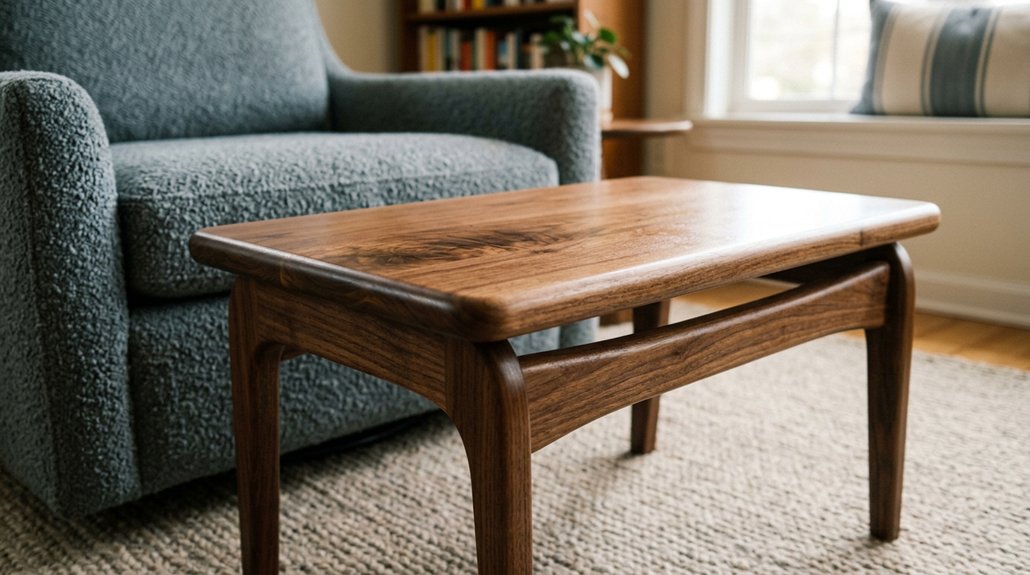
To choose the right footstool height, measure your sofa or chair seat height from the floor, excluding cushions, and pick a footstool 1-2 inches shorter for better comfort and support. Usually, this means selecting a height between 13-18 inches. Consider who will use it—kids, seniors, or petite users—as their needs differ. If you want more tips on optimizing your space and comfort, keep going to learn more.
Why Footstool Height Matters for Comfort and Ergonomics
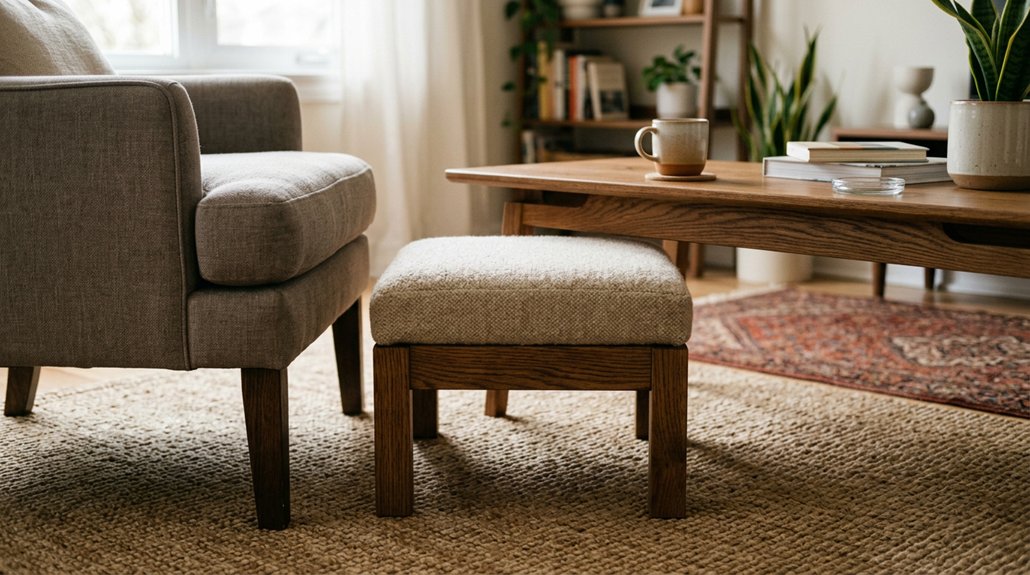
Choosing the right footstool height is essential because it directly affects your comfort and ergonomics when sitting. An appropriately sized footstool, about 1 to 2 inches shorter than your sofa or chair seat, allows your feet to rest naturally without strain.
When the height is right, it promotes better leg angles, improving blood circulation and reducing lower back and leg stress. Conversely, a footstool that’s too tall causes your legs to dangle uncomfortably, while one that’s too short offers inadequate support.
Ergonomic footstool height prevents poor blood flow and relieves tension in your feet and legs after long sitting periods. Matching the footstool height to your seat also maintains visual harmony, enhancing both comfort and the overall lounging experience. Proper adjustment of footrest height can also support active movement, which can help keep your legs engaged and improve circulation during extended sitting.
How to Measure Your Sofa or Chair Seat Height
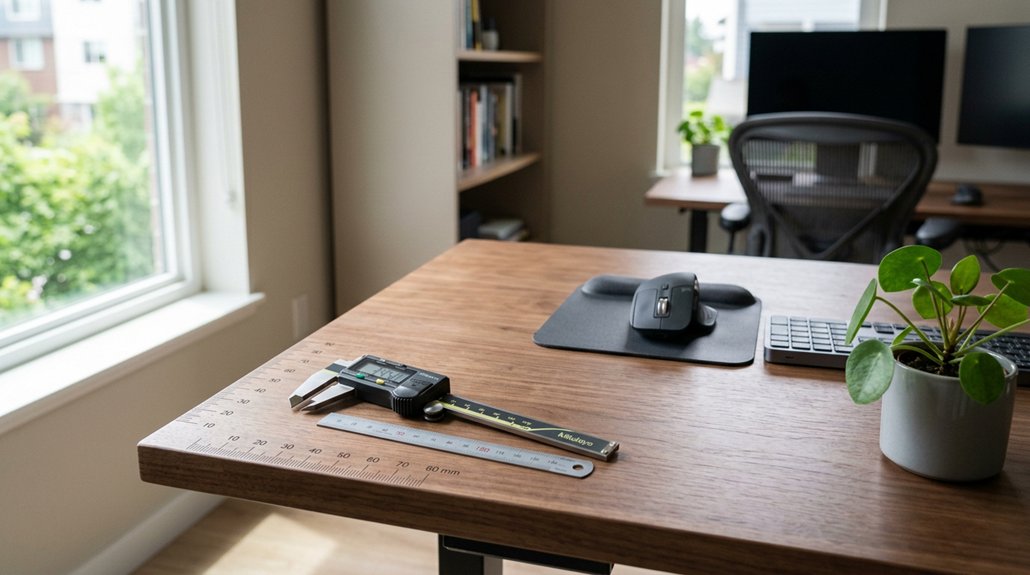
How can you guarantee your footstool fits comfortably and provides proper support? Start by measuring your sofa or chair seat height accurately. Use a measuring tape or ruler to measure from the floor straight up to the top of your sofa seat cushion. Make sure you measure when cushions are uncompressed to get the true seat height. If your cushions are removable, measure with them in place, as their thickness affects the total height. Most standard sofas have a seat height between 16 to 18 inches. Record this measurement carefully, then choose a footstool that’s about 1 to 2 inches shorter for ergonomic support. Proper measurement guarantees your footstool complements your sofa seat perfectly for comfort and style, and considering the ergonomic design features can further improve your seating experience.
What Is the Ideal Footstool Height for Relaxing Support?
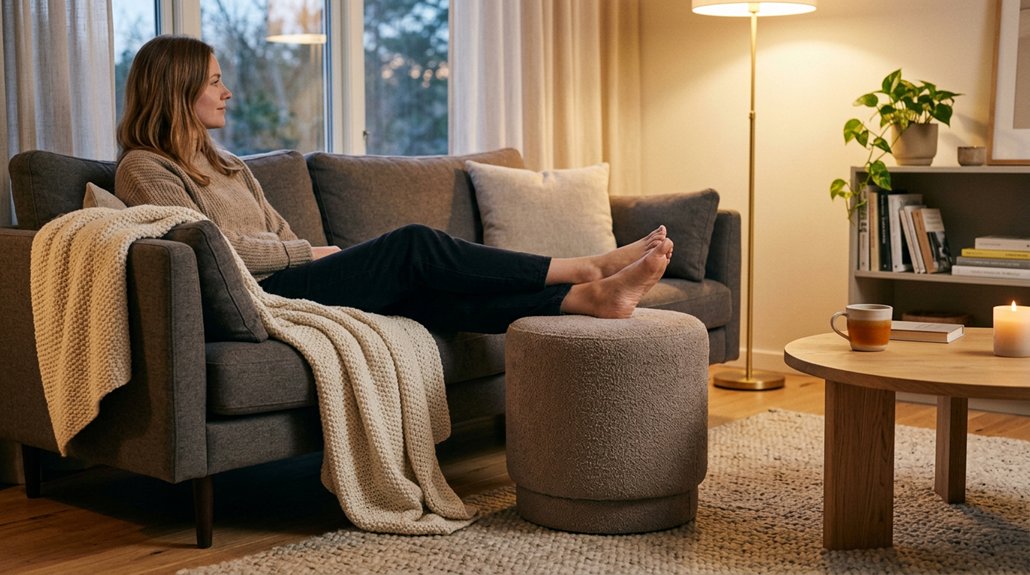
Ever wonder what the perfect footstool height is for ultimate relaxation? The ideal height for footstools usually falls between 13 to 18 inches, about 1 to 2 inches lower than your sofa or chair seat.
This alignment creates a comfortable resting spot, allowing your legs to rest at a natural angle that promotes good blood circulation. Avoid footstools that are too tall, as they can raise your legs above the seat, causing discomfort. Conversely, shorter footstools may not support your feet properly.
For ergonomic comfort, choose a height that prevents your legs from dangling or feeling suspended. To guarantee the best fit, test different heights using boxes or similar surrogates before buying, so you find the perfect supporting footstool for your relaxation needs.
How to Match Footstool Height to Your Seating for Better Comfort
Finding the right footstool height begins with carefully matching it to your seating height for maximum comfort. The goal is to select a footstool height roughly 1 to 2 inches lower than your sofa or chair seat height, usually around 14 to 17 inches for most sofas.
When your footstool complements your sofa seat height, your legs rest at a natural angle, enhancing blood circulation and reducing strain. Avoid choosing a taller footstool, as it can cause discomfort and look mismatched in your space.
To test comfort before buying, rest your feet on objects of similar height. Properly matching footstool height guarantees better support, promotes blood flow, and creates a more ergonomic lounging experience. Adjustable footrests with customizable height settings make it easier to find the perfect fit for your seating arrangement.
Should You Use a Fixed or Adjustable Footstool?
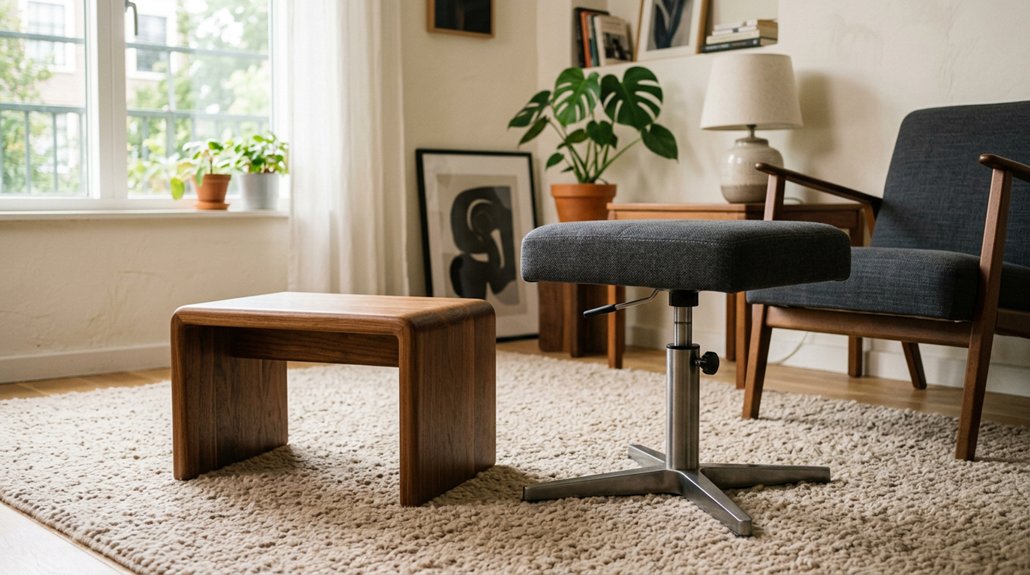
Choosing between a fixed or adjustable footstool depends on your specific needs and living situation.
Selecting the right footstool depends on your needs and space for optimal comfort and functionality.
Fixed footstools are generally set at a height between 13 to 18 inches, providing stable, durable foot support ideal for consistent use in a single seat. They’re more affordable and simple to maintain, making them perfect if you don’t need frequent adjustments.
Adjustable footstools, on the other hand, offer customizable height settings, allowing you to fine-tune your ergonomic comfort based on your leg length or seating arrangement. They provide versatility for multi-user environments or varying furniture heights, but can be bulkier or mechanically complex.
Consider your space, how many people will use it, and whether you need precise foot support when deciding which type works best for you.
Common Mistakes When Choosing Footstool Height and How to Avoid Them
Selecting the wrong footstool height can lead to discomfort and disrupt your room’s aesthetic balance. If your footstool is taller than your sofa or chair seat height, it appears out of place and may cause strain.
Conversely, choosing a footstool that’s too short fails to provide proper leg support, leading to dangling legs and poor circulation. Not measuring the seat height beforehand often results in mismatched proportions, reducing comfort and visual harmony.
Ignoring the recommended 1-2 inches shorter than the seat height can strain your joints and legs during use. Additionally, considering foam density and support levels when selecting a footstool can ensure durability and comfort over time. To avoid these mistakes, always measure your furniture’s seat height accurately and select a footstool that complements the overall room design, ensuring both ergonomic support and aesthetic coherence.
How Material and Cushioning Influence Footstool Height Choices
The material and cushioning you choose for your footstool directly influence its effective height and how comfortable it feels during use. Cushioning thickness adds extra elevation beyond the frame, often increasing height by 2-4 inches depending on the density of the material.
Softer materials like thick foam or wool blends provide more compression, affecting both perceived and practical height comfort. Dense upholstery fabrics, such as sheepskin with layered padding, maintain supportive height while reducing pressure points, promoting ergonomic positioning.
Conversely, materials prone to sinking, like loose-filled poufs, require a lower structural height to compensate for compression during use. When selecting your footstool, consider how your material choice and cushioning thickness align with your sofa height and guarantee peak posture support for comfortable, ergonomic use.
In addition, choosing durable materials with appropriate material quality ensures longevity and sustained comfort over time.
Tips for Testing Footstool Comfort Before Buying
Ever wondered how to guarantee a footstool will feel comfortable before making a purchase? Start by testing the footstool’s height with a surface that matches your desired height, ensuring your legs rest at a comfortable angle. The ideal footstool height is usually about 1 inch shorter than your sofa or chair seat, typically between 13 to 18 inches. Avoid footstools that cause your legs to dangle or suspend mid-air, as this can hinder support and blood flow. Confirm that the height doesn’t exceed a 2-3 inch difference from your seating height to promote an ergonomic posture. Paying attention to the adjustable features of the footrest, such as height and tilt capabilities, can further enhance comfort. Spend several minutes trying the footstool in your space to assess comfort and ease of movement, ensuring it suits your body’s needs before buying.
What Height Works Best for Kids, Seniors, and Petite Users?
Are you wondering which footstool height suits kids, seniors, or petite users best? The ideal ottoman height varies to guarantee comfort and proper support.
For kids, look for a footstool around 10-12 inches high, so their feet rest flat without dangling. Seniors benefit from a height of 15-18 inches, aligning with their chair or sofa seat to encourage circulation.
Petite users typically need a footstool between 13-15 inches, keeping their legs ergonomic and reducing strain. Remember, adjustable footstools are versatile options for all these needs, adapting to user preferences.
The key is choosing a height that allows feet to rest flat and comfortably support the lower limbs, promoting circulation and reducing fatigue for each user type.
Considering the supportive design features of the footstool can further enhance comfort and benefit users with specific needs.
How Room Layout and Furniture Affect Footstool Placement and Height
Room layout and furniture placement play a significant role in determining the ideal height and position for your footstool. Your footstool height should be slightly lower than the seat height of nearby furniture, about 1-2 inches shorter, to guarantee comfortable leg support. Proper placement is key: leave a clear 14-18 inch space between the footstool and the furniture pieces like sofas or chairs for easy movement. The width of the footstool should complement surrounding furniture, ideally about two-thirds of the sofa cushion width, creating visual balance. Position your footstool near seating areas or rugs to maximize functionality and aesthetic appeal. Additionally, considering ergonomic support can improve comfort and prevent fatigue during extended sitting periods. Overall, the layout and arrangement of furniture influence both footstool height and placement, helping maintain room flow and visual harmony in your living room.
Creative Ways to Incorporate Footstools Into Your Living Room Design
Incorporating footstools into your living room design offers both style and functionality, allowing you to create versatile seating options and visual interest.
To enhance your space, consider these creative ideas:
- Position footstools near sofas or armchairs with heights 1-2 inches lower, ensuring ergonomic comfort and seamless integration with your design elements.
- Use contrasting textures or colors for footstools, transforming them into eye-catching accents that complement your existing furniture.
- Add small pouf-style footstools in open-plan areas for flexible, movable seating that doesn’t overwhelm the room.
- Style footstools with decorative trays or throws to turn them into functional side tables or cozy lounging supports, balancing height and aesthetics.
These approaches make your living room more functional and visually appealing.
Top Troubleshooting Tips for Footstool Height and Support
If your footstool doesn’t support proper leg placement, it can cause discomfort or strain over time.
To find the right height, compare it to your sofa or chair, aiming for 1-2 inches shorter, and test support with a box before buying. Make sure the footstool fits well with your furniture so your room looks balanced and functions comfortably.
Proper Leg Placement
Achieving proper leg placement when using a footstool is key to comfort and avoiding strain. The right footstool height supports your feet fully, preventing dangling legs and promoting healthy blood circulation.
To guarantee proper leg placement, consider these tips:
- Keep the footstool height about 1 to 2 inches lower than your sofa or chair seat height for natural positioning.
- Test the height by resting your feet on a box or similar surface first, guaranteeing it matches your comfort needs.
- Avoid footstools that exceed the seat height by more than 2-3 inches, as they can cause leg strain.
- Choose an ottoman or footrest in the 13 to 18-inch height range based on your seat height for peak comfort and proper leg placement.
Matching Furniture Heights
Matching the heights of your furniture pieces is key to creating a comfortable and visually balanced space.
When choosing a footstool, make certain its size complements the seat height of your sofa or chair. Measure the seat height from the ground to the top of the cushion before selecting a footstool, aiming for a height 1 to 2 inches lower. This size difference supports proper leg circulation and ergonomic alignment while maintaining aesthetic harmony.
Avoid footstools that are taller than your seating, as they can cause awkward leg positioning. Consistency in proportional differences—no more than 2-3 inches— helps preserve the room’s visual flow.
Proper matching of furniture heights creates a cohesive look and enhances your overall comfort.
Ensuring Comfortable Support
To guarantee your footstool provides comfortable support, it’s essential to choose a height that promotes natural leg positioning and keeps your feet well-supported. The right height prevents strain, reduces pressure on your lower back, and enhances your living space.
- Aim for a footstool height about 1 to 2 inches lower than your sofa or chair seat, usually between 13 and 18 inches, to secure ergonomic support.
- Use a box or similar object at home to test comfort, securing your legs aren’t dangling and blood circulation isn’t restricted.
- Keep the height difference within 2 to 3 inches of your seating to avoid unnecessary tension in your hips and lower back.
- Adjust based on how you’ll use it—shorter for foot resting, slightly taller if used as occasional seating—maximizing support and functionality.
The Benefits of Choosing the Right Footstool Height for Your Health
Choosing the right footstool height can greatly impact your comfort and overall health when sitting for extended periods. The correct footstool height promotes health benefits by helping you rest your feet properly, ensuring your legs are supported at or slightly below your chair or sofa seat height—typically 13 to 18 inches.
This proper leg position encourages healthy blood circulation, reducing issues like leg swelling or numbness. It also eases pressure on your lower back and spine, decreasing strain during long sittings. An ergonomic footstool supports better posture, relieving tension in your feet, legs, and lower back, enhancing comfort and relaxation.
Additionally, sheepskin footstools distribute weight evenly and improve circulation through their natural wool fibers, offering extra health advantages.
Frequently Asked Questions About Footstool Heights for Maximum Comfort
Ever wondered how to find the perfect footstool height for maximum comfort? Choosing the right footstool height depends on your seating furniture and personal preferences.
A good rule is to select a footstool about 1 to 2 inches shorter than your sofa or chair seat height, ensuring ergonomic support.
Consider these points:
- Check if your feet are flat on the footstool, promoting natural leg positioning.
- Match or slightly fall below the sofa seat height for better circulation.
- Avoid pieces of furniture that are taller, which can cause discomfort or look disproportionate.
- Test by resting your feet on a box before purchasing to verify ergonomic fit.
Frequently Asked Questions
What Is the Best Height for a Footstool?
The best footstool height is about 1 inch lower than your sofa or chair, typically around 15-17 inches, ensuring your legs are supported comfortably without dangling, promoting proper blood flow and a harmonious look in your space.
What Is the Best Height for a Footrest?
The best height for a footrest is about 1 inch shorter than your sofa or chair seat, usually between 13 and 18 inches. This guarantees your legs stay comfortably supported at a natural, ergonomic angle.
Should a Footstool Be Higher or Lower Than the Sofa?
Your footstool should be lower than the sofa, ideally about 1 to 2 inches shorter. This guarantees comfort, proper posture, and visual harmony in the room, preventing strain and awkward angles for your legs and back.
How to Choose the Right Stool Height?
You choose the right stool height by matching it closely to your seat height, ideally 1-2 inches shorter, ensuring your legs are comfortable, supported, and you maintain good blood flow without feeling dwarfed or overwhelmed by the furniture.