To stretch at your desk, start with simple moves like shoulder shrugs, neck tilts, and seated spinal twists to loosen tight muscles. Take regular breaks every hour for 5–10 minutes to stand, move, and perform targeted stretches for your hips, back, shoulders, and wrists. Maintain good workspace ergonomics, like keeping your monitor at eye level and feet flat on the floor. Keep practicing these techniques consistently; you’ll discover more effective stretches to stay comfortable throughout the day.
Why Regular Stretching Is Essential for Office Workers
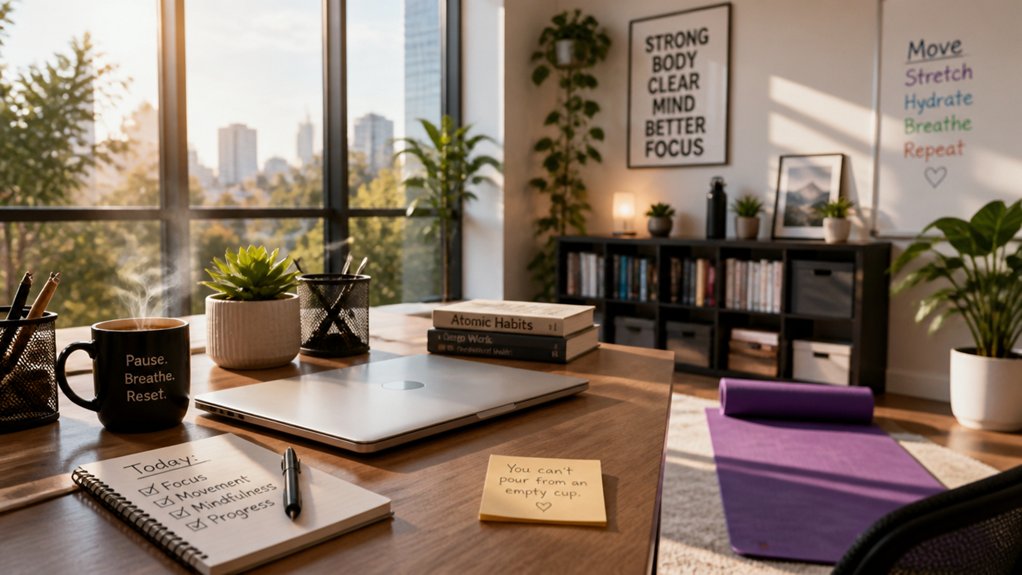
Why is regular stretching so important for office workers? When you sit for long periods, muscle stiffness can set in, especially in your neck, shoulders,, and lower back. Stretching helps combat this by promoting better circulation and oxygen flow, which reduces fatigue and boosts your energy levels throughout the day. A well-designed ergonomic chair with adjustable lumbar support can also help maintain natural spine alignment and reduce strain during long hours of sitting. It also prevents muscles from shortening and weakening, especially the hip flexors and hamstrings affected by prolonged sitting. Regular movement breaks every hour, including desk stretches, help maintain musculoskeletal health and support proper posture.
How to Set Up Your Workspace for Better Stretching and Movement
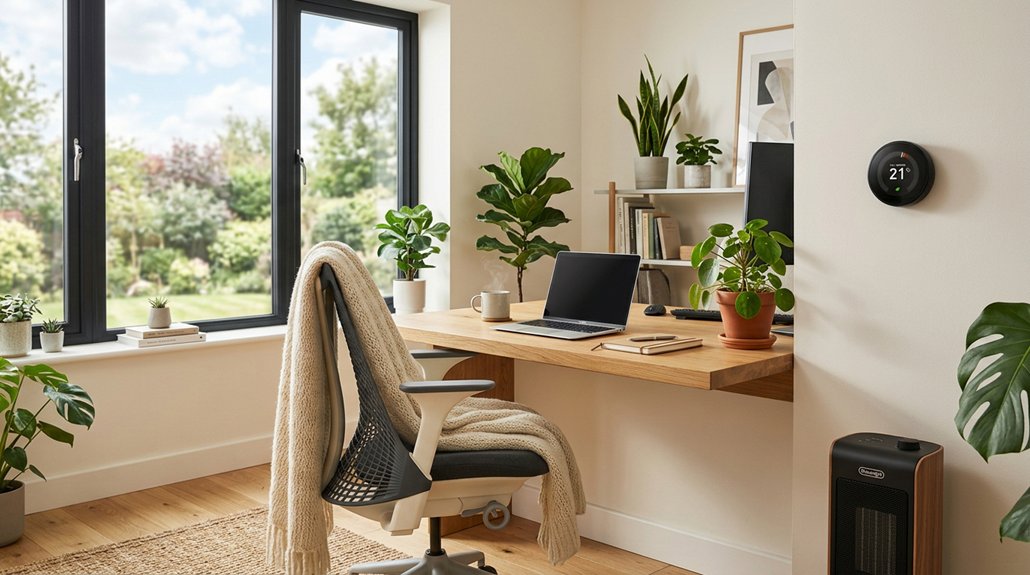
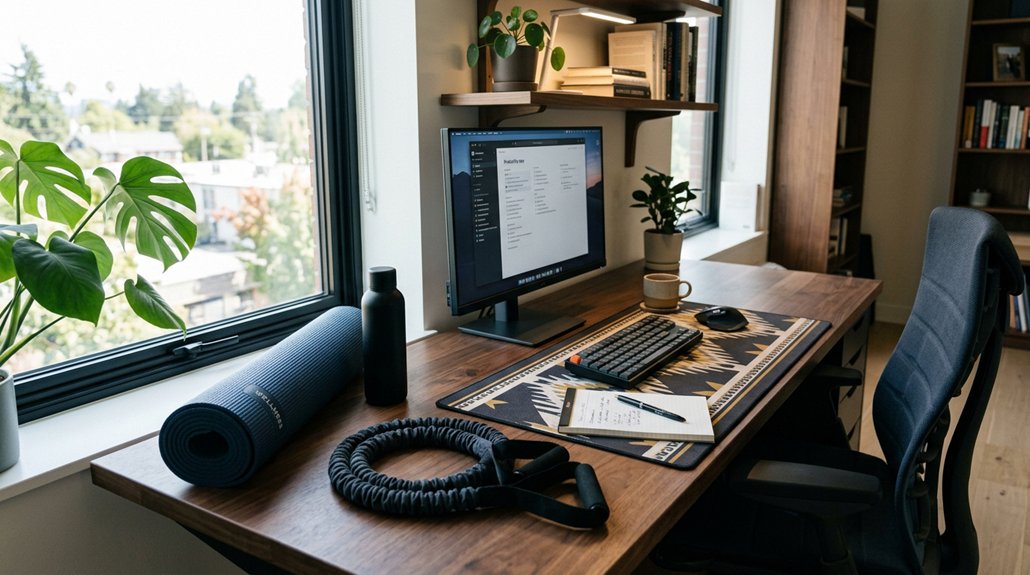
Setting up your workspace thoughtfully can make a big difference in how easily you incorporate stretching and movement into your day. Position your monitor at eye level so you don’t strain your neck, and keep your keyboard directly under your hands with wrists in a neutral position for ergonomic comfort during desk stretches.
Arrange your chair so your feet rest flat on the floor, with knees and hips bent at 90 degrees, supporting comfortable seated stretches. Use adjustable armrests to keep your elbows bent at 90 degrees and shoulders relaxed, enhancing upper-body mobility.
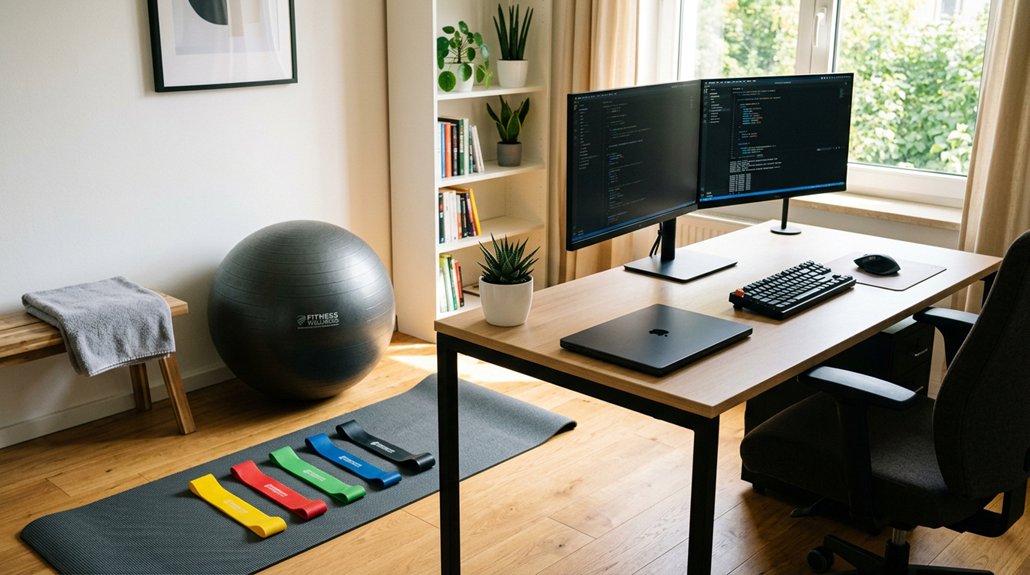
Keep your workspace clear of clutter to allow space for subtle standing stretches or leg movements around your desk. Setting hourly reminders encourages you to stand, move, and perform desk-friendly stretches like shoulder blade squeezes or seated spinal twists.
Incorporating multi-directional movements into your setup, such as adjustable armrests, can further support healthy posture and ease of movement throughout the day.
Easy Stretches You Can Do While Sitting at Your Desk
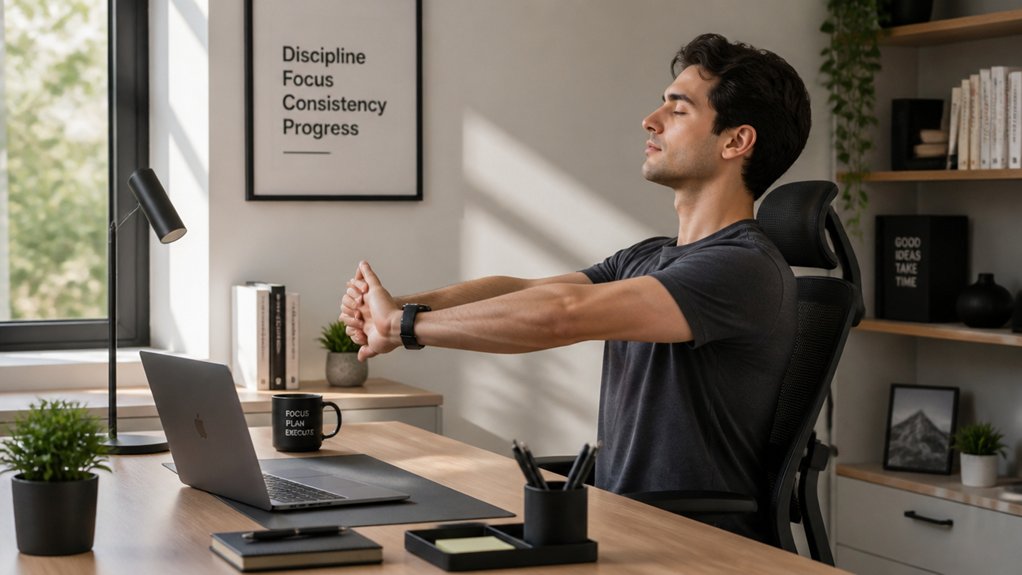
Even while sitting at your desk, you can easily incorporate simple stretches to reduce tension and improve flexibility. These desk stretches target pain points and keep you comfortable throughout the day. Start with seated hamstring stretches by extending one leg, resting your foot on a chair, and bending forward at the waist for 10–30 seconds. Use seated spinal twists, sitting tall and rotating your torso side to side for 15–20 seconds to maintain spinal mobility. Practice shoulder blade squeezes by pinching your shoulder blades together for 5–10 seconds. Incorporating adjustable headrests can further promote proper neck posture during these stretches.
Simple Ways to Move and Break Up Sitting During Your Day
To stay comfortable and avoid stiffness, it’s important to take regular movement breaks throughout your day. Changing your work posture often and incorporating desk-friendly stretches can make a big difference. Simple habits like standing during calls or setting reminders help you stay active without disrupting your workflow. Using under-desk elliptical exercisers can also facilitate consistent movement and support your activity goals during work hours.
Incorporate Regular Movement Breaks
Taking regular movement breaks throughout your workday is essential for reducing muscle stiffness and boosting your overall energy. Every hour, stand up, walk, or do seated stretches to prevent stiffness and pain. These simple actions help improve blood flow and counteract prolonged sitting. Using timer reminders can keep you consistent with your breaks, guaranteeing you don’t forget. Alternating between sitting and standing with a sit-stand desk reduces static posture strain while encouraging movement. Regular short breaks are more effective than one long rest for maintaining energy and preventing discomfort. Incorporate these strategies to break up your workday effectively. The table below highlights key points:
| Action | Benefit |
|---|---|
| Stand or walk every hour | Reduces stiffness and pain |
| Do seated stretches | Boosts circulation and energy |
| Use timer reminders | Guarantees consistent movement breaks |
| Switch positions with sit-stand desk | Prevents static posture strain |
Additionally, choosing a compact standing desk converter can facilitate easy transitions and encourage more frequent movement during your workday.
Variate Workpostures Frequently
Varying your work postures throughout the day can greatly reduce the negative effects of prolonged sitting. To do this, make a conscious effort to change your position every 30 to 60 minutes by standing, stretching, or walking for 5-10 minutes.
Alternating between sitting and standing desks helps break up long periods of inactivity and reduces strain. Incorporate small movements like seated spinal twists, shoulder blade squeezes, or neck tilts at regular intervals to keep your muscles mobile.
Using timer reminders or phone alerts can prompt you to shift your posture and take short activity breaks. Additionally, try to break tasks into intervals—like taking phone calls while walking or standing during meetings—so you stay active throughout the day. Ensuring your workspace furniture can support ergonomic adjustments, such as an electric standing desk, also plays a crucial role in maintaining proper posture and comfort.
Use Desk-Friendly Stretches
Incorporating desk-friendly stretches into your routine allows you to stay mobile and reduce stiffness without interrupting your workflow. These stretches target your upper back, neck, and shoulders, helping to ease tension from prolonged sitting. Try seated spinal twists, shoulder blade squeezes, or gentle neck tilts—these can be done discreetly at your desk. Wrist and hand stretches, like extending your arm with the palm up and pulling back fingers, prevent repetitive strain. Performing shoulder shrugs or neck stretches during breaks relieves upper back and neck tension. These simple movements promote circulation and flexibility. Using adjustable posture correctors can further support proper alignment and enhance your stretching routine during long work hours.
Use the table below for quick reference:
| Stretch | Target Area | How to Do |
|---|---|---|
| Seated Spinal Twist | Upper back | Twist torso while seated, hold for a few seconds |
| Shoulder Blade Squeeze | Shoulders/upper back | Squeeze shoulder blades together, hold briefly |
| Neck Tilt | Neck | Tilt head side to side gently |
| Wrist Stretch | Wrists/hands | Extend arm, gently pull fingers back |
| Shoulder Shrug | Shoulders | Lift shoulders, hold, then release |
Best Stretches for Neck, Shoulders, and Upper Back Relief
To relieve tension in your neck, shoulders, and upper back while at your desk, it’s effective to perform targeted stretches that can be done comfortably in place. Shoulder shrugs, for example, help loosen tightness by lifting your shoulders toward your ears, holding for 3–5 seconds, then relaxing. Do this 2–3 times to ease upper back and neck tension.
Upper trapezius stretches involve gently pulling your head toward each shoulder and holding for 10–15 seconds on each side, relieving shoulder stiffness. Neck stretches like slow head rolls and lateral tilts held for 10–20 seconds increase mobility and reduce muscle tightness.
Incorporate these simple moves to help your neck, shoulders, and upper back stay relaxed, improving comfort and circulation during long work hours. Using ergonomic support like lumbar cushions with high-density memory foam can further enhance your seated posture.
Desk-Friendly Moves to Keep Your Lower Body Flexible
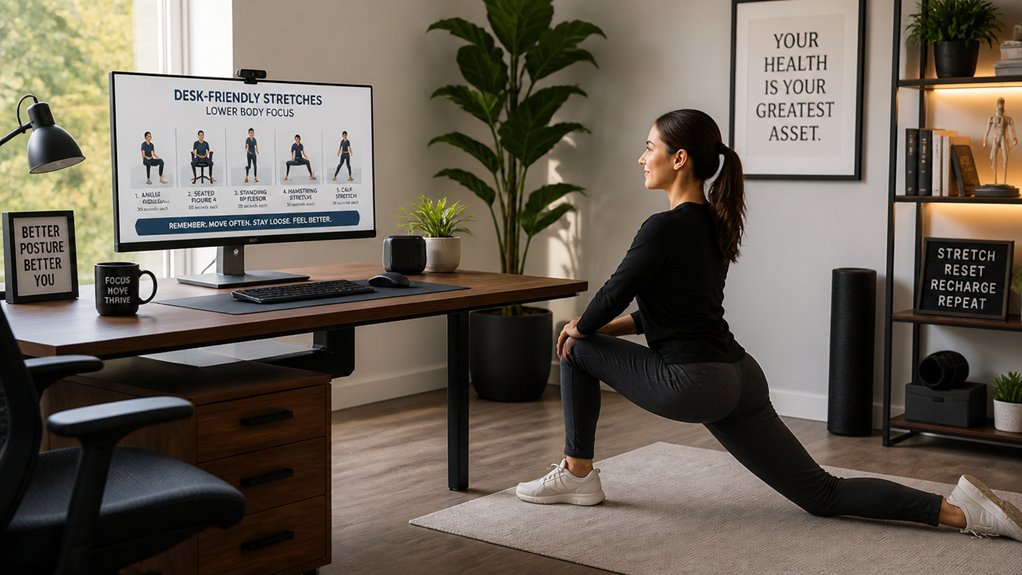
Keeping your lower body flexible at your desk is achievable with simple, seated movements that fit into your routine. Incorporate specific stretches to target tight hip flexors and hamstrings, which can contribute to lower back pain. Regularly moving your legs helps maintain mobility and prevents musculoskeletal issues.
Focus on stretches like hamstring extensions and hip flexor openings to ease tension. Gentle knee-to-chest stretches also promote lower-body flexibility. These moves improve circulation and reduce stiffness during long sitting periods.
Consistent practice supports overall lower-body health without disrupting your work. Remember, small daily actions can make a significant difference in avoiding discomfort and maintaining mobility in your lower back, hips, and legs.
- Seated hamstring stretch: extend one leg, bend at the waist, hold.
- Knee hugs: hug one knee to your chest, switch legs.
- Hip flexor stretch: gently lift one knee toward your chest.
- Ankle flex and stretch exercises.
- Regular leg movements to counteract tightness.
How Often Should I Stretch During the Workday?
How often should you take a stretch break during the workday? Experts recommend taking stretching breaks every hour to combat muscle stiffness and improve posture.
Each break should last about 5 to 10 minutes, giving you time to stand, move, and perform targeted stretches. Regular short stretching sessions help prevent discomfort in your neck, shoulders, back, and legs, keeping muscles flexible and circulation flowing.
Incorporating these breaks into your routine can also counteract the negative effects of prolonged sitting, supporting musculoskeletal health. To make this easier, set timer reminders so you don’t skip your stretching sessions.
Consistently taking these breaks not only improves your comfort but also helps maintain proper posture, reducing pain and fatigue throughout your workday.
Tips to Make Stretching a Habit and Avoid Straining Yourself
Establishing a stretching routine at your desk is easier when you set reminders that prompt you to pause for 5 to 10 minutes each hour. These breaks make a big difference in preventing stiffness and reducing strain.
To avoid overexertion, focus on gentle movements, holding each stretch for 10-20 seconds without bouncing. Pay attention to your body’s signals, adjusting the intensity as needed, especially in tight areas like your neck, shoulders, and hips.
Incorporate subtle, desk-friendly stretches like seated spinal twists or shoulder blade squeezes to stay consistent without disrupting your workflow. Gradually combine dynamic and static stretches, increasing hold time and movement range over time. Doing so helps you feel the stretch safely and sustainably, making stretching a natural part of your workday.
Create a Personalized Desk Stretch Routine for Long-Term Benefits
To get the most long-term benefits, you’ll need to personalize your stretch routine based on your specific muscle tension areas like your hips, neck, or wrists.
Establish regular habits by scheduling hourly breaks and using reminders to make stretching a consistent part of your day.
As you progress, adapt your routine by increasing stretch duration or range of motion to promote ongoing flexibility and musculoskeletal health.
Tailor Stretches to Needs
Creating a personalized desk stretch routine begins with identifying the areas where you experience the most muscle tension during your workday. Focus on problems like tight hips, weak core muscles, or rounded shoulder blades that develop from prolonged sitting.
Once identified, you can tailor your stretches to target these specific issues effectively. Adapt your routine by combining techniques that loosen tight hips, strengthen your core, and open your shoulders. Use body awareness to adjust stretch intensity and avoid discomfort.
Remember, small, frequent movement breaks support long-term benefits. Incorporate reminders like alarms or routine triggers to stay consistent. Customizing your stretches based on your unique needs guarantees that you get the most relief and improvement from your desk routine.
- Target tight hips with hip flexor stretches
- Strengthen core muscles with gentle crunches or planks
- Open rounded shoulder blades with chest and shoulder stretches
- Use body feedback to adjust stretch duration and intensity
- Schedule regular reminders to maintain consistency
Establish Consistent Habits
Making a habit of incorporating 3-5 minute stretches into your hourly routine can greatly reduce muscle stiffness and promote musculoskeletal health over time. Consistency is key; hold each stretch for 10-30 seconds and repeat certain stretches 2-3 times daily to retrain muscle memory and improve posture.
Use timer reminders or phone alerts to stay on schedule, making it easier to ease muscle tension regularly. Tailor your stretches to target areas like your neck, shoulders, hips, or wrists to maximize comfort and long-term benefits.
Incorporating both dynamic and static stretches gradually, while listening to your body’s signals, guarantees effective habits without risking overstretching or injury. Establishing these consistent habits creates a personalized routine that supports your overall musculoskeletal health.
Frequently Asked Questions
Can I Stretch if I Have Pre-Existing Neck or Shoulder Injuries?
Yes, you can stretch with pre-existing neck or shoulder injuries, but you should be careful. Always consult your healthcare provider first, then do gentle, controlled stretches to avoid aggravating your condition.
Are There Any Stretches I Should Avoid During Pregnancy?
During pregnancy, you should avoid deep stretches or those involving lying flat on your back to prevent pressure on your abdomen and blood flow. Consult your healthcare provider before starting any new stretching routine for personalized guidance.
How Do I Know if I’M Stretching Safely and Correctly?
You know you’re stretching safely and correctly when you feel gentle tension without pain, breathe smoothly, avoid bouncing or overstretching, and listen to your body’s signals, stopping if you experience discomfort or dizziness.
What Should I Do if Stretching Causes Pain or Discomfort?
If stretching causes pain or discomfort, stop immediately and gently ease into the stretch again, adjusting your position. If pain persists, consult a healthcare professional to prevent injury and guarantee you’re stretching safely and effectively.
Can Stretches Help Prevent Common Office-Related Musculoskeletal Issues?
Yes, stretches can help prevent office-related musculoskeletal issues by loosening tight muscles, improving posture, and increasing circulation. Regular stretching reduces discomfort and promotes overall well-being, making your workday more comfortable and productive.