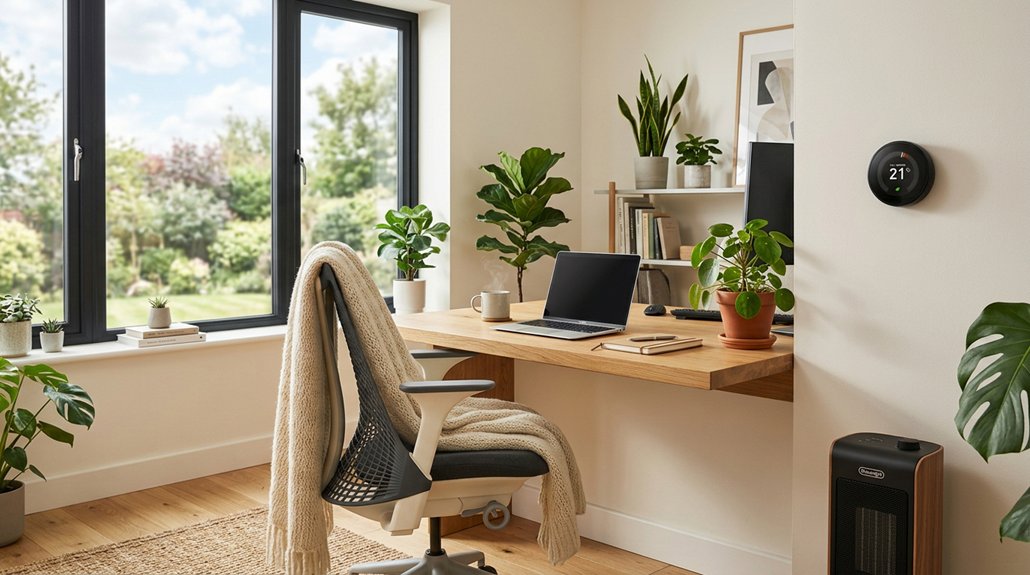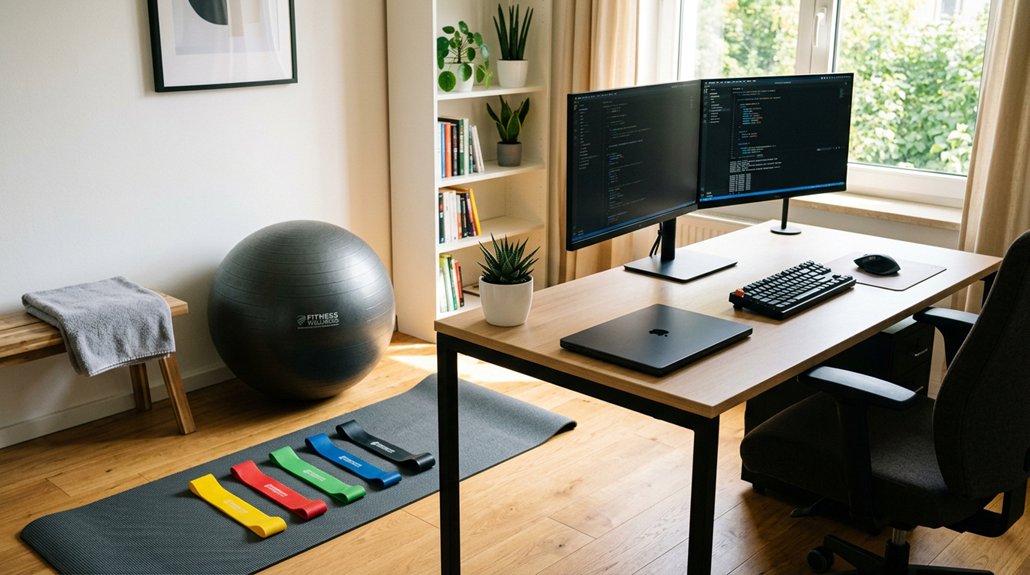
To strengthen your core at your desk, try discreet exercises like seated leg lifts, chair crunches, and abdominal circles during short breaks. Incorporate movements such as desk pushups and side twists to engage deep muscles. Using ergonomic furniture and maintaining proper posture helps support your progress. Regularly alternating these exercises and active breaks prevents fatigue and boosts posture over time. Keep going, and you’ll discover more ways to integrate effective core work into your workday.
Why Core Strength Is Key for Desk Workers’ Posture and Back Health
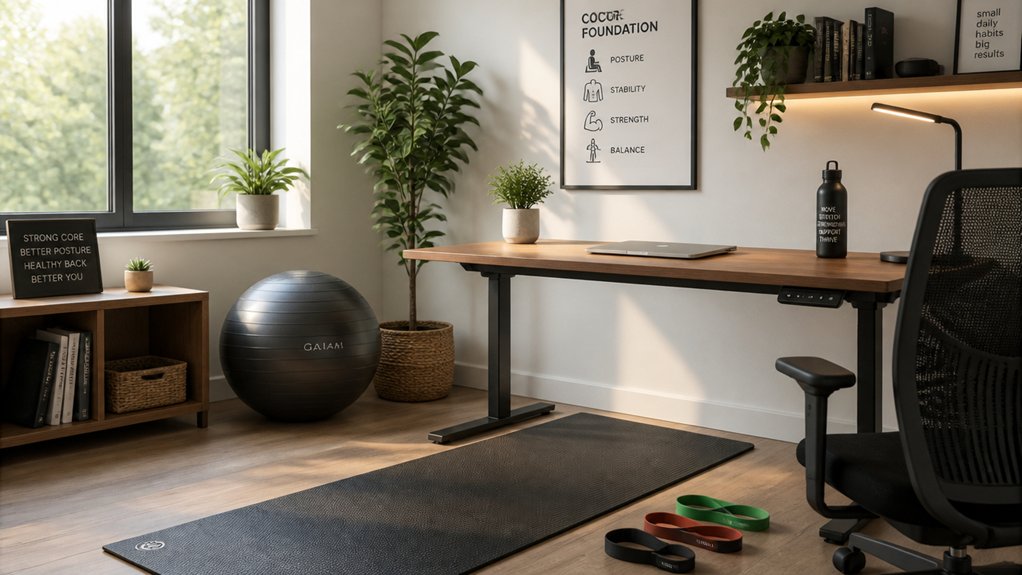
When you spend long hours at a desk, maintaining good posture becomes essential to avoid back pain and spinal issues. Your core muscles, including the pelvic floor, transversus abdominis, and multifidus, support proper alignment and prevent slouching. Incorporating ergonomic supports like lumbar cushions can enhance spinal alignment by contouring to natural spine curves, providing targeted comfort during extended sitting periods. Strong core muscles stabilize your pelvis and lower back, which lessens strain from prolonged sitting. Improved core strength not only supports your back health but also helps you maintain an upright posture naturally. This reduces discomfort and minimizes the risk of chronic back pain. Additionally, a stronger core enhances balance and alignment, making you look slimmer and feel less fatigued. By focusing on core strength, you’re actively protecting your spine and promoting ergonomic health during your busy workday.
Easy Office Core Exercises You Can Do Discreetly at Your Desk
Looking for simple ways to strengthen your core without leaving your desk? These discreet exercises can help you do just that, using your office chair as your workout tool.
Discover easy desk exercises to boost your core strength without leaving your workspace.
Start with seated leg lifts: sit back, keep your shoulders relaxed, and lift one foot off the floor on an exhale, engaging your core. Alternate legs for 10 lifts each.
Next, try chair crunches: sit straight, bend your knees, and curl your upper body downward while exhaling, then return upright on an inhale.
You can also perform abdominal circles by tightening your lower abs and obliques and moving in slow, controlled circles for a minute.
Finally, use the “elbows to knees” move: twist your torso to bring an elbow toward the opposite knee while lifting the other leg, completing 10-12 reps.
Keep your posture aligned for maximum benefits. Proper posture support discreet design and adjustable features play a key role in maintaining comfort during these exercises.
How to Fit Quick Core Workouts Into Your Daily Work Routine
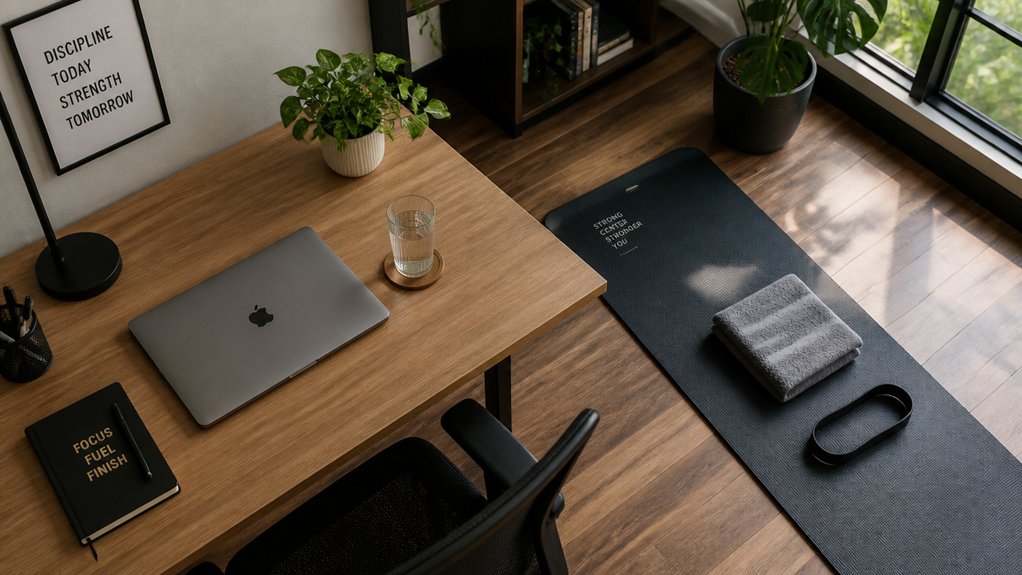
Incorporating quick core workouts into your busy workday is easier than you might think, especially with the discreet exercises discussed earlier. Simple exercises like seated leg raises or chair crunches can be done during brief breaks, helping strengthen your core strength without leaving your desk.
Use in-chair foot lifts and abdominal circles to engage your abdominal muscles with minimal movement, allowing you to focus on work tasks. Magic carpet rides or office chair dips are simple moves you can perform within 5-10 minutes, effectively activating your core.
Plus, alternating between wall sits and desk-edge planks during waiting periods helps seamlessly integrate core workouts into your routine. Short, frequent sessions boost your core endurance and posture, all without disrupting your productivity.
Additionally, incorporating movements supported by ergonomic accessories like adjustable footrests can promote better circulation and active engagement of your lower body during these exercises rocking mechanism.
The Best Office Furniture to Support Your Core and Posture
Choosing ergonomic chairs with adjustable features allows you to customize support and maintain proper alignment throughout the day. An exercise ball can also engage your core passively if used for at least an hour daily, with the right size based on your height. Perching on the front edge of your chair and avoiding leaning back encourages core activation, while lumbar support helps sustain good posture. Incorporating lumbar support mechanisms into your workspace setup can further enhance spinal alignment and reduce strain.
Ergonomic Chair Designs
Ergonomic chair designs are essential for supporting your core and maintaining proper posture throughout the workday. They feature adjustable lumbar support to follow your back’s natural curve, reducing lower back strain.
A stable yet flexible seat base allows subtle balance shifts that engage your core muscles during extended sitting. Proper chair height is vital—keeping your feet flat on the floor and knees bent at a 90-degree angle promotes ideal pelvic alignment and encourages better core engagement.
Advanced office chairs may include dynamic sitting features, like slight rocking or tilting, which encourage active posture and help activate your core muscles continuously. Using an ergonomic chair for at least one hour daily helps passively strengthen your core by forcing balance and posture maintenance without slouching. Additionally, adjustable height and tilt features support optimal positioning and promote ongoing core engagement during prolonged periods of sitting.
Adjustable Furniture Features
Adjustable furniture features are key to maintaining proper posture and engaging your core muscles during work hours. They help you keep a strong core, stay back straight, and shoulders relaxed. An ergonomic chair with lumbar support and height adjustments encourages spine alignment and core engagement. Alternating between sitting and standing with an adjustable desk minimizes prolonged sitting and boosts core activation. Using stability ball chairs promotes active sitting, continuously strengthening core muscles. Chairs with forward tilt or seat pan adjustments keep your pelvic position correct, preventing slouching. Additionally, desks with adjustable keyboard and monitor heights support neutral wrist and head positions, reducing strain. These features work together to foster better posture and core stability, making your workspace both healthier and more supportive. Maintaining a sturdy, well-constructed height-adjustable desk ensures stability and safety during frequent height changes.
Combine Core Exercises With Active Breaks for Better Results
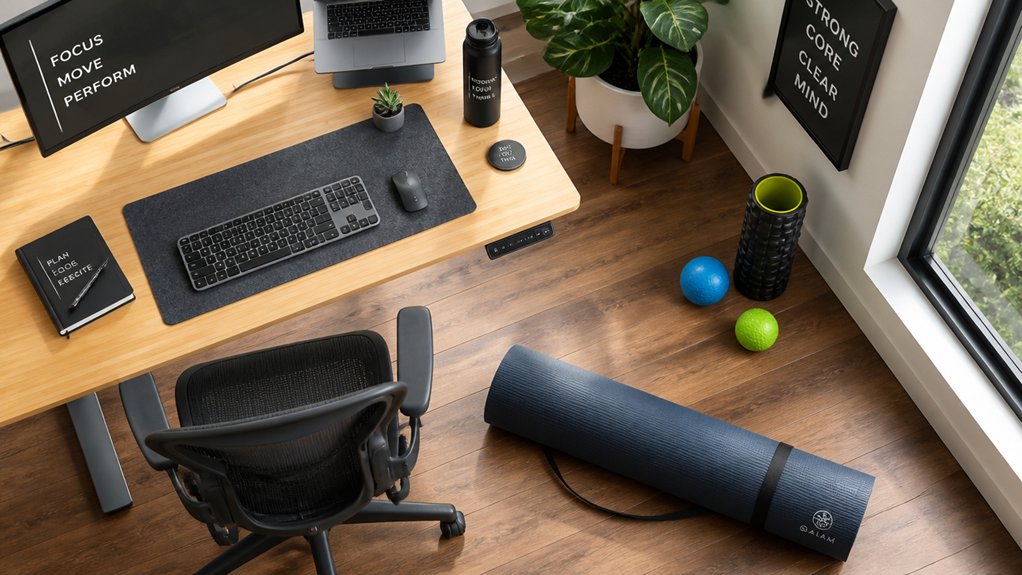
Taking short movement breaks every 1-2 hours keeps your core engaged and reduces sitting-related risks. Mixing different exercises like planks or wall sits during these breaks enhances posture and spinal alignment. Staying consistent and alternating movements helps build core endurance and improves overall body awareness. Incorporating balance and stability tools such as balance boards can further activate core muscles and promote better coordination.
Incorporate Short Movement Breaks
Incorporating short movement breaks into your work routine can greatly boost your core strength and reduce the risks associated with prolonged sitting. During these breaks, perform quick exercises like seated leg lifts or abdominal circles to activate muscles supporting your posture. Engage your side muscles by twisting gently and hold for a second to increase stability. These active pauses help improve overall balance and reduce back pain.
| Exercise | Targeted Muscles | Benefits |
|---|---|---|
| Seated leg lifts | Abs, pelvic floor | Improve circulation |
| Abdominal circles | Transversus abdominis, multifidus | Enhance core stability |
| Desk pushups | Chest, shoulders | Boost circulation |
| Side twists | Obliques, side muscles | Strengthen lateral core |
| Chair crunches | Rectus abdominis, obliques | Reduce stiffness |
Alternate Exercises Regularly
Mixing different core exercises with active breaks during your workday keeps your muscles engaged and prevents fatigue. To do this effectively, repeat 10 times: lift your left leg, then engage your left elbow towards your knee in a seated crunch, alternating with stretching or walking. Alternating exercises like planks and seated leg lifts, combined with active breaks, helps prevent muscle burnout and targets deeper muscles such as the transversus abdominis and multifidus. Repeating these movements regularly can also improve your spinal alignment and overall posture. Repeat 10 times: lift your left leg, then twist slightly to engage your core. Varying these movements improves posture, balance, and breathing, while reducing back pain caused by prolonged sitting. Incorporate this pattern of core exercises and active breaks regularly to keep your muscles challenged and prevent stagnation.
Stay Consistent Throughout Day
Maintaining consistency in your core exercises throughout the day greatly enhances their benefits, especially when combined with active breaks. Every hour, do simple movements like in-chair foot lifts or abdominal circles to keep your muscles engaged.
When switching between seated leg raises or desk pushups and standing stretches, focus on moves that involve your left knee and right knee—like knee lifts or gentle lunges—to activate your core dynamically. Incorporate short active breaks, such as standing heel raises or thoracic rotations, to boost circulation and reduce stiffness from prolonged sitting.
Holding a stable position with your core muscles flat on the floor, or engaging your core during these exercises, helps you develop endurance and improve posture. Consistency is key to preventing back pain and enhancing overall core strength throughout your workday.
How a Strong Core and Good Ergonomics Improve Your Long-Term Health
A strong core combined with good ergonomics plays an essential role in protecting your long-term health, especially for those who spend hours at a desk.
Place your hands on your lap, keeping your left side aligned. Lift your left leg slightly to engage your core muscles, helping support your spine and improve posture. Engaging your core while maintaining proper ergonomic setup reduces musculoskeletal strain, lowering injury risk.
Good ergonomics, like adjusting your chair and monitor height, combined with core strength, helps keep your head, shoulders, and hips properly aligned. This not only prevents back pain but can also make you look 5 to 10 pounds thinner.
Over time, these habits improve balance, stability, breathing, and overall physical health, counteracting the negative effects of a sedentary lifestyle.
Frequently Asked Questions
How to Strengthen Core While Sitting at Desk?
You can strengthen your core at your desk by performing seated leg raises, in-chair foot lifts, abdominal circles, and chair crunches regularly. Keep good posture, engage your abs, and move intentionally to build strength without leaving your seat.
What Are the Big 3 Core Strengthening Exercises?
The Big 3 core exercises are planks, side planks, and bird-dogs. They target different muscles, improve stability, and can be done without equipment, helping you boost posture, reduce discomfort, and strengthen your core effectively at work.
How Do You Strengthen Your Core at a Standing Desk?
At a standing desk, you strengthen your core by maintaining good posture, engaging your abs and pelvic floor, practicing standing wall sits, doing torso twists, and lifting your heels for balance, keeping your muscles active throughout the day.
What Are the Top 3 Core Strengthening Exercises?
The top three core strengthening exercises for you are wall sits, seated reverse crunches, and desk pushups. They target your core effectively, can be done discreetly at your desk, and help improve your posture and endurance.