The best left-handed ergonomic mouse offers a comfortable, natural fit that reduces strain and prevents repetitive injuries. Look for models with mirrored contours, customizable buttons, and vertical or semi-vertical designs to support a neutral wrist position. Wireless options like the Logitech G Pro Wireless or ambidextrous options like the Goldtouch Wireless are great choices. To discover more about how these mice can improve your comfort and productivity, keep exploring different features and setups.
Why Right-Handed Mice Fail Left-Handed Users: and What You Need
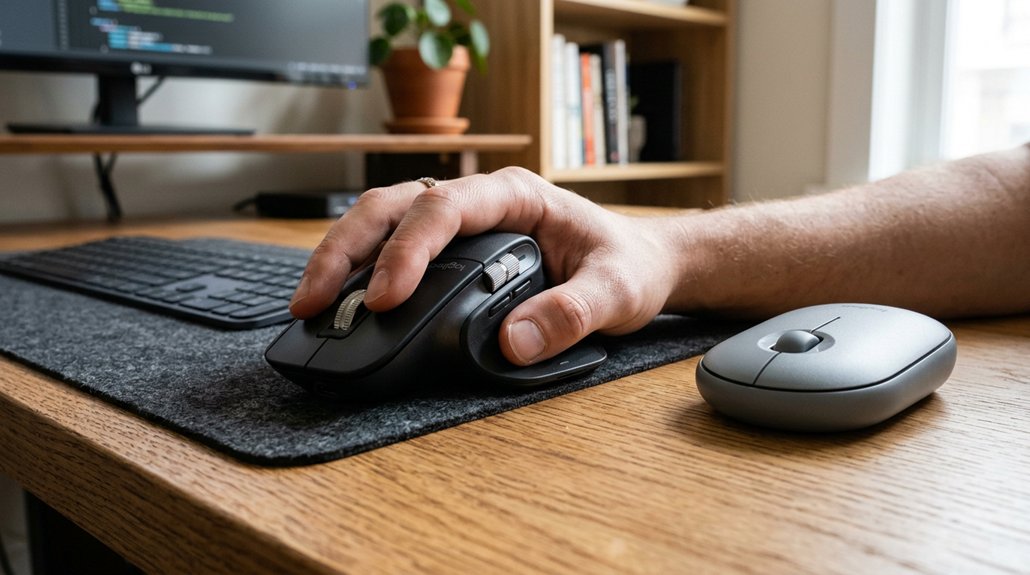
Right-handed mice are designed with contours and button placements optimized for right-handed users, which makes them uncomfortable and inefficient for left-handed users. A standard right-handed mouse forces left-handed users into awkward wrist and forearm positions, causing discomfort and reducing accuracy. Using a right-handed mouse with your left hand increases shoulder strain because of unnatural twisting and compensations. Unlike ergonomic, vertical left-handed mice, traditional models lack support for a relaxed, neutral hand posture. The poor design of right-handed mice results in hand fatigue and strain, especially over long periods. To avoid repetitive strain injuries and improve comfort, left-handed users need a dedicated left-handed mouse or an ambidextrous, ergonomic option that naturally aligns with their hand’s movement. Recognizing the importance of ergonomic design can significantly enhance comfort and reduce strain for left-handed users.
What Sets Left-Handed Ergonomic Mice Apart From Standard Mice
Left-handed ergonomic mice are built with symmetrical designs and button placements that naturally fit your left hand, reducing strain and awkward movements. Their customized contours and thumb rests promote a more relaxed, neutral hand posture compared to standard mice. These features make left-handed ergonomic mice stand out by prioritizing comfort and alignment for left-handed users. Additionally, adjustable angles in some models allow further customization to suit individual ergonomic needs.
Symmetrical Design Principles
Symmetrical design principles set left-handed ergonomic mice apart by creating shapes that naturally conform to the contours of the left hand. These principles focus on balanced, mirrored shapes that fit comfortably and reduce strain during use. Unlike standard right-handed mice, left-handed ergonomic models reposition primary and secondary buttons for intuitive access by your fingers. Ambidextrous mice also incorporate symmetrical design principles, allowing for button remapping and adaptability. The goal is to support a neutral wrist posture, minimizing twisting and repetitive strain injuries. Many models adopt vertical or semi-vertical orientations, aligning with a handshake position that’s more natural. Additionally, the use of specific wrist support features enhances comfort and promotes better ergonomic alignment during prolonged use.
Customized Button Placement
Customized button placement is the key that sets left-handed ergonomic mice apart from standard models, ensuring that controls are naturally within easy reach for your fingers.
With tailored layouts, these mice support activities like left-handed gaming by providing thumb buttons and side keys positioned on the left side, matching your natural handshake position. Unlike right-handed mice, left-handed ergonomic mice are reshaped and mirrored to align with your hand’s anatomy, reducing finger stretches and awkward movements. Some models are fully dedicated left-hand devices, while others are ambidextrous with software remapping options. By optimizing button placement, these mice help maintain a neutral wrist posture, minimizing hand twisting and shoulder strain, which ultimately boosts comfort and control during prolonged use. Additionally, thoughtful design features contribute to overall ergonomic benefits, promoting healthier and more comfortable long-term use.
Ergonomic Hand Posture
Ergonomic hand posture is a defining feature that distinguishes left-handed ergonomic mice from standard models. When using a left-hand ergonomic mouse, the design supports a natural, relaxed handshake position, aligning your hand and arm to reduce twisting and muscle tension.
Vertical ergonomic models, like the Evoluent Vertical Mouse 4 Left Hand, promote a neutral grip that greatly lowers wrist strain compared to traditional horizontal mice. The ergonomic design reshapes contours and places buttons for effortless finger movement, aiding comfort and usability.
These mice help prevent repetitive strain injuries (RSI) by encouraging a steady, strain-free position during extended use. Unlike standard mice, left-specific ergonomic models maintain proper shoulder and forearm alignment, making long hours at the computer more comfortable and minimizing fatigue. Additionally, choosing models with multi-directional adjustments can further optimize support and ergonomic benefits during prolonged use.
Types of Ergonomic Mice Designed for Left-Handed Users
Left-handed ergonomic mice come in various forms, including symmetrical and ambidextrous designs that suit both hands, as well as hand-specific contoured shapes optimized for left-handed use. Many models feature adjustable grip angles and customizable buttons to improve comfort and fit different hand sizes. These options guarantee you find a mouse that supports your natural posture and reduces strain during extended use. For enhanced wrist support, some models incorporate memory foam wrist rests for added comfort during prolonged use.
Symmetrical and Ambidextrous Designs
Have you ever noticed how symmetrical and ambidextrous mice are designed to serve both left- and right-handed users seamlessly? These mice feature balanced, symmetrical designs that don’t favor one hand, making them versatile options. Many include removable or programmable side buttons on either side, allowing full customization for left-handed use. Ambidextrous models reduce the “lefty tax” by generally being more affordable and easier to find than hand-specific mice. Popular wireless gaming mice, like the Logitech G Pro Wireless, weigh around 80 grams and come equipped with high-performance sensors like the Hero 25K, offering 1,000 Hz polling for precision. These designs suit claw and fingertip grips best, though some palm grip users might prefer more ergonomically contoured options. When choosing an ergonomic mouse for left-handed use, it’s beneficial to consider models with non-slip bases to ensure stability on various desk surfaces.
Hand-Specific Contoured Shapes
Contoured shapes designed specifically for left-handed users are crafted to match the natural posture of the hand, reducing strain during extended use. These hand-specific contoured left-handed mice feature tailored curves and button placements that align with left-hand finger positioning, enhancing usability. Consider these key features:
- Many left-handed ergonomic mice include thumb rests to support a relaxed grip and lessen fatigue.
- Vertical left-handed mice maintain a neutral wrist position, supporting a natural handshake posture that prevents strain.
- Some models are customizable, offering adjustable tilt angles and reshaped contours for a personalized fit.
- The ergonomic shape often incorporates supportive contours that promote proper wrist alignment, further reducing micro-movements and discomfort.
These asymmetric designs outperform ambidextrous options by delivering targeted support, making them ideal for prolonged use and reducing postural issues in left-handed users.
Adjustable and Customizable Features
Adjustable and customizable ergonomic mice are designed to fine-tune your comfort by allowing you to modify key features to suit your hand and working style. An adjustable, left-handed ergonomic mouse can feature variable tilt angles and detachable thumb rests, helping to improve your hand posture and reduce strain. Many models incorporate split design features that promote natural hand alignment and minimize wrist discomfort. Some semi-vertical mice like the Goldtouch Wireless Ambidextrous Mouse offer adjustable weights and ergonomic tilt, such as 66 degrees, for personalized support. Many ambidextrous models allow button remapping and hand mode switching via software, giving you tailored button layouts. Some vertical mice provide separate left- and right-handed versions to guarantee peak ergonomic contours and prevent wrist twisting. Advanced options like the UniMouse offer multiple adjustable features, maximizing comfort and customization with wired or wireless options.
What Are the Benefits of Vertical and Semi-Vertical Designs?
What makes vertical and semi-vertical mice beneficial? These designs position your hand in a natural handshake posture, reducing wrist and forearm twisting that often causes discomfort.
Vertical and semi-vertical mice promote a natural handshake posture, reducing wrist and forearm strain for greater comfort.
The best vertical mice, like semi-vertical models such as the Goldtouch Wireless Ambidextrous Mouse, tilt at about 66 degrees with adjustable weights, offering comfort without extreme angles.
Using a vertical mouse helps prevent repetitive strain injuries (RSI) by promoting relaxed shoulder and wrist positions during long hours. Lumbar support mechanisms can inform ergonomic enhancements that benefit overall posture.
Here are some key benefits:
- They decrease wrist pain and fatigue by limiting unnatural pronation.
- They encourage a neutral hand and wrist posture, easing tension.
- They support long-term comfort, especially for those who use a mouse extensively.
With the right vertical or ambidextrous mouse, you improve ergonomics and reduce strain.
Top Features to Consider in a Left-Handed Ergonomic Mouse
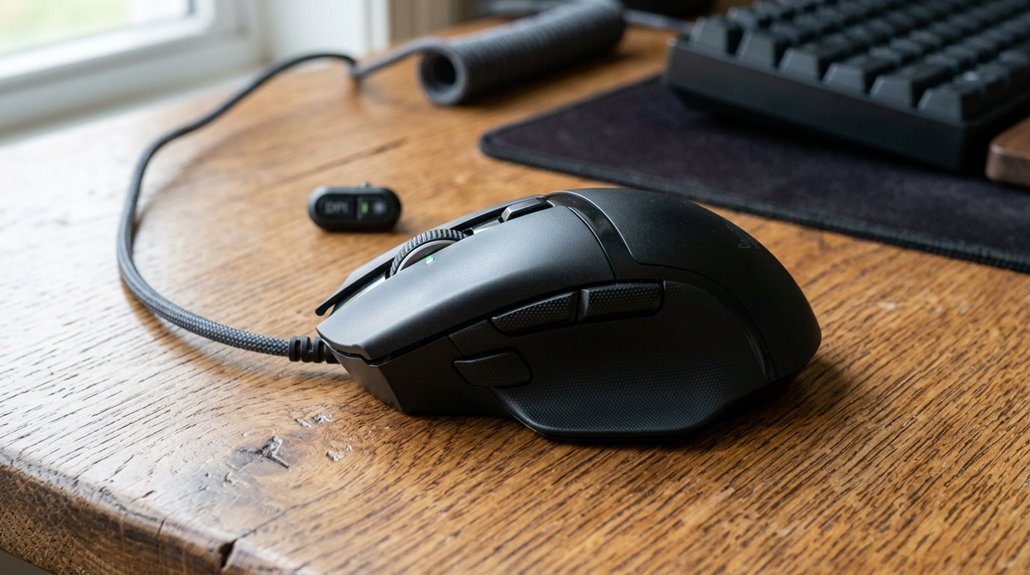
Choosing the right left-handed ergonomic mouse involves considering several key features that enhance comfort and reduce strain. Look for models with a fully mirrored or symmetrical design, ideal for supporting natural left-hand posture while minimizing wrist and forearm discomfort.
Ambidextrous ergonomic mice are popular, offering customizable buttons and software for personalizing the hand mode and remapping functions. Vertical or semi-vertical shapes help maintain a neutral “handshake” wrist position, reducing repetitive strain.
Weight also matters; selecting an ergonomic mouse between 80 to 99 grams balances agility and fatigue reduction. For added convenience, opt for wireless connectivity, which removes cable restrictions and improves ease of use.
A reliable sensor, like Hero 25K or Pixart PWM 3336, guarantees smooth, accurate tracking during long work or gaming sessions.
Best Wireless Left-Handed Ergonomic Mice in 2026
When choosing a wireless left-handed ergonomic mouse in 2026, you should consider how the design supports comfort and ease of use.
Battery life and connectivity options are key, ensuring your mouse stays reliable during long sessions. Top models like the Logitech G Pro Wireless and Turtle Beach Burst II Air balance these features for maximum performance.
Top Wireless Design Features
Wireless left-handed ergonomic mice in 2026 prioritize seamless design features that enhance comfort and performance.
When choosing the best wireless mice, look for key elements like:
- An *ergonomic* shape that supports prolonged use without strain, often achieved through *ambidextrous design* or symmetry.
- A high *polling rate* of 1,000 Hz, ensuring rapid responsiveness for gaming or precision tasks.
- Flexibility in connectivity options, such as dual Bluetooth and 2.4 GHz, for stable, lag-free performance and versatile use.
These features optimize usability by balancing comfort with responsiveness, allowing left-handed users to perform at their best.
Sharp design focus on lightweight construction and customizable buttons further enhances the overall experience, making your wireless mouse both functional and comfortable for daily or competitive use.
Battery Life and Connectivity
In 2026, battery life and connectivity play crucial roles in selecting the best ergonomic mouse for left-handed users, especially for gaming or extended work sessions.
The Logitech G Pro Wireless offers excellent battery life and a 1,000 Hz polling rate, making it a top choice for wireless gaming. The Turtle Beach Burst II Air emphasizes a long-lasting 120-hour battery and lightweight design, perfect for competitive wireless gaming.
The Logitech G305 Lightspeed provides a robust 250-hour battery life on a single AA cell with reliable 2.4 GHz wireless. Meanwhile, the SteelSeries Rival 3 Gen 2 Wireless supports dual Bluetooth and 2.4 GHz wireless, offering flexible connectivity.
Choosing a wireless mouse with solid battery life and stable wireless options guarantees uninterrupted performance during long sessions.
Best Wired Left-Handed Ergonomic Mice for Precision and Reliability
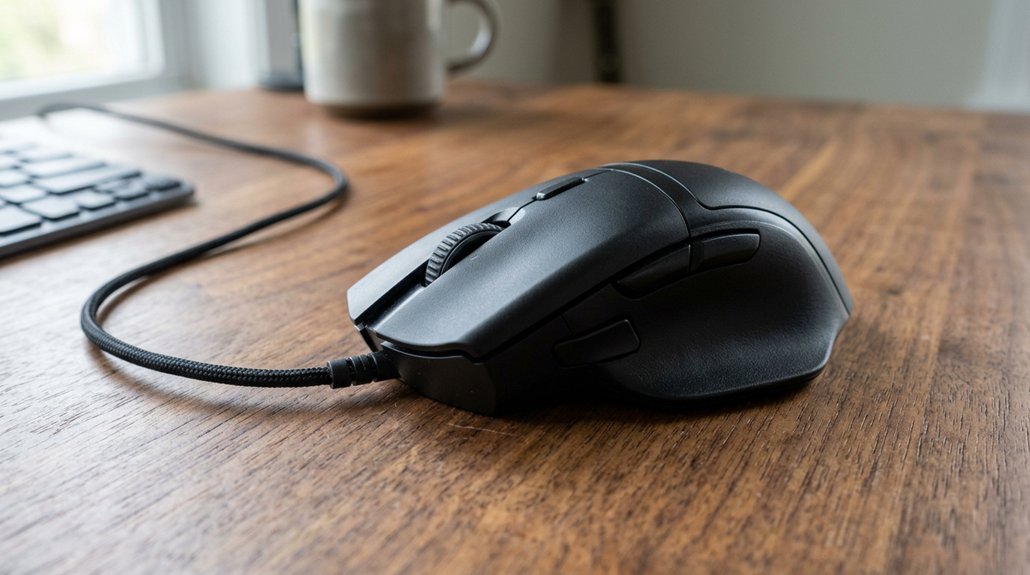
For left-handed users seeking precision and reliability, wired ergonomic mice provide a dependable solution without signal lag or interference. These mice guarantee consistent input, essential for detailed work or gaming.
Consider these top options:
- The Evoluent Vertical Mouse 4 (Left Hand Wired VM4L) offers a vertical design that reduces wrist strain and enhances comfort during long hours.
- The Logitech G Pro Wired is an ambidextrous gaming mouse with an 8,000 dpi sensor and a 1,000 Hz polling rate, delivering accurate tracking and low latency.
- The Corsair M55 RGB Pro, an affordable choice, features DPI up to 12,400 and thumb buttons on both sides for versatile control. This wired, left-handed ergonomic mouse balances precision and affordability.
How to Choose the Right Size and Fit for Your Left-Handed Mouse
Choosing the right size and fit for your left-handed ergonomic mouse is essential to guaranteeing comfort and reducing fatigue during extended use. Your hand size and grip style—whether palm, claw, or fingertip—play a vital role. A well-fitting mouse supports natural hand posture, minimizing strain. Take into account adjustable angles, thumb rests, and customizable buttons to better match your hand’s natural posture. Weighing between 80–99 grams often offers balance for gaming, control, and speed. Opt for vertical or semi-vertical designs tailored for left-hand use to maintain a neutral wrist position. Test button reachability to confirm side buttons are accessible without excessive finger or shoulder movement. The table below highlights key factors to reflect on:
| Feature | Importance |
|---|---|
| Hand size | Guarantees proper grip and control |
| Grip style | Affects shape and button placement |
| Adjustable angles | Customizes fit for comfort |
| Weight | Influences maneuverability and fatigue |
| Button placement | Guarantees easy access without strain |
Customization Options for Left-Handed Ergonomic Mice
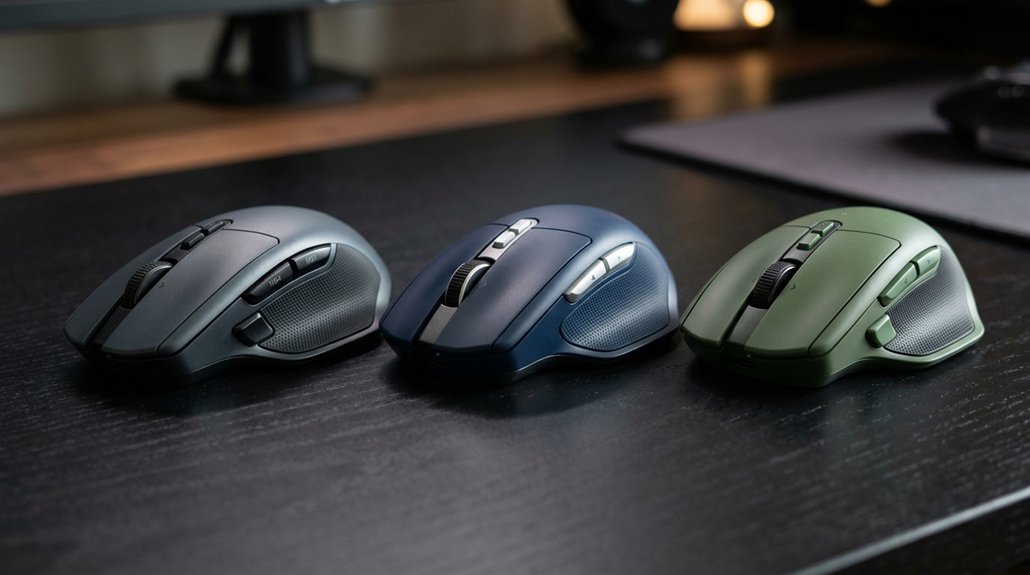
Customization options greatly enhance the comfort and functionality of left-handed ergonomic mice, allowing you to tailor the device to your specific grip style and preferences. Many left-handed ergonomic mice feature ambidextrous designs with customizable button placement and hand mode switching via dedicated software.
Some key customization features include:
- Adjustable angles, thumb rests, and weight settings to improve ergonomic fit.
- Remappable buttons for personalized shortcuts, especially on models like the Evoluent Vertical Mouse 4.
- DPI and sensor sensitivity adjustments, with programmable profiles up to 30,000 dpi, ensuring ideal precision for your needs.
These options let you fine-tune your left-handed ergonomic mice for maximum comfort and efficiency, making your workflow seamless and customized.
Comparison of Leading Left-Handed Ergonomic Mice: Pros and Cons
When comparing leading left-handed ergonomic mice, it’s important to take into account how each model balances comfort, functionality, and price.
The Goldtouch Wireless Ambidextrous Mouse offers a versatile, wireless experience with adjustable features, making it a good choice for those seeking true ambidextrous comfort at around $40–$45.
The Evoluent Vertical Mouse 4 provides excellent wrist strain reduction but is wired, which might limit flexibility.
The Wave Vertical Ergonomic Mouse by UPLIFT Desk delivers wireless vertical support at an affordable $34, combining comfort and budget.
For left-handed, ergonomic gaming, the Logitech G Pro Wireless emphasizes high performance and customizable features, though it leans more toward gaming than strict ergonomics.
Finally, semi-vertical options with adjustable tilt offer a balance, appealing to users who find extreme vertical shapes uncomfortable.
Common Challenges for Left-Handed Users : and How Ergonomic Mice Help
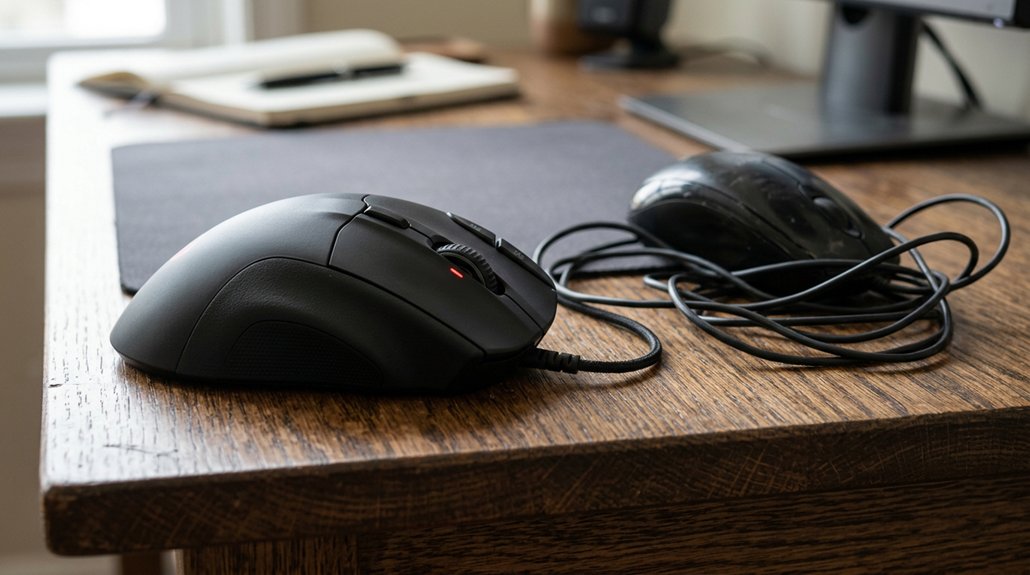
Left-handed users often face discomfort and inefficient movement when using standard right-handed mice, which aren’t designed to fit the natural contours of their hands. This leads to issues like wrist strain, awkward forearm angles, and muscle fatigue.
Ergonomic mice alleviate these challenges with features tailored specifically for left-handed users, such as mirrored contours and button placements. They help by:
- Supporting a neutral handshake position, reducing twisting and tension.
- Minimizing wrist and forearm strain through vertical or specially shaped designs.
- Promoting better posture, which prevents repetitive strain injuries (RSI).
Using ergonomic mice makes it easier to maintain comfort during extended computer use, helping you avoid discomfort and inefficiency common with non-optimized setups.
Setting Up Your Left-Handed Mouse for Maximum Comfort
To achieve maximum comfort with your left-handed ergonomic mouse, start by configuring your operating system’s primary mouse button setting to “left.” This makes clicking natural and prevents awkward hand movements. Next, choose an ergonomic mouse designed specifically for left-handed users or an ambidextrous model with customizable buttons to guarantee proper hand alignment and minimize strain. Adjust the pointer speed and sensitivity (DPI) for your tasks to reduce unnecessary hand and wrist movements during long use. Position your desk and mouse pad so your elbow is at roughly a 90-degree angle, with a neutral wrist posture, mimicking a natural handshake. Regular hand and wrist stretches, along with breaks, also help prevent strain and keep your hand comfortable during use.
| Hand Positioning | Mouse Setup |
|---|---|
| Keep wrist neutral | Adjust DPI for comfort |
| Maintain 90° elbow | Choose an ergonomic model |
| Take regular breaks | Configure primary button to ‘left’ |
Are Left-Handed Ergonomic Mice Worth the Investment?
Are left-handed ergonomic mice worth the investment? Absolutely, especially if you spend long hours at your computer. Left-handed ergonomic mice are designed to reduce discomfort by aligning with your natural hand posture, preventing the awkward wrist twisting common with standard right-handed mice.
They help minimize repetitive strain injuries (RSI) and boost long-term comfort. Consider these options:
- High-quality left-handed ergonomic mice with vertical or semi-vertical designs lessen shoulder and forearm tension.
- Ambidextrous models can be a practical, cost-effective alternative, offering compatibility for both hands.
- Customizable features like adjustable angles and button layouts improve comfort and productivity.
Though they can be pricier, investing in these mice pays off by supporting your health and ensuring better overall comfort during extensive computer use.
Frequently Asked Questions
What Is the Best Left-Handed Mouse?
The best left-handed mouse depends on your needs; if you want comfort and customization, choose an ambidextrous model like the Logitech G Pro Wireless. For ultimate ergonomics, consider an upright vertical mouse like the Evoluent.
Are Left-Handed Mice Worth It?
Yes, left-handed mice are worth it because they offer tailored ergonomic support that reduces strain, improves comfort, and prevents injuries during long hours at your computer. They help you work more efficiently and protect your health.
Do Lefties Need a Special Mouse?
Yes, lefties benefit from a special mouse, as it’s designed to fit your natural grip, reduce strain, and improve comfort. Using an ambidextrous or left-handed ergonomic mouse helps prevent discomfort and promotes healthier wrist and arm positioning.
What Is the Highest Rated Ergonomic Mouse?
The highest-rated ergonomic mouse is the Logitech MX Master 4, praised for its customizable design and comfort features. However, it’s right-handed only, so if you need ambidextrous options, consider the Kensington Expert Mouse Wireless Trackball.
In Summary
Choosing a left-handed ergonomic mouse can dramatically improve your comfort and productivity. By understanding the differences from standard mice, exploring the types available, and considering key features, you can find the perfect fit. Investing in the right ergonomic mouse not only relieves strain but also boosts your efficiency. Don’t settle for discomfort—upgrade today and enjoy a more natural, pain-free computing experience tailored specifically for left-handed users.