Blue light blocking lamps reduce eye strain by filtering out high-energy blue wavelengths, which cause glare, flicker, and visual discomfort during screen use. They provide steady, flicker-free illumination that minimizes glare and eases eye muscle fatigue. By improving contrast and reducing harsh blue light exposure, these lamps help prevent dryness, headaches, and blurry vision. Keep exploring to discover how proper lighting can boost comfort and productivity for your workspace.
How Blue Light Causes Eye Fatigue During Screen Use
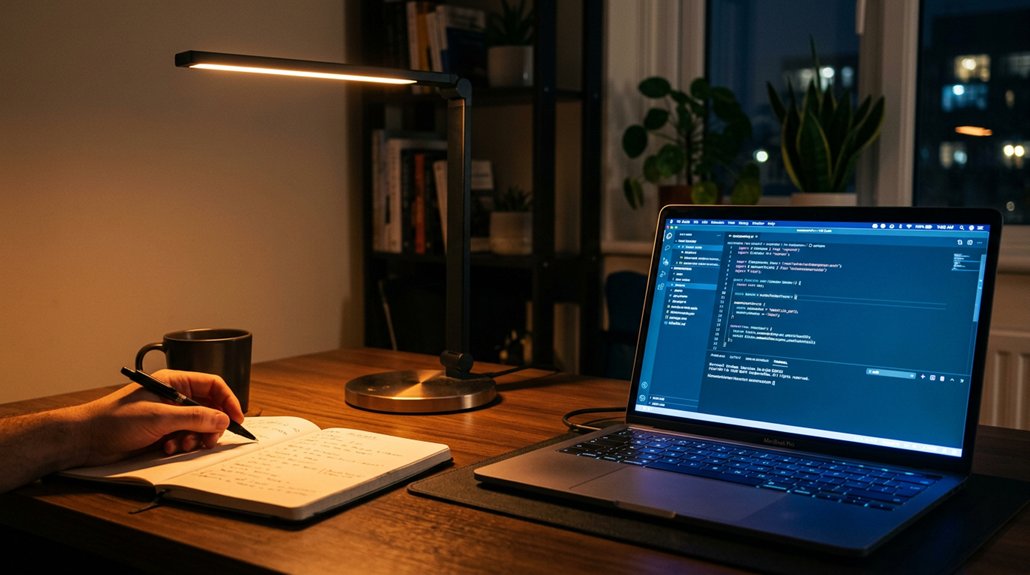
Blue light from screens contributes to eye fatigue by increasing glare and flicker, which forces your eyes to strain more as they try to focus. When exposed to blue light, your eyes struggle to adjust, leading to digital eye strain. A blue light blocking overlay can help mitigate these effects by filtering out harmful wavelengths before they reach your eyes. The high-energy wavelengths cause glare and reduce contrast sensitivity, making it harder to see clearly. This constant visual discomfort causes your eye muscles to overwork, resulting in eye fatigue and dryness.
Prolonged exposure may overstimulate retinal cells, raising the risk of retinal damage over time. The flickering and glare from blue light also make focusing difficult, adding to headaches and blurred vision during extended screen use.
Ultimately, blue light’s effects intensify discomfort and burden your eyes, hampering visual comfort.
Why Regular Office Lighting Isn’t Enough to Prevent Eye Strain
Regular office lighting often lacks blue light filtering, so you’re exposed to intense wavelengths that cause glare and contrast problems. Without proper filtering, your eyes work harder to focus, leading to fatigue and discomfort. Standard lights also create glare and flicker that worsen visual strain when combined with screen time. Additionally, the absence of bias lighting can make screen content appear more intense, further straining your eyes.
Insufficient Blue Light Filtering
Have you ever noticed eye discomfort or fatigue after a long day under typical office lighting? Regular office lighting, including LED and fluorescent bulbs, emits significant blue light in the 380-500 nm range, which contributes to digital eye strain. These lights lack blue light filtering technology, so they don’t reduce blue light exposure that causes discomfort and fatigue.
Standard lights don’t adjust their color temperature or intensity, leaving glare and visual discomfort unresolved. Unlike blue light blocking lamps, regular office lighting offers no selective absorption of blue wavelengths to protect your eyes.
As a result, you may experience dry, itchy eyes, headaches, or difficulty focusing, especially during prolonged screen use. Blue light blocking glasses are essential to help reduce eye strain caused by insufficient filtering from everyday office lighting, which often fails to incorporate blue-light filtration, making dedicated protective solutions even more important.
Glare and Contrast Issues
Traditional office lighting often creates glare and uneven contrast that can strain your eyes, especially during long screen sessions. Excessive blue light emission from LED and fluorescent bulbs intensifies glare, reducing visual comfort and worsening digital eye strain. Harsh ambient lighting causes high contrast between your screen and surroundings, forcing your eyes to work harder. A properly designed desk lamp with full-spectrum LEDs can help mitigate these issues by providing balanced illumination.
| Issue | Effect | Solution |
|---|---|---|
| Glare | Eye muscle fatigue, discomfort | Blue light blocking lamps ease glare |
| Contrast | Difficulty focusing, dryness | Adjustable lighting enhances contrast |
| High contrast | Eye strain, fatigue | Proper ambient lighting reduces contrast |
Blue light blocking lamps filter harmful blue light, decrease glare, and provide softer contrast, helping you work longer comfortably.
Understanding Blue Light and Visual Discomfort: What the Science Tells Us
Understanding blue light and its connection to visual discomfort is essential as more of us spend extended hours in front of screens. Blue light, especially wavelengths between 400-455 nm, contributes to eye strain by causing symptoms like dryness, fatigue, and headaches.
Prolonged exposure to high-energy visible (HEV) blue light can disrupt your visual focus, forcing your eye muscles to work harder during near tasks, leading to blurred vision. Blue light blocking lamps help reduce this exposure by filtering or removing blue-violet wavelengths, decreasing glare and improving visual contrast.
Unlike UV radiation, blue light directly affects your circadian rhythm and comfort, making screen time more manageable. Scientific studies confirm that controlling blue light exposure with filtered lighting lessens discomfort and helps you enjoy longer, more comfortable screen use. Additionally, monitor privacy screens with blue light filtering features offer targeted protection, effectively reducing eye strain during extended work sessions.
How Blue Light Filters Reduce Glare and Make Screens More Comfortable
Blue light filters in lamps help decrease glare on screens by limiting the high-energy blue wavelengths that cause visual discomfort. This reduction makes it easier for your eyes to see details clearly and prevents fatigue during long screen sessions.
As a result, your overall viewing experience becomes more comfortable and less strainful.
Glare Reduction Benefits
Blue light filters in lamps play an essential role in reducing screen glare, making your viewing experience more comfortable. They effectively filter out high-energy blue wavelengths (380-500 nm), which are responsible for harsh reflections and flicker that strain eye muscles.
By lowering blue light intensity, these lamps diminish glare and improve contrast and clarity, allowing you to focus more easily on screen content. This reduction in glare minimizes eye fatigue and headaches, especially during long periods of use.
Additionally, blue light filters help stabilize pupil dilation by preventing excessive brightness, promoting a relaxed gaze. Using these lamps in ambient lighting conditions reduces the contrast between your screen and surroundings, further easing visual stress and creating a more comfortable, glare-free environment for everyday use. Incorporating blue-light filtration technology can significantly enhance eye comfort and protect your vision over time.
Enhanced Visual Comfort
Using blue light filters in lamps directly enhances visual comfort by reducing the harsh glare from digital screens. By filtering out high-energy blue wavelengths, these lamps lessen glare, making screens easier to view and more comfortable to look at for extended periods.
This reduction in blue light exposure improves contrast and visual clarity, which helps lessen eye strain and fatigue. Wearing blue light-blocking glasses can further minimize glare sensitivity and flicker perception, easing the demands on your eye muscles. Reduced glare from blue light creates a more stable, comfortable visual environment that encourages longer screen use without discomfort.
Studies confirm that blue light filtering lamps help alleviate symptoms like dryness, irritation, and headaches, all contributing to a more pleasant and relaxed visual experience.
Are Blue Light Blocking Lamps Effective? What Experts Say
Are blue light blocking lamps truly effective? Experts say they can greatly reduce digital eye strain by lowering blue light exposure, which is linked to dryness, fatigue, and headaches. These lamps help decrease glare and improve contrast, offering subjective relief during prolonged screen use. A flicker-free lighting environment further enhances visual comfort and reduces eye fatigue. While they don’t prove long-term eye damage prevention, reducing blue light with specialized lamps can lessen eye discomfort when combined with proper ambient lighting. Their effectiveness depends on integrating them into a broader strategy, including regular breaks and ergonomic setup.
Blue light blocking lamps primarily serve as a helpful tool in managing eye strain, but they shouldn’t be relied on alone. According to specialists, combining them with good habits offers the best approach for reducing symptoms caused by prolonged exposure to blue light.
Blue Light Lamps vs. Regular Desk Lights: Which Is Better for Your Eyes?
When choosing lighting for your workspace, the type of desk lamp you use can greatly impact your eye comfort during long hours at the screen. Blue light blocking lamps emit minimal blue light in the 380-500 nm range, reducing glare and digital eye strain compared to regular desk lights that often produce higher blue light levels. A well-designed blue light lamp can also help maintain better air quality, contributing to a healthier environment while working. These lamps offer warmer color temperatures and flicker-free illumination, minimizing symptoms like dryness, headaches, and visual fatigue. Additionally, blue light blocking lamps support your circadian rhythm by producing lighting that encourages healthy melatonin production, unlike standard LED lights. Many incorporate flicker-free technology and ultra low EMF emissions, further lowering visual stress. Overall, blue light blocking lamps are a better choice for eye comfort during prolonged screen time than regular desk lights.
Features to Look for in a Blue Light Desk Lamp for Optimal Eye Comfort
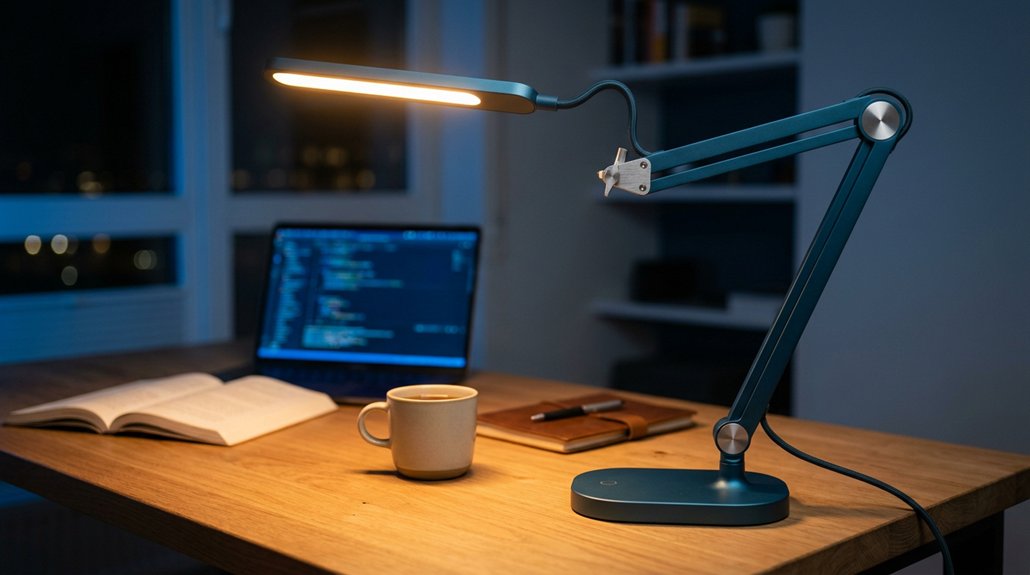
Looking for a blue light desk lamp that offers maximum eye comfort? Focus on those with a quality blue light filter or built-in blue light filters that block or absorb blue-violet wavelengths, reducing digital eye strain.
Prioritize desk lamps with blue light filters to minimize digital eye strain and enhance long-term eye comfort.
Adjustable brightness and color temperature settings are essential, allowing you to customize light exposure based on time of day and task, minimizing blue light emissions between 380 nm and 500 nm.
Flicker-free technology guarantees a steady light source, decreasing visual fatigue during long use.
Opt for lamps with circadian-friendly, warm light spectrum capabilities, especially for evening use, to support melatonin production and prevent sleep disruption.
Low EMF emissions also contribute to eye comfort, so choose a lamp designed with user well-being in mind for peak comfort and health. Additionally, selecting a lamp with blue light filtering features ensures optimal protection against harmful wavelengths.
How Proper Lighting Boosts Eye Health and Productivity
Proper lighting reduces eye strain and makes it easier to focus on tasks. This can be achieved with flicker-free, adjustable lamps that provide soft, even illumination. A high CRI value ensures true-to-life skin tones and background hues, further reducing visual fatigue. When your environment is well-lit with flicker-free, adjustable lamps, you can work longer without discomfort. This not only improves your eye health but also boosts your productivity throughout the day.
Enhances Visual Comfort
Blue light blocking lamps improve visual comfort by reducing glare and filtering out harsh blue wavelengths, making it easier to focus during long periods of screen use. These lamps help minimize contrast between your screen and surroundings, which reduces digital eye strain symptoms like dryness, itchiness, and discomfort.
By providing flicker-free, circadian-friendly illumination, blue light blocking lamps support natural eye function and boost productivity. Filtering out blue light helps maintain ideal color temperature and contrast, easing eye fatigue and headaches.
Proper ambient lighting from these lamps encourages healthier blinking habits, lowering the risk of blurred vision and screen-induced eye fatigue. Overall, they create a more comfortable environment, allowing you to work longer without sacrificing eye health or focus.
Increases Task Focus
When you use blue light blocking lamps, they create a focused and comfortable environment that naturally enhances your attention to tasks. By reducing screen glare and visual discomfort, these lamps help you stay concentrated longer. Proper lighting with minimal blue light exposure decreases eye strain symptoms like dryness and fatigue, allowing for extended productivity. They replicate natural light spectra without harmful blue wavelengths, supporting better visual acuity and reducing cognitive load. Additionally, adjusting brightness levels reduces eye muscle effort, improving concentration and lowering headaches. This focused lighting also complements strategies like the 20-20-20 rule. Here’s how blue light blocking lamps boost task focus:
| Benefit | Effect |
|---|---|
| Reduce eye strain | Longer focus sessions |
| Minimize screen glare | Clearer visibility |
| Support visual acuity | Less fatigue |
| Enhance concentration | Better productivity |
Setting up Your Desk to Minimize Eye Strain With Blue Light Protection
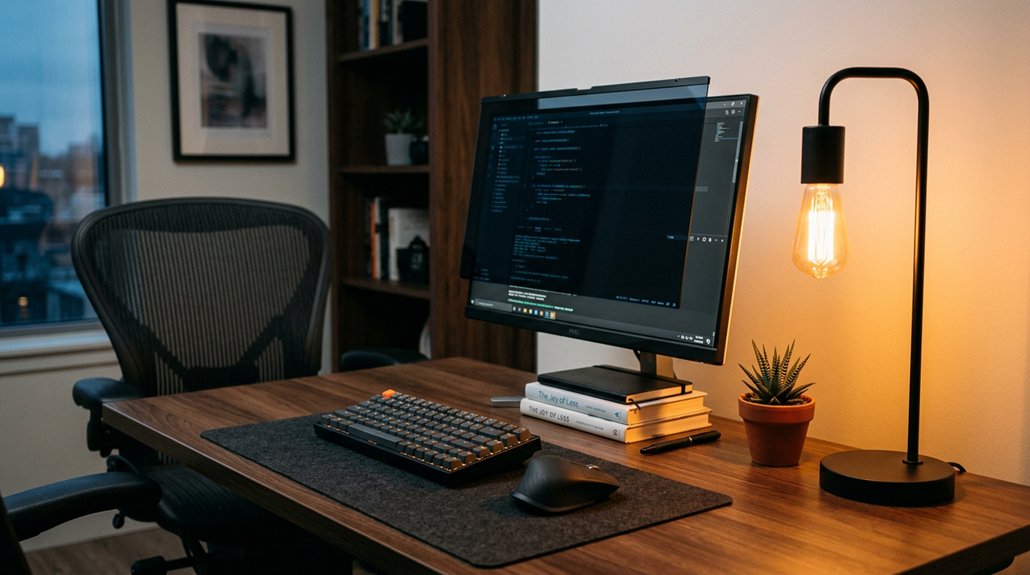
To minimize eye strain at your desk, it’s essential to position your blue light blocking lamps correctly and choose lighting that reduces glare and contrast on your screen. Use blue light blocking lamps that deliver flicker-free lighting, helping to reduce screen glare and prevent eye muscle strain during long periods of digital work.
Opt for circadian-friendly lamps with blue light-free or amber-toned bulbs, especially in the evening, to lower exposure to high-energy blue wavelengths and enhance eye comfort. Adjust the desk lamp brightness to maintain balanced lighting—not too harsh or dim—avoiding dryness and eye fatigue.
Combining these lamps with proper ergonomic screen placement, about 25 inches away and slightly downward, optimizes visual comfort and minimizes digital eye strain.
Tips for Using Your Blue Light Lamp Effectively to Reduce Eye Discomfort
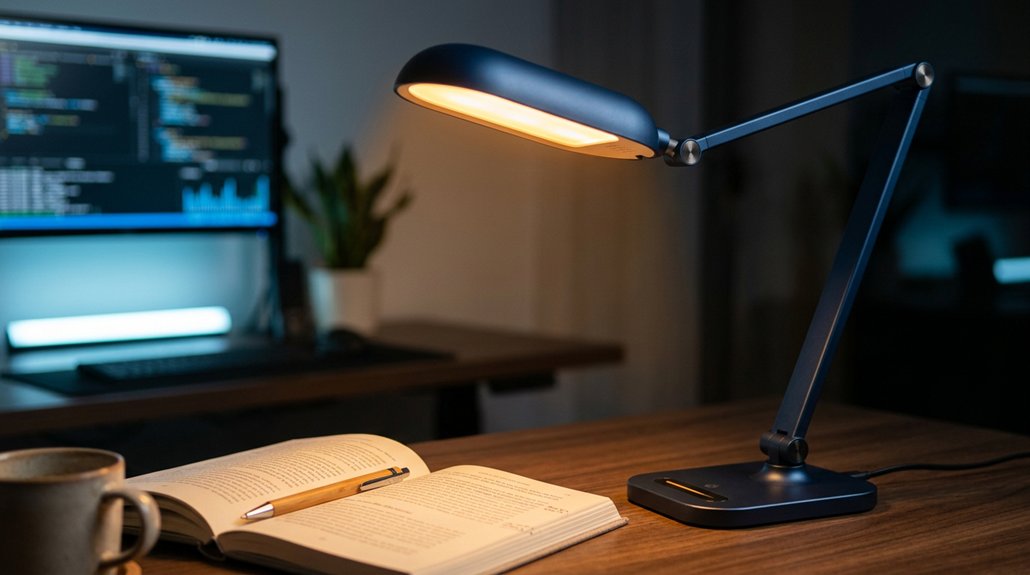
Using your blue light lamp effectively involves thoughtful placement and adjustable settings to minimize eye discomfort. Position it to provide ambient, flicker-free, and glare-free lighting that reduces contrast strain from screen brightness.
Position your blue light lamp to provide flicker-free, glare-free ambient lighting that eases eye strain from screens.
Choose lamps with circadian-friendly full spectrum or blue light-free amber bulbs to lessen eye fatigue and support natural melatonin production.
Adjust the brightness to match your room lighting, avoiding harsh contrasts that cause dryness and discomfort during long screen time. Use the lamp especially in the evening to reduce exposure to high-energy blue-violet light, which can disrupt sleep.
Combining this with Blue Light Blocking Glasses and following the 20-20-20 rule helps reduce symptoms like headaches, dryness, and blurred vision. Proper lamp use maximizes comfort and promotes healthier eye habits.
How Users Are Benefiting From Blue Light Blocking Lamps in Their Home Offices
Using blue light blocking lamps in your home office can greatly cut down your eye fatigue, letting you work longer without discomfort.
They also help you stay more focused by reducing glare and visual strain, making your tasks easier to handle.
Plus, by limiting blue light exposure at night, these lamps support better sleep, helping you feel more refreshed after work.
Reduced Eye Fatigue
Blue light blocking lamps greatly reduce eye fatigue for home office users by providing flicker-free, circadian-friendly lighting that minimizes exposure to high-energy blue wavelengths. This filtering of harmful blue light helps decrease symptoms of digital eye strain, such as dryness, itchiness, and discomfort.
Proper ambient lighting from these lamps also lessens contrast glare between the screen and surroundings, reducing eye muscle tension and headaches. Users notice longer periods of visual comfort and productivity because the lighting promotes natural eye relaxation.
- Minimize digital eye strain during prolonged screen use
- Decrease eye fatigue with flicker-free, safe light
- Reduce contrast glare for greater visual comfort
- Support natural eye relaxation for extended work periods
Improved Work Focus
When you incorporate blue light blocking lamps into your home office, you can enjoy improved focus and sustained attention during long work sessions. These lamps emit circadian-friendly, flicker-free, and ultra-low EMF light, which reduces glare and eye fatigue, helping you stay concentrated.
By filtering out high-energy visible (HEV) blue light, they minimize digital eye strain symptoms like dryness, headaches, and blurred vision, enhancing your ability to focus. Proper ambient lighting from blue light blocking lamps lowers the contrast between screen brightness and room lighting, making it easier for your eyes to adjust and stay comfortable.
Many users report an improved mood and fewer visual distractions, leading to higher productivity and better work focus during extended periods in their home offices.
Better Sleep Quality
Incorporating blue light blocking lamps into your home office can greatly enhance your sleep quality by reducing exposure to disruptive blue wavelengths after sunset. These lamps filter out high-energy blue light (380-500 nm), supporting better melatonin production and helping maintain your circadian rhythm.
When used in the evening, they minimize eye strain and reduce pre-sleep discomfort, making it easier to fall asleep and stay asleep. Many users notice fewer sleep interruptions and an overall improvement in rest quality.
Plus, features like flicker-free and glare reduction create a comfortable environment that promotes relaxation.
- Reduce evening blue light exposure for quicker sleep onset
- Maintain your circadian rhythm with warm, amber lighting
- Lower eye strain-related headaches and fatigue
- Support restorative sleep with comfortable, ambient lighting
Myths and Facts: Do Blue Light Lamps Protect Your Eyes Long-Term?
Many people wonder whether blue light lamps can offer long-term protection for their eyes. The truth is, while they reduce eye strain mainly by decreasing screen glare and improving ambient lighting, scientific evidence doesn’t confirm they prevent retinal damage or age-related macular degeneration. Using blue light lamps can ease visual discomfort and dryness, but they don’t guarantee long-term eye health benefits. To truly protect your eyes, focus on habits like taking screen breaks and using Blue Light Blocking Glasses. Here’s a quick comparison:
| Myths | Facts |
|---|---|
| They prevent retinal damage | No conclusive proof they do long-term eye protection |
| They eliminate eye diseases | Mainly reduce visual discomfort, not prevent eye disease |
| They stop aging of the eyes | No evidence for slowing long-term damage |
| They are enough alone | Good habits and nutrition are vital |
| They replace eye checkups | Regular eye exams are essential |
Integrating Blue Light Lamps Into an Ergonomic Home Workspace
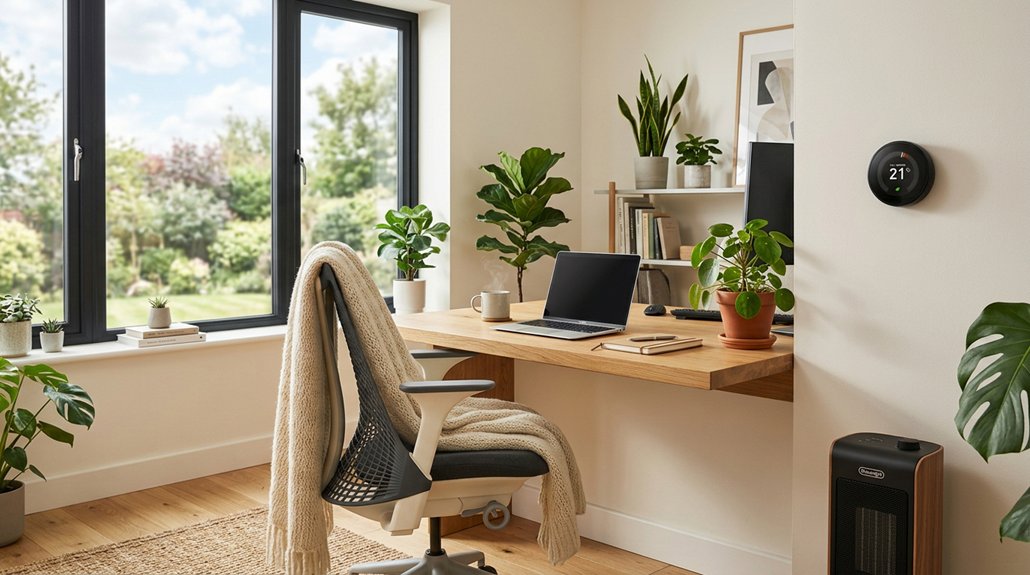
Creating an ergonomic home workspace involves more than just arranging your desk and chair; it also requires enhancing your lighting to reduce eye strain. Incorporate blue light blocking lamps like the NoBlue Amber Book Light or Sweet Dreams Sleep Light Bulb to reduce harsh artificial lighting and support your circadian rhythms.
Use lamps with adjustable brightness to balance ambient light, lowering screen glare and digital eye fatigue. Proper positioning of these lamps alongside your screen minimizes eye muscle strain and dryness by avoiding direct harsh illumination.
Combining these lamps with ergonomic desk setup guarantees sustained visual comfort during long work sessions. By integrating blue light blocking lamps effectively, you’ll improve your workspace environment and reduce eye strain naturally.
- Adjust brightness levels for ideal ambient light
- Position lamps to avoid glare on screens
- Use flicker-free, ultra low EMF lighting for comfort
- Balance artificial lighting with natural circadian cues
Final Tips: How to Keep Your Eyes Comfortable While Working Indoors
To keep your eyes comfortable while working indoors, focusing on proper lighting is key. Use blue light blocking lamps that emit flicker-free, circadian-friendly, and ultra-low EMF light to reduce glare and eye strain. Position these lamps with adjustable brightness to maintain proper ambient lighting, preventing high contrast between your screen and surroundings.
Incorporate full spectrum or blue light-free options to mimic natural daylight, supporting visual comfort and boosting mood. Regularly tweak the color temperature and brightness based on the time of day and task to minimize blue light exposure and eye fatigue.
Also, follow the 20-20-20 rule by taking frequent breaks to relax eye muscles, prevent dryness, and reduce discomfort, ensuring a more comfortable indoor working environment.
Frequently Asked Questions
Does Blocking Blue Light Help Eye Strain?
Blocking blue light helps your eye strain by reducing glare, eye fatigue, and dryness during long screen use. It improves contrast and comfort, but pairing it with breaks and good lighting gives the best relief from visual discomfort.
What Is the 20 Second Rule for Eye Strain?
The 20 Second Rule for eye strain tells you to look away from your screen every 20 minutes for 20 seconds, focusing on an object about 20 feet away. This relaxation helps prevent eye fatigue and dryness.
What Color Light Is Best for Eye Strain?
The best color light for eye strain is warm white or amber, around 2,700K to 3,000K. It reduces glare, flicker, and blue light exposure, helping you work comfortably longer without fatigue or discomfort.
Is It Healthy to Block Blue Light?
Blocking blue light is healthy because it reduces eye strain, prevents sleep disruption, and minimizes glare. You protect your eye health and support better sleep by using blue light blocking lamps, especially during evening screen time.
In Summary
Using blue light blocking lamps can really help reduce eye strain by minimizing glare and eye fatigue during screen time. While they’re not a magic fix for all eye discomfort, they’re a simple addition to your home workspace that can make a noticeable difference. Remember to take regular breaks, adjust your lighting, and keep your eyes hydrated. With these tips, you’ll stay more comfortable and protect your vision in long work or leisure sessions indoors.