Pressure relief footrest technology uses advanced materials like memory foam, gel, and air cushions to evenly distribute pressure across your feet and legs. These features help improve circulation, reduce discomfort, and prevent issues like pressure ulcers or blood pooling during long sitting periods. Many models also include adjustable and dynamic functions, such as rocking or tilting, to promote movement and better posture. Keep exploring to discover how these innovations can support your comfort and health every day.
How Do Pressure Relief Footrests Help Prevent Pressure Injuries?
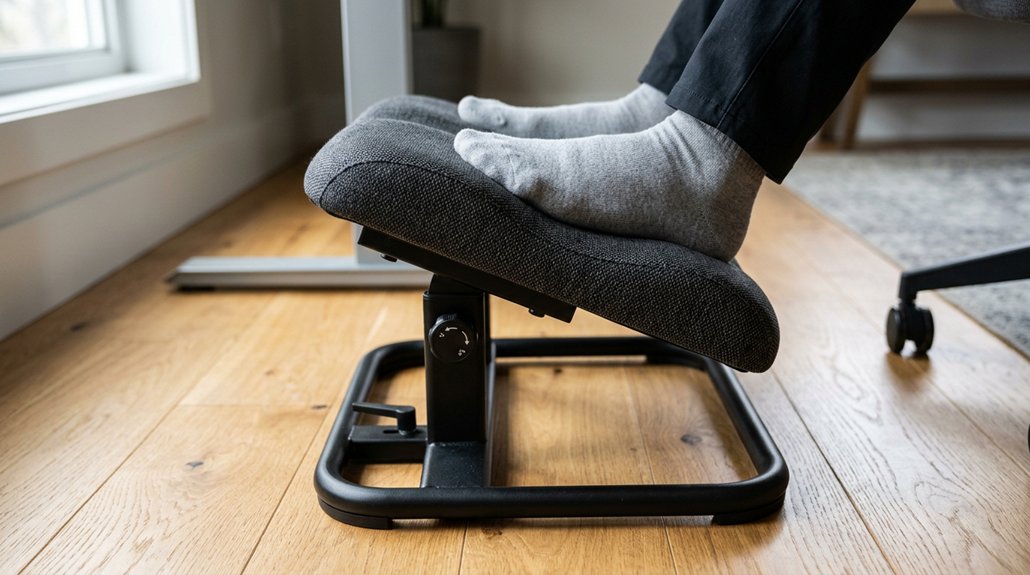
How do pressure relief footrests actually prevent pressure injuries? When you use a pressure relief footrest, it helps distribute pressure evenly across your feet, reducing pressure points that could lead to skin breakdown or ulcers. Additionally, some models incorporate features like massage rollers or textured surfaces that stimulate circulation and pressure distribution, further aiding in injury prevention. By supporting proper foot and leg positioning, it improves circulation, ensuring oxygen and nutrients reach vulnerable skin tissues. Some footrests feature pressure-relieving materials like memory foam or gel cushions, which target specific areas like heels and toes to reduce localized pressure. Dynamic options, like foot rockers, encourage movement and postural adjustments, decreasing the time pressure remains over bony prominences. Overall, a well-designed pressure relief footrest minimizes nerve compression, promotes blood flow, and reduces the risk of pressure injuries, especially for seated individuals with limited mobility.
Why Use a Pressure Relief Footrest? The Benefits You Should Know
Ever wondered why pressure relief footrests are a smart addition to your seating setup? They help redistribute pressure from bony prominences like heels and ankles, reducing the risk of pressure ulcers.
Pressure relief footrests help prevent pressure ulcers by redistributing weight from heels and ankles.
Using pressure relief footrests encourages active sitting, which keeps you engaged and prevents stiffness. Imagine feeling:
- Your feet gently rocking on the footrest, stimulating circulation
- Your posture improving as your lower back feels supported
- Your legs experiencing better blood flow
- Your feet evenly distributing pressure, easing foot discomfort
These benefits work together to reduce the risk of conditions like plantar fasciitis and DVT. Overall, pressure relief footrests promote healthier sitting habits by encouraging movement, improving posture, and alleviating discomfort—all essential for long periods of sedentary activity. Additionally, incorporating textured massage surfaces and non-slip features enhances stability and comfort during prolonged use, further supporting ergonomic benefits in sitting.
What Features Make a Comfortable and Effective Pressure Relief Footrest?
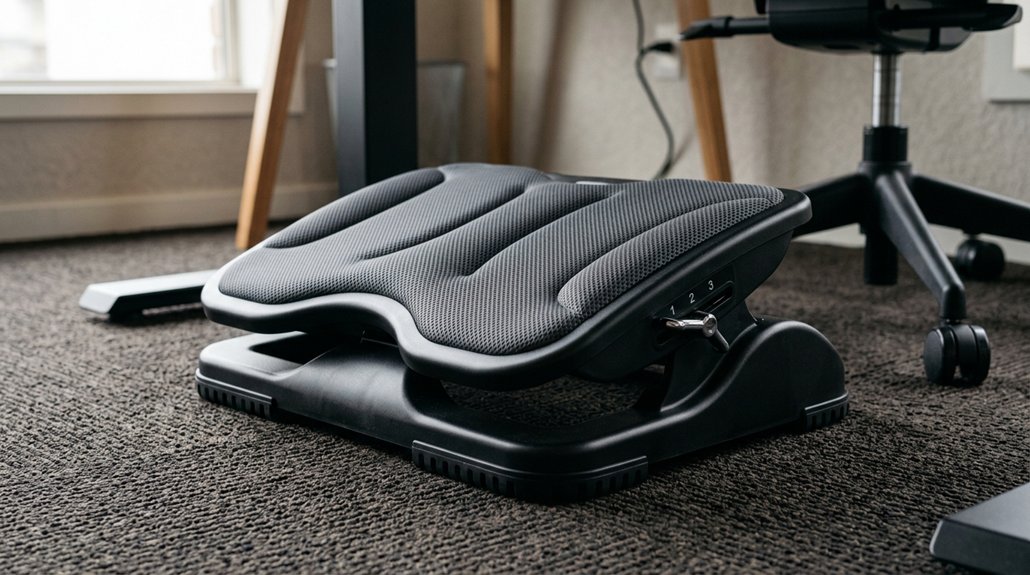
What makes a pressure relief footrest truly comfortable and effective? It’s all about features that support healthy blood flow and reduce pressure on your foot. Materials like memory foam or Flexigel cushion mold to your foot’s shape, evenly distributing pressure and lowering the risk of pressure injuries. Adjustable height and tilt, including rocking mechanisms, encourage dynamic sitting and frequent postural changes, decreasing stiffness and nerve compression. A non-slip surface, such as CQ-1000, keeps your foot stable and prevents slouching. Textured surfaces with massaging beads stimulate circulation for added comfort. Removable, washable covers guarantee hygiene, especially with prolonged use. Proper pressure distribution is crucial for comfort and prevention of fatigue. The table below highlights key features to look for:
| Feature | Benefit | Importance |
|---|---|---|
| Memory Foam/Flexigel | Mold to foot, reduce pressure | Prevents pressure injuries |
| Adjustable Height/Tilt | Promotes movement, foot support | Reduces discomfort and injuries |
| Non-slip Surface | Stability, proper foot positioning | Prevents slouching, injuries |
| Textured Surface | Stimulates circulation, comfort | Less foot pain |
| Easy-to-clean Cover | Hygiene, maintenance | Prevents skin issues |
What Materials Are Used in Pressure Relief Footrests? Foam, Gel, and Air Explained
Have you ever wondered what makes pressure relief footrests effective at reducing pressure and enhancing comfort? It’s the materials used, like foam, gel, and air.
Foam, especially memory foam, molds to your feet, spreading pressure evenly, though it’s best for weights under 120 kg. Gel-based footrests, like those using Flexigel’s dual-layer honeycomb gel, improve pressure distribution and boost blood flow. Air cell technology, exemplified by ROHO cushions, offers adjustable support by inflating or deflating, providing personalized relief.
Additionally, some cushions combine foam and gel, such as Systam foam/gel pads, supporting heavier loads up to 270 kg while maintaining durability. These materials are often integrated into footrest surfaces with non-slip bases that enhance breathability, safety, and comfort.
How Does Pressure Redistribution Improve Long-Term Comfort and Health?
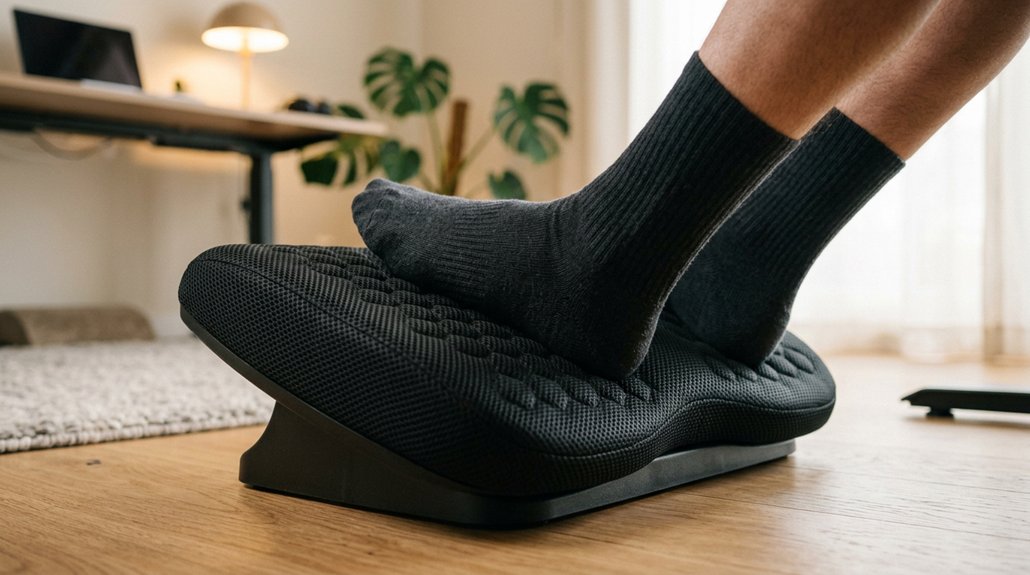
Pressure redistribution helps keep your blood flowing smoothly by reducing pressure points that can block circulation. When your body weight is evenly spread, you’re less likely to experience discomfort or develop pressure ulcers over time. Using ergonomic cushions with contoured support can further enhance this pressure relief. This balance supports your overall health, making long periods of sitting more comfortable and safer.
Enhanced Blood Flow
Ever wonder how redistributing pressure from your feet can benefit your long-term health? A pressure relief footrest improves blood flow by preventing localized compression of your feet’s bony prominences.
This is achieved through pressure redistribution, which allows blood to circulate freely. As a result, you experience:
- Increased oxygen and nutrients reaching your skin and tissues
- Reduced risk of pressure ulcers and discomfort during long sitting periods
- Dynamic footrests, like foot rockers, that encourage active movement, stimulating circulation
- Prevention of blood pooling, swelling, and venous issues in your lower extremities
- The use of rocking mechanisms that promote natural, smooth arcs of movement to enhance circulation and reduce stiffness
Reduced Pressure Points
Redistributing pressure effectively reduces the formation of concentrated stress points on your feet and lower legs. Pressure relief footrest technology uses materials like memory foam and gel to spread pressure evenly across your feet, preventing localized skin stress and ulcers. This even distribution improves blood flow and reduces the risk of tissue ischemia, which leads to pressure injuries. Dynamic footrests, such as foot rockers, promote active sitting and natural postural adjustments, further lowering pressure. The use of stable, non-slip fabrics helps prevent shear forces that can compromise skin health over long periods. Incorporating foam materials known for their pressure-absorbing properties enhances overall comfort and protection.
How Do Dynamic Footrests Promote Better Circulation and Posture?
Have you ever noticed how staying still while sitting can leave your legs stiff and your back sore? Dynamic footrests, like foot rockers, encourage active sitting by promoting frequent postural adjustments. Imagine:
Staying still while sitting causes discomfort; dynamic footrests promote movement for better posture and comfort.
- Your feet gently rocking back and forth, keeping muscles engaged.
- Movement stimulating blood flow, which helps improve circulation and reduces swelling.
- Proper foot positioning supporting spinal alignment, easing lower back pain.
- Continuous motion preventing stiffness in legs and feet, cutting down risks like DVT and varicose veins.
- Incorporating adjustable thermostats can help manage comfort levels, ensuring a more personalized experience.
These features work together to support natural movement, enhancing overall seated posture and relaxation.
How to Choose the Best Pressure Relief Footrest for Your Workspace
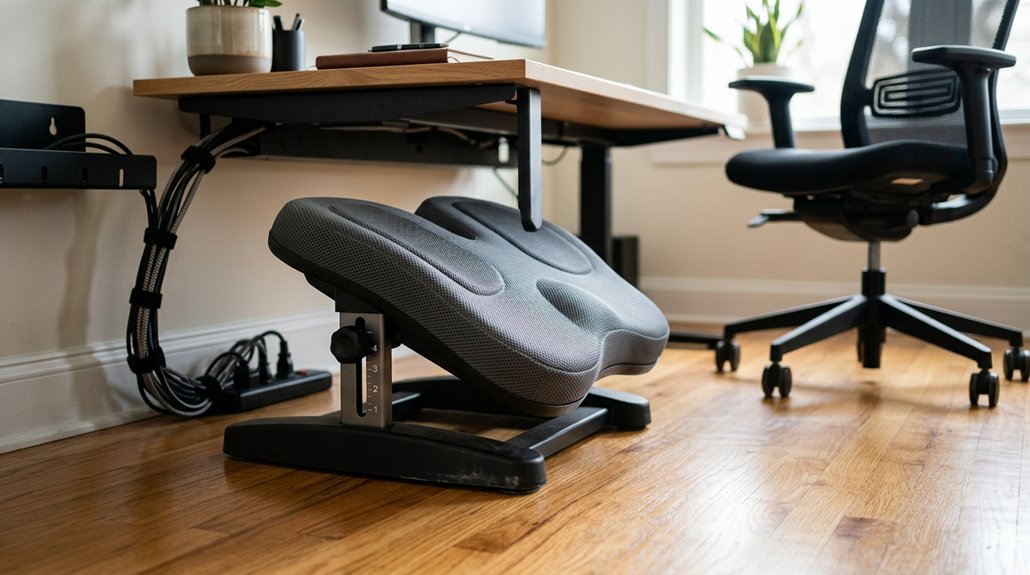
When choosing a pressure relief footrest, it’s essential to prioritize adjustable height and tilt features to support proper posture and reduce pressure points. Consider the surface and cushioning materials to guarantee stability, comfort, and easy maintenance throughout your workday. Additionally, look for models with durable foam cushions made from high-density foam or rebound sponge to ensure long-lasting comfort and support. By selecting the right combination, you’ll enhance comfort, promote better circulation, and minimize long-term health risks.
Adjustable Features Importance
Choosing a pressure relief footrest with adjustable features is essential to guarantee it fits your unique workspace and ergonomic needs.
With adjustable height, you can align your thighs and feet properly, preventing pressure on the backs of your legs and boosting circulation. Multi-position adjustability allows you to customize tilt and rocking angles, encouraging dynamic sitting that reduces stiffness and nerve compression.
Think of these features like:
- Adjustable height: Raising or lowering the footrest for perfect leg support.
- Tilt capability: Inclining the footrest to promote better posture.
- Rocking function: Allowing gentle movement to prevent stiffness.
- Anti-slip design: Keeping the footrest stable during adjustments and use.
Investing in these adjustable features elevates your comfort and supports proper pressure relief throughout your workday, especially when considering anti-fatigue properties that help minimize discomfort during prolonged standing or sitting.
Surface and Material Considerations
Selecting the right surface and material for your pressure relief footrest is essential for ensuring comfort, durability, and effective pressure management. Quality materials like memory foam and flexigel cushions mold to your feet, dispersing pressure evenly and boosting blood flow. Breathable fabrics such as Carrflex barrier textiles and Fusion barrier fabrics prevent overheating and resist wear. Non-slip technologies like CQ-1000 keep your footrest stable, reducing shear and strain on soft tissues. The balance of firmness and cushioning provided by high-density foam or gel combinations supports various weights—up to 270kg—while promoting circulation. Removable, washable covers also maintain hygiene. Here’s a quick guide:
| Material Type | Benefit | Use Case |
|---|---|---|
| Memory Foam | Molds to shape, enhances blood flow | Comfort-focused settings |
| Honeycomb Gel | Distributes pressure evenly | Intensive pressure relief |
| Breathable Fabric | Keeps surfaces cool, durable | Long-term office use |
What Are the Different Types of Pressure Relief Footrests? Rockers, Adjustable, and Static Models
Are you wondering how different pressure relief footrests can help improve comfort during long hours at a desk? There are three main types to take into account.
First, static models provide firm support, evenly distributing pressure to reduce discomfort. Second, adjustable footrests let you customize height and tilt, enhancing spinal alignment and improving circulation. Third, rocker footrests feature smooth rocking motions, promoting active sitting, increasing blood flow, and reducing stiffness.
To visualize:
- You sit with your feet comfortably supported and supported, not pressed against hard surfaces.
- You adjust the height and tilt of your adjustable footrest for peak posture.
- You gently rock back and forth on a rocker footrest, feeling movement in your feet and legs.
- You experience better circulation and less fatigue across long work sessions.
These pressure relief footrests, whether static, adjustable, or rocker, enhance comfort and reduce pressure buildup effectively.
How Can You Integrate a Pressure Relief Footrest Into Your Home Office?
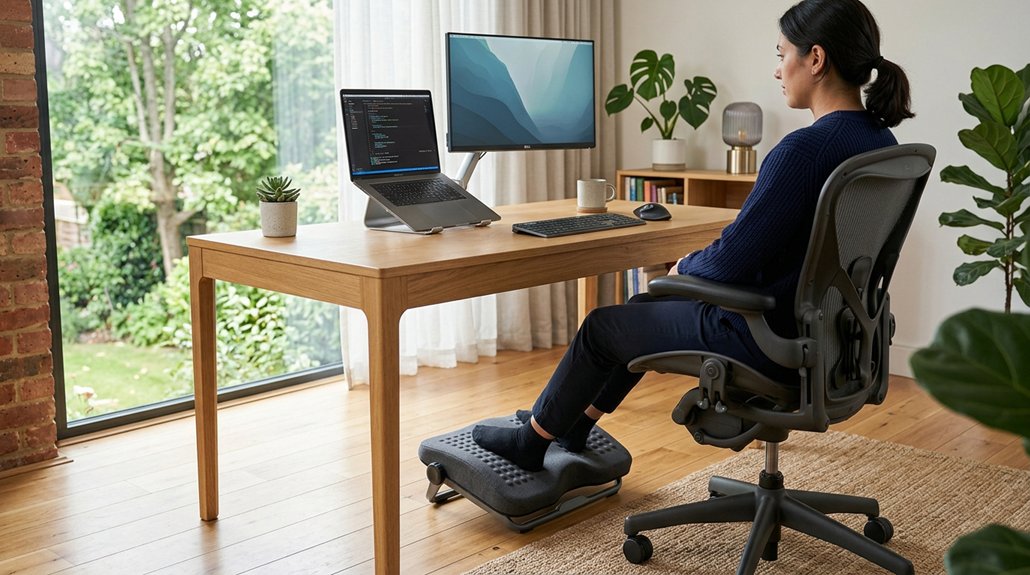
To integrate a pressure relief footrest into your home office, start by selecting a design that encourages active sitting, like one with rocking or tilting features.
Make sure the height and angle are adjustable to support proper posture and comfort during long work sessions. Position the footrest to promote natural foot placement and stability, ensuring you stay comfortable and avoid circulation issues.
Choosing the Right Design
Integrating a pressure relief footrest into your home office requires careful consideration of its design features to maximize comfort and support. First, select a footrest with adjustable height and tilt to guarantee proper foot placement that promotes spinal alignment and reduces pressure on your lower back.
Second, opt for pressure-dispersing materials like memory foam or flexigel cushions to evenly distribute foot pressure and boost circulation during long work sessions.
Third, consider dynamic footrests such as foot rockers that encourage active sitting and regular postural shifts, reducing stiffness.
Finally, check for a non-slip surface or CQ-1000 Non-Slip technology to keep the footrest stable and prevent slouching. Ensuring these features will enhance pressure relief and overall comfort.
Incorporating Active Movement
Incorporating a pressure relief footrest with active movement into your home office encourages natural postural adjustments that boost circulation and reduce lower limb pressure. Devices like foot rockers promote dynamic sitting, allowing you to rock your feet and ankles, which improves movement and comfort during long sessions.
Adjustable pressure relief footrests can be customized to keep your thighs parallel to the floor, reducing pressure on bony areas like the ischial tuberosity. Non-slip surfaces guarantee stability, preventing slouching and supporting ergonomic posture.
Common Issues With Pressure Relief Footrests and How to Fix Them
Many common issues with pressure relief footrests stem from improper adjustments or unsuitable designs, which can lead to discomfort and poor posture.
First, if your seat height isn’t correct, your pressure on the body increases, especially on the backs of your legs. Fix this by adjusting the footrest height so your feet are fully supported without dangling.
Second, footrests with insufficient surface area cause uneven pressure distribution, leading to discomfort. Opt for textured or cushioned surfaces for even relief.
Third, footrests without non-slip surfaces slide with movement, reducing stability—choose models with rubber grips or CQ-1000 Non-Slip technology.
Fourth, non-adjustable height or tilt causes misalignment and pressure on the tailbone. Use adjustable models to promote proper ergonomic positioning and prevent discomfort.
What’s Next? Emerging Trends in Pressure Relief Footrest Design and Innovation
What’s next for pressure relief footrest design looks promising, as innovative materials and features aim to enhance comfort and support. Emerging pressure redistribution technologies incorporate dynamic materials like flexigel and memory foam, improving pressure distribution and promoting better blood flow.
Adjustable tilt, rocking mechanisms, and height customization encourage active sitting and help reduce nerve compression and lower limb fatigue. New barrier fabric technologies such as Fusion and Carrflex offer improved breathability and chemical resistance, supporting pressure care on footrest surfaces.
Additionally, ergonomic contours and customizable shapes work together to prevent pressure ulcers, especially for those with limited mobility. Smart footrest prototypes are being developed to monitor pressure points in real time, enabling personalized adjustments that enhance comfort and prevent tissue damage during prolonged sitting.
Frequently Asked Questions
Does Footrest Help With Varicose Veins?
Yes, a footrest helps with varicose veins by encouraging active movement, reducing venous pressure, and improving circulation. Elevating your feet and using dynamic footrests can prevent blood pooling and alleviate symptoms effectively.
Do Pressure Relief Cushions Really Relieve Pressure?
Yes, pressure relief cushions really relieve pressure by redistributing your weight away from vulnerable areas like the sacrum and ischial tuberosities. They optimize blood flow, reduce skin damage risk, and improve comfort, especially when properly fitted and combined with repositioning.
Are Foot Rests Good for You?
Foot rests are good for you because they support proper posture, reduce back pain, improve circulation, and promote movement. They help prevent discomfort and joint issues, making your seated experience healthier, more comfortable, and more productive overall.
Do Footrests Help With Back Pain?
Yes, footrests help with back pain by supporting proper spinal alignment, encouraging better posture, reducing muscle tension, and improving circulation. They distribute body weight evenly, lower strain on your lower back, and promote active sitting, easing discomfort.
In Summary
Incorporating a pressure relief footrest into your space can greatly boost comfort and health by preventing pressure injuries and promoting proper circulation. Choose the right features, materials, and model to suit your needs, and stay informed about new innovations. With the right footrest, you’ll enjoy long-term comfort and support, whether at home or work. Keep exploring options to find the perfect fit that keeps you comfortable and healthy every day.