Your footrest matters for spinal alignment because it helps stabilize your pelvis and maintain the natural curve of your spine. When your feet are unsupported, your pelvis tilts backward, causing misalignment, muscle tension, and back pain. Using a proper footrest distributes pressure evenly, reduces fatigue, and encourages micro-movements that prevent stiffness. Keep going to discover how choosing and setting up the right footrest can improve your posture and comfort even more.
Why Unsupported Feet Cause Back Pain and Postural Problems
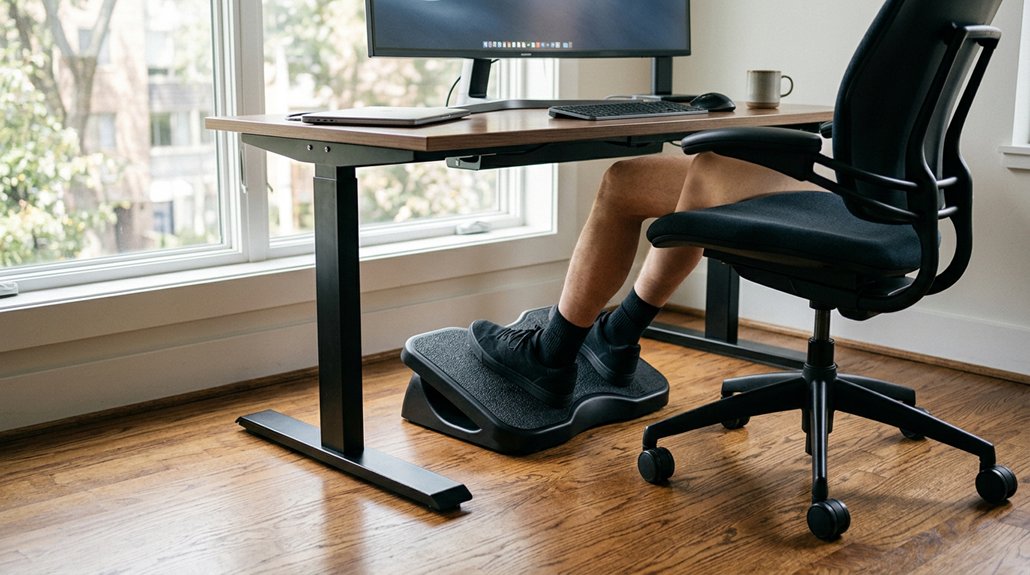
Have you ever wondered why your back aches after sitting for long periods? Unsupported feet can cause pelvic tilt and destabilize your lumbar region, leading to spinal misalignment and lower back pain.
When your feet don’t rest properly, your pelvis shifts backward, disrupting your natural spinal curvature. This misalignment increases muscle tension and causes posture instability.
Without proper footrest supports, pressure on your thighs rises, restricting circulation and making your legs feel heavy. Reduced ankle and calf movement slows blood flow, contributing to swelling and discomfort.
Over time, unsupported foot positioning solidifies poor posture, creating a cycle of muscle strain and persistent back pain. Proper foot placement helps maintain the balance of your pelvis and supports a healthy spinal alignment, which is essential for preventing long-term issues. Incorporating a ergonomic footrest can significantly improve your seated posture and reduce these problems.
How Using a Footrest Keeps Your Spine Aligned While You Sit
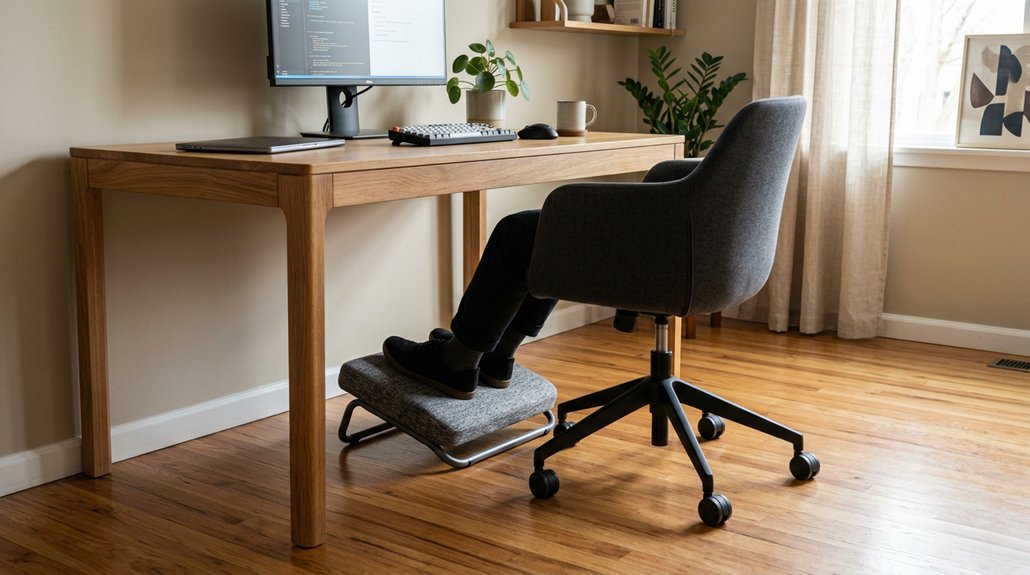
Using a footrest actively supports your feet, which helps stabilize your pelvis and preserve the natural curve of your spine. When you support your feet properly, it prevents pelvic tilt and lumbar instability by evenly distributing your weight. This promotes proper posture and keeps your spine aligned during sitting. Additionally, a footrest reduces pressure on your thighs, helping to improve blood flow and minimize discomfort. Dynamic footrests encourage micro-movements, supporting spinal freedom and preventing stiffness. The table below summarizes how a footrest helps:
| Benefit | Effect |
|---|---|
| Keeps spine aligned | Maintains natural curve and reduces muscle tension |
| Supports proper posture | Lowers pain and strain on lower back |
| Enhances blood flow | Promotes healthier circulation and comfort |
A well-designed footrest with adjustable rocking mechanisms can further enhance comfort by accommodating various movement preferences and encouraging active leg engagement.
Signs You Need a Footrest to Prevent Back and Hip Pain
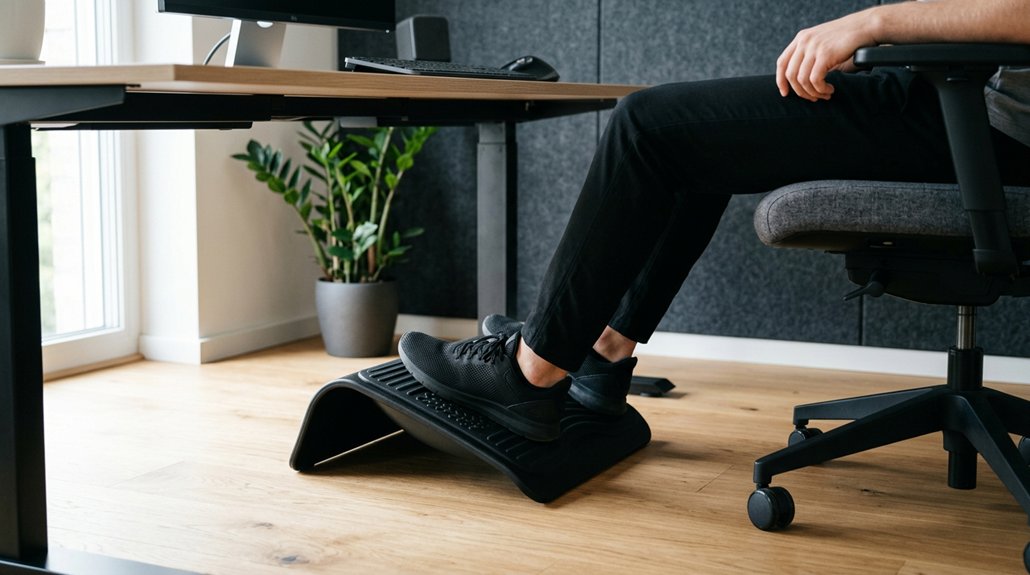
Noticing persistent back or hip pain after long periods of sitting is a clear sign you might need a footrest. Footrests allow you to keep your feet supported, helping prevent pelvic tilt and poor posture.
Persistent back or hip pain after sitting signals the need for a footrest to support proper posture.
Without proper foot support, your pelvis may become unstable, leading to spinal misalignment and increased muscle fatigue. You might also feel leg heaviness, numbness, or pins and needles, indicating restricted circulation from unsupported feet.
If you experience lower pain after sitting or notice stiffness and discomfort, a footrest can support natural pelvic positioning and reduce pain. It also promotes better circulation, lowering leg fatigue during prolonged sitting.
Using a footrest guarantees your hips stay aligned, minimizing muscle strain and helping you sit more comfortably for extended periods. Adjustable height and tilt features in footrests further enhance ergonomic benefits by customizing support to your body’s needs.
How to Choose the Best Footrest for Better Posture and Comfort
Choosing the right footrest is essential for maintaining proper posture and comfort during long hours of sitting. To do this effectively, focus on these key features:
- Adjustable height and angle — guarantee your knees form a near 90-degree angle, promoting neutral spine alignment and reducing lower pain.
- Dynamic or rocking design — encourage micro-movements that improve circulation and help prevent stiffness.
- Stable, ergonomic base — select a non-slip, sloped surface that distributes weight evenly, stabilizes your pelvis, and supports overall comfort.
Prioritize durable materials that retain shape, like high-resilience foam or quality plastics, to provide consistent support. Additionally, choosing a footrest with non-slip textures and materials helps prevent slipping during use, enhancing safety and stability. The best footrest fully supports your feet without dangling, optimizing spinal alignment and minimizing discomfort.
How a Dynamic Footrest Promotes Movement and Eases Muscle Tension
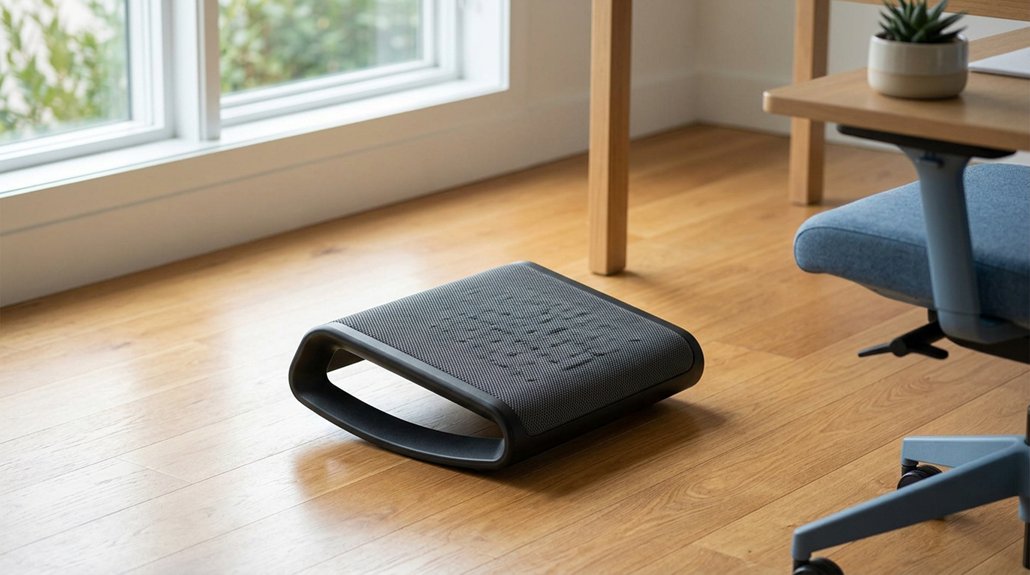
A dynamic footrest actively encourages micro-movements that keep your muscles engaged and prevent stiffness during long periods of sitting. Using a dynamic footrest promotes active sitting, which helps ease muscle tension and improves spinal alignment.
The rocking motion stimulates blood circulation in your lower limbs, reducing fatigue and discomfort from static postures. By enabling consistent postural adjustments, it lessens lower back strain and distributes pressure evenly under your feet, minimizing foot pain.
Additionally, activating your calf muscles enhances vascular health, lowering the risk of swelling and deep vein thrombosis. This movement not only supports comfort throughout your workday but also prevents muscle tightness that can lead to postural imbalances. Overall, a dynamic footrest keeps you feeling secure, comfortable, and less fatigued. Ergonomic features
How to Set Up Your Footrest for Maximum Postural and Circulatory Benefits
Setting up your footrest correctly guarantees you get the maximum benefits for posture and circulation.
First, adjust the footrest height so your knees form about a 90-degree angle, ensuring your feet are fully supported. This helps stabilize your pelvis and maintains neutral spinal alignment.
Adjust the footrest height so your knees are at a 90-degree angle for proper support and spinal alignment.
Second, make sure the surface is stable and non-slip to prevent shifting, which can disrupt seated posture and reduce circulation benefits.
Third, incorporate slight incline or rocking movements to encourage micro-movements, promoting better blood flow and reducing muscle stiffness.
Additionally, position the footrest to evenly distribute pressure under your legs and feet, helping you maintain comfort and reduce discomfort during prolonged sitting.
Remember to periodically adjust the height and angle for continuous support of natural posture and circulation. Utilizing a supportive design ensures your footrest maintains proper alignment and enhances overall sitting ergonomics.
Frequently Asked Questions
What Is the Best Way to Realign Your Spine?
You should maintain neutral spinal curvature by supporting your pelvis and lower back, use a properly adjusted footrest for foot and knee support, and keep moving your feet slightly for micro-adjustments, ensuring balanced posture and reducing strain.
Can a Footrest Help With Back Problems?
Yes, a footrest can help with back problems by promoting neutral spine alignment, reducing pressure on your lower back, and encouraging micro-movements that improve circulation and prevent muscle fatigue, ultimately easing pain and discomfort during long sitting periods.
What Is the 90-90-90 Rule in Ergonomics?
The 90-90-90 rule in ergonomics means keeping your knees, hips, and ankles roughly at 90-degree angles when sitting. It helps you maintain proper posture, reduces strain, and promotes comfortable, healthy sitting during long periods.
How Long Does It Take to Realign Your Spine?
It takes about 4 to 6 weeks of consistent ergonomic adjustments and footrest use to see noticeable spinal realignment. Long-term improvements, like reduced discomfort, usually occur after 3 to 6 months with ongoing posture awareness and supportive habits.
In Summary
Using a footrest isn’t just about comfort—it’s key to maintaining proper spinal alignment. When your feet are supported, you reduce strain on your back and hips, preventing pain and postural issues. Choose the right footrest, set it up correctly, and incorporate movement for even better results. Taking these steps helps you sit healthier, feel better, and avoid long-term discomfort. Prioritize your posture; your back will thank you for it.