To relieve carpal tunnel symptoms, incorporate these seven wrist rest exercises: start with gentle wrist rotations in all directions to boost blood flow, then perform wrist flexor and extensor stretches with supports to gently lengthen tendons. Add tendon glides and grip exercises using a soft ball to strengthen muscles. Make sure your workspace is ergonomically set up to avoid strain. Keep practicing these exercises safely, and you’ll discover how consistent efforts can improve your comfort and wrist health.
What Are the Best Wrist Exercises for Carpal Tunnel Relief?
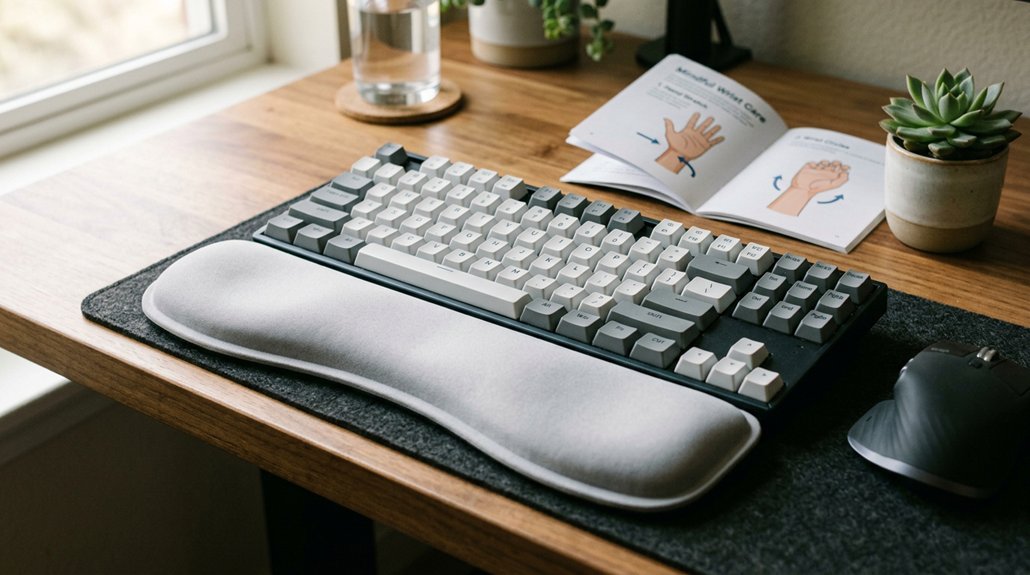
What’re the best wrist exercises to relieve carpal tunnel symptoms? To help reduce pressure on the median nerve and ease discomfort, try wrist rotations by moving your hand up, down, left, and right, completing four sets.
Incorporate stretches like the prayer stretch, pressing your palms together and lowering them from chin to waist to stretch your wrist flexor and extensor muscles for 15–30 seconds, repeat 2–4 times. Bending your wrist backward or forward with the help of your opposite hand targets these muscles and relieves nerve compression.
Additionally, tendon glides promoting mobility and hand grip exercises with a soft ball strengthen your hand and wrist muscles. These targeted movements improve hand and wrist flexibility, helping diminish carpal tunnel symptoms effectively.
A consideration to enhance comfort is using ergonomic pen grips, which support proper hand orientation and distribute pressure evenly during extended periods of activity.
How to Perform Effective Wrist Rotations and Stretches Safely
Performing wrist rotations and stretches correctly is essential to prevent further strain or injury while relieving carpal tunnel symptoms. Start with gentle wrist rotations, moving your hand smoothly up, down, left, and right. Repeat this motion up to four times per session to help reduce pressure on the median nerve.
Gentle wrist rotations and stretches help relieve carpal tunnel symptoms and prevent further injury.
For wrist stretches, extend your arm with the palm up and gently bend the wrist backward with the opposite hand, holding for 30 seconds, then repeat 2 to 4 times.
For the wrist extensor stretch, extend your arm with the palm down and bend the wrist forward, supporting with the other hand, also holding for 30 seconds.
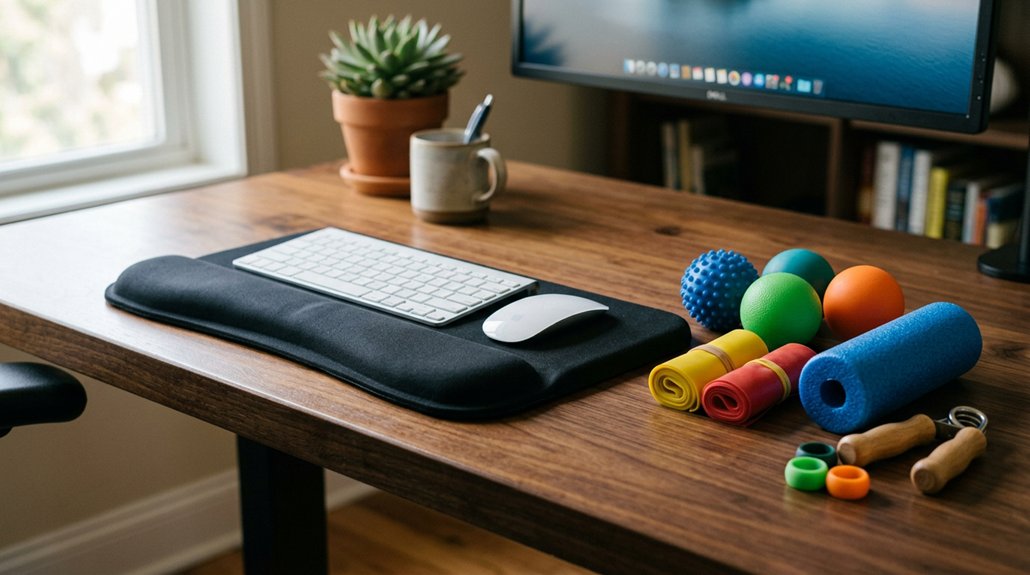
Always stop if you feel sharp pain or discomfort to avoid aggravating carpal tunnel syndrome. Incorporate these exercises regularly for flexibility and nerve support. Proper support ergonomic wrist rests can also help maintain correct wrist positioning during long periods of activity.
Wrist Resistance and Grip Exercises to Reduce Tingling
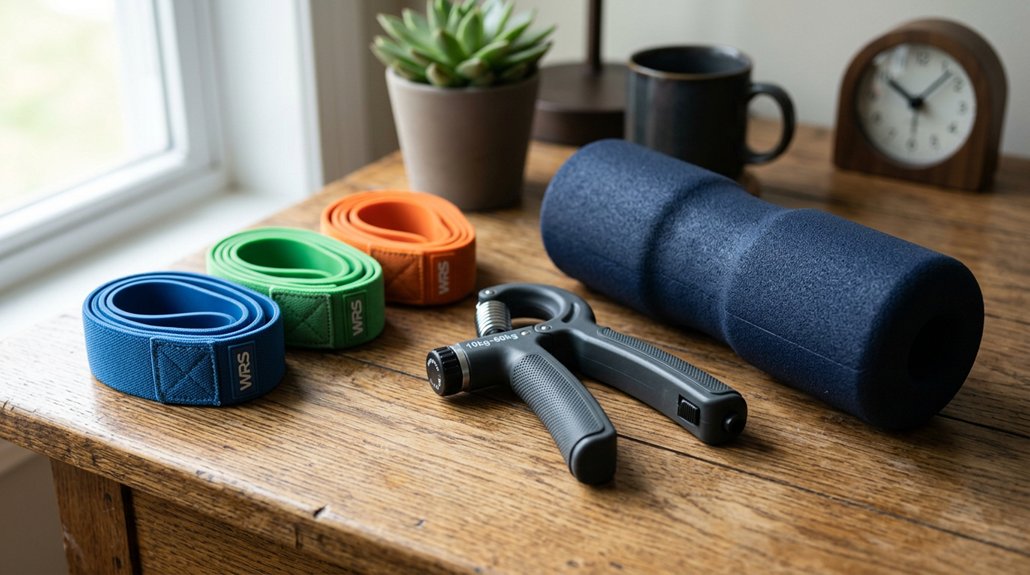
Many people find that incorporating wrist resistance and grip exercises can effectively reduce tingling sensations and improve overall wrist strength.
Wrist resistance exercises strengthen the forearm muscles that support your wrist, helping to alleviate pressure on the median nerve associated with carpal tunnel syndrome. For example, using your opposite hand to resist wrist movements or performing wrist curls with a light weight—like canned goods—can build wrist flexor strength. Proper support through ergonomic designs, such as contoured wrist rests, can also enhance comfort during these exercises.
Grip strengthening activities, such as squeezing a soft rubber ball or rolled-up sock, also help reduce wrist stress and numbness. Repeating these exercises at least twice daily can improve hand function and decrease tingling. However, if you experience sharp pain, stop immediately and consult a healthcare professional to prevent worsening symptoms.
Setting Up an Ergonomic Home Office for Wrist Health
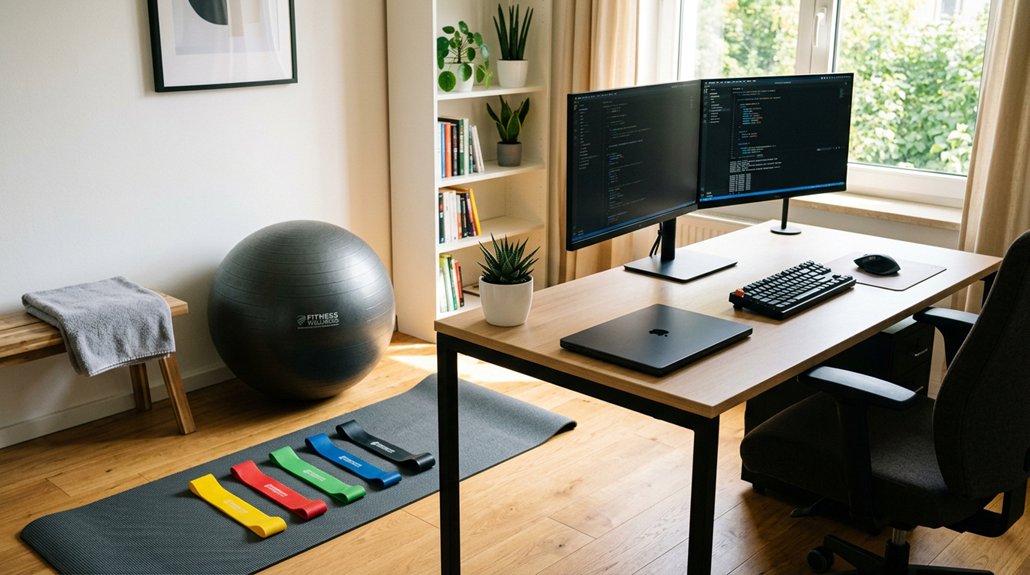
Setting up your home office correctly can make a big difference in wrist comfort. Make sure your desk and chair height support neutral wrist positions, and keep your keyboard and mouse at elbow level.
Proper monitor placement also helps maintain good posture and reduces strain.
Proper Desk Height
Maintaining the right desk height is essential for protecting your wrists from strain and discomfort. Aim to set your desk so your forearms are parallel to the floor, with elbows at your side and forming a 90-degree angle. This position supports a neutral wrist alignment and minimizes wrist strain. Using an adjustable desk or keyboard tray helps achieve ergonomic alignment tailored to you. Ensuring desk thickness compatibility with your mounting system is also crucial for a secure and ergonomic setup.
Keyboard and Mouse Position
To promote wrist health and prevent discomfort, position your keyboard so your wrists stay straight and at or just below elbow level. This alignment reduces pressure on the median nerve within the carpal tunnel, lowering the risk of strain.
Keep your mouse close to the keyboard and at the same height to avoid excessive wrist extension or deviation, which can increase stress on your wrist. Consider an ergonomic keyboard with a negative tilt or split design; these features help reduce wrist bending and improve comfort.
Support your forearms with armrests or a desk, keeping them parallel to the floor for a neutral wrist posture. Remember to take frequent breaks to stretch and reposition your hands, helping to prevent prolonged static wrist positions that contribute to carpal tunnel symptoms. Incorporating memory foam wrist supports can provide additional pressure relief during long typing sessions.
Monitor Placement Tips
Positioning your monitor properly can greatly improve your wrist health and overall comfort while working. Keep the top of your screen at or slightly below eye level to maintain a neutral head and wrist position, which helps prevent strain and pain.
Place the monitor about an arm’s length away (20-30 inches) to avoid leaning forward, which can increase tension in your arms and wrists. Make sure the monitor is directly in front of you to reduce twisting of your wrists and neck, promoting an ergonomic posture.
Use an adjustable monitor stand or riser to customize height and angle, supporting relaxed wrist positions during typing and mouse use. Proper monitor placement can help prevent carpal tunnel syndrome and reduce wrist pain caused by poor ergonomics. Ensuring your riser has ergonomic features like adjustable height and tilt can further optimize wrist health during long work sessions.
Signs You Should See a Doctor About Your Carpal Tunnel Symptoms
Wondering when your carpal tunnel symptoms warrant a trip to the doctor? If pain or numbness in your thumb, index, middle, and ring fingers worsens or persists despite wrist rest exercises, it’s time to call your doctor.
Seek medical advice if you notice loss of coordination that interferes with daily tasks like gripping objects or buttoning clothes. If you experience pain radiating up your forearm or shoulder, it could indicate nerve involvement beyond the wrist, requiring immediate attention.
Don’t wait if symptoms stay the same or worsen after several weeks of conservative measures; professional assessment becomes essential. A healthcare provider can perform physical exams and nerve conduction studies to diagnose the problem accurately and recommend effective treatment to prevent further damage. Proper spinal alignment supports overall posture and can influence nerve health, potentially impacting carpal tunnel symptoms.
Tips to Maximize Comfort and Safety During Wrist Exercises

To get the most benefit from your wrist exercises, start with proper warm-up techniques to prepare your muscles. Make sure you’re using correct form and positioning to avoid strain, and always listen to your body signals for any signs of discomfort. Paying attention to these tips helps guarantee safety while maximizing comfort during your routine. Incorporating an ergonomically designed wrist rest can further support proper wrist alignment and reduce fatigue throughout your exercises.
Proper Warm-Up Techniques
How can you guarantee your wrist warm-up is safe and effective? Start by ensuring no pain or numbness is present before you stretch.
Gently bend your wrist in different directions—up, down, left, right—up to four times to increase blood flow and flexibility. Feel a gentle stretch as you move, but avoid any movement causing sharp or worsening pain.
Stretch your fingers wide apart and relax, repeating four times to prepare your hand muscles and tendons. Use the thumb stretch by gently pulling your thumb backward until you feel a mild stretch, then release.
Always stop immediately if discomfort occurs, and focus on slow, controlled movements to avoid aggravating symptoms. Proper warm-up helps maximize comfort and safety during your wrist exercises. Additionally, choosing a ergonomic mouse pad with wrist support can further help maintain proper wrist alignment and reduce strain.
Use Correct Exercise Form
Using correct exercise form is key to making your wrist workouts both safe and effective. Make sure you perform exercises for carpal tunnel gently, avoiding sharp pains. Keep your wrist in a neutral or slightly extended position to prevent nerve compression. Use your opposite hand to gently pull or assist during stretches, making certain the stretch stays mild to moderate. Maintain proper posture with relaxed shoulders and supported forearms. Follow recommended hold times of 15–30 seconds and repeat 2–4 times. Proper form helps prevent carpal tunnel syndrome and maximizes the benefits of nonsurgical treatment options. Keep these tips in mind to avoid strain and make your wrist exercises safe and comfortable. Additionally, using ergonomic supports like wrist rests can further improve positioning and reduce unnecessary tension during exercises.
Listen to Body Signals
Pay close attention to your body’s signals during wrist exercises because they serve as important indicators of safety and comfort. If you notice any tingling, burning, weakness, or discomfort, stop immediately. These symptoms could be signs of carpal tunnel syndrome or that your exercise program needs adjustment.
Avoid pushing through pain, as it may worsen symptoms or delay treatment. Gently perform exercises and gradually increase intensity, paying heed to your body’s responses. Proper form is essential to avoid unnecessary stress on the median nerve.
What to Expect and Next Steps for Long-Term Relief
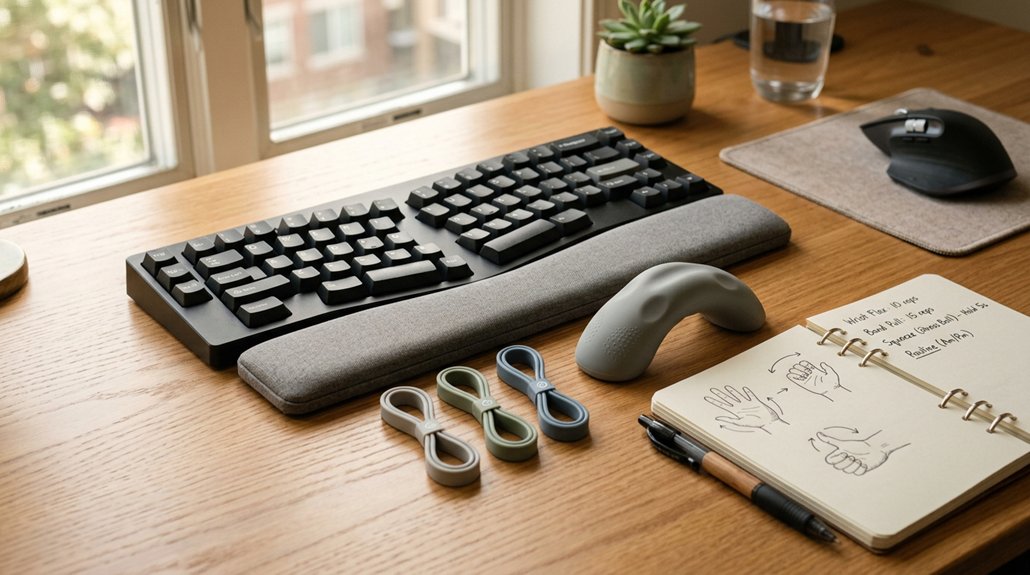
Achieving long-term relief from carpal tunnel syndrome involves consistent effort and a proactive approach. You should regularly perform wrist rest exercises, like wrist rotations and stretches such as prayer and wrist flexor stretches, to reduce median nerve pressure. These exercises, combined with ergonomic adjustments and wrist braces, strengthen wrist stability and help prevent symptom progression.
To maintain progress, monitor your symptoms closely—stop any exercise that causes sharp or worsening pain and consult your health care provider for tailored guidance. Long-term relief often requires a multidisciplinary approach that includes physical therapy, lifestyle changes, and periodic reassessment to address underlying causes.
Staying committed to your treatment options and collaborating with health care professionals can improve your chances of managing symptoms effectively and avoiding surgical options.
Frequently Asked Questions
Do Wrist Rests Help With Carpal Tunnel?
Yes, wrist rests can help with carpal tunnel by supporting neutral wrist positions, reducing strain, and easing mild symptoms. However, you should combine their use with exercises and ergonomic changes, and consult a healthcare professional for personalized advice.
Will Wrist Exercises Help the Carpal Tunnel?
Yes, wrist exercises can help your carpal tunnel by reducing pressure on the median nerve, improving wrist stability, and preventing symptoms from worsening. Be gentle, avoid pain, and combine exercises with braces and activity modifications for best results.
What Fruit Helps With Carpal Tunnel?
Eating fruits like cherries, blueberries, and oranges can help with carpal tunnel because they are rich in antioxidants and vitamin C, which reduce inflammation and support tissue repair, ultimately promoting nerve and wrist health.
What Is the Pressure Point to Release Carpal Tunnel?
You should focus on the pressure point on the palm side of your wrist, directly over the median nerve as it passes through the carpal tunnel. Gentle massage and pressure in this area can help relieve symptoms effectively.
In Summary
By regularly practicing these wrist exercises, you can ease carpal tunnel symptoms and prevent future discomfort. Remember to perform movements safely, listen to your body’s signals, and maintain an ergonomic workspace. If symptoms persist or worsen, don’t hesitate to see a doctor for personalized treatment. Incorporating these tips into your daily routine can help you find lasting relief and keep your wrists healthy for the long term. Stay consistent, and take care of your wrists!