Healthy home workspace air quality requires proper ventilation to dilute pollutants, low levels of chemicals, mold, dust mites, and pet dander, and regulated humidity below 50%. Regular cleaning, using HEPA filters, and avoiding harsh cleaners help reduce allergens. Monitoring CO2, humidity, and radon levels guarantees your space stays safe and comfortable. Maintaining these practices creates a healthier environment—if you want to discover how to implement these steps effectively, keep exploring the details.
Recognize the Signs of Poor Indoor Air Quality
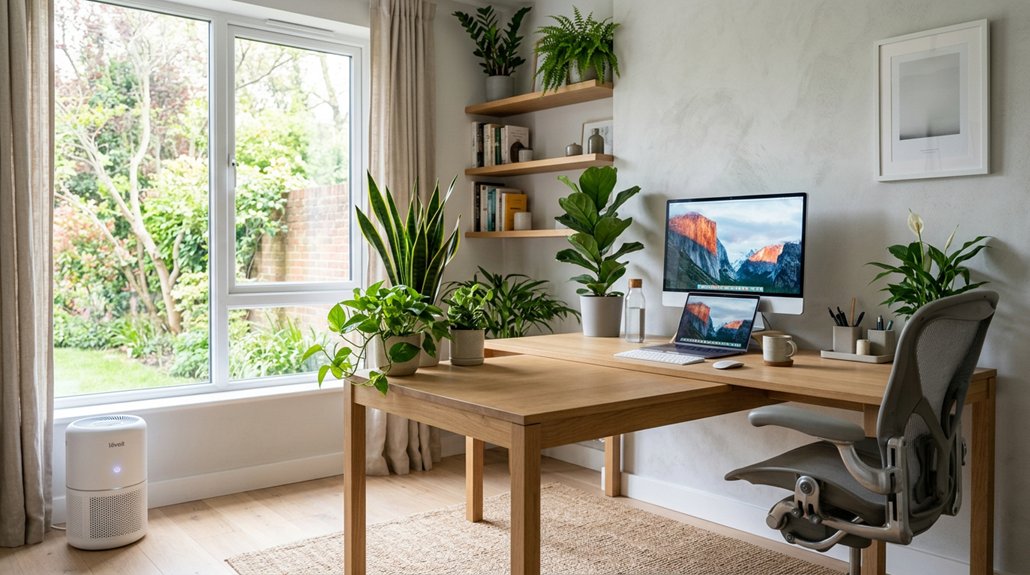
Indoor air quality can often be overlooked, but recognizing its signs is essential for a healthy home workspace. Poor air quality manifests through symptoms like headaches, dizziness, fatigue, and eye, nose, or throat irritation that worsen while working at home.
You might notice overly dry or muggy air, or discomfort from temperatures that are too hot, cold, or drafty. Visible mold, musty odors, or dust buildup suggest indoor air pollutants like mold spores, dust mites, and pet dander.
Increased allergy flare-ups or respiratory issues, especially during activities like cleaning or remodeling, indicate problems with mold spores or VOCs. Poor humidity levels and an inadequate ventilation system also contribute to unhealthy conditions. Ensuring proper air cleaning and filtration is vital to maintaining optimal indoor air quality.
Recognizing these signs helps you address indoor air quality issues before they impact your health.
Diagnose Common Indoor Air Problems and How to Fix Them
How can you tell if your home workspace is suffering from air quality issues? Monitor your indoor air by checking CO2 levels, humidity, and signs of allergens like dust or mold.
Elevated CO2 suggests poor ventilation, so increase outdoor air exchange by opening windows or using exhaust fans. High humidity above 50% promotes mold and dust mites, so control it with dehumidifiers or ventilation.
Inspect your HVAC systems, especially filters—use MERV 11+ or HEPA filters to trap pollutants. Look for water leaks or blocked vents that hinder air circulation.
Reduce chemical contaminants by avoiding harsh cleaning products and opting for low-VOC furnishings. Regular vacuuming with HEPA filters also helps improve indoor air, making your workspace healthier.
Practical Steps to Improve Indoor Ventilation and Reduce Pollutants
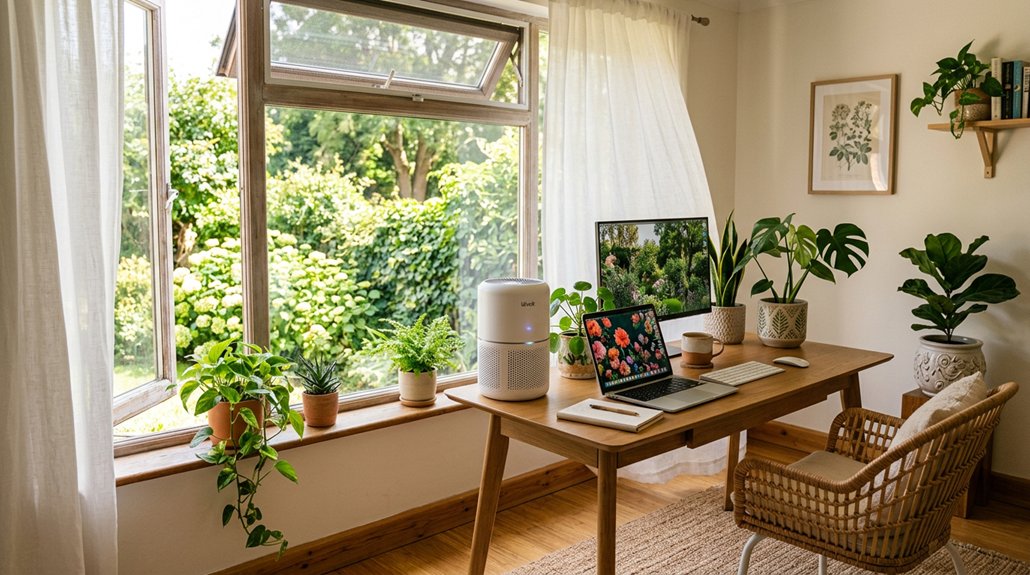
To improve your indoor air quality, focus on enhancing ventilation by opening windows daily and keeping vents unobstructed.
Reduce pollutants by limiting chemical cleaners, fragrances, and smoking indoors.
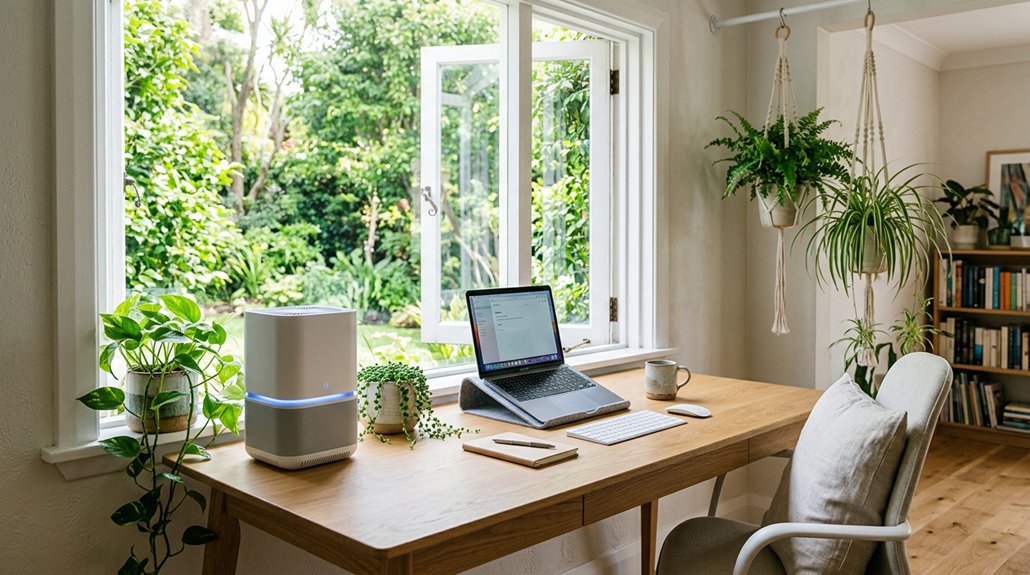
Using air purifiers and high-quality filters can further remove allergens and contaminants effectively.
Enhance Ventilation Effectiveness
Enhancing ventilation effectiveness is a practical way to improve your home’s air quality (IAQ) and reduce pollutants. Opening windows and doors daily for at least 10 minutes helps dilute indoor contaminants with fresh outdoor air, boosting ventilation effectiveness. Use exhaust fans during and after cooking or showering to lower moisture and pollutant buildup, supporting better air circulation. Regularly inspect and maintain your HVAC systems, especially high-efficiency filters rated MERV 11 or higher, to guarantee peak airflow, temperature, and humidity control. Incorporate acoustic panels that help absorb noise and improve air circulation by reducing reverberation and ensuring better ventilation efficiency. Avoid blocking air diffusers or vents, which can obstruct airflow and hinder pollutant dilution. These simple steps help guarantee a steady flow of fresh outdoor air, improving IAQ and creating a healthier indoor environment.
Minimize Pollutant Sources
Reducing indoor pollutant sources is a key step in improving your home workspace air quality (IAQ). Start by choosing low-emission furniture and building materials tested for volatile organic compounds (VOCs) to limit chemical pollutants. Avoid indoor smoking and limit the use of fragranced air fresheners, cleaning chemicals, and aerosol sprays without proper ventilation to prevent pollutants buildup.
Additionally, employing humidifiers with safety features can help maintain optimal humidity levels, reducing the risk of mold and microbial growth that can further compromise indoor air quality. Regularly maintain and replace filters in your HVAC systems—preferably with MERV 11 or higher—to improve the removal of dust, allergens, and airborne contaminants. Increase natural ventilation by opening windows or using mechanical systems like Dedicated Outdoor Air Systems (DOAS) to dilute indoor pollutants.
Also, control humidity below 50% using dehumidifiers and exhaust fans to prevent mold and microbial growth.
Use Air Purification Methods
Using air purification methods is a practical way to improve your indoor ventilation and lower pollutant levels in your home workspace. Air purifiers with HEPA filters can effectively remove particulate matter, indoor allergens include dust and pollen, and pollutants like organic compounds. Regularly replacing HVAC filters with high-efficiency MERV 11 or higher boosts filtration. Operating exhaust fans and opening windows guarantee fresh air and dilute airborne contaminants. Avoiding chemical air fresheners and scented products minimizes volatile organic compounds (VOCs). Houseplants like spider and snake plants can modestly improve air quality and humidity but consider allergies. Here’s a quick overview:
| Method | Benefit | Recommendations |
|---|---|---|
| Air purifiers | Remove allergens & pollutants | Use HEPA filters |
| Ventilation | Increase fresh air | Open windows, exhaust fans |
| Filter replacements | Maintain filtration efficiency | Replace filters every 6-12 months |
| Reduce VOC sources | Lower chemical indoor pollutants | Avoid scented products |
| Houseplants | Slight air purification | Use cautiously, consider allergies |
Additionally, ensuring proper airtightness of your workspace helps maintain the efficiency of these purification methods.
When to Call in Indoor Air Quality Professionals

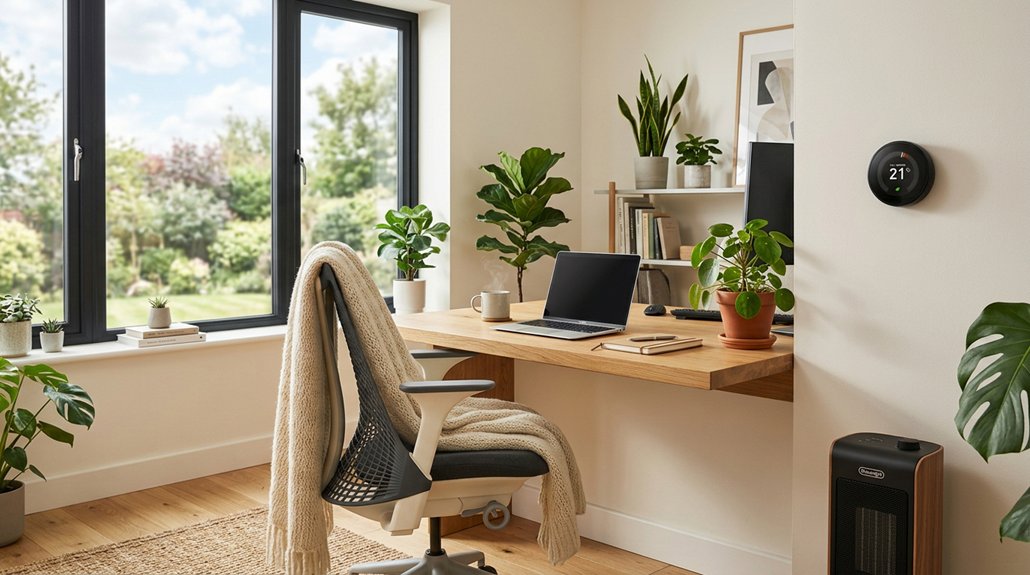
If you notice persistent symptoms such as headaches, fatigue, or respiratory issues despite initial efforts to improve indoor environments, it’s time to call IAQ professionals. They can perform a professional assessment to determine if IAQ problems stem from microbial contamination, poor ventilation, or high contaminant levels. Using effective heating solutions like personal space heaters can also help manage temperature control and reduce discomfort that might contribute to symptoms. These experts evaluate ventilation adequacy and HVAC systems to guarantee they meet standards like ASHRAE 62.1. Building owners and occupants should seek industrial hygienists or ventilation engineers for precise measurements, source identification, and tailored solutions. Avoid relying solely on costly or unreliable monitoring tools; instead, choose consultants with proven experience and verifiable references. When symptoms linger despite self-corrections, professional help is essential to identify underlying IAQ issues and restore healthier indoor air quality.
Long-Term Strategies for Maintaining Healthy Indoor Air
Maintaining healthy indoor air over the long term requires consistent, proactive strategies that address common sources of contamination and guarantee proper ventilation.
Controlling humidity with dehumidifiers and exhaust fans keeps moisture below 50%, reducing mold and dust mites that worsen IAQ. Regular HVAC maintenance, including replacing filters rated MERV 11 or higher every 6 to 12 months, helps filter indoor pollutants effectively.
Continuous ventilation, via systems like DOAS or by opening windows, supplies fresh air and dilutes indoor pollutant levels. It’s crucial to conduct periodic radon testing using a radon test kit; if levels exceed 4.0 pCi/L, mitigation is essential. Limiting indoor sources of chemicals and choosing low-VOC furnishings further supports long-term healthy indoor air. Incorporating air-purifying plants can also naturally enhance indoor air quality and provide additional benefits.
Daily Habits to Keep Your Indoor Air Clean and Safe
Incorporating simple daily habits can greatly improve the air quality in your home workspace.
First, vacuum regularly with a HEPA-filter vacuum to reduce dust, pet dander, and allergens. Keep indoor humidity below 50% using a hygrometer and dehumidifiers to prevent mold and dust mites, which harm good IAQ. Ventilate your space daily by opening windows for at least 10 minutes to freshen the indoor air and dilute pollutants.
Vacuum regularly with a HEPA filter, keep humidity under 50%, and ventilate daily to improve indoor air quality.
Remember to replace HVAC filters every 6 to 12 months, choosing MERV 11 or higher filters for better particle removal. Prohibit indoor smoking and limit using scented products or air fresheners, as these introduce harmful chemicals.
These habits help maintain a healthy indoor environment and support good IAQ in your home workspace.
Frequently Asked Questions
Can Poor Air Quality Cause Palpitations?
Yes, poor air quality can cause palpitations by lowering oxygen levels, exposing you to irritants or CO, and increasing stress. You might notice irregular heartbeats when your environment is poorly ventilated or filled with pollutants.
At What AQI Should I Stay Indoors?
You should stay indoors when the AQI is above 100, especially if it reaches 151 or higher. Protect yourself from harmful pollutants by reducing outdoor exposure, and use air purifiers or keep windows closed during high pollution events.
Can Bad Air Quality Cause Phlegm?
Yes, bad air quality can cause phlegm by irritating your respiratory system, introducing allergens, and chemical contaminants. When you’re exposed to these irritants indoors, your body produces excess mucus, leading to persistent phlegm and coughing.
How Can You Improve Indoor Air Quality at Your Workplace?
You can improve your workplace’s air quality by increasing ventilation, regularly cleaning HVAC filters, reducing indoor pollutants like chemicals and smoke, monitoring air quality with sensors, and addressing any source of contaminants promptly for a healthier environment.