For reducing eye strain, opt for warm white lights around 2700K-3000K to create a relaxing environment. Neutral white lights at 4000K-5000K balance brightness and help maintain focus without blue light fatigue. Avoid cool white lights above 6500K, as they emit blue light that can cause headaches and disrupt sleep. To learn more about choosing the best lighting for your comfort, keep exploring the tips that follow.
How Different Color Temperatures Affect Eye Comfort and Fatigue
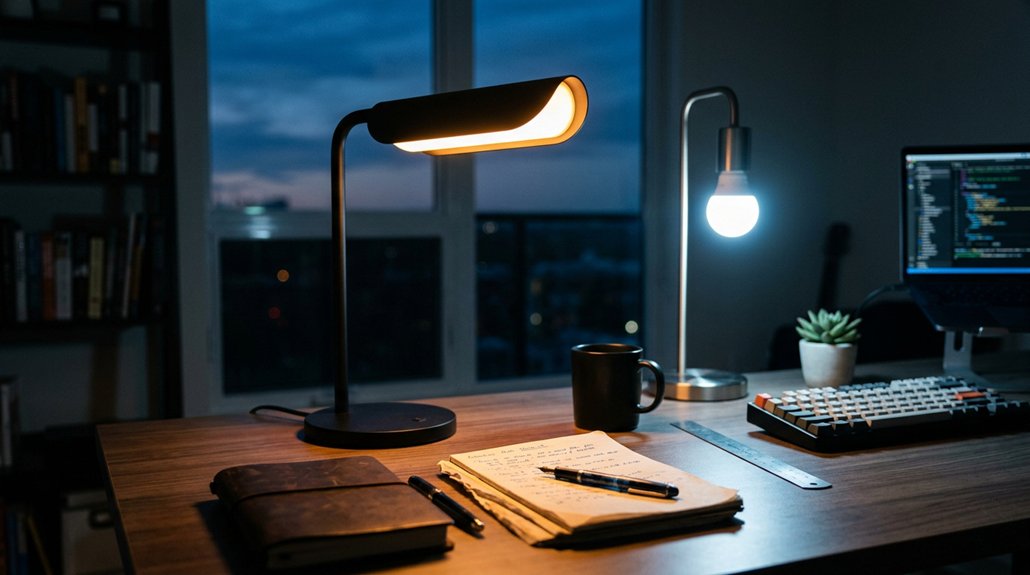
Different color temperatures influence how comfortable your eyes feel and how quickly they get fatigued. Warm color temperature lights, around 2700K-3000K, emit a soft, cozy glow that relaxes your eyes but may increase eye strain over time.
Neutral white light (about 4000K) offers a balanced brightness, reducing glare while maintaining alertness. Cool white lights with higher color temperatures (above 6500K) contain more blue, which enhances focus but also emits blue light that can cause eye fatigue and headaches if exposure is excessive.
LEDs often produce this blue light, which can disrupt your circadian rhythm and sleep patterns. Adjusting light intensity and choosing the right color temperature can help reduce eye strain, especially during extended indoor use. Some models even feature full-spectrum LEDs that provide more natural light, further supporting eye comfort.
How to Choose Warm and Neutral White Lights for Your Home Office
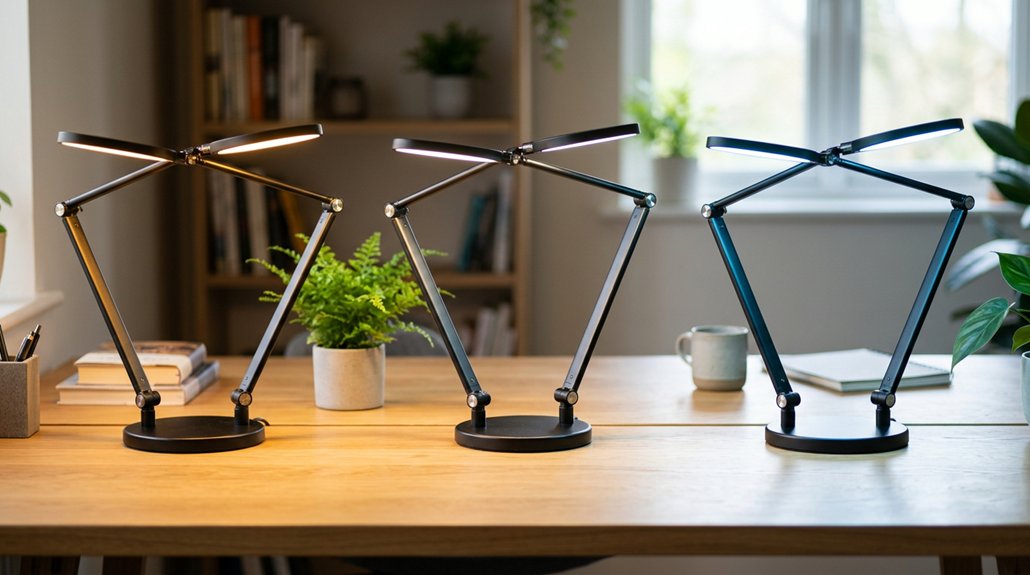
Wondering how to create a comfortable and productive home office lighting setup? Start by choosing warm white light around 3500K-4000K, which balances eye comfort with sufficient brightness, helping reduce drowsiness without harsh glare.
Neutral white lights between 4000K-5000K are perfect for detailed tasks; they offer clarity and improve focus while minimizing eye strain caused by cooler blue-heavy lights.
Opt for LED lighting with a high Color Rendering Index (CRI 80+), ensuring true color visibility and less visual fatigue during long work hours. To support adaptability, select light sources with adjustable color temperature or dimmable features.
Position your light bulbs and fixtures correctly to avoid glare and shadows, which can cause pupils to constantly adjust—further reducing eye strain and boosting overall comfort in your home office. Additionally, choosing adjustable brightness features helps tailor lighting to different activities and ambient conditions.
Practical Tips to Optimize Lighting and Reduce Eye Strain During Work
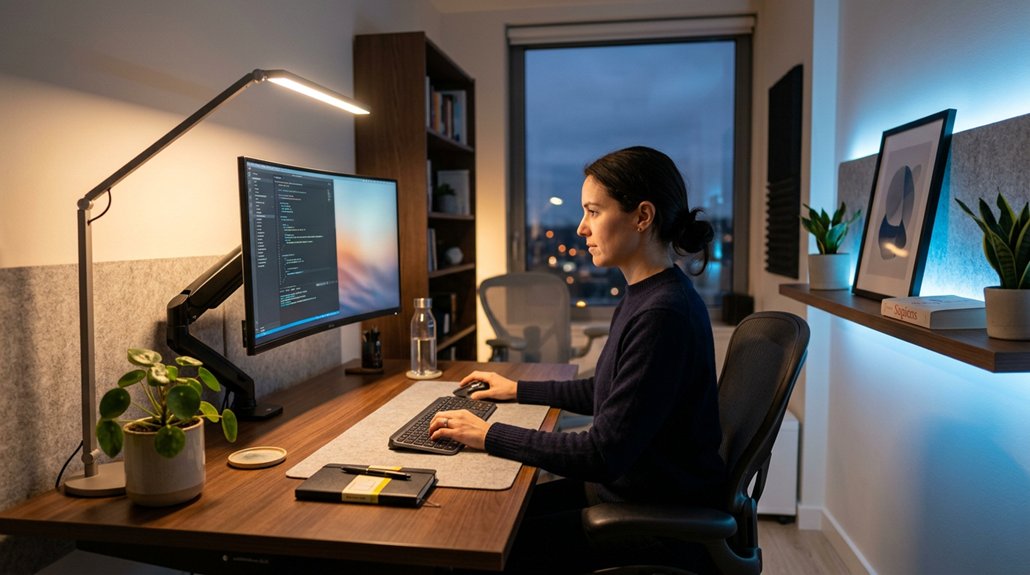
To effectively reduce eye strain during work, you need to optimize your lighting setup with practical adjustments. Use warm white light (2700K-3000K-3000K) for extended work hours to create a comfortable atmosphere, and switch to neutral white light (3500K-4000K) in workspaces for better focus without exposure to harsh blue spectrum. Incorporate flicker-free LEDs and adjustable color temperatures to ensure steady, comfortable illumination tailored to your needs. Position your LED lights to avoid direct glare and shadows on screens or surfaces. Incorporate adjustable, dimmable lighting to match brightness to your task, reducing fatigue. Adding bias lighting behind your monitor with a color temperature around 6000K softens contrast and eases eye strain. Proper placement and flexible lighting options help you tailor your workspace, making it easier to stay comfortable and alert while minimizing eye fatigue.
Frequently Asked Questions
What Color LED Light Helps With Eye Strain?
You should choose warm white LED lights with a color temperature between 2700K and 3000K. They emit a softer, yellowish hue that relaxes your eyes, reduces glare and flicker, and minimizes blue light exposure, easing eye strain effectively.
What Is the Best Color Temperature for Eye Strain?
You should use warm white light between 2700K and 3000K, as it creates a soothing glow that relaxes your eyes, reduces blue light exposure, and minimizes eye fatigue during prolonged use, helping you stay comfortable and focused.
Is 4000K Light Good for Eyes?
Yes, 4000K light is good for your eyes. It provides a balanced, neutral white glow that reduces eye strain by minimizing harsh glare and blue light, making it ideal for work, study, and indoor environments.
What LED Color Is Best for Sensitive Eyes?
You should choose warm white LEDs around 2700K to 3000K for sensitive eyes. These emit less blue light, reduce glare, and provide a cozy, comfortable atmosphere, helping minimize eye strain and visual fatigue during extended use.
In Summary
Choosing the right color temperature can notably reduce eye strain and boost your comfort. Warm and neutral white lights create a cozy, natural environment, helping you stay focused and less fatigued. Remember to adjust your lighting based on your tasks and environment, and take regular breaks to protect your eyes. With these tips, you can create a brighter, more comfortable workspace that keeps your eyes happy and healthy.