To prevent cubital tunnel syndrome, do simple desk stretches like ulnar nerve glides, wrist flexor and extensor stretches, and shoulder rolls. These help keep your nerves mobile and reduce tension around your elbows. Make sure to take regular breaks, stretch every hour, and maintain good elbow and wrist positioning. If you want to learn more about effective ways to protect your nerves and set up your workspace, keep exploring these helpful tips.
Understanding Ulnar Nerve Compression at the Elbow
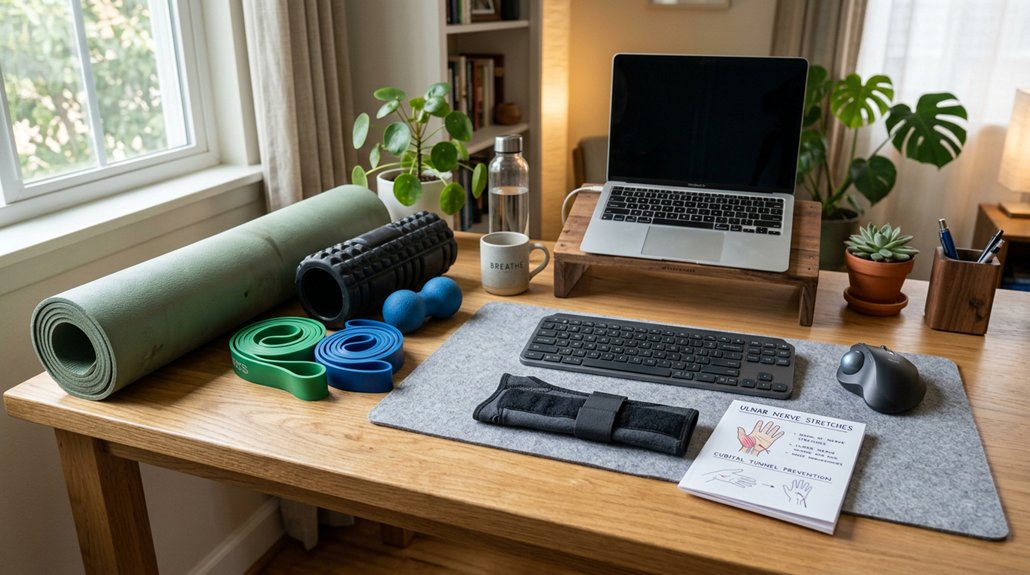
Ulnar nerve compression at the elbow occurs within the narrow cubital tunnel, a passage behind the medial epicondyle. When you bend your elbow repeatedly or lean on it, this tunnel becomes irritated, putting pressure on the ulnar nerve.
This compression can cause numbness and tingling in your ring and little fingers, signs that the nerve isn’t functioning properly. Activities that involve prolonged elbow bending, like typing or phone use, can worsen the pressure and irritation.
Structural issues such as arthritis or previous injuries can further narrow the cubital tunnel, increasing the risk of nerve entrapment. If left untreated, this compression can lead to weakness and poor coordination in your hand muscles, affecting your grip strength and dexterity over time. Memory foam supports and non-slip bases can help prevent improper arm positioning and reduce strain during prolonged activities.
Why Regular Breaks Protect Your Nerve Health
Taking regular breaks throughout your workday is essential for protecting your nerve health and preventing cubital tunnel syndrome. These breaks help prevent prolonged elbow bending and nerve compression at the tunnel.
During microbreaks, you can perform gentle ulnar nerve glides and posture resets, which improve blood flow and reduce nerve tension. Brief movements like elbow extension and scapular squeezes also relieve pressure on the nerve.
Keeping these breaks consistent—about every 30–60 minutes—minimizes cumulative irritation caused by static positions. Regular breaks prevent tingling and numbness in your ring and little fingers, common in cubital tunnel issues.
Using ergonomic tools and proper positioning, like supportive pillows that maintain optimal arm and elbow angles, enhances overall nerve health and reduces strain during long periods of desk work.
Incorporating nerve-friendly stretches and nerve gliding exercises during these breaks greatly lowers your risk of developing symptoms related to repetitive elbow flexion.
Setting Up Your Desk to Prevent Nerve Irritation
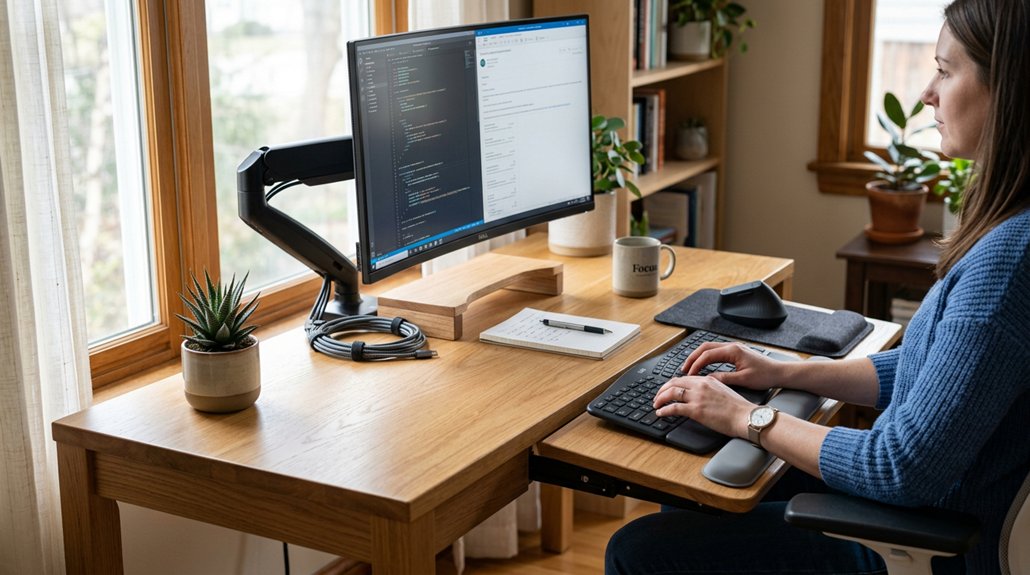
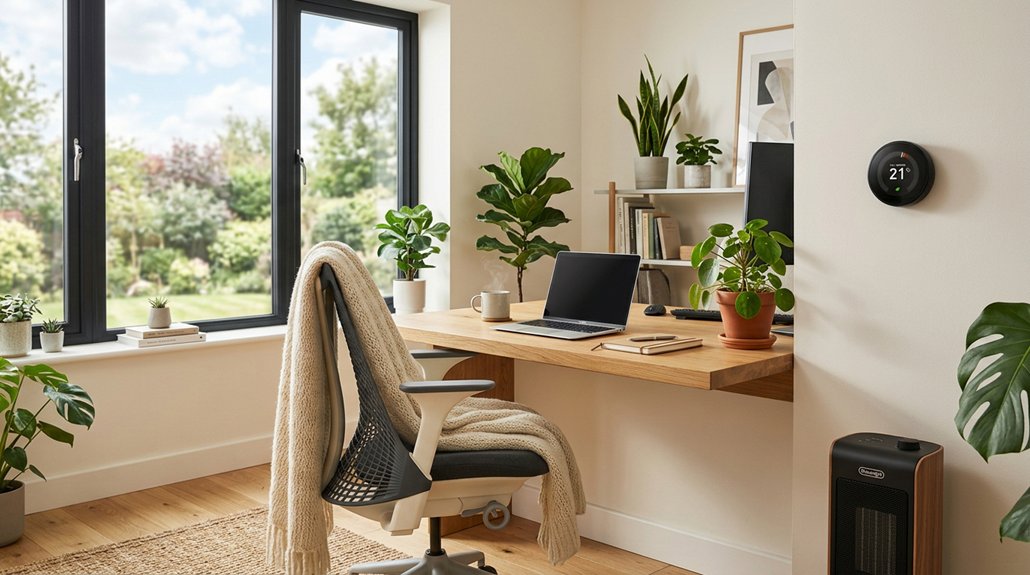
Creating a comfortable and ergonomic workspace is key to preventing nerve irritation during your workday. To glide for cubital tunnel, position your keyboard and mouse close and low, reducing forearm reach and minimizing twisting or excessive elbow bending. Keep your elbows at about a 90-degree angle to ease ulnar nerve strain at the cubital tunnel.
Using compact keyboard layouts paired with centralized pointing devices like the RollerMouse Red or SliderMouse Pro helps keep elbows open and wrists neutral, promoting better posture. Avoid resting your elbows on hard surfaces; instead, use daytime padding to prevent direct pressure on the ulnar nerve at the elbow.
Incorporate microbreaks every 30–60 minutes to gently extend your elbows and reset scapular posture, reducing prolonged flexion and nerve irritation.
Simple Desk Stretches to Keep Your Nerves Happy
Incorporating gentle nerve glides and stretches into your routine helps keep your nerves mobile and reduces tension. Simple techniques like wrist circles or triceps stretches can make a big difference during long hours at your desk. Using ergonomic glove features, such as adjustable straps and supportive cuffs, can also enhance comfort and reduce strain. Regularly practicing these moves prevents stiffness and nerve irritation, keeping you comfortable and productive.
Gentle Nerve Glides
Gentle nerve glides are simple, effective stretches you can do at your desk to keep your nerves healthy and reduce discomfort from cubital tunnel syndrome.
One popular move is the Ulnar Nerve Glide, where you extend your arm at shoulder height with your palm up. Keep your wrist neutral, then slowly bend and straighten your elbow, avoiding any sharp pain or tingling. Perform 3–5 slow reps per set, aiming for 1–3 sets daily, ideally during 30–60 second microbreaks. This helps gently mobilize the nerve without overloading it. Regularly practicing supportive ergonomic design can further help maintain nerve health during prolonged sitting.
Efficient Stretching Techniques
Simple desk stretches can make a significant difference in maintaining nerve health during your workday. Ulnar nerve glides involve extending your arm at shoulder height with your palm up, then bending and straightening your elbow 3–5 times, twice daily, to gently mobilize the nerve without symptoms.
The wrist flexor stretch is easy: extend your arm forward with a straight elbow, then softly pull your fingers back with the opposite hand for 20–30 seconds, doing this 2–3 times per side to ease forearm tension.
Incorporate triceps stretches, like overhead or wall leans, for 20–30 seconds, making sure no tingling occurs.
Pair these with proper desk ergonomics—elbows around 90–110 degrees, wrists neutral—and regular scapular squeezes to reduce nerve compression and promote mobility throughout your workday.
Additionally, using adjustable supportive devices can help maintain proper posture and reduce strain on your nerves during prolonged sitting.
Forearm Flexor and Extensor Stretches You Can Do Sitting or Standing
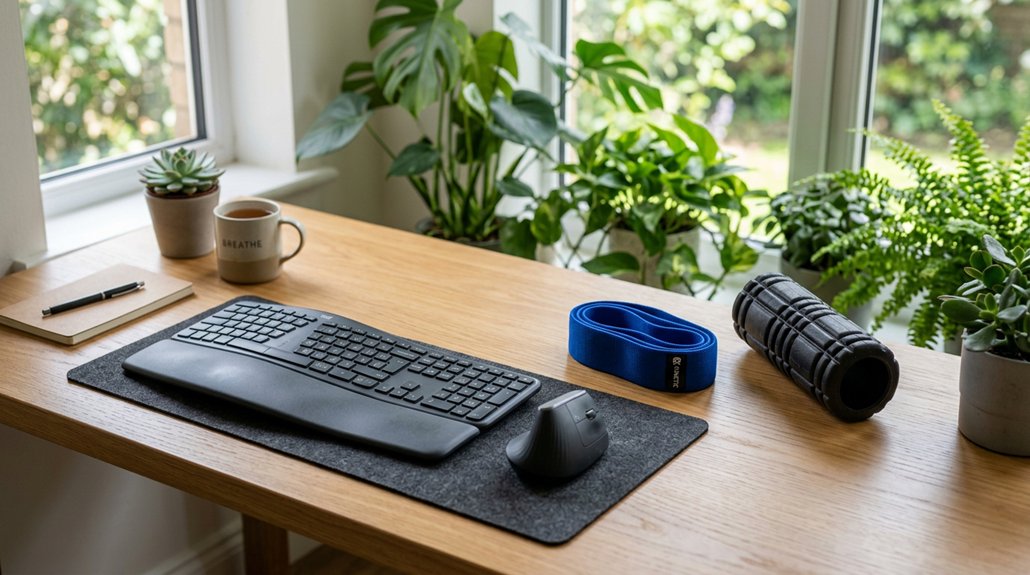
You can easily perform forearm flexor and extensor stretches while sitting or standing at your desk to help prevent cubital tunnel syndrome. These stretches target the muscles around the ulnar nerve, reducing tension and nerve compression.
Perform quick forearm stretches at your desk to prevent cubital tunnel syndrome and ease nerve tension.
For forearm flexor stretches, place your palm down on a desk with fingers pointing away, then gently hold wrist extension for 20–30 seconds, repeating 2–3 times per side.
To stretch the forearm extensors, extend your arm with the palm down, then pull your fingers backward with the opposite hand until you feel a mild stretch. Always stay within a pain-free range and avoid tingling or numbness in your fingers.
Incorporate these cubital tunnel syndrome exercises regularly to keep your forearm muscles flexible and prevent nerve irritation. Ergonomic grip designs can also help reduce strain on your hands during daily activities.
- Forearm flexor stretches with wrist extension
- Gentle finger pulls for forearm extensor stretch
- Hold each stretch for 20–30 seconds
- Repeat 2–3 times per side
Neck and Shoulder Moves That Reduce Ulnar Nerve Tension
Neck and shoulder movements play a crucial role in reducing ulnar nerve tension, especially during long periods of desk work. Shoulder rolls, with 10 forward and 10 backward rotations, help ease tension in your upper body and reduce nerve pressure near the neck and shoulder.
Practice scapular setting by squeezing your shoulder blades down and back while adding a chin nod for 10 slow reps; this improves posture and decreases ulnar nerve irritation upstream. Incorporating ergonomic headrest support can further enhance cervical alignment and comfort during extended work sessions designed for neck support.
Incorporate neck glides by drawing your head straight back, creating a double chin, with 2-second holds and 8–10 repetitions to relieve nerve tension around the cervical spine.
Slow neck tilts side-to-side and front-back, with 10 controlled reps each, maintain cervical mobility and reduce compression along the ulnar nerve pathway.
Posture Tips to Keep Your Elbows in the Safe Zone

Maintaining proper elbow posture while working at your desk can greatly reduce nerve strain and discomfort. Keep your elbows slightly bent at about 90 degrees, avoiding excessive bending that can increase pressure on the ulnar nerve.
Make certain your forearms are parallel to the floor, with wrists in a neutral position, to minimize nerve irritation. An ergonomic desk setup is essential—place your keyboard and mouse close and low so you don’t reach or lean.
Incorporate hourly 1-minute posture resets, including scapular squeezes and gentle elbow opening, to prevent continuous nerve compression. Additionally, avoid leaning on hard desk edges or resting elbows heavily on forearm sides, which can cause localized nerve pressure and inflammation.
Using ergonomic office chairs with adjustable features can also support proper posture and reduce strain during long working hours lumbar support mechanisms.
Prioritize these tips to keep your elbows safe while working long hours.
Tips for Maintaining Neutral Wrist and Elbow Positions All Day
To keep your wrists and elbows in neutral positions all day, set up your workspace ergonomically with supportive tools like an adjustable keyboard and centralized pointing devices. Remember to take microbreaks every 30 to 60 minutes to stretch, reset your posture, and reduce nerve tension. Using padding on your desk and avoiding bent elbows when using your phone also helps maintain proper alignment and prevents strain. Incorporating an ergonomic keyboard with features like a split layout, adjustable tilt, and soft palm rests can further promote neutral wrist postures and reduce pressure on tendons.
Ergonomic Desk Setup
Creating an ergonomic desk setup starts with positioning your keyboard and mouse correctly to keep your wrists and elbows in a neutral, healthy position. To limit elbow strain and work longer comfortably, consult an ergonomic specialist for personalized advice.
A smarter desk setup includes:
- Keeping your elbows bent at or slightly more than 90 degrees while typing
- Positioning your keyboard and mouse close and low to avoid reaching and twisting
- Using compact keyboards paired with centered pointing devices like RollerMouse Red or SliderMouse Pro
- Incorporating soft elbow rests or padding to prevent prolonged pressure on the medial elbow
- Ensuring your armrests support proper adjustability range to maintain optimal posture during extended periods of work
These adjustments help maintain proper posture and are essential for Non-Surgical Treatment of cubital tunnel syndrome. Proper setup minimizes nerve compression, making it easier to work longer without discomfort.
Regular Movement Breaks
Frequent movement breaks are key to preventing cubital tunnel syndrome and keeping your elbows and wrists healthy throughout the workday. Taking microbreaks every 30 minutes allows you to gently open your elbows and perform scapular squeezes, reducing prolonged elbow flexion and ulnar nerve irritation. During these breaks, incorporate quick exercises like slow wrist circles or ulnar nerve gliding to promote nerve mobility. Keep your arm in a neutral position, avoiding bending your elbow excessively or resting on hard surfaces. Use ergonomic tools, like compact keyboards, to prevent overreaching. Consistently practicing these microbreaks helps maintain ideal elbow angles (around 90–110 degrees), minimizes nerve compression, and supports ulnar nerve transposition.
| Idea | Action | Benefit |
|---|---|---|
| Take microbreaks every 30 mins | Stretch arms, perform scapular squeezes | Reduce nerve irritation |
| Keep neutral wrist position | Use ergonomic tools | Prevent wrist flexion or extension |
| Incorporate nerve gliding exercises | Slow wrist circles | Enhance nerve mobility |
Chair Stretches to Relieve Tension and Boost Circulation
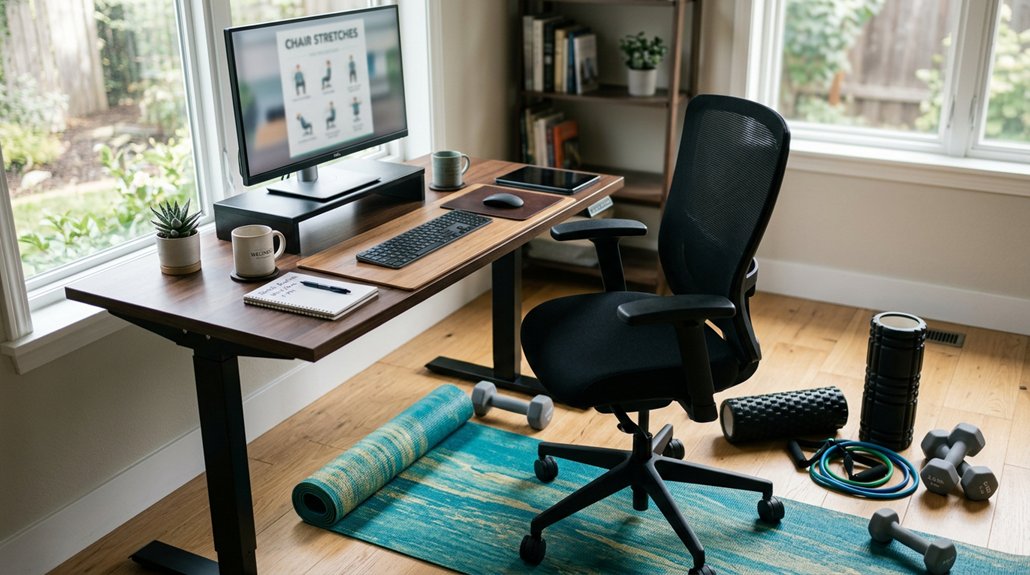
Seated stretches can effectively relieve tension and improve circulation during long periods of desk work. To do this, try engaging your chair arm for support. For example, place your affected arm straight along the chair arm, with your palm facing upward.
Gently extend your shoulder blades by pulling them down and back, then hold for 20–30 seconds. You can also perform shoulder blade squeezes to release upper body tension.
Additionally, stretch your triceps by leaning your elbow against the chair back or raising your hand overhead. To further boost circulation, extend your forearm with your palm on the desk, fingers pointing away, and hold for 20–30 seconds.
These chair stretches help maintain posture, reduce nerve compression, and keep you comfortable during long work sessions.
- Chair arm support with arm straight and palm facing up
- Shoulder blades drawn down and back, held for 20–30 seconds
- Triceps stretch, elbow against chair back or overhead
- Forearm stretch with palm on desk, fingers pointing away
Choosing Ergonomic Tools to Minimize Nerve Strain
Choosing the right ergonomic tools can make a big difference in reducing nerve strain during your workday. Opt for compact keyboards and centralized mice to keep your forearms and elbows in a natural, relaxed position.
Using supportive desk accessories also helps prevent unnecessary pressure on the ulnar nerve.
Ergonomic Keyboard Positioning
Have you considered how your keyboard placement can impact nerve strain in your elbows? Proper ergonomic keyboard positioning helps protect your ulnar nerve and prevents cubital tunnel syndrome.
Keep your keyboard centered, so your elbows remain at a 90-degree angle, with forearms parallel to the floor. Use compact ergonomic keyboards like the Balance Keyboard to reduce forearm reach and maintain a neutral wrist posture—lessening strain during long sessions.
Pair your keyboard with centralized pointing devices, such as a RollerMouse Red, to minimize forearm twisting. Keep the keyboard and mouse close and low to your body to prevent prolonged elbow bending.
Also, consider desk padding and adjustable chair height to avoid pressure on your elbows and guarantee continuous nerve protection.
Proper Mouse Placement
Placing your mouse correctly is essential for preventing nerve strain and reducing the risk of cubital tunnel syndrome. Keep the mouse close to your keyboard and at the same height to minimize forearm reach, which can put pressure on the ulnar nerve.
Use centralized pointing devices, like the RollerMouse Red or SliderMouse Pro, to keep your hand and wrist in a neutral position, preventing nerve irritation. Choose compact ergonomic mice paired with smaller keyboard layouts to avoid twisting your upper arm or gripping excessively.
Keep movements smooth and within comfortable reach to reduce prolonged elbow flexion and leaning on the ulnar side. Regular microbreaks can further help reset nerve tension, promoting better posture and minimizing nerve compression during mouse use.
Supportive Desk Accessories
Using the right supportive desk accessories can considerably reduce nerve strain during your workday. Choosing ergonomic tools helps keep your forearm reach minimal and maintains a neutral wrist position, reducing cubital tunnel pressure.
Compact keyboards like the Balance Keyboard help avoid overstretching your arms. Pairing them with centralized pointing devices such as the RollerMouse Red eliminates excessive forearm twisting and gripping.
Position your keyboard and mouse close and low on the desk to keep your elbows slightly open at a 90-degree angle, preventing nerve compression. Adding daytime padding on desk edges or armrests offloads pressure on your elbows.
Remember to follow the 60/20 rule by taking microbreaks every hour to reset your posture and perform gentle nerve glides, protecting your nerves throughout the day.
- Compact ergonomic keyboards to reduce forearm reach
- Centralized pointing devices for minimal twisting
- Low, close positioning to maintain neutral wrist position
- Padding on desk edges or armrests to offload pressure
When and How Often to Take Nerve-Friendly Breaks
Establishing a regular schedule for nerve-friendly breaks is essential to prevent cubital tunnel syndrome from developing or worsening. To support effective tunnel syndrome treatment, take microbreaks every 30 to 60 minutes during desk work.
Use 20-second breaks following the 60/20 rule to perform exercises to start, like gently extending your elbow, squeezing your scapulae, and gliding your ulnar nerve. These small movements help reduce tingling in the ring finger and alleviate nerve tension.
Focus on bending your elbow slightly and then hand to gently straighten to maintain nerve mobility. Aim to do nerve gliding exercises 2–3 times daily—mid-morning and mid-afternoon—and incorporate 1-minute posture resets hourly, emphasizing scapular retraction and chin nods to optimize alignment and minimize nerve compression.
Signs You Should Extend Breaks or Adjust Your Setup
Paying attention to warning signs from your body can help prevent cubital tunnel syndrome from worsening. If you notice tingling or numbness in your ring fingers or little fingers during or after work, it’s a sign to extend your breaks and review your ergonomic setup.
Persistent elbow discomfort, especially on the inner side, suggests you need longer or more frequent breaks to reduce nerve compression. Increased weakness or clumsiness in your hand grip indicates immediate adjustments to your workstation posture and increased rest periods.
Morning symptoms like tingling or stiffness after sleep may require night splints and a reassessment of your ergonomic habits, along with extended break times.
- Tingling in ring fingers during work
- Inner elbow pain or discomfort
- Weak or clumsy hand grip
- Morning stiffness or tingling
Create a Workspace That Supports Nerve Comfort
Creating a workspace that supports nerve comfort involves adjusting your setup to reduce strain on the ulnar nerve. Keep your elbows at a 90-degree angle while typing, which helps lessen compression on the cubital tunnel. Guarantee your forearms are parallel to the floor and your wrists remain neutral, minimizing pressure and avoiding excessive elbow bending.
Use ergonomic tools like compact keyboards and centralized pointing devices to reduce reach, twisting, and leaning on your elbows. Adding padding or soft elbow rests can offload pressure from prolonged leaning. Taking regular microbreaks every 30–60 minutes allows you to perform exercises take to promote nerve circulation.
If discomfort persists, consult an orthopedic specialist for tailored treatment options, assuring your workspace supports nerve health and prevents cubital tunnel syndrome.
Quick Tips to Prevent Nerve Compression During Work
To prevent nerve compression during work, keep your elbows at roughly 90 degrees with forearms parallel to the floor and wrists neutral.
Take quick microbreaks every 30-60 minutes to stretch, open your elbows, and relieve pressure.
Also, make certain your workspace is ergonomically optimized to support proper arm and elbow positioning.
Maintain Proper Elbow Position
Maintaining proper elbow positioning while working is essential to prevent nerve compression in the cubital tunnel. Keep your elbows bent at approximately a 90-degree angle to minimize syndromes related to ulnar nerve irritation. Avoid resting your elbows on hard surfaces or desks; instead, use padding to reduce pressure on the nerve.
Position your keyboard and mouse close and at a low height to keep elbows slightly open and wrists in a neutral position. Instead of cradling your phone, use a headset to prevent sustained elbow flexion, which can worsen symptoms. Incorporate exercises to reduce muscle strain around the wrist flexor muscles and scapular area.
Proper ergonomic habits help prevent nerve compression symptoms and promote overall comfort during long work hours.
- Keep elbows at a 90-degree bend
- Use padding on hard surfaces
- Position keyboard and mouse low and close
- Wear a headset instead of cradling
Take Regular Microbreaks
Taking regular microbreaks throughout your workday is essential for preventing nerve compression and promoting joint mobility. During microbreaks, they’ll help you perform quick movements that open the elbow and facilitate ulnar nerve glide.
Use 20 to 60-second stretches to gently extend and flex your elbows, keeping wrists neutral and avoiding prolonged bending over 90 degrees. Incorporate scapular squeezes and chin nods to improve posture and reduce nerve irritation from sustained arm positions.
Perform gentle ulnar nerve glide exercises, such as slowly bending and straightening your elbow with the palm facing up, repeating 3–5 times. Remember to avoid leaning on your elbows or resting forearms on hard surfaces, as this can exert pressure on the ulnar nerve and increase the risk of compression.
Optimize Desk Ergonomics
Optimizing your desk setup is essential for preventing ulnar nerve compression during work. Proper ergonomics reduce strain on the nerve, preventing sharp pain and discomfort.
Keep your elbows at about a 90-degree angle with forearms parallel to the floor, avoiding cradling the phone or leaning on your elbows. Position your keyboard and mouse close and low, using compact layouts to minimize reaching and bending. Use padding to offload pressure from resting or leaning on your elbows.
Remember to implement the 60/20 rule, taking microbreaks to extend your elbows and perform nerve glides. If you experience persistent discomfort, contact us today for professional advice.
Ignoring these signs could lead to more serious issues, so stop immediately if you feel numbness or tingling in your fingers, like a band around your fingers, and seek help promptly.
Frequently Asked Questions
Does Stretching Help Cubital Tunnel Syndrome?
Stretching can help cubital tunnel syndrome by loosening tight muscles, improving nerve mobility, and reducing pressure on the ulnar nerve, especially when combined with proper posture and ergonomic adjustments, but always perform stretches gently without causing pain or tingling.
How to Sit at a Desk to Avoid Carpal Tunnel?
You should sit with elbows bent at 90 degrees, forearms parallel, and wrists neutral; use ergonomic gear, take microbreaks with gentle stretches, relax shoulders, and avoid leaning on your wrists to prevent carpal tunnel issues.
Can Cubital Tunnel Syndrome Be Prevented?
Yes, you can prevent cubital tunnel syndrome by maintaining proper ergonomics, taking regular breaks, performing nerve gliding and stretching exercises, using padded supports, and avoiding prolonged elbow bending or putting pressure on your elbows during work.
What Exercises Should You Avoid if You Have Cubital Tunnel Syndrome?
If you have cubital tunnel syndrome, avoid stretches causing tingling or numbness, eliminate elbow flexion, and steer clear of jerky, overextended, or deep bending movements that worsen symptoms or increase nerve irritation during desk work.