To improve office comfort, consider adjustable leg rests like retractable supports, ottomans, or attachable clamps that fit your chair. These options promote better blood flow, reduce back strain, and support proper posture by keeping your knees slightly lower than hips. Memory foam cushions or soft surfaces can add extra comfort. By selecting the right support and setting it up properly, you’ll enjoy enhanced comfort and health—continue exploring to find the best solution for your workspace.
Why Proper Leg Support Is Key to Office Comfort and Health
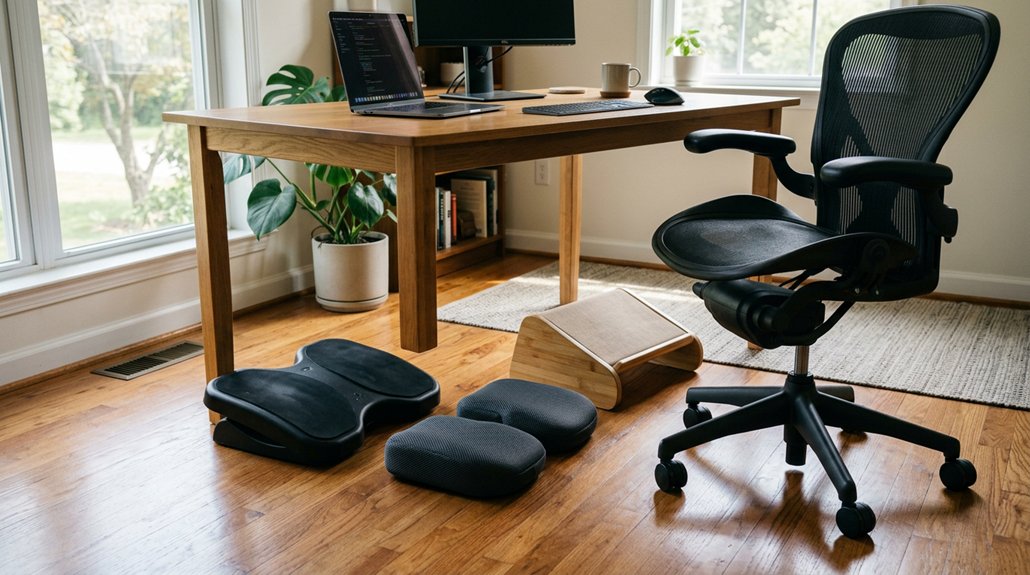
Proper leg support is essential for maintaining comfort and health during long hours at your desk. An ergonomic office chair that offers proper leg support helps improve blood circulation and reduces the risk of conditions like deep vein thrombosis, varicose veins, and leg numbness.
Elevating your legs with an ergonomic leg rest aligns your pelvis and spinal curve, easing lumbar strain and decreasing back pain. Good leg support also prevents musculoskeletal disorders, which account for a significant portion of work-related injuries. Additionally, adjustable foot rests can promote subtle leg movement and circulation, further enhancing comfort during extended sitting periods.
Chairs with adjustable or collapsible leg rests support your calves and ankles, preventing stiffness and discomfort during extended periods of sitting. When your legs are well-supported, you’ll experience increased comfort, mental clarity, and productivity—making it easier to focus and feel confident throughout the day.
How to Choose the Best Leg Rest for Your Workspace and Body
Selecting the right leg rest involves considering both your workspace and your body’s needs. If you have limited space, an integrated or retractable leg rest can be a seamless upgrade to your ergonomic chair. For portability, standalone footrests make moving between work areas easy.
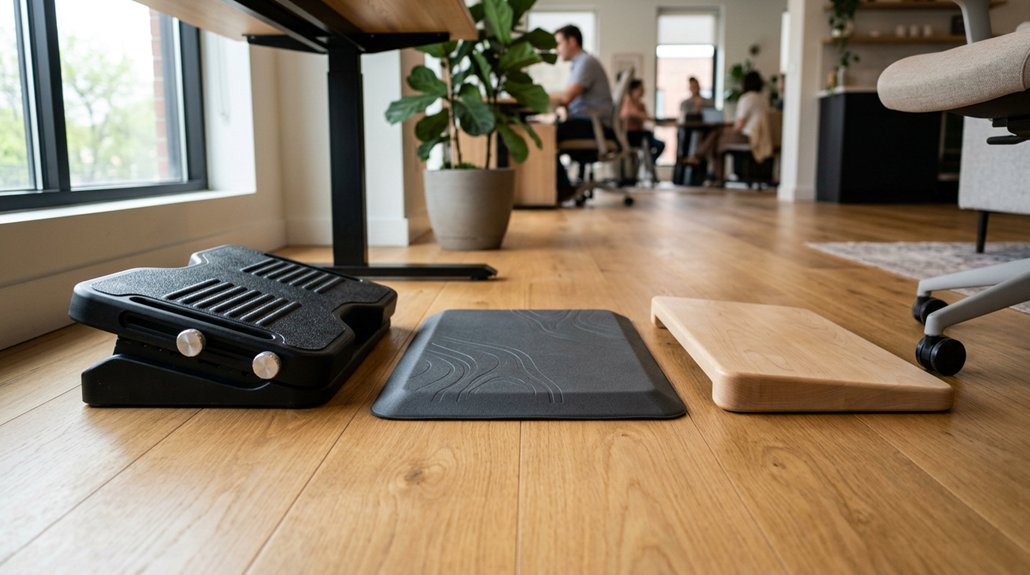
Choose an adjustable footrest that lets you modify height and tilt, ensuring a gentle slope from hips to knees and preventing calf pressure, which promotes better circulation. Look for models with non-slip feet or rubber bases for added stability and safety. Padded or contoured platforms with molded foam provide barefoot comfort, while pivot functionality encourages foot adjustments, supporting dynamic sitting. Incorporating adjustable height and tilt features can further enhance ergonomic comfort tailored to your posture.
Types of Leg Support Options for Your Office Chair
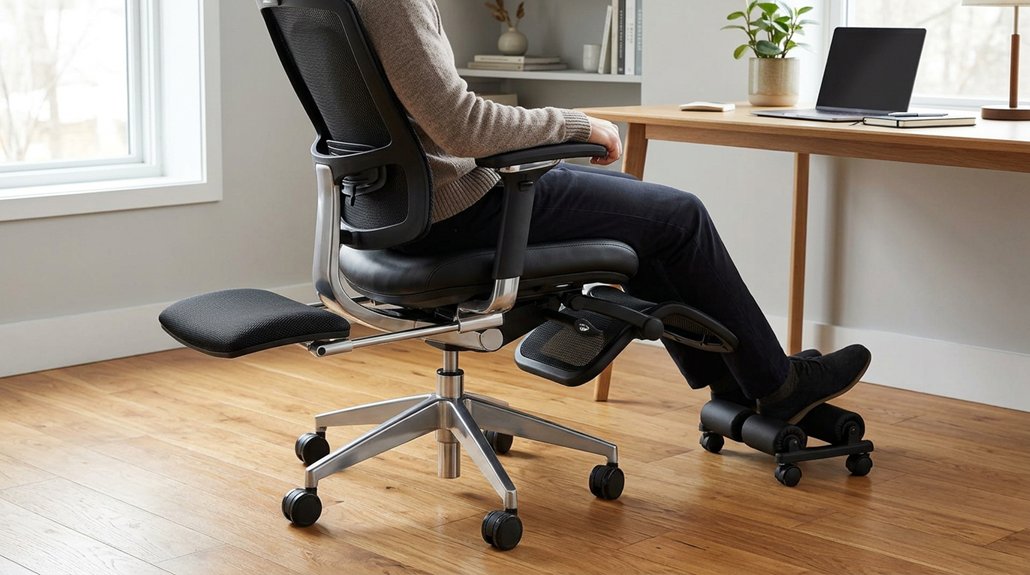
There are several leg support options to take into account for your office chair, from integrated or retractable rests to standalone footstools and attachable supports. A growing trend is the use of adjustable footrest rockers, which promote active movement and improve circulation during long hours at the desk. Each type offers different benefits in compatibility, adjustability, and space needs, so it’s important to pick one that fits your workspace and comfort priorities. Let’s explore these options to find the best fit for your ergonomic needs.
Integrated vs. Standalone Rests
When choosing leg support options for your office chair, understanding the differences between integrated and standalone rests can help you make an informed decision.
Integrated or retractable leg rests are built directly into the chair, offering a sleek, minimalist support solution, perfect for small workspaces. They provide seamless ergonomic benefits but can’t be added later.
Standalone footrests or ottomans, by contrast, are separate units that you can move between rooms. They’re compatible with most chairs and offer flexibility, but they require additional floor space and storage.
Attachable leg rests are another option—they clamp onto existing chairs, allowing easy upgrades, though they might face stability or compatibility issues.
Your choice depends on workspace size, chair type, comfort preferences, and budget.
A memory foam cushion can also improve overall comfort by supporting posture and reducing pressure points during long sitting sessions.
Attachments and Compatibility
Attachments and compatibility play a crucial role in choosing the right leg support for your office chair. Attachable leg rests are a flexible option, clamping onto your existing chair frame to provide extra support. However, their stability and compatibility depend on your chair’s design, so it’s important to check if they fit securely. Additionally, ergonomic support features in certain models can enhance overall comfort and promote better posture during extended sitting periods. Compatibility also varies with different chair models, meaning not all leg rests will suit every setup. Some leg rests are built-in or retractable, offering seamless integration but limited retrofitting options. Standalone footrests and ottomans are more universal, easily compatible with most chairs but require extra space. Carefully consider your workspace size, chair type, and budget to find the attachment solution that best enhances your comfort without sacrificing stability or compatibility.
Adjustability for Comfort
Adjustability is key when choosing leg support options for your office chair, as it allows you to tailor support to your comfort needs. Adjustable footrests with tilt and height adjustments, typically between 1 to 3 inches, help you find the perfect elevation for your legs. This promotes better blood flow and reduces discomfort during long hours of sitting. Incorporating ergonomic design features ensures the support aligns with your natural posture for maximum comfort. Pivoting platforms on larger footrests let you move around and change foot positions easily, encouraging subtle movement without needing full height adjustment. Soft covers, foam padding, and cushioning enhance tactile comfort, especially if you’re barefoot, while hard plastic platforms work well with shoes. Stability features like non-slip pads keep the support stable, ensuring consistent comfort while reducing distractions. Overall, adjustable options let you customize your leg support for maximum ergonomic benefit.
How to Properly Set Up Your Leg Support for Maximum Comfort
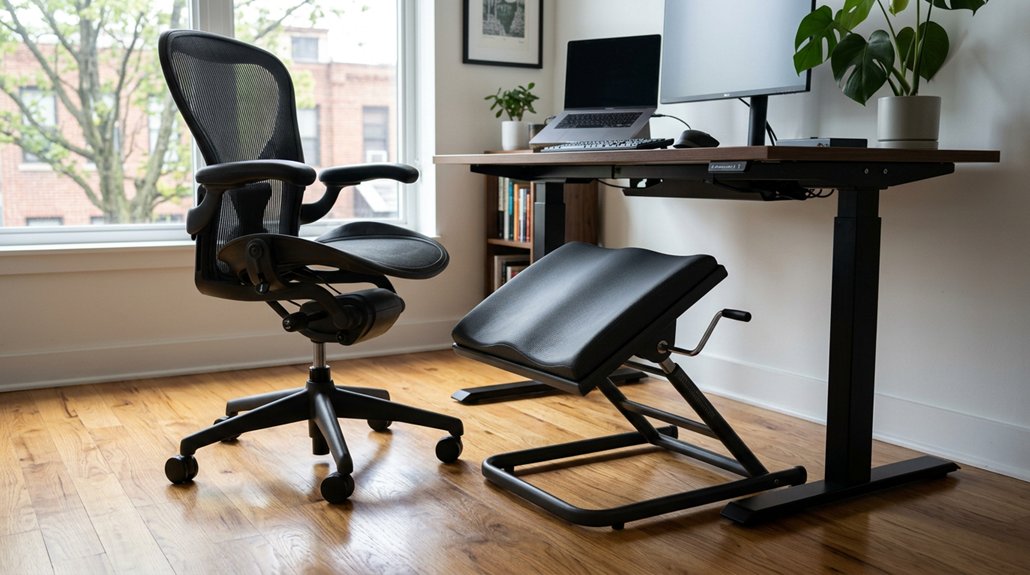
To set up your leg support for maximum comfort, start by adjusting your chair height so your feet rest flat on the floor and your knees form a 90-degree angle.
Once this is set, position the leg rest so your calves are fully supported, ensuring continuous contact behind your knees and ankles. Avoid pressure points that could restrict blood flow.
Aim for a gentle slope from your hips to knees, keeping your knees slightly lower than your hips in a “waterfall” posture.
Make sure you sit fully back against the chair’s lumbar support before extending or adjusting the leg rest, maintaining proper spinal alignment.
Be cautious not to elevate your legs too high, as overextension can cause discomfort and circulation issues. Instead, seek a relaxed, natural position that promotes good blood flow.
Additionally, choosing a leg support with ergonomic shape and contour can help distribute your weight more evenly and improve overall comfort during long sitting sessions.
The Benefits of Ergonomic and Sustainable Leg Rest Solutions
Incorporating ergonomic and sustainable leg rest solutions in your office setup can greatly boost comfort and support healthy posture. A well-designed leg rest promotes proper blood circulation by elevating and supporting your lower leg, reducing the risk of DVT, swelling, and musculoskeletal disorders.
Investing in high-density memory foam support options can provide better pressure relief and durability over time.
Ergonomic leg rests help maintain spinal alignment, encouraging a “waterfall” posture with knees slightly lower than hips, easing lower back strain and preventing pain. Choose sustainable options built from durable, recycled, or responsibly sourced materials to minimize environmental impact.
Common Questions About Leg Supports and Office Ergonomics
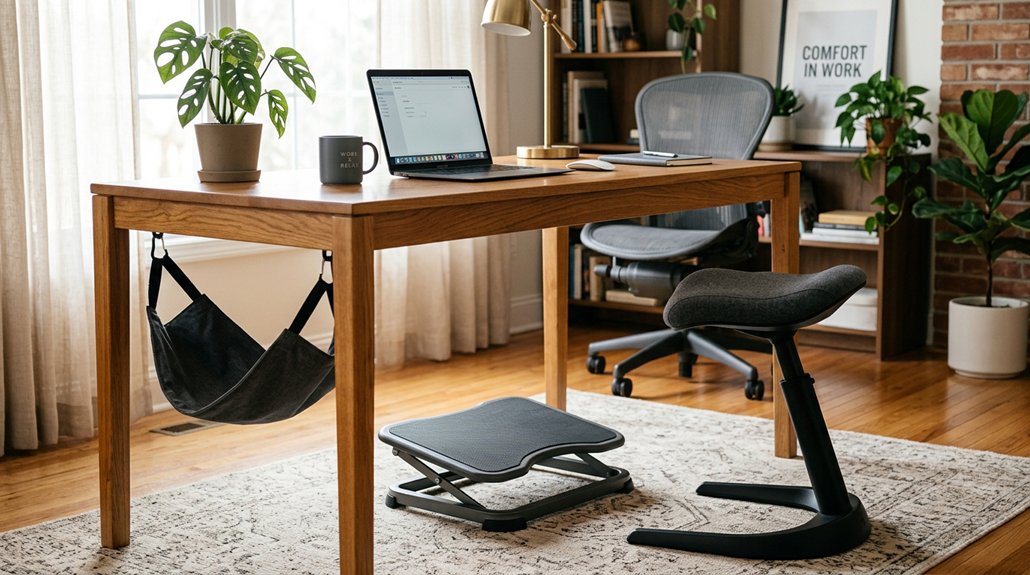
Have questions about choosing the right leg rest or setting up your office for comfort? You’ll want to know how proper placement improves posture and reduces strain during long work hours. A well-designed ergonomic support can also help maintain proper spinal alignment and prevent discomfort. Let’s explore some common concerns to help you find the best ergonomic solutions.
Choosing The Right Leg Rest
Choosing the right leg rest begins with understanding the different styles available and how they support your office ergonomics. A good leg rest should support your entire lower leg with a slight slope from hips to knees, keeping knees slightly lower than hips. This position reduces sciatic nerve pressure and lowers back strain. Additionally, some ergonomic models feature core engagement benefits, helping to promote proper posture and reduce fatigue during long periods of sitting. There are three main styles: integrated or retractable rests built into the chair, standalone footrests or ottomans that are portable and universally compatible, and attachable rests that clamp on but may be less stable.
Comfort depends on the surface; soft padded rests support your feet better barefoot, while hard surfaces may require shoe use or covers. Adjustable height and tilt features help customize comfort, with users typically setting height once and pivoting to shift foot position during work.
Ensuring Proper Office Setup
To guarantee your office setup promotes comfort and health, it’s important to position your leg supports correctly. Use adjustable footrests or leg rests that create a gentle slope from hips to knees, reducing sciatic nerve pressure and supporting spinal alignment. Elevate your calves and feet with leg rests that improve circulation and prevent numbness. Whenever possible, chairs should allow your feet to rest flat on the floor, with knees slightly lower than hips to avoid restricted blood flow. Stability features like non-slip feet and pivoting platforms secure safety and micro-movements for dynamic sitting. Proper setup requires balancing height, tilt, and support for peak comfort.
| Leg Rest Type | Proper Positioning | Benefits |
|---|---|---|
| Adjustable | Flat on the floor; knees below hips | Reduces strain and improves circulation |
| Elevated | Slightly above the floor | Supports legs and promotes movement |
| Reclining | Supports calves and ankles | Enhances ergonomic posture |
Frequently Asked Questions
How Can I Make My Office More Comfortable?
You can make your office more comfortable by choosing an adjustable ergonomic chair, adding a leg rest, and using a supportive footrest. Standing desks and proper lumbar support also help reduce strain, enhancing overall comfort during your workday.
How to Elevate Legs at Desk Job?
You can elevate your legs at your desk by using an adjustable footrest, recline your chair with a collapsible leg rest, or position a standalone leg rest so your knees are slightly lower than your hips, boosting comfort and circulation.
What Is the 90-90-90 Rule in Ergonomics?
The 90-90-90 rule in ergonomics means sitting with your hips, knees, and ankles at roughly 90-degree angles, keeping your thighs parallel to the floor and feet flat, which supports proper posture and reduces strain during long sitting periods.
What Is the 20/8-2 Rule for Standing Desks?
The 20/8-2 rule guides you to sit for 20 minutes, stand for 8, then move or stretch for 2, promoting better circulation, reducing fatigue, and preventing discomfort, ensuring your standing desk setup remains ergonomic and comfortable throughout your workday.
In Summary
Investing in the right leg support can make a huge difference in your office comfort and overall health. By choosing ergonomic, adjustable options and setting them up properly, you’ll reduce strain and improve posture during long work hours. Don’t overlook sustainable and supportive solutions — they’re worth the extra effort. Prioritize your comfort and wellbeing, and you’ll find your workdays become much more enjoyable and productive. Your body will thank you!