To reduce eye strain in the evening, use warm, low-color temperature lighting around 2700K to 3000K, which emits relaxing yellow-orange hues and minimizes blue light exposure. Incorporate dimmable, layered, and indirect lighting to avoid glare and harsh shadows. Blue light filters or amber glasses can further protect your eyes during screen time. If you’re interested, exploring more strategies can help you create a comfortable, sleep-friendly environment.
How Warm, Low-Color Temperature Light Eases Eye Strain at Night
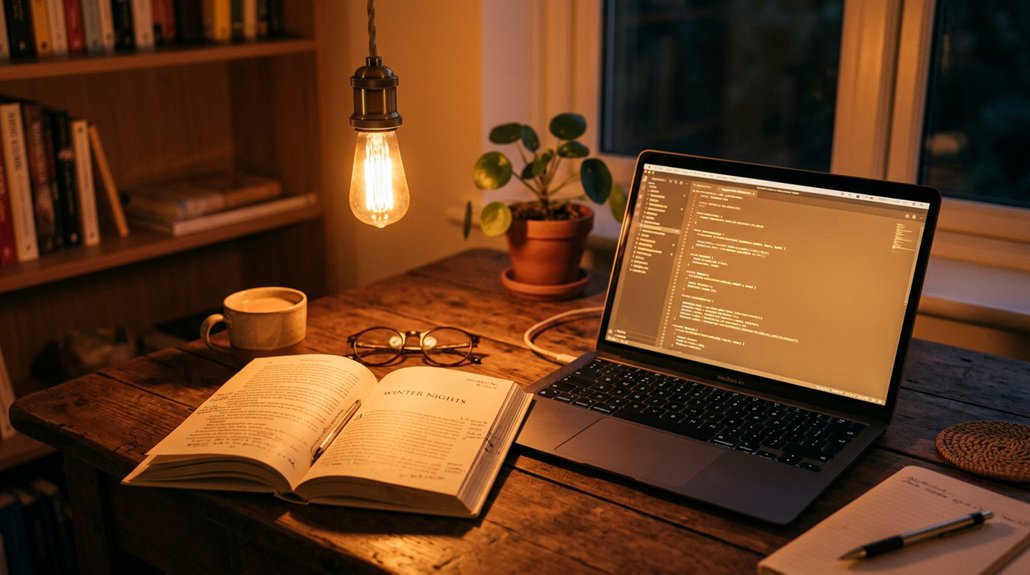
Since exposure to harsh, blue-toned light can tire your eyes and disrupt sleep, switching to warm, low-color temperature lighting at night offers a simple yet effective solution. Warm light sources with color temperatures between 2700K and 3000K emit yellow-orange hues that help relax your eyes and reduce eye strain after long screen use.
A flicker-free, adjustable color temperature lighting can further enhance comfort by allowing you to customize the warmth to suit your activities.
By minimizing blue light exposure, this type of lighting supports melatonin production, which promotes better sleep. Using dimmable LED bulbs or incandescent lights creates a soft, soothing glow that avoids harsh contrast and glare, easing eye muscle tension.
Warm, low-color temperature lights also align with your natural circadian rhythms, giving your eyes a chance to recover and lowering the risk of headaches associated with eye fatigue.
Why Dimmer and Adjustable Lights Boost Evening Eye Comfort
Using dimmer and adjustable lights gives you control over brightness and direction, helping you avoid harsh glare and eye fatigue. They also allow you to set a warm, comfortable glow that’s easier on your eyes during the evening. Additionally, some lamps feature stepless dimming that enables precise brightness adjustments, further enhancing eye comfort. These flexible options make it simpler to create a soothing environment that reduces strain and supports better sleep.
Custom Light Intensity
Adjustable and dimmer lights enable you to customize your evening lighting, which can greatly reduce eye strain. With control over custom light intensity, you can lower brightness levels to mimic natural dusk, easing your eyes and preventing fatigue.
Adjustable lights let you balance ambient and task lighting precisely, minimizing glare and harsh shadows that can worsen discomfort in low-light settings. Using dimmer switches, you can create glare-free illumination tailored to your sensitivity, helping to avoid headaches and visual strain after prolonged indoor activity.
These options also allow you to choose softer light tones that reduce blue light exposure in the evening, supporting melatonin production and eye comfort. Overall, customizing light intensity helps create a gentle, relaxing environment that protects your eyes during evening hours.
Reduced Glare Impact
Dimmer and adjustable lights directly reduce harsh contrasts and glare that can strain your eyes during evening hours. By lowering brightness, they minimize glare on screens and reflective surfaces, easing eye discomfort.
Adjustable lights let you direct illumination away from your eyes and screens, further decreasing glare-related fatigue. Using warm white bulbs (2700K–3000K) creates a relaxing ambiance while decreasing blue light exposure, which can worsen eye strain.
Dimmer switches or smart lighting systems allow smooth, gradual adjustments, helping your eyes shift comfortably from bright to dim surroundings. This control over light intensity and direction supports visual comfort, reduces muscle fatigue, and makes your evening environments less harsh, promoting healthier eyes and improved relaxation during your nighttime activities. Incorporating bias lighting that supports eye comfort can further enhance your visual experience and reduce fatigue.
Flexible Lighting Options
Flexible lighting options, like dimmer switches and adjustable lamps, give you precise control over illumination levels, helping to reduce eye strain during the evening. With dimmable LEDs and adjustable lights, you can tailor the brightness to suit your activities, whether it’s reading or relaxing. This flexibility minimizes harsh shadows and glare, creating a comfortable environment. Using ambient lighting and task lighting together helps balance overall brightness, easing eye muscle fatigue for prolonged near work. Additionally, understanding blue-light filtration capabilities can further enhance eye comfort in low-light settings.
How Soft, Indirect Lighting Prevents Glare and Shadows
Soft, indirect lighting plays a crucial role in preventing glare and shadows, making your environment more comfortable for your eyes. By using soft indirect lighting, you guarantee light spreads evenly, reducing harsh contrasts that can cause eye strain. Incorporating diffusers or placing light sources behind furniture helps diffuse the light, preventing direct glare on your eyes and screens. Layered indirect lighting, combining multiple light sources, creates a balanced ambiance and minimizes sharp shadow edges. Properly positioned lights at angles, such as to the side or behind workstations, stop reflections and glare from hitting your eyes or glossy surfaces. Additionally, using materials with anti-glare coatings can further enhance visual comfort by reducing reflective disruptions. Overall, this approach enhances visual comfort by eliminating problematic shadows and glare, supporting your eyes during evening activities and reducing fatigue.
The Best Blue Light Filters and Amber Glasses for Night
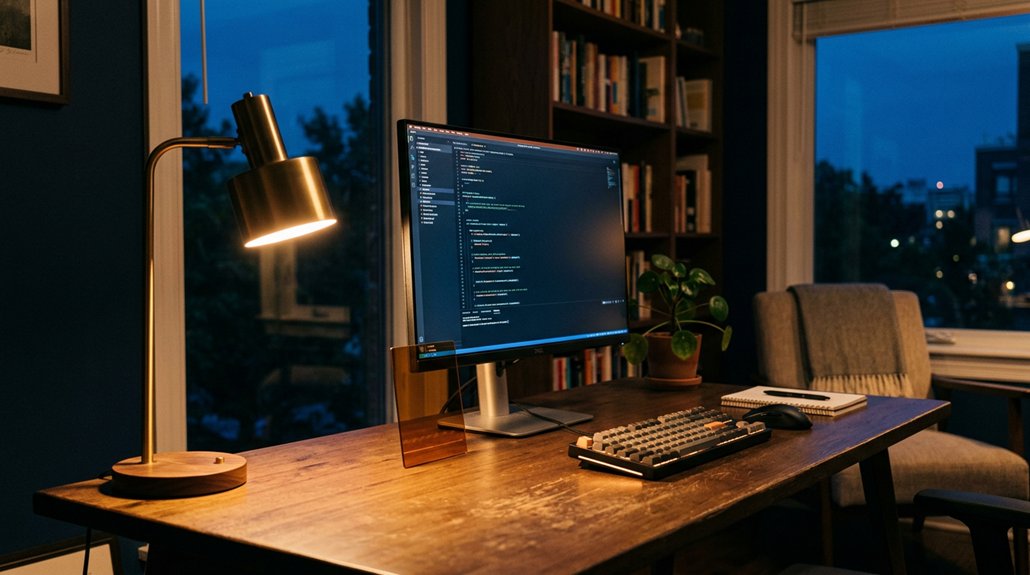
Blue light filters on screens can considerably lessen eye fatigue and support better sleep by cutting down on blue wavelengths. Amber glasses offer a physical barrier that blocks much of the blue light, often outperforming screen filters for eye comfort and sleep quality. Combining both options with warm, dim lighting creates an environment that minimizes strain and supports your natural sleep cycle. Using blue light blocking lenses with high filtering efficiency (98-99%) can further enhance this protective effect during evening screen time.
Effectiveness of Blue Light Filters
Blue light filters are highly effective tools for reducing exposure to the high-energy wavelengths that cause eye strain and disrupt sleep cycles. These filters, whether as screen apps or protectors, effectively block blue light around 450-500 nm, which is linked to digital eye fatigue. Wearing amber glasses, especially in the evening, further enhances comfort by blocking blue light in this range, improving sleep quality. Their effectiveness depends on adaptive technology that minimizes blue light emission gradually as ambient lighting dims, maintaining visual clarity. Consider these points: 1. Blue light filters reduce eye strain by lowering blue light exposure. 2. Amber glasses block wavelengths associated with melatonin suppression. 3. Combining filters with warm, under 3000K lighting maximizes relaxation and reduces headaches. Additionally, choosing high-quality blue light filter overlays with appropriate material hardness and size compatibility ensures optimal performance and durability.
Advantages of Amber Glasses
Amber glasses offer a highly effective way to block a significant portion of blue light, making them one of the best options for reducing eye strain during evening screen use. They filter up to 90% or more of blue light wavelengths between 400-520 nm, which are most harmful to eye comfort and sleep.
Wearing amber glasses in the evening helps protect your eye health by reducing visual fatigue, headaches, and digital eye strain. Additionally, they support sleep quality by maintaining natural melatonin production, preventing blue light’s disruptive effects on your circadian rhythm.
Compared to generic blue light filters, amber glasses provide more thorough blue light blocking, especially during night hours when your eyes and sleep are most vulnerable. They’re a practical choice for anyone looking to improve eye comfort and overall health.
Incorporating blue light filtering technology in glasses can significantly enhance their effectiveness in protecting your eyes during extended screen time in the evening.
Where to Place Lamps for Comfortable Evening Reading
Ever wondered the best way to position your lamp for comfortable evening reading? To reduce eye strain, arrange your lighting so that the light source is slightly behind and above the reading area, angled to illuminate the pages directly.
Use adjustable desk or floor lamps with warm white bulbs (2700K–3000K) to soften the light and create an eye-friendly environment. Position lamps at a 90-degree angle to your body, which helps minimize shadows and keeps your eyes comfortable.
Avoid placing lamps directly in front or behind you to prevent harsh reflections and glare that increase fatigue. Opt for lamps with shades or diffusers to soften light intensity, ensuring an evenly lit space that reduces eye discomfort during extended reading.
Creating a Cozy, Calming Atmosphere With Warm Accent Lights
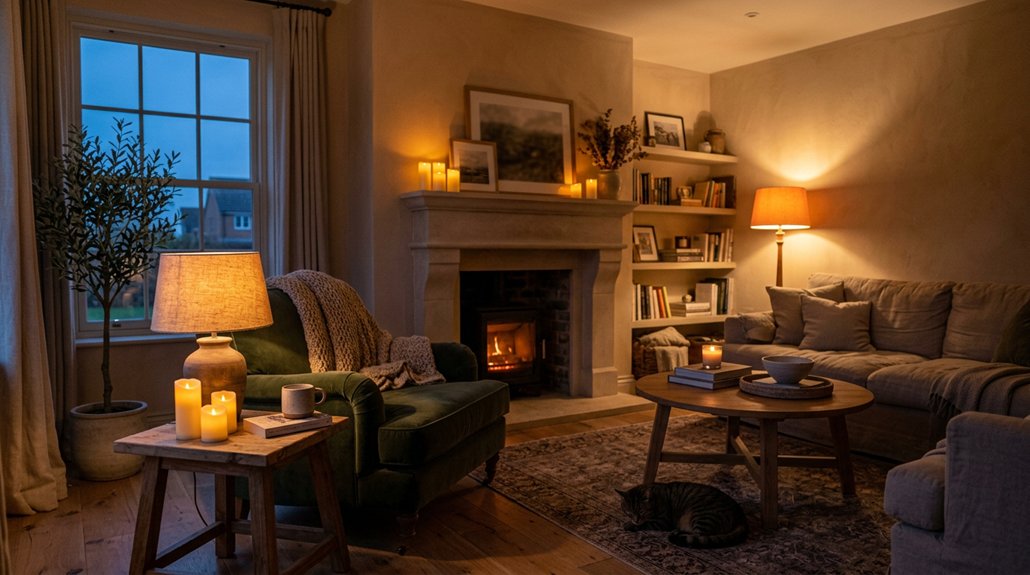
Creating a cozy, calming atmosphere with warm accent lights can make your space more inviting and help ease stress after a long day. Choose warm accent lights with a color temperature between 2700K and 3000K to produce a soft yellow-orange glow that relaxes your eyes.
Using dimmable warm LED bulbs gives you control over brightness, reducing harsh contrasts and glare before bed. Incorporate indirect lighting, like wall sconces or shaded lamps, to soften ambient light and prevent visual fatigue. Layered illumination created with multiple warm accent lights helps distribute light evenly, minimizing eye strain.
Importantly, these lights avoid blue light exposure, supporting natural melatonin production and aiding your wind-down routine. Overall, warm accent lights cultivate a restful, inviting environment perfect for evening relaxation.
Tips to Transition Your Home Lighting for Better Sleep and Less Eye Fatigue
To promote better sleep and reduce eye fatigue, it’s important to gradually shift your home lighting in the evening. Use warm lighting below 3000K to support melatonin production and minimize eye strain.
Incorporate adjustable brightness LEDs or smart bulbs that automatically shift from cooler to warmer tones, easing the switch from daytime brightness. Avoid cool, blue-toned lights late at night, as they can disrupt sleep cycles and increase eye discomfort.
Instead, employ soft, indirect ambient lighting and task lamps to create a calming environment with reduced harsh glare. Material quality can also influence how comfortable lighting feels, as better fabric materials tend to diffuse light more softly and evenly.
Frequently Asked Questions
What Is the Best Lighting to Reduce Eye Strain?
You should choose warm white bulbs between 2700K and 3000K, use dimmable LED lamps, and avoid bright or blue-rich lights. Incorporate soft, indirect lighting and blue light filters on screens to lower eye strain effectively.
Is LED or OLED Better for Eye Strain?
OLED is better for eye strain because it offers deeper blacks, less flicker, and reduced glare. Its adaptive brightness and contrast help minimize fatigue, making it more comfortable for prolonged evening use compared to traditional LED screens.
How to Immediately Reduce Eye Strain?
To immediately reduce eye strain, dim the lights, use warm white bulbs, activate night mode or blue light filters on screens, take frequent breaks, and position lights at a 90-degree angle to avoid glare, minimizing eye discomfort effectively.
What Color Light Is Least Straining on Eyes?
Warm light with yellow-orange hues, around 2700K to 3000K, is least straining on your eyes. It creates a calming environment, minimizes glare, and supports melatonin production, helping reduce eye fatigue and promote better sleep during evening hours.
In Summary
To reduce eye strain in the evening, switch to warm, dimmable, and indirect lighting. Use blue light filters or amber glasses when screens are unavoidable, and place your lamps thoughtfully for comfortable reading. Creating a cozy, calming atmosphere not only eases your eyes but also signals your body that it’s time to wind down. Making these simple lighting adjustments helps you relax better and enjoy your evenings without discomfort.