To relieve eye strain during work breaks, try the 20-20-20 rule: every 20 minutes, look at something 20 feet away for 20 seconds. Do gentle eye exercises like rolling your eyes and switching focus between near and distant objects. Blink slowly and often to keep your eyes moist, and practice palming to relax your eye muscles. Using natural light and adjusting your workspace can also help. Keep exploring these simple techniques to protect your eyes effectively.
Why Regular Breaks Help Prevent Eye Strain

Taking regular breaks during work is essential because it gives your eye muscles a chance to relax after prolonged focus on screens. When you focus on digital devices for long periods, your eye muscles become fatigued, leading to eye strain and discomfort.
A quick break allows these muscles to rest, reducing symptoms like dryness and headaches. It also prompts you to blink more often, which moistens your eyes and prevents dryness caused by staring at screens. Short rests help prevent blurry vision and reduce tension in your neck and shoulders.
How the 20-20-20 Rule Eases Eye Fatigue
By following the 20-20-20 rule, you prevent focus fatigue by giving your eye muscles a break from constant near work. It also encourages natural blinking, which keeps your eyes moist and comfortable. Incorporating blue-light filtration through specialized glasses can further enhance eye comfort during screen use. Regularly shifting focus helps reduce symptoms like headaches and blurry vision, easing overall eye fatigue.
Prevents Focus Fatigue
The 20-20-20 rule helps prevent focus fatigue by giving your eye muscles a much-needed break every 20 minutes. When you shift your gaze to an object 20 feet away, you relax your eye muscles, reducing the strain from prolonged near-focus tasks like screen work. To enhance protection, consider using blue light filter overlays, which can significantly reduce blue light exposure and further lessen eye strain during screen time. This simple practice eases the accommodation stress that builds up with continuous close-up viewing. Additionally, taking these breaks encourages you to blink more often, which replenishes tears and helps relieve eye strain symptoms such as dryness and discomfort. Regularly practicing the 20-20-20 rule keeps your eye muscles from becoming overworked, decreasing the risk of headaches, blurry vision, and other symptoms associated with focus fatigue. It’s an easy, effective way to maintain visual comfort during long work periods.
Promotes Natural Blinking
When you follow the 20-20-20 rule, it naturally encourages you to blink more frequently. This practice helps restore your blink rate, which often drops during prolonged screen use, leading to dry and tired eyes. By shifting focus to objects 20 feet away, you stimulate natural blinking, keeping your eyes moist and comfortable. This simple activity also counters eye strain symptoms like headaches and blurry vision while maintaining eye hydration. Incorporating bias lighting kits can further reduce eye strain by providing consistent indirect illumination that minimizes harsh contrasts.
Simple Eye Exercises to Do During Work Breaks
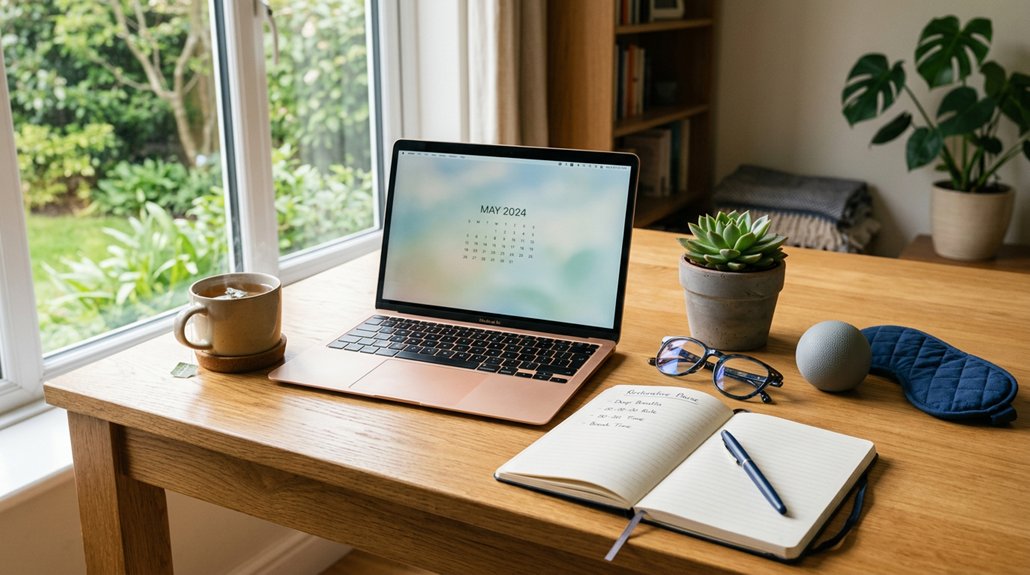
Taking short breaks during work is essential for preventing eye fatigue, and simple exercises can make a significant difference.
Taking quick breaks and simple eye exercises can greatly reduce fatigue and improve comfort during work.
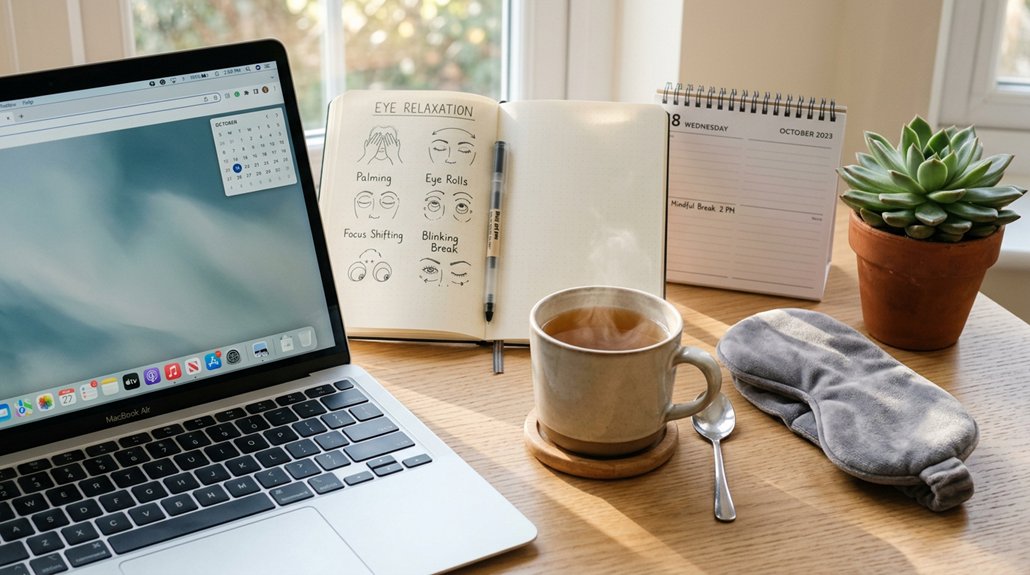
During your work breaks, try the 20-20-20 rule by looking at something 20 feet away for 20 seconds to reduce eye strain. Perform slow eye rolls, moving your eyes clockwise and counterclockwise 5 to 10 times to stretch and relax eye muscles.
Use the slow blink exercise—close your eyes slowly, hold, then open to help replenish tears and ease dryness. Practice refocusing by looking at a finger close to your eyes, then shifting focus to a distant object, repeating three times to boost flexibility.
Finally, try palming by rubbing your palms together, then covering your closed eyes for 30-60 seconds to relax muscles and ease strain. Incorporating glare reduction techniques, like adjusting monitor hoods, can further enhance comfort during screen time.
Relax Your Eyes With Easy Palming Techniques
Relaxing your eyes with easy palming techniques offers an effective way to soothe tired muscles and reduce screen-related strain. To practice palming, rub your palms together to generate warmth, then gently cup them over your closed eyes without applying pressure, blocking out light. This helps relax eye muscles by providing soothing warmth and darkness, easing irritation from prolonged screen use. Incorporating blue-light filtering benefits can further lessen eye fatigue caused by blue light exposure. For maximum benefit, hold the position for 30 to 60 seconds while breathing deeply. You can enhance the relaxation by gently rolling your eyes underneath your palms to stretch tense muscles further. Regularly practicing palming during work breaks can help replenish tear film moisture and reduce symptoms like dry, tired, or burning eyes. Palming is simple, effective, and easy to incorporate into your daily routine.
Why Blinking More Can Reduce Dryness and Discomfort
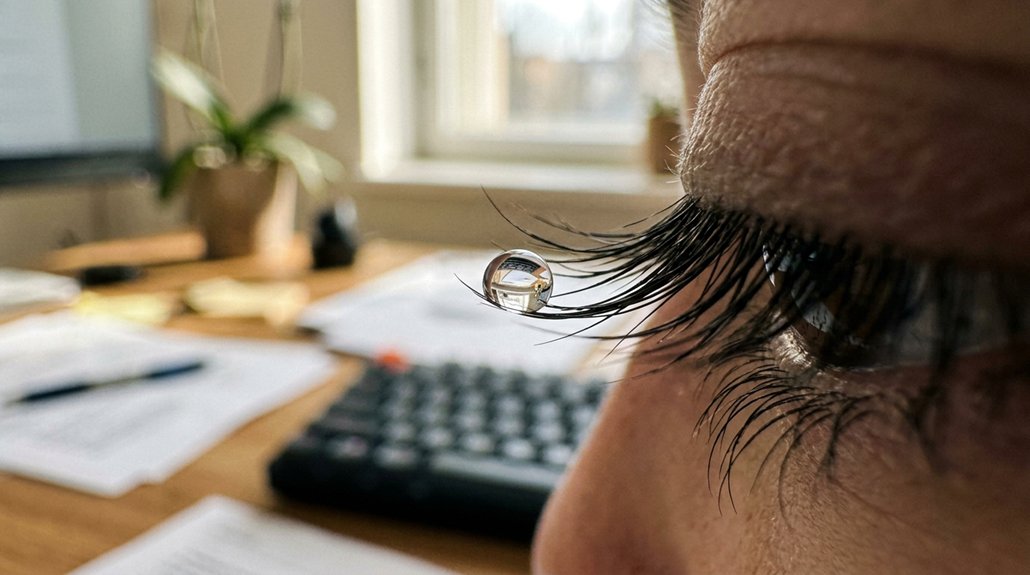
Blinking more helps keep your eyes moist by spreading tears evenly across the surface, reducing dryness and irritation. Practicing slow blinking exercises and consciously increasing your blink rate can restore tear film and ease discomfort. Regularly reminding yourself to blink during screen time guarantees your eyes stay hydrated and less strained. Incorporating sleep mode settings or choosing purifiers with ultra-quiet operation can help you maintain focus during work breaks without distractions.
Importance of Natural Blinking
Natural blinking plays an essential role in keeping your eyes comfortable and healthy, especially during screen use. When you blink naturally, it spreads tears evenly across your eye’s surface, preventing dryness and irritation.
Prolonged screen time can cause your blinking rate to drop by up to 50%, leading to symptoms like burning and redness. Regular, deliberate blinking—such as slow blinks or blinking with yawning—stimulates tear production, helping to maintain proper eye moisture.
Increasing your natural blink frequency during work breaks reduces dryness, itching, and discomfort. Incorporating conscious blinking every 20 minutes can stabilize your tear film, ensuring your eyes stay lubricated and comfortable throughout long periods of work.
Full-spectrum LEDs and good lighting conditions can also support healthier blinking habits and reduce eye strain. Prioritizing natural blinking supports overall eye health and relieves digital eye strain.
Techniques to Increase Blinks
To effectively reduce dryness and discomfort caused by prolonged screen use, adopting specific blinking techniques can be highly beneficial. By consciously increasing your blinking, you help distribute tears evenly across your eye surface, preventing dryness that worsens eye strain.
Practicing the slow blink exercise—closing your eyes like window blinds, holding for a few seconds, then opening slowly—replenishes your tear film and relieves irritation. Combining blinking with yawning activates tear ducts more efficiently, boosting moisture and reducing burning or itching during long work sessions.
Regular, deliberate blinking interrupts tear evaporation and maintains ocular surface lubrication. Incorporating these simple techniques into your work breaks helps keep your eyes comfortable, alleviating dryness-related symptoms and helping prevent the progression of eye strain caused by reduced tear production. Using white noise machines can also create a more focused environment, reducing the need to strain your eyes further in noisy settings.
Quick Gaze Shifts That Relieve Digital Eye Strain
Quick gaze shifts are a simple yet effective way to relieve digital eye strain during screen breaks. These eye exercises involve changing focus between objects at different distances, such as shifting from your finger close to your eyes to something 20 feet away. This helps relax your eye muscles and reduce fatigue. Using flicker-free LED lighting with adjustable color temperature can further minimize eye strain by providing steady, comfortable illumination. Following the 20-20-20 rule—looking at a distant object for 20 seconds every 20 minutes—supports this practice by easing muscle tension caused by fixed screen distances. Incorporating quick vertical and horizontal eye movements, like slowly looking up and down or side to side with eyes closed, also spreads tear film and relieves dryness. Regular quick gaze shifts can greatly improve eye comfort, decreasing symptoms like blurry vision, headaches, and dry eyes from prolonged device use.
How to Use Eye Rolling and Focus Switching for Relief
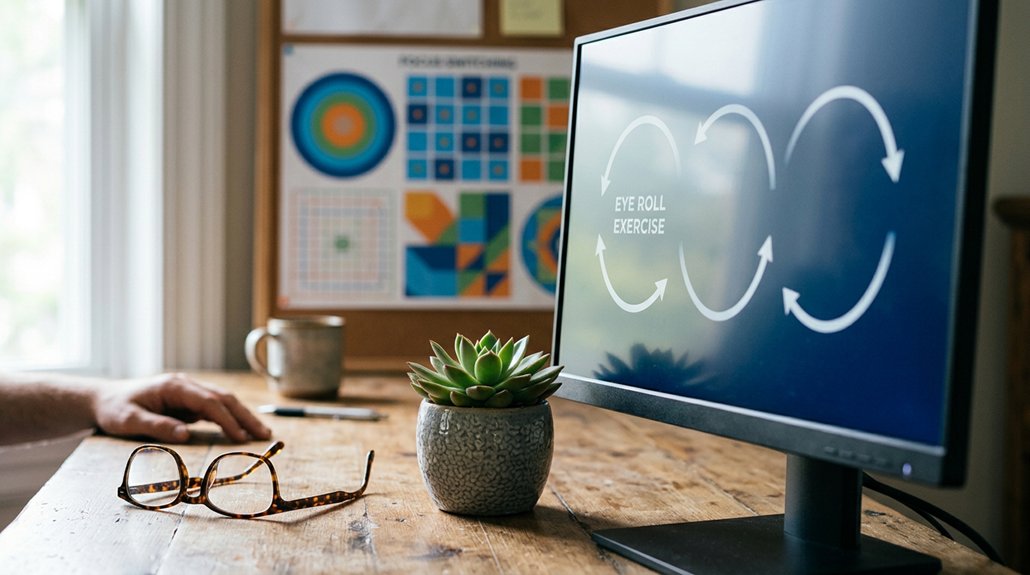
Start by incorporating eye rolling into your breaks, slowly circling your eyes clockwise and counterclockwise to loosen tense muscles. Follow this with focus switching, shifting your gaze between a nearby object and a distant one to boost flexibility. Doing these exercises regularly helps reduce eye fatigue, dryness, and discomfort during long screen sessions. Incorporating blue light reduction into your routine can further protect your eyes from strain and improve overall comfort.
Benefits of Eye Rolling
The benefits of eye rolling exercises lie in their ability to strengthen eye muscles and release built-up tension. By slowly rotating your eyes clockwise and counterclockwise, usually 5 to 10 times per session, you can help reduce eye strain and fatigue.
These exercises stimulate tear distribution, preventing dryness and easing muscle relaxation around your eyes. Combining eye rolling with focus switching can further enhance relief, as it trains your eye muscles to adjust efficiently between near and distant objects.
Remember to perform eye rolls gently, without involving your neck, to isolate eye muscles and avoid dizziness. Regularly practicing this simple exercise during work breaks helps refresh tired eyes, improve coordination, and protect against long-term digital eye strain issues.
Focus Switching Techniques
Building on the benefits of eye rolling, incorporating focus switching exercises further enhances relief by actively engaging your eye muscles. These exercises help prevent eye strain caused by staring at screens for too long.
To do focus switching, hold a finger at arm’s length and focus on it, then shift your focus to a distant object. Repeat this process three times in each session. Combining this with eye rolling—done 5 to 10 times—relieves tension and improves muscle flexibility.
These techniques promote better coordination of your eye muscles, counteracting the stress of fixed focal distances. Performing focus switching and eye rolling every 20-30 minutes during work helps maintain visual comfort and reduces symptoms like blurry vision and headaches, keeping your eyes relaxed and healthy throughout the day.
Desk-Friendly Eye Stretches to Reduce Tiredness
Feeling tired eyes after hours at your desk? Try these simple eye care exercises to ease eye strain during work breaks. Start with eye rolling; gently circle your eyes clockwise and counterclockwise 5 to 10 times to stretch muscles. Use the 20-20-20 rule: look at something 20 feet away for 20 seconds every 20 minutes. Close your eyes, then move your gaze up and down, left and right, three times each to relieve tension. Practice refocusing by shifting your gaze from a finger close to your nose to a distant object three times.
| Exercise | Benefits |
|---|---|
| Eye rolling | Relax eye muscles |
| 20-20-20 rule | Reduce focus fatigue |
| Gaze movement | Release tension |
| Refocus exercise | Strengthen focusing muscles |
These exercises to try keep eye strain at bay and promote better eye care.
Using Natural Light to Make Your Workspace More Eye-Friendly

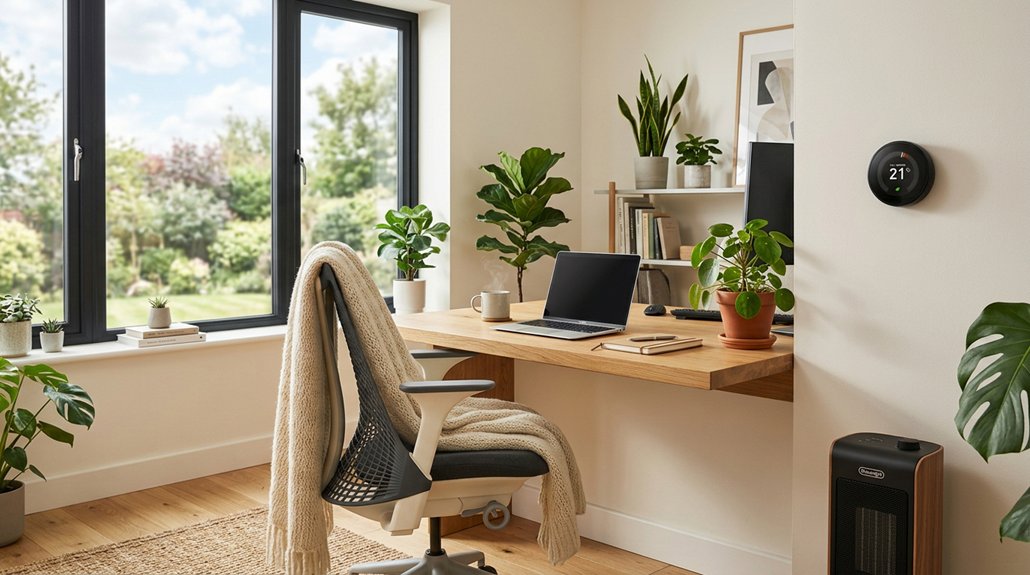
Maximizing natural light in your workspace can greatly reduce eye strain and improve overall comfort. Position your desk near a window or in a well-lit area to help reduce eye strain, as natural light is more gentle than artificial lighting.
Taking breaks to look outside at natural light relaxes your eye muscles and helps improve focus, complementing the 20-20-20 rule with varied visual stimuli. Natural light also helps regulate your circadian rhythm, which can lessen digital eye strain caused by blue light from screens.
Be sure to control glare by using blinds or curtains, maintaining comfortable brightness and preventing pupil strain. Incorporating natural light creates a healthier environment and can alleviate symptoms like dry eyes and headaches associated with prolonged screen use.
Setting Up Your Desk to Support Eye Health
Creating an ergonomic workspace is essential for supporting your eye health during long hours at your computer. Position your screen about an arm’s length (20-30 inches) away and slightly below eye level to reduce eye and neck strain. Use adjustable chairs and desks to promote proper posture, keeping your feet flat and back well-supported. These ergonomic adjustments help minimize posture changes that can lead to fatigue. To further protect your eyes, incorporate ambient lighting that cuts glare—use anti-glare protectors and position lights to the side. Keep frequently used items within easy reach, minimizing unnecessary eye and head movements. Proper setup guarantees your eyes remain comfortable, reducing strain and promoting productivity.
| Aspect | Recommendations |
|---|---|
| Screen Position | 20-30 inches away, slightly below eye level |
| Ergonomic Furniture | Adjustable chairs and desks for correct posture |
| Lighting Setup | Use anti-glare filters, indirect lighting to reduce glare |
| Item Placement | Keep essentials within reach for minimal eye and head movement |
Signs You Need More Breaks or Should See an Eye Specialist
Noticing frequent headaches, blurry vision, or dry, watery eyes during your workday often signals that it’s time to take more breaks or consult an eye specialist. These eye strain symptoms indicate your eyes might be overworked or need professional evaluation.
If you experience difficulty focusing on objects both near and far, combined with burning sensations or discomfort, it’s a clear sign to see an eye doctor.
Recurring neck or shoulder pain related to prolonged screen use can also indicate poor posture contributing to eye strain, requiring both rest and ergonomic adjustments.
If eye fatigue or light sensitivity persists despite taking regular breaks and performing home exercises, don’t delay seeking an optometrist’s advice. Recognizing these signs guarantees timely intervention and better eye health.
Incorporate Eye Care Into Your Daily Routine for Long-Term Relief
Incorporating simple eye care routines into your daily schedule can provide long-term relief from eye strain and discomfort. Regularly practicing eye vision exercises helps prevent fatigue and dryness. For example, follow the 20-20-20 rule by looking at something 20 feet away for 20 seconds every 20 minutes. During breaks, blink slowly and yawn to help replenish your tear film and soothe dryness. Perform eye movement exercises—close your eyes, then move your gaze up, down, left, and right three times to relax tired muscles. Refocusing exercises, like switching focus between your finger and distant objects, can enhance flexibility. Use warm palming techniques during breaks: cup your palms over closed eyes for 30–60 seconds to relax muscles and help relieve eye strain.
| Exercise | Description | Benefits |
|---|---|---|
| 20-20-20 rule | Look 20 ft away for 20 sec every 20 min | Decreases muscle fatigue and dryness |
| Blinking & yawning | Slow blink and yawn during breaks | Replenishes tears, reduces dryness |
| Eye movement | Move gaze up, down, left, right (3 times) | Relaxes eye muscles |
| Refocusing | Switch focus from nearby finger to distant objects | Improves eye flexibility, reduces strain |
Frequently Asked Questions
How to Deal With Eye Strain From Work?
You can reduce eye strain by following the 20-20-20 rule, blinking slowly, doing eye movements, shifting focus between nearby and distant objects, and taking regular breaks to rest and soothe your eyes with palming.
What Is the 20 Minute Rule for Eye Strain?
The 20-minute rule for eye strain suggests taking a break every 20 minutes, focusing on something 20 feet away for at least 20 seconds. This helps relax your eye muscles, reduce fatigue, and prevent discomfort.
Can High Cortisol Cause Blurry Eyes?
Yes, high cortisol can cause blurry eyes. It disrupts blood sugar balance, increases eye pressure, and affects muscle tension, leading to temporary vision issues. Managing stress effectively helps reduce these cortisol-related eye disturbances.
How to Rest Overworked Eyes?
To rest your overworked eyes, follow the 20-20-20 rule, perform slow blinking exercises, practice palming, move your gaze gently in all directions, and take regular breaks. These steps relax your eye muscles and reduce fatigue effectively.