To combat office fatigue effectively, focus on creating an ergonomic workspace with eye-level monitors, supportive chairs, and proper lighting to reduce strain. Develop a daily routine that includes consistent sleep, regular breaks, and physical activity to boost energy. Manage stress with relaxation techniques like deep breathing or meditation, and keep track of your energy patterns to identify what works best. Stay motivated and informed—more helpful tips await if you continue exploring!
What Are the Main Causes of Office Fatigue and How Can You Recognize Them?
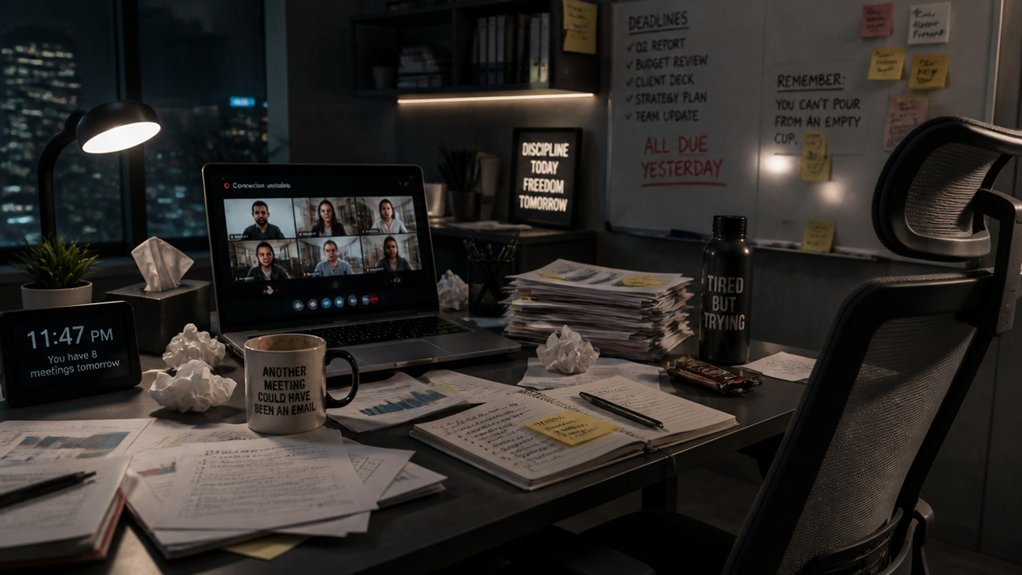
Ever wondered what triggers office fatigue? It’s often caused by prolonged sitting, which leads to physical exhaustion and muscle tension, worsening fatigue.
Work stress and irregular hours can disrupt sleep patterns, resulting in persistent tiredness and reduced concentration. These issues impair your focus, slow reaction times, and increase mistakes, affecting overall productivity.
Poor workplace ergonomics, like bad posture and inadequate lighting, intensify eye strain and muscle fatigue, making you feel even more drained.
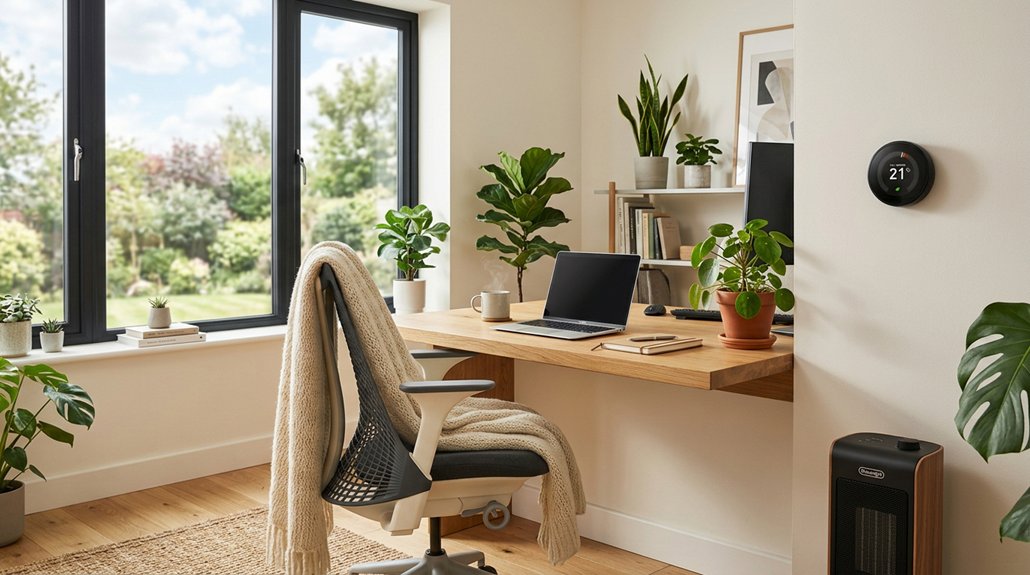
Using ergonomic office chairs with features like adjustable lumbar support and dynamic tilt functions can help alleviate some sources of strain and improve comfort.
Recognizing signs such as decreased motivation, sluggishness, and frequent errors can help you identify fatigue early. Chronic office fatigue not only hampers your daily performance but also raises risks of workplace injuries, absenteeism, and long-term health problems like depression and cardiovascular issues.
Staying aware of these causes is key to addressing fatigue effectively.
Set Up an Ergonomic Workspace That Keeps You Energized
Are you maximizing your workspace to stay energized throughout the day? An ergonomically designed setup can make a big difference in fatigue management.
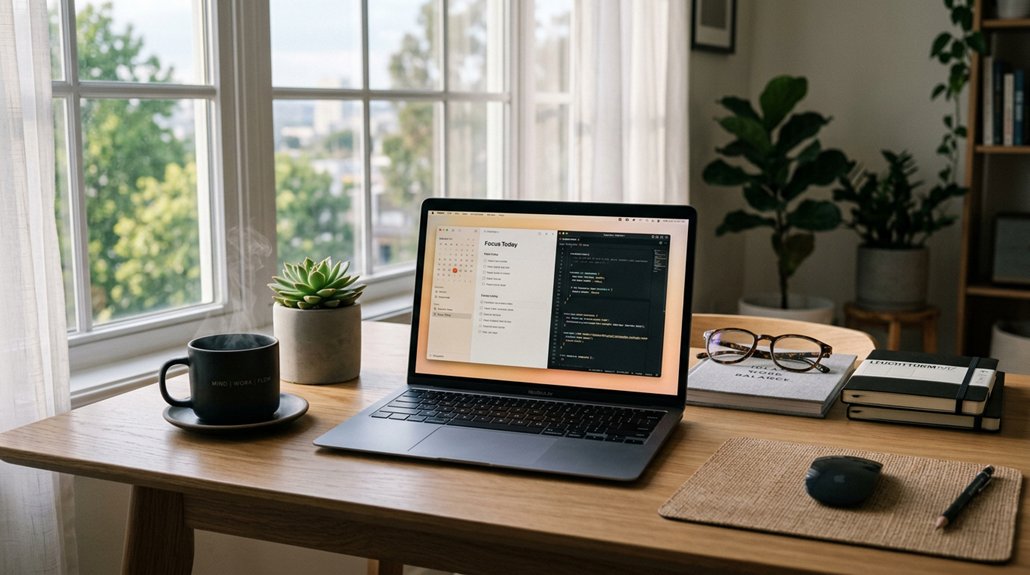
Position your monitor at eye level and about 20 inches away to reduce neck strain and eye fatigue. Use an adjustable chair that supports your lower back and allows both feet to rest flat on the floor, promoting good posture and physical health.
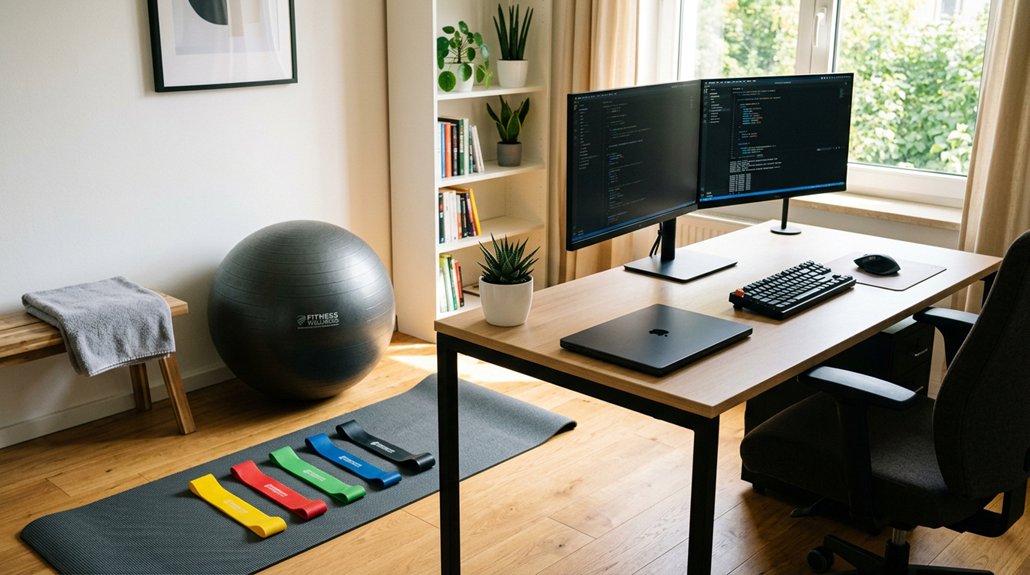
For multi-screen setups, consider using adjustable monitor stands to align your monitors at the proper height and angle, reducing strain and improving posture. Keep your keyboard at elbow height with wrists straight to prevent repetitive strain injuries. Optimize lighting to avoid glare and reflections that cause eye strain.
Remember to take regular breaks—stand, stretch, or walk every 30 minutes—to reduce muscle tension and stay alert. Combining this workspace setup with a healthy diet supports your energy levels and helps you stay focused all day.
Build Daily Routines That Boost Your Energy and Focus
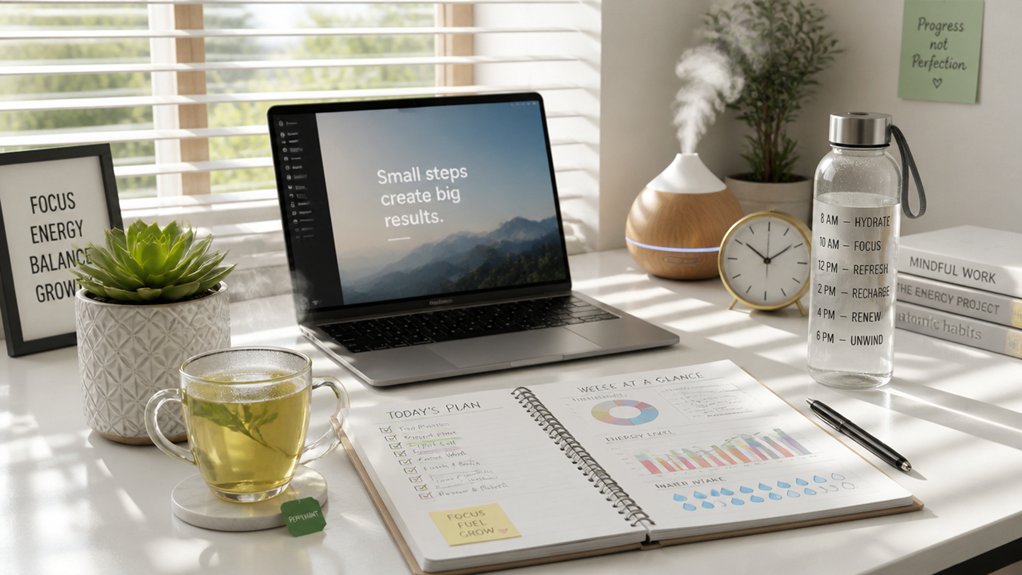
Building daily routines that boost your energy and focus starts with setting a consistent sleep schedule. A good night’s sleep enhances your alertness and concentration throughout the day.
To maximize energy, follow these steps:
- Incorporate frequent breaks every 30 minutes during work to reduce muscle fatigue and stay alert.
- Start your day with a balanced diet rich in complex carbs and protein, fueling your metabolism and maintaining mental clarity.
- Integrate physical activity, like stretching or brisk walking, to boost mood, circulation, and cognitive function.
- Choosing an supportive anti-fatigue mat can help reduce discomfort during long hours of standing, contributing to overall comfort and energy levels.
Additionally, stay hydrated and practice sleep hygiene to guarantee restful nights. Developing routines that prioritize these habits helps you reduce stress, conserve energy, and improve overall focus during office hours.
Manage Workplace Stress With Simple Relaxation Techniques
When work stress starts to build up, practicing simple relaxation techniques can quickly help you regain focus and reduce tension. Deep breathing exercises during breaks lower stress hormone levels, boosting your mental health and reducing work-related fatigue.
Incorporate mindfulness meditation for at least 10 minutes daily to enhance mental clarity and manage stress effectively. Engaging in brief yoga or stretching routines relaxes your mind and body while decreasing muscle tension caused by office stress.
Guided relaxation techniques like progressive muscle relaxation or calming mantras counteract fatigue and increase your energy levels. Scheduling short social interactions or enjoyable activities helps relieve stress, lift your mood, and maintain focus throughout the day.
These relaxation techniques support stress management and help you stay energized, reducing fatigue.
Track Your Energy Levels to Find What Works Best for You
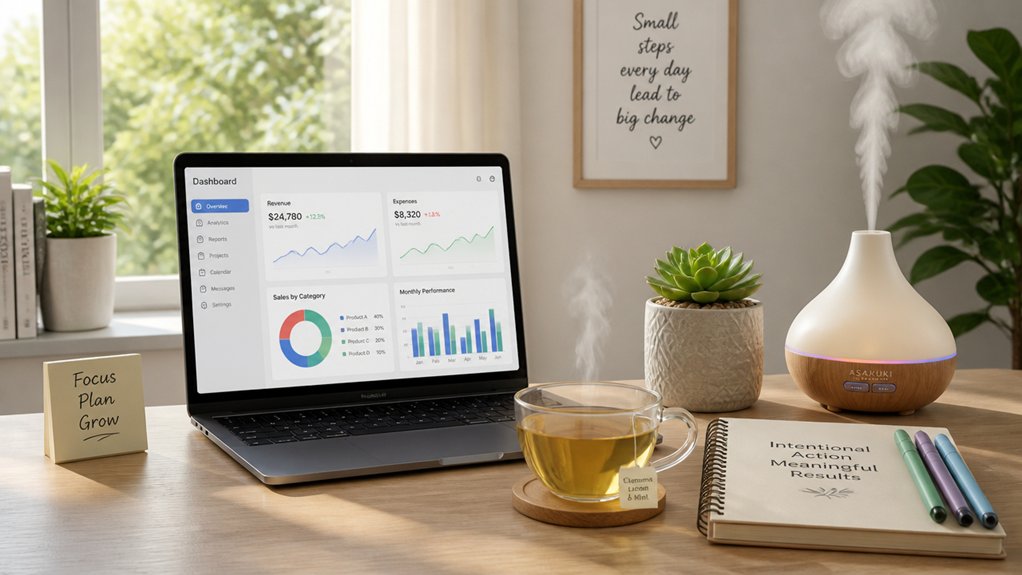
Tracking your energy levels throughout the day helps you understand how various factors influence your productivity and fatigue. By keeping a daily log of energy highs and lows, you’ll uncover patterns linked to workload, nutrition, and breaks. Incorporating insights from air filtration efficiency can also help you optimize your environment for better focus and less fatigue. Use this data to adjust your schedule—timing tasks during alertness peaks and taking breaks during natural dips. To manage fatigue effectively, try experimenting with different strategies like short walks, hydration, or stretching, and note their impact on your energy levels. Also, pay attention to how sleep quality, meal timing, and caffeine intake affect your blood sugar levels and overall energy. Take steps to maintain your energy levels, prevent and manage fatigue, and reduce fatigue risk by reviewing your tracked data regularly to identify what truly works best for you.
Frequently Asked Questions
How Can I Improve My Posture to Reduce Fatigue?
To improve your posture and reduce fatigue, sit upright with your back supported, keep your feet flat on the floor, and align your monitor at eye level. Take regular breaks and stretch to maintain comfort and circulation.
What Snacks Are Best for Sustained Energy During Work?
You should snack on nuts, fruits, yogurt, or whole grains for sustained energy during work. These options provide stable blood sugar levels, healthy fats, and fibers that keep you energized and focused without crashes.
How Does Lighting Affect Office Fatigue and Productivity?
Lighting impacts your office fatigue and productivity greatly; bright, natural light boosts alertness, while dim or harsh lighting causes eye strain and drowsiness. Adjust your environment with proper illumination to stay energized and focused throughout your workday.
Can Desk Exercises Help Prevent Tiredness and Stiffness?
Yes, desk exercises help prevent tiredness and stiffness by boosting circulation, reducing muscle tension, and re-energizing you, making it easier to stay focused and productive throughout your workday. Regular movement benefits your overall well-being.
What Are Quick Mental Breaks to Refresh My Focus?
You can refresh your focus with quick mental breaks by practicing deep breathing, visualizing calming scenes, doing light stretches, listening to music, or briefly stepping outside for fresh air, helping boost your energy and mental clarity quickly.