

You’ll boost posture and circulation by adding an adjustable, anti‑slip footrest that aligns your hips and knees, encourages micro‑movements, and eases lumbar strain. Choose a model with height, rocking, and tilt options so you can fine‑tune it as your desk changes. Look for sturdy materials—hardwood, foam, or textured plastic—and a non‑sliding base for stability. Easy‑clean surfaces and a 400 lb capacity keep it durable, and the right footrest will complement your ergonomic setup for all‑day comfort. Continue for more details on top picks and buying guides.
Key Criteria for a Desk Footrest
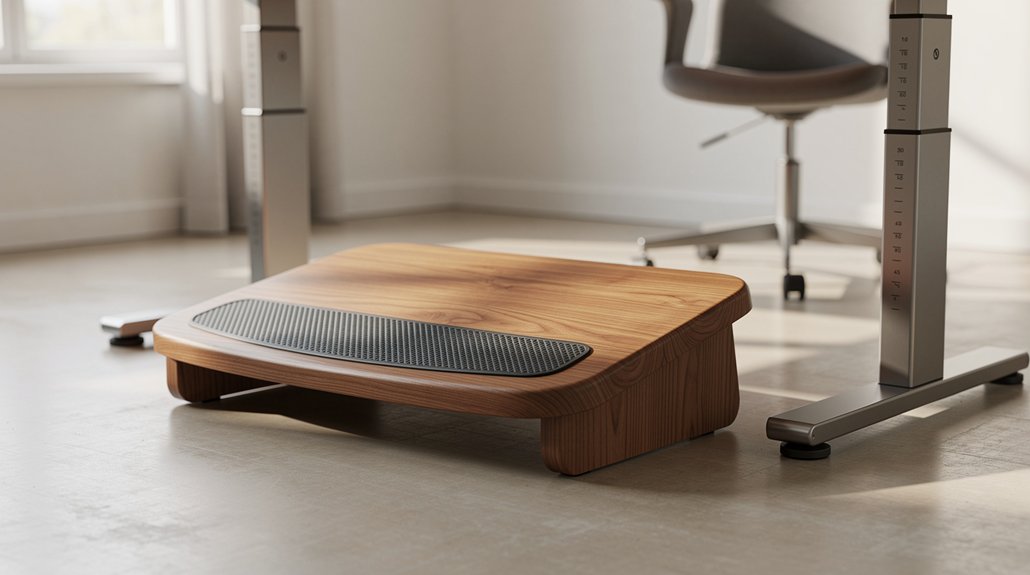
A good desk footrest should keep your legs comfortable and your posture aligned by positioning your knees at a right angle and supporting a neutral sitting position. When you choose a footrest, prioritize adjustable height so you can fine‑tune the angle as your desk moves.
Look for anti‑slip bottoms that lock the unit in place on carpet or hardwood, preventing unwanted sliding. A sturdy, removable surface makes cleaning easy and extends durability.
You also want a slight rocking or tilt feature that encourages micro‑movements, helping you stay active without sacrificing stability. Remember, the footrest supplements a well‑set chair and desk, not replaces proper ergonomic habits. By matching these criteria, you’ll sustain comfort throughout the workday.
Spine & Circulation Benefits of an Under‑Desk Footrest
Ever wondered how a simple footrest can transform your spine health? When you place a footrest under your desk, it aligns your lower body, keeping hips and knees at a neutral angle. This reduces pressure on the lumbar spine, easing shoulder and back strain. By elevating your feet, the footrest encourages subtle movement, which boosts circulation and prevents leg stiffness during long work sessions. The anti‑slip surface holds you steady while the rockable design promotes micro‑adjustments, discouraging static posture.
Shorter users especially benefit, as the footrest keeps feet planted and supports proper chair height, eliminating dangling legs. Overall, the footrest improves posture, enhances circulation, and protects your spine throughout the day.
Height, Rocking & Tilt Adjustability

Wondering how a footrest can adapt to every working posture? You’ll find that height, rocking, and tilt adjustability let you fine‑tune support whether you sit, stand, or shift weight.
Height, rocking, and tilt adjustability let you fine‑tune foot support for any posture.
The StrongTek model offers four height settings, so you can raise or lower the platform to match your desk level and leg length.
Humanscale’s FR300 Upgrade slides smoothly between 3.75 and 6.75 inches thanks to ball‑bearing rollers, giving you precise height control without wobble.
Huanuo adds a 30‑degree tilt and three rockable positions (4.3–6.7 inches), letting you tilt your feet forward or back for comfort.
Even the RIAMTGCX standing option includes an upper bar and three height adjustments, encouraging dynamic leg movement while you work.
All these features keep your posture aligned and reduce fatigue.
Choosing the Right Material: Wood, Foam, or Plastic
When you compare wood, foam, and plastic footrests, the material determines durability, comfort, and maintenance. Wood offers a premium look and high durability, supporting up to 400 lb with a sturdy foundation. Foam provides dense cushioning, shape retention, and easy‑wash covers, while plastic delivers lightweight affordability and textured surfaces for extra foot relief. Choosing wisely lets you match your budget, aesthetic, and daily use.
1. Durability – Wood’s hardwood plywood outlasts foam’s compression and plastic’s wear.
22. Comfort – Foam’s plush feel eases pressure; plastic’s massaging texture adds variety.
33. Maintenance – Wipe‑clean wood and plastic; remove and machine‑wash foam covers.
4. Budget – Plastic stays cheapest; wood sits mid‑range; foam balances cost and comfort.
Material & Anti‑Slip Considerations for All‑Day Comfort

You’ll want a footrest with a durable anti‑slip surface so your feet stay steady even during long work sessions.
Choose breathable materials—like wood or metal with perforated pads—to keep your feet cool and comfortable.
A textured top or removable cover adds extra grip and easy cleaning, extending the rest’s life.
Durable Anti‑Slip Surfaces
Ever wondered why a footrest that stays put feels so much more comfortable? You’ll notice that a solid anti‑slip surface paired with durability keeps your feet steady all day, preventing the tiny shifts that cause fatigue.
- Rubberized top – StrongTek’s 9‑inch rubberized surface grips both bare and socked feet, delivering instant traction.
- Textured bottom – Anti‑slip bottom construction stops sliding when you roll or tilt the footrest, safeguarding your posture.
- Hardwood platform – Lauan hardwood endures up to 400 lb, preserving surface grip without deformation.
- Steel‑reinforced wood – Humanscale FR300’s steel frame supports a wooden platform, maintaining non‑slip footing through constant use.
Choosing a footrest with these material and anti‑slip considerations ensures you stay comfortable, focused, and safe from morning until evening.
Breathable Material Choices
Why settle for a stifling footrest when breathable materials can keep your feet cool and secure all day? Choosing the right footrest material means you’ll feel fresh, even during long meetings. A breathable fabric cover lets air circulate, preventing sweat buildup while the anti‑slip bottom holds firm on carpet or tile. Look for models that combine ergonomic design with mesh or moisture‑wicking layers, so your feet stay supported and dry. Removable, machine‑washable covers add hygiene and convenience, letting you swap for a fresh layer whenever needed. Pairing a breathable top with a sturdy, non‑slip base ensures stability, pressure relief, and all‑day comfort without compromising posture.
Budget‑Friendly Ergonomic Options
Looking for a cost‑effective way to improve posture at your standing desk? A budget‑friendly ergonomic footrest can give you the support you need without breaking the bank. You’ll still enjoy proper alignment, reduced fatigue, and a cleaner workspace while keeping expenses low.
- Everlasting Comfort – Soft padded footrest for $29, machine‑washable, easy to clean.
- Cushion Lab – Mid‑range option at $55, sturdier build, quieter rocking.
- DIY Foam Pad – Cut a high‑density foam block, add a non‑slip mat, virtually free.
- Adjustable Wooden Rest – Simple wooden platform with a screw‑adjustable angle, inexpensive and durable.
These picks let you start with an affordable entry point, then you can upgrade later if you need extra durability or premium features.
Top Picks: ComfiLife, Humanscale FR300, Huanuo

You’ll appreciate ComfiLife’s removable cover that keeps things clean while you work.
The Humanscale FR300’s rock‑solid wood platform feels sturdy and adds a sleek, professional look to your desk.
Huanuo’s textured surface gives your feet a gentle massage, helping you stay comfortable during long sessions.
ableLife: Removable Cover Design
Ever wondered how a removable cover can keep your footrest looking fresh while delivering plush support? The ComfiLife model nails it with a machine‑washable removable cover that slides on effortlessly. Its high‑density plush foam cushions your feet, and the cover’s quick‑release snaps make cleaning a breeze, giving you easy maintenance without sacrificing comfort. The 2‑inch height adjustment lets you fine‑tune ergonomics, while the fabric resists stains and wear.
- Machine‑washable cover for hassle‑free cleaning
- Snap‑on design that saves time
- Plush foam layer for superior cushioning
- Two height options (3.9″ or 5.9″) for personalized support
Humanscale FR300: Rock‑Solid Wood Platform
If a removable cover keeps the ComfiLife footrest fresh, the Humanscale FR300 takes durability up a notch with its solid wood platform and steel frame. You’ll appreciate the footrest glides smoothly on ball‑bearing rollers, letting you enjoy a gentle rocking action that eases tension in your legs. The nonskid strips keep you steady, whether you’re barefoot or in shoes, while the height range of 3.75‑6.75 inches lets you match any desk. Its rock‑solid construction isn’t just aesthetic; it promises long‑term durability backed by a lifetime warranty. You’ll appreciate improved circulation during long work sessions, and the sleek wood‑and‑steel look fits nicely under shared desks without looking cheap. This upgrade pick balances sturdy design with comfortable movement.
Huanuo: Textured Massaging Surface
Looking for a footrest that actually massages your feet while you work? The Huanuo adjustable desk footrest delivers a full‑foot massage with its textured surface of circular beads. As you sit, the beads press into your soles, boosting circulation and easing tension. You can slide the height between 4.3 and 6.7 inches, rock it gently, or tilt it for multi‑axis comfort. The plastic frame comes in black, gray, or white, and it arrives pre‑assembled—no extra setup or warranty needed. While the rocking isn’t as buttery as premium picks, the constant foot massage and circulation support make it a solid, affordable choice.
- Textured surface with massaging beads
- Height‑adjustable 4.3–6.7 in range
- Rockable and tiltable for custom comfort
- Pre‑assembled, budget‑friendly design
Rocking vs. Fixed‑Angle: When to Choose Which

Why choose a rocking footrest over a fixed‑angle one? If you crave movement, a rocking design keeps your legs active, boosts circulation, and lets you fidget without breaking focus. Its back‑and‑forth motion encourages micro‑adjustments that suit NEAT habits, especially when you stand or shift weight frequently.
Conversely, a fixed‑angle footrest delivers stable, precise height support, helping you lock in a consistent posture while typing. Its durability and exact height range shine during long seated sessions where uninterrupted support matters.
Pick rocking when you want dynamic relief and circulation; opt for fixed‑angle when you need steady, reliable alignment for sustained work. Both styles protect posture, so match the footrest to your workflow and ergonomics.
Cleaning & Maintenance Guidelines
Choosing the right footrest is only half the battle; keeping it clean and functional is the other. For the StrongTek Under Desk Footrest, footrest maintenance is simple and keeps the anti‑slip surface performing its best. Follow these cleaning guidelines to protect the Lauan hardwood plywood and the 400‑lb capacity.
- Wipe the top and bottom with a damp microfiber cloth after each use; avoid harsh chemicals that could degrade the anti‑slip coating.
- Spot‑clean spills immediately using mild soap and water, then dry thoroughly to prevent warping.
- Inspect the adjustable hinges weekly; tighten any loose screws with the supplied Allen key.
- Apply a thin layer of wood‑safe polish quarterly to preserve the finish and maintain traction.
These steps ensure longevity and consistent ergonomic support.
How a Footrest Complements Your Ergonomic Setup
You’ll notice that an adjustable footrest lets you switch between active sitting and relaxed positions, keeping your legs engaged and reducing fatigue.
By fine‑tuning the height, you can align your knees with your hips, which promotes a neutral spine and smoother circulation.
This simple tweak integrates seamlessly with your desk and chair, completing a truly ergonomic workstation.
Active Sitting Benefits
Ever notice how a simple footrest can turn a static chair into a hub of micro‑movements? When you place your feet on a footrest, you invite subtle shifts that keep blood flowing, reduce leg stiffness, and reinforce a neutral posture. The gentle rocking or tilting activates NEAT (non‑exercise activity thermogenesis), so you stay alert without sacrificing comfort.
- Improved circulation – feet elevation encourages venous return, easing swelling.
- Dynamic posture support – rocking aligns thighs parallel to the floor, preventing slouching.
- Reduced nerve compression – proper foot placement eases pressure on the backs of the legs.
- Enhanced focus – micro‑movements increase oxygen delivery to the brain, boosting productivity.
Footrest Height Adjustability
Have you ever noticed how a simple adjustment in footrest height can transform your ergonomic setup? An adjustable height footrest lets you fine‑tune support so your feet rest flat and your knees stay neutral, which directly improves leg circulation. When you shift from sitting to standing, a 3‑to‑6‑inch range accommodates both postures, preventing dangling feet and keeping your chair aligned. Precise increments let you match wrist‑to‑elbow alignment while typing, reducing strain on forearms.
Shorter users benefit most, because they can raise the footrest enough to avoid awkward angles without sacrificing comfort. Pairing this flexibility with a sit‑stand desk also encourages micro‑movements, breaking static posture and enhancing overall comfort throughout the day.
Quick Selection Checklist for the Perfect Under‑Desk Footrest
Looking for a footrest that truly complements your adjustable desk? You’ll want a model that boosts posture, encourages movement, and fits your workflow. Use this quick checklist to narrow down the perfect under‑desk footrest.
A footrest that enhances posture, encourages movement, and seamlessly fits your adjustable desk workflow.
- Adjustability & Tilt – Ensure height and tilt can be fine‑tuned; a rocking option adds natural motion and improves circulation.
- Surface Size & Grip – Aim for a non‑slip surface around 9 inches with anti‑slip bottoms for carpet and hard floors.
- Durability & Capacity – Choose materials like hardwood or aluminum that support up to 400 lb for daily use.
- Cleaning & Maintenance – Look for removable, machine‑washable covers or textured surfaces that stay hygienic and easy to clean.
Where to Buy the Best Desk Footrest Deals
After narrowing down the features you need, the next step is finding where to snag the best footrest deals. Head to the Uplift Desk website, where the Promotion section highlights ergonomic footrests for adjustable desks at reduced prices. Use coupon code STARS before Memorial Day Savings—valid through 05/26/2026—to apply promotion/discounts to the subtotal before tax and shipping. Browse the bestsellers and new arrivals; top brands like Humanscale and Steelcase appear alongside the Collegiate Collection. If you have questions, live‑chat or call 800‑349‑3839 during business hours. Compare specs, read reviews, and add the footrest to your cart before the sale ends, ensuring you secure the best deal for a healthier workstation.
Frequently Asked Questions
Are Footrests Good for Posture?
Yes, footrests improve your posture by aligning knees, reducing thigh pressure, and keeping feet stable. They promote circulation, prevent dangling legs, and let you maintain a neutral seated position throughout work.
What Is the 20/8-2 Rule for Standing Desks?
You follow the 20/8‑2 rule by standing 20 minutes, sitting 8 minutes, then moving for 2 minutes, repeating this cycle throughout your workday to keep circulation flowing and fatigue low.
Do Chiropractors Recommend Standing Desks?
You’ll find that most chiropractors don’t explicitly endorse standing desks; they suggest using them responsibly, maintaining neutral alignment, and incorporating movement or footrests to support posture and reduce strain.
How to Improve Posture at a Standing Desk?
You’ll improve posture at a standing desk by keeping your monitor eye‑level, aligning elbows at 90°, using a footrest to shift weight, standing on a cushioned mat, and taking short movement breaks every hour.
In Summary
By adding a footrest under your adjustable desk, you’ll boost posture, improve circulation, and stay comfortable all day. Pick a model with height, rocking, and tilt options, and choose a material that feels right and stays slip‑free. Keep it clean, and it’ll seamlessly fit into your ergonomic setup. Follow the quick checklist, and you’ll find the perfect footrest that supports your health and productivity.

Leave a Reply