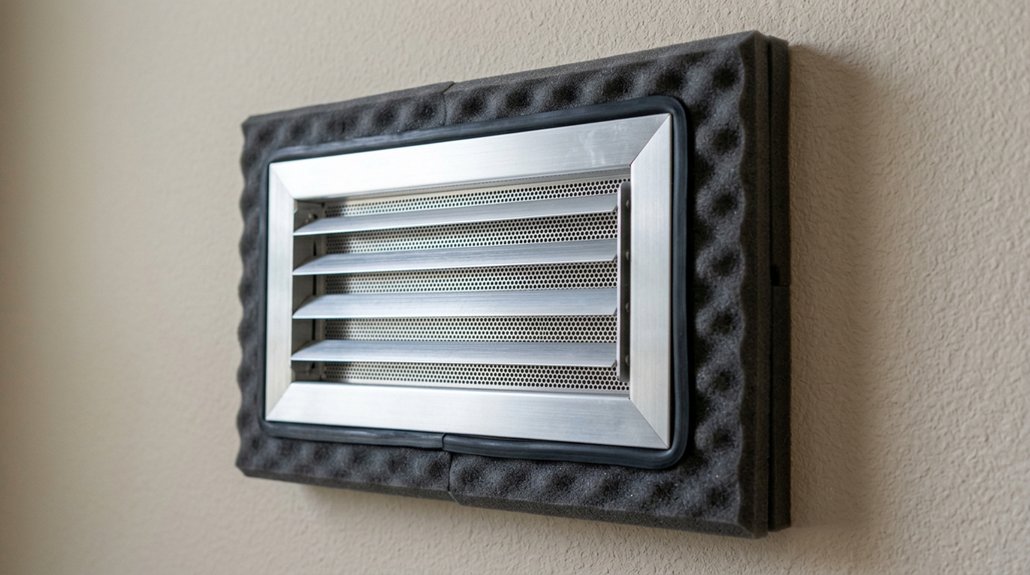
To reduce HVAC noise while working, start by inspecting your system for loose or vibrating components and tighten or replace them. Install sound barriers like acoustic panels, enclosures, or soundproof curtains to block airborne noise and echoes. Use vibration isolators and flexible duct connectors to prevent vibrations from spreading. Regularly maintain your system by cleaning filters and lubricating moving parts to minimize squeaks and rattles. Keep listening to discover more effective tips to create a quieter workspace.
Why HVAC Noise Matters and How It Affects Your Space
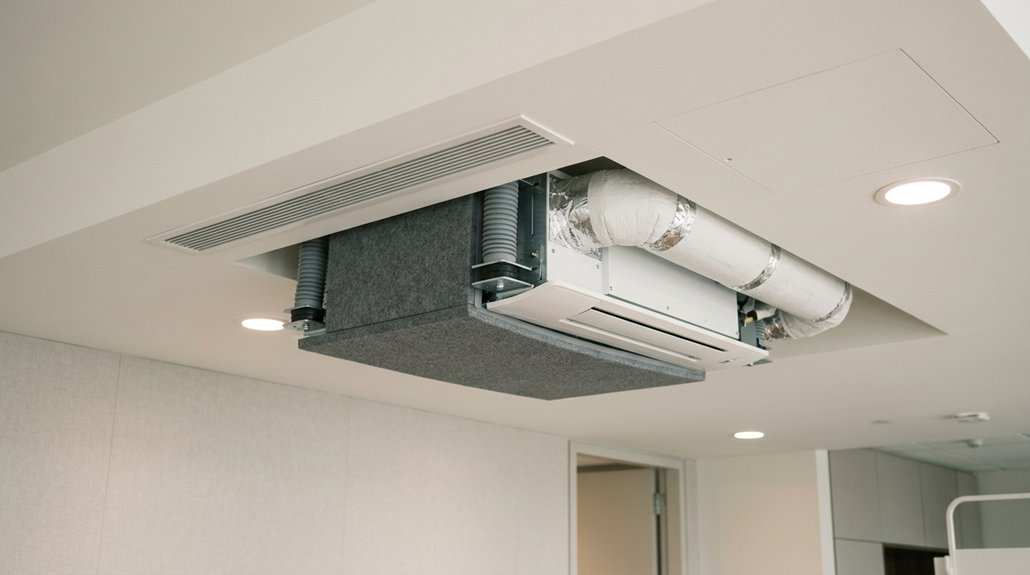
Have you ever noticed how HVAC noise can be more disruptive than you’d expect? Unwanted noise from air moving, air handlers, and vibrations can easily breach quiet zones, impacting concentration and productivity.
Mechanical rooms often produce significant overall noise, making it harder to focus. To reduce the noise, soundproofing solutions targeted at mechanical rooms and ductwork are essential. These measures help contain noise generated by air handlers and compressors, preventing it from entering occupied spaces.
Targeted soundproofing for mechanical rooms and ductwork helps contain noise, creating quieter, more focused indoor environments.
HVAC noise reduction isn’t just about comfort; it also supports better communication and work efficiency. By addressing unwanted noise sources, you create a calmer environment where distractions are minimized, stress is lowered, and workplace well-being improves. Incorporating acoustic panels designed specifically for home offices can further enhance sound absorption and overall noise control.
Effective soundproofing makes a noticeable difference in maintaining a quiet, focused workspace.
Find Out What’s Causing the Noise in Your HVAC System
Determining what’s causing HVAC noise requires a systematic approach to identify and address specific sources. Start by inspecting mechanical components like fans, motors, and compressors—they often produce humming, squeaking, or vibrations. Next, examine the ductwork for rattling, banging, or excessive turbulence caused by loose joints, sharp bends, or sagging flexible ducts. Recognizing air quality factors that influence system performance can also help pinpoint underlying issues affecting noise levels.
| Source | Symptoms | Solution |
|---|---|---|
| Airflow issues | Whistling, whooshing | Check air leaks, vents, and duct sizes |
| Vibrations | Amplified vibrations | Add vibration isolation, inspect mounting |
| Mechanical components | Unusual hums, squeaks | Lubricate, balance fan blades, inspect motors |
Soundproofing and Containing HVAC Noise With Barriers and Enclosures
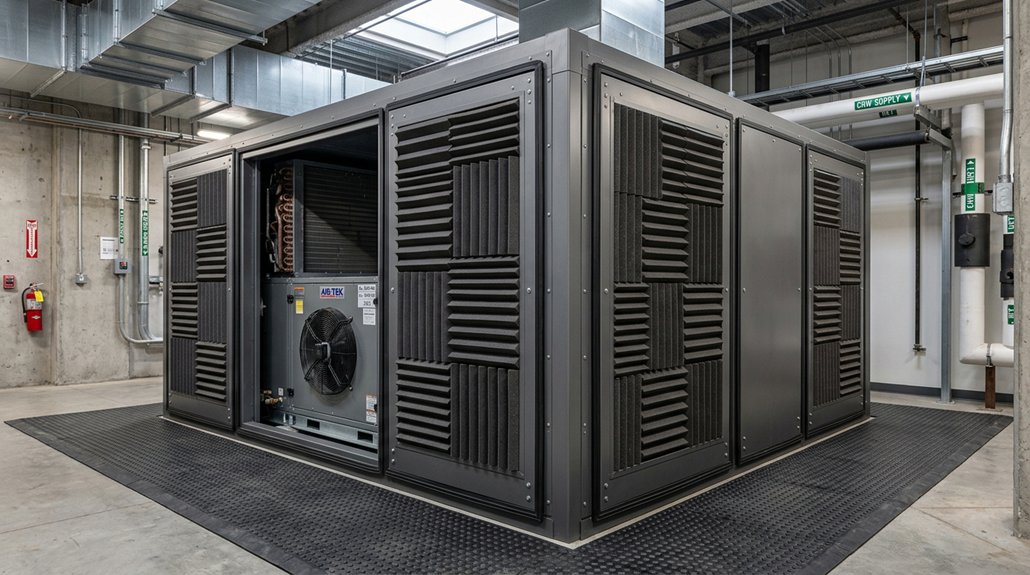
To effectively reduce HVAC noise, installing barriers and enclosures made from sound-absorbing or sound-reflecting materials can greatly block noise from air handlers and compressors. Sound barriers like engineered sound barrier walls, mass-loaded vinyl, and acoustical louvers enhance soundproofing by damping airborne noise and vibration transmission. Using soundproofing curtains in adjacent indoor spaces can also help absorb residual noise and prevent echoes. Custom sound enclosures around noisy HVAC units and multi-layer acoustic panels help contain sound and reduce disturbance. Using vibration isolators and flexible duct connectors further prevents vibrations from traveling through ducts. These barriers and enclosures work together to minimize noise from an HVAC, creating a quieter workspace. Expert solutions from providers like Sound Fighter Systems can tailor these barriers to meet specific indoor and outdoor noise challenges, ensuring effective containment and a more comfortable environment.
How to Reduce Vibration and Airflow Noises in HVAC Components
Vibration and airflow noises in HVAC components can be substantially reduced by properly installing vibration isolators and mounts under equipment like air handlers, compressors, and blower motors. These isolators help prevent vibrations from transferring to the building structure, lowering noise levels.
Tighten or replace loose and unbalanced fan blades to minimize vibration-induced noise. Securing duct joints, adding support, and using flexible duct connectors prevent rattling and reduce noise caused by vibration and movement.
Applying sound-absorbing insulation around HVAC components and lining ducts with acoustic materials dampens both vibration and airflow noises.
Regular maintenance, including lubrication of motors, belts, and bearings, decreases squeaks and vibrations, ensuring quieter operation and improving overall noise reduction in your HVAC system. Incorporating soundproofing techniques, such as using specialized acoustic panels, can further enhance the effectiveness of these measures.
Maintain Your HVAC Regularly to Keep Noise Levels Down
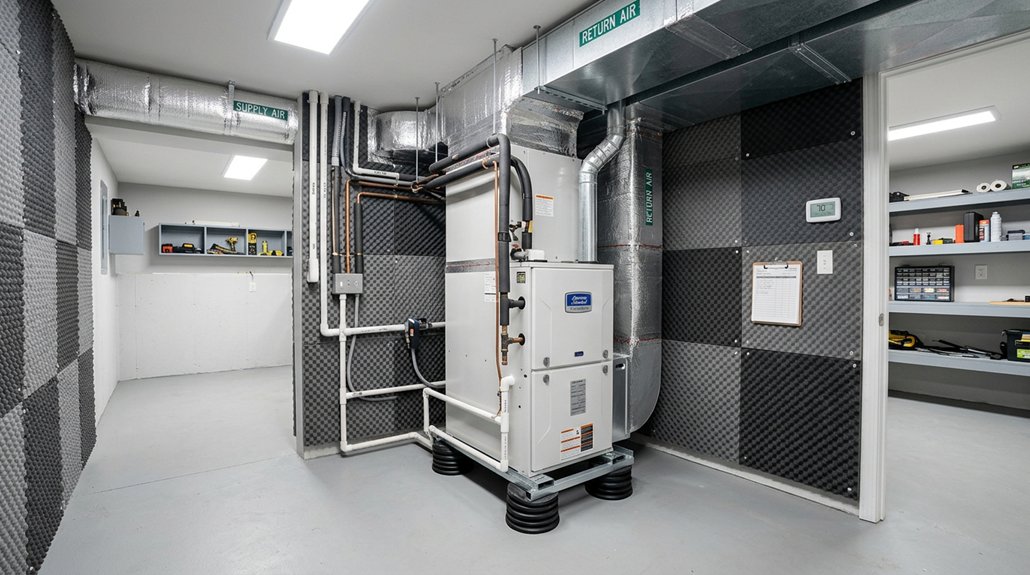
Regular maintenance is key to keeping your HVAC system quiet during operation. You should routinely maintain your system by lubricating motors, checking belts and bearings, and tightening or replacing loose fan blades to prevent squeaks and reduce noise.
Regularly clean or replace air filters to guarantee proper airflow and decrease noise caused by restricted ducts. It’s also important to inspect and secure duct joints and panels, which can rattle or vibrate, amplifying sound.
Additionally, consider vibration isolation measures like pads for compressors and air handlers, which help minimize structural noise transmission. Scheduling professional HVAC maintenance annually allows you to identify worn components, air leaks, or unbalanced parts that could contribute to excess noise.
Proper upkeep helps your HVAC stay quiet and efficient.
Frequently Asked Questions
How to Make HVAC Less Noisy?
To make your HVAC less noisy, you should install vibration isolators, seal duct leaks, add acoustic insulation, upgrade to quieter systems, and keep equipment well-maintained. Regularly lubricate, clean, and tighten components to prevent unnecessary noise.
What Is the $5000 Rule for HVAC?
The $5000 Rule for HVAC suggests that investing around $5000 in noise reduction measures, like vibration isolators, soundproofing, and professional installation, considerably lowers noise, improves comfort, and extends your system’s lifespan.
What Is the 2 Foot Rule in HVAC?
The 2 Foot Rule in HVAC recommends keeping noisy components, like air handlers and compressors, at least two feet away from occupied spaces. This minimizes noise transmission, improving comfort and creating quieter work or living environments.
How Do I Stop Hearing Voices Through My Vents?
To stop hearing voices through your vents, you can install sound-absorbing insulation inside ducts, seal leaks with foil tape, add vibration isolators, and place soundproof panels around vents to block and absorb noise effectively.