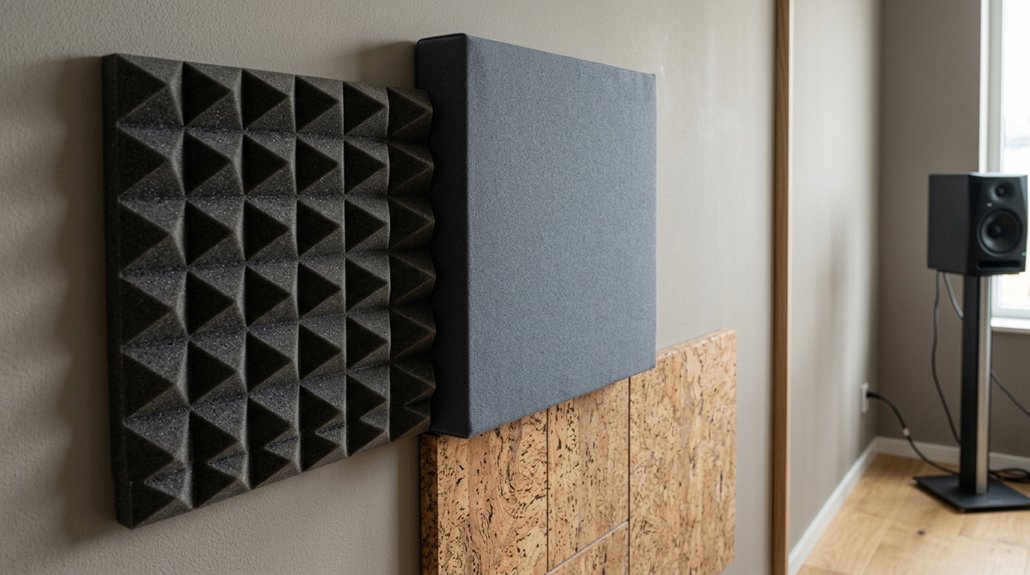
To choose sound absorption wall materials, start by identifying your room’s acoustic issues, like echoes or muddiness. Focus on materials with around 30 kg/m³ density and about 16 cm thickness, such as mineral wool or fiberglass, which work well across frequencies. Consider fabric-wrapped panels with breathable fabrics for style and performance. Cover at least 25-30% of hard surfaces to make a difference. If you want to learn more about selecting the best options for your space, keep exploring.
How to Identify Your Room’s Acoustic Problems
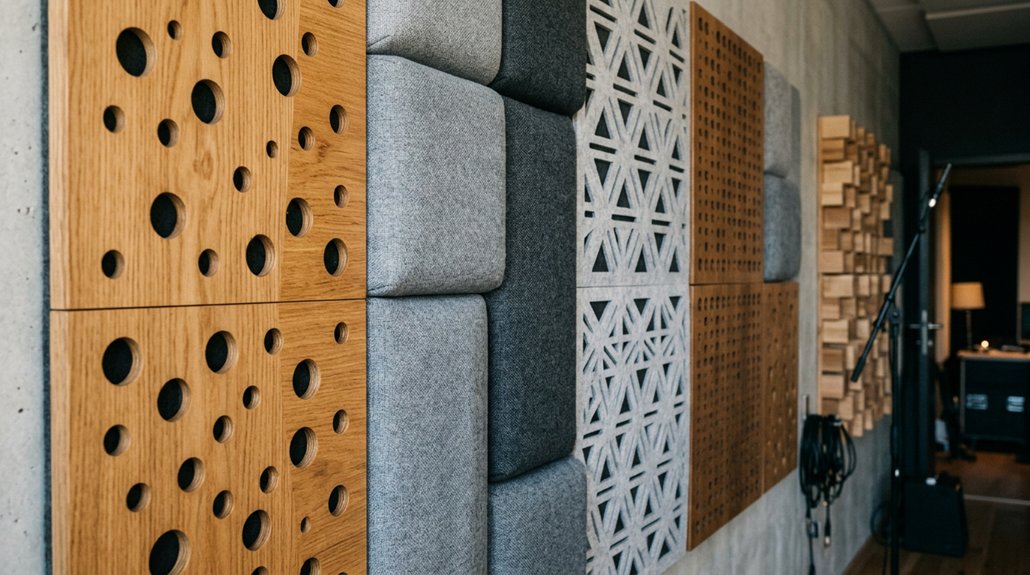
How can you tell if your room has acoustic issues? Listen for echoes—these are delayed sound reflections bouncing off hard surfaces, especially reflection points like glass, concrete, or wood.
Listen for echoes bouncing off hard surfaces like glass, concrete, or wood to identify room acoustic issues.
Walk through your space and clap your hands or tap surfaces; if sharp sounds linger or bounce back, it indicates excessive reflection and a need to absorb sound. Pay attention to low-frequency problems too, like booming or rattling sounds, which signal bass buildup.
Muddiness or overlapping speech suggests reverberation from quick, multiple reflections, reducing clarity. Larger rooms with minimal soft furnishings or flat surfaces are more prone to these issues. Using multiple layers of acoustic panels can help enhance sound absorption and improve your room’s acoustics.
Recognizing these signs helps you pinpoint where to add sound-absorbing materials, reducing echoes and improving overall acoustics.
What Matters Most in Sound Absorption Materials
When selecting sound absorption materials, understanding what influences their effectiveness can make a big difference in improving your room’s acoustics. The key factors are density and thickness; ideal values are around 30kg/m³ and about 16cm (6″) deep for broad frequency absorption, including bass.
Fiberglass and mineral wool cores are popular choices due to their fibrous, porous structures that convert sound energy into heat, reducing echo and reverberation. Mineral wool performs better in absorbing low frequencies compared to fiberglass.
Materials that are too dense tend to reflect sound instead of absorbing it, so balancing weight and thickness is essential. Combining these core materials with breathable fabrics like microfiber suede or SoundSuede™ also maximizes sound penetration and enhances aesthetics.
The noise reduction coefficient (NRC) helps measure overall sound absorption effectiveness.
Which Core Material Is Best for Noise Reduction?
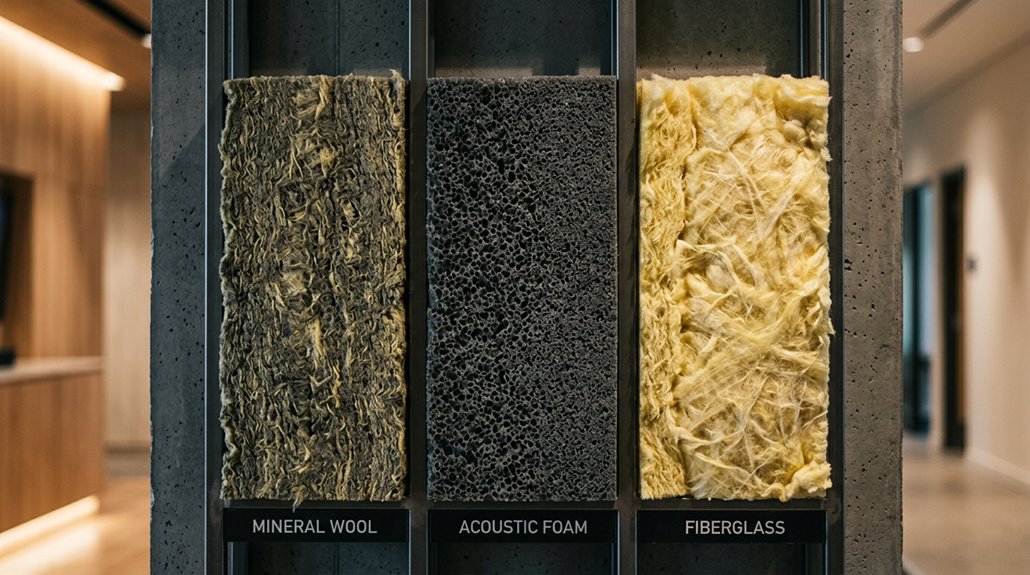
If you need to block low-frequency noise effectively, choosing a dense core material like mineral wool is your best bet because of its superior sound trapping. Thicker panels also improve absorption, especially at lower frequencies, while thinner or less dense options may fall short. Incorporating materials with dense non-woven fabric blended with synthetic cotton can further enhance sound dampening qualities. Understanding how material density and thickness influence performance can help you pick the right core for your noise reduction goals.
Low-Frequency Absorption Efficiency
Determining the best core material for low-frequency noise reduction depends on understanding their density and thickness. For effective low-frequency absorption, bass traps with mineral wool cores outperform fiberglass, thanks to their higher density, which enhances sound absorption capabilities in the bass range.
Mineral wool cores efficiently absorb sound frequencies down to about 40 Hz, especially when combined with thicker designs. While fiberglass offers broader frequency control, it requires around 16 cm (6 inches) of thickness to effectively dampen bass energy. Denser materials that balance fiber density and depth prevent sound reflection and maximize low-frequency absorption.
Eco-friendly options like Acoustimac EcoCore also deliver strong low-frequency noise reduction, making them excellent alternatives that are both effective and environmentally conscious.
Material Density and Thickness
The effectiveness of a core material in noise reduction heavily depends on its density and thickness. Higher-density materials like mineral wool (around 30 kg/m³) deliver better sound absorption, especially at low frequencies, than lower-density options like standard fiberglass.
Thicker panels, such as those four inches or more, improve bass frequency reduction down to about 40 Hz through the quarter-wavelength effect. Semi-rigid fiberglass balances high density and a frameless design, maximizing sound absorption across a broad frequency range.
However, excessive density can cause sound reflection rather than absorption, so choosing materials with an ideal core weight—around 30 kg/m³—and a thickness near six inches enhances energy dissipation. Ultimately, the right combination guarantees your wall panels effectively absorb sound without unwanted rebound. Additionally, selecting materials with appropriate sound absorption properties ensures optimal performance across different noise frequencies.
Selecting the Right Panel Size and Shape for Your Space
Choosing the right panel size and shape depends on your room’s dimensions and acoustic needs. Larger panels cover more area and absorb lower frequencies, while smaller or custom shapes can target specific spots or blend with your design. Incorporating multi-functionality in your panels, such as adjustable or modular designs, can further enhance their effectiveness and adaptability within your space. Always consider placement and aesthetic preferences to maximize both function and style.
Acoustic Effect and Coverage
Selecting the right panel size and shape for your space directly impacts how effectively sound absorption works. Wider wall panels cover more area, enhancing acoustic coverage and better managing mid to low-frequency reflections. Larger panels, typically ranging from 3×3 inches to 96×48 inches, are ideal for broad coverage, while smaller or custom-shaped panels target specific reflection points for precise treatment. A minimum acoustic coverage of 25-30% of hard surfaces is recommended to reduce echo and reverberation effectively. Incorporating modular expansion options allows for versatile and adaptable acoustic treatment tailored to your changing needs. Shapes like rectangles and squares are common, but custom options can fit architectural features and design aesthetics better. Incorporating air gaps behind panels or frameless fiberglass cores increases absorption, broadening the frequency range treated for supreme sound absorption in your space.
Space and Layout Compatibility
To guarantee ideal sound absorption, matching panel size and shape to your space’s layout is key. Properly chosen sound absorbing materials guarantee you maximize acoustic treatment without cluttering your walls or ceiling.
Consider these points:
- Select panels with dimensions that match your wall or ceiling’s size, favoring the longest measurement for better coverage.
- Use rectangular or square shapes for standard spaces or custom shapes for unique room layouts, especially to address specific acoustic issues.
- For corners and reflection points, around 60 cm wide panels strike a balance between handling ease and acoustic efficiency.
- Ensuring your panels have appropriate dimensions and shapes helps optimize their placement and effectiveness across different room configurations.
Keep in mind that custom panels up to 48″ x 96″ are available if standard sizes don’t fit. Proper sizing enhances sound absorption and guarantees your room’s acoustics are tailored to your needs.
How to Pick Acoustic Fabrics That Match Your Style and Goals
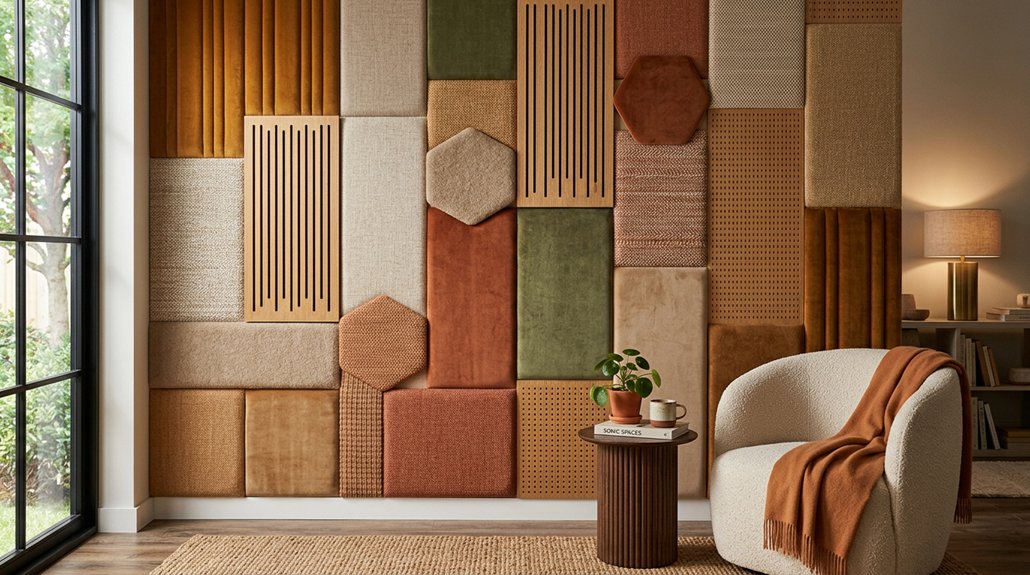
How can you find the perfect acoustic fabric that complements your style while meeting your sound absorption needs? First, explore different types—traditional, synthetic, and semi-synthetic—each offering unique aesthetic qualities and sound-absorbing capabilities.
Synthetic fabrics like SoundSuede™ and Guilford textiles are great for durability and enhanced sound absorption, making them ideal for acoustic solutions.
When selecting an acoustic fabric, consider acoustic transparency and breathability to guarantee sound waves can pass through to the absorptive core.
With over 40 color options and various collections, you can easily customize your look without sacrificing performance.
Request free fabric swatches to evaluate texture, color, and acoustic properties, helping you choose sound-absorbing materials designed to seamlessly match your style and sound absorption goals. Additionally, opting for lightweight and ergonomic design considerations can ensure your acoustic setup maintains both style and comfort.
Are Eco-Friendly Sound Absorbers Better for Your Room?
Eco-friendly sound absorbers are gaining popularity as more people seek sustainable solutions without sacrificing performance. These materials, like Ecocore panels made from recycled materials, offer high sound absorption while being biodegradable and non-irritating.
Eco-friendly sound absorbers like Ecocore panels deliver high performance with sustainable, biodegradable, and non-irritating materials.
Although some eco-friendly options like wood fiber panels are less effective than fiberglass or mineral wool, they still provide a natural aesthetic for moderate sound absorption needs. Mineral wool often outperforms synthetics in low-frequency absorption due to its density, making it a smart eco choice.
Additionally, fabric-wrapped panels using recycled or natural fabrics enhance eco-friendly sound absorption solutions by combining performance with sustainability. Color and lighting stability in monitor calibration helps ensure consistent ambient conditions, supporting effective sound absorption and overall room comfort.
How to Balance Sound Absorption and Reflection for Clearer Audio
Achieving clear audio in a room often involves finding the right balance between sound absorption and reflection. Too much absorption can deaden the space, while excessive reflection causes echo and muddiness.
Use porous materials like acoustic foam, fiberglass, or mineral wool to trap sound waves, reducing reverb. Opt for panels with about 30kg/m³ density and 16cm depth to target mid and low frequencies effectively. Incorporate bass traps in corners to manage low-end frequencies, preventing muddiness.
To maintain natural liveliness, strategically place absorption panels and retain some reflective surfaces, which help produce a balanced, clear sound. Adding air gaps behind wall panels or frameless fiberglass enhances absorption efficiency without increasing bulk.
Balancing these elements creates a more accurate and pleasant audio environment.
Combining Layers: Hybrid Solutions for Better Noise Control
Combining different layers of sound-absorbing and barrier materials can drastically improve noise control in a space. With hybrid sound absorption, you get the benefits of porous absorbers like mineral wool or fiberglass combined with dense barrier materials such as mass-loaded vinyl (MLV). This layered approach effectively blocks sound while also absorbing mid to low frequencies.
Layering sound-absorbing and barrier materials enhances noise control and targets a range of frequencies effectively.
You can enhance sound absorption by layering acoustic foam or fabric-wrapped panels over a mineral wool core, which broadens frequency coverage. Adding air gaps between layers boosts low-frequency sound absorption by utilizing the quarter wavelength effect.
Consider these options for hybrid solutions:
- Layering acoustic foam over porous absorbers
- Incorporating dense barriers like MLV with porous cores
- Creating air gaps for improved bass control
This combination offers tailored noise reduction for versatile acoustic environments.
Where to Place Acoustic Panels for Maximum Effectiveness
Have you ever wondered where to place acoustic panels to get the most out of them? To optimize their effect, position panels at first reflection points on side walls and the ceiling. These are where sound waves from speakers bounce straight to your ears, causing early echoes. Placing panels behind the listener on the rear wall also captures reflected sound, reducing reverberation and improving speech clarity. For rooms with high ceilings or hard surfaces, ceiling clouds or baffles effectively control vertical reflections. Corners are ideal for bass traps, which absorb low frequencies. Distribute panels across surfaces, covering at least 25-30%, for balanced sound absorption. Use this table to identify key locations for acoustic panels:
| Location | Purpose |
|---|---|
| First reflection points | Minimize early echoes |
| Rear wall | Reduce reverberation |
| Corners | Absorb low frequencies (bass traps) |
| Ceiling clouds | Control vertical reflections |
How Much Coverage Do You Need for Good Sound Control?
How much coverage do you actually need to effectively control sound in your space? To reduce echo and reverberation, aim for at least 25-30% coverage of all hard, reflective surfaces with sound absorption materials.
Aim for 25-30% coverage of reflective surfaces with sound absorption for effective echo control.
Proper coverage guarantees sound waves are effectively absorbed, preventing unwanted noise buildup. Focus on strategic placement on walls, corners, ceilings, and first reflection points for maximum impact.
Keep in mind:
- Thicker panels or bass traps are essential for addressing low-frequency sound waves.
- Using acoustic panels with bass traps alongside standard panels creates balanced absorption for mid, high, and low frequencies.
- Proper room measurement and acoustic consultation help determine the exact square footage needed for peak sound control.
This targeted coverage enhances clarity and reduces problematic sound reflections.
Tips for Installing Acoustic Wall Materials That Last
Proper surface preparation guarantees your panels adhere well and stay in place over time.
Securing materials effectively with the right hardware prevents sagging or detachment.
Paying attention to these installation details helps your acoustic solution remain durable and perform efficiently.
Proper Surface Preparation
Before installing acoustic wall materials, it’s vital to prepare the surface thoroughly to guarantee they stay secure and effective over time. Confirm the wall is clean, dry, and free of dust or grease to promote strong adhesion of sound absorbers and acoustic ceiling panels.
Fill and smooth any holes, cracks, or uneven spots, creating a flat, stable base that prevents warping or gaps that could weaken sound absorption, especially at high frequencies. Use moisture-resistant primers or sealants on drywall or porous surfaces to protect against humidity damage, maintaining long-lasting performance.
Additionally, consider the wall cavity depth or air gaps behind panels, which can improve low-frequency sound absorption. Proper hardware selection compatible with wall types and panel weight is also essential for secure mounting.
Securing Materials Effectively
Effective installation begins with selecting the right hardware, such as manufacturer-recommended Z-clips or Z-bars, which provide secure and stable mounting for your acoustic panels. Proper hardware guarantees optimal support for sound absorption materials like acoustic clouds, ceiling baffles, or wall panels, maintaining their position and effectiveness over time.
Choose installation methods based on panel size and weight; heavier panels may require multiple Z-clips or sturdy brackets. Always confirm the wall surface is clean, dry, and suitable for mounting to prevent issues with adhesion or stability.
Handle fabric-wrapped panels carefully to avoid fabric damage and maintain tension for the best absorption. Following detailed installation guides guarantees long-lasting attachment, helping you achieve the best absorption and acoustic performance in any space.
Budgeting for High-Quality Sound Absorption Solutions
Wondering how to balance quality and cost when selecting sound absorption wall materials? High-performance fiberglass panels, like Mineral Wool or Owens Corning 703, deliver superior sound absorption but tend to be pricier than foam or wood fiber options.
High-performance fiberglass panels offer excellent sound absorption but come at a higher cost than foam or wood fiber options.
Your budget should consider panel size, material density, and thickness—thicker, denser panels (such as 16cm depth, 30kg/m³) improve low-frequency absorption but increase costs.
Custom-sized panels or special fabric coverings add to your expenses, so plan accordingly.
To manage costs effectively, consider:
- Prioritizing 25-30% coverage of hard surfaces
- Exploring lightweight, more affordable options for less critical areas
- Balancing quality and budget to maximize sound absorption without overspending on unnecessary details
Key Takeaways for Achieving Optimal Room Acoustics
Achieving ideal room acoustics hinges on selecting and implementing the right combination of sound-absorbing materials.
To optimize sound absorption across high and mid frequencies, choose materials like fiberglass or mineral wool with the right density and depth—around 30 kg/m³ and 16 cm thick. Frameless fiberglass panels wrapped in acoustically transparent fabrics maximize absorption area, effectively reducing echoes and reverberation.
Covering 25-30% of hard wall surfaces with these materials is essential for meaningful improvements in clarity. Incorporating recycled materials not only boosts sustainability but also enhances sound absorption capabilities.
Proper installation, such as wall-mounted Z-clips, guarantees consistent placement and maintains acoustic balance. Combining high-performance core materials with thoughtful fabric coverings results in a balanced, aesthetically pleasing solution for superior room acoustics.
Frequently Asked Questions
What Is the Best Sound Deadening Material for Walls?
You should choose fiberglass panels for walls because they trap sound effectively across many frequencies, converting it into heat, and are easy to install, providing a high-performance, visually appealing solution that reduces echo and reverberation considerably.
Is R11 or R13 Better for Soundproofing?
You should choose R13 over R11 because its higher density offers slightly better sound absorption, especially for low frequencies. However, neither is ideal for soundproofing; consider denser materials or specialized acoustic panels for more effective sound blocking.
How to Choose Which Wall to Place Soundproof Panels On?
You should place sound absorption panels on walls where early reflections occur, especially side walls and opposite the main sound source. Cover at least 25-30% of reflection-prone surfaces to effectively reduce echo and improve clarity.
What Type of Materials Absorb Sound the Best?
You should choose fiberglass or mineral wool panels, as they offer the best sound absorption across a wide frequency range. Fiberglass is lightweight and effective, while mineral wool performs slightly better at low frequencies, but is denser.