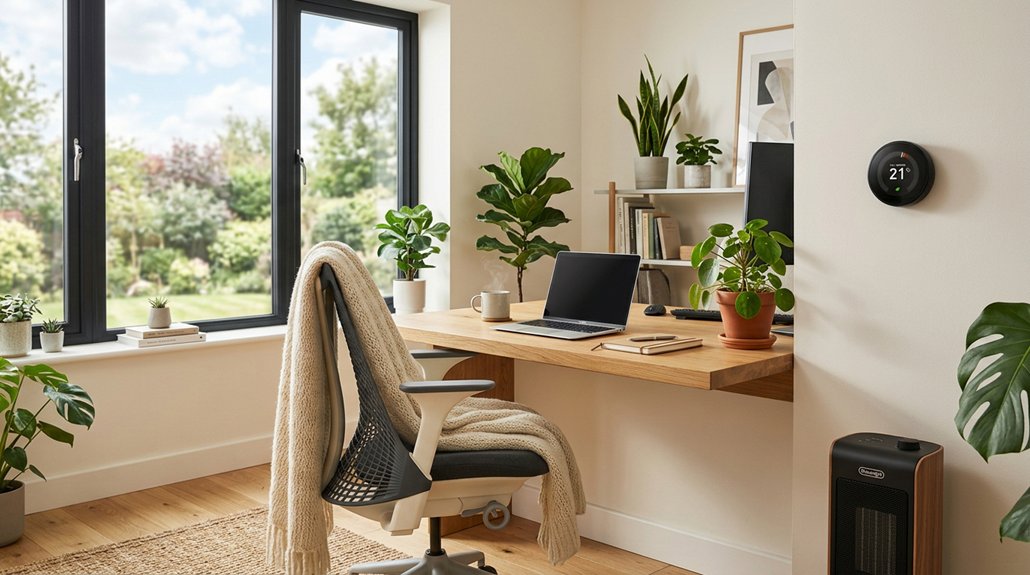
Your desk position directly impacts your mental focus by reducing physical discomfort and eliminating distractions. When your monitor is at eye level, your chair supports proper posture, and your workspace is organized, you’ll find it easier to stay attentive. Alternating between sitting and standing, along with good lighting, keeps your energy up. If you keep these tips in mind, you’ll discover simple changes that can boost your concentration even further.
How Proper Desk Position Enhances Focus and Comfort

Proper desk positioning directly boosts your focus and comfort by reducing physical strain. An ergonomic setup positions your monitor at eye level, about an arm’s length away, preventing neck and shoulder discomfort.
Proper desk positioning enhances focus and comfort by reducing neck and shoulder strain.
Keep your keyboard and mouse at elbow height with wrists in a neutral position to minimize muscle tension, supporting sustained mental clarity. Adequate task lighting reduces eye strain, especially when avoiding glare from windows.
Ensuring proper spine alignment by adjusting your chair so your feet rest flat on the floor and your back is well-supported helps prevent fatigue that can disrupt concentration. Incorporating lumbar support mechanisms can further maintain natural spine alignment and reduce strain.
When your workspace is ideally arranged, you’ll experience less physical discomfort and mental fatigue, allowing you to stay focused longer and work more efficiently. Proper desk positioning is essential for a comfortable, attention-enhancing environment.
Adjust Monitor Height to Improve Concentration
Adjusting your monitor to the right height can make a noticeable difference in your focus and comfort. Position your monitor at eye level and about an arm’s length away to prevent neck strain and reduce muscle tension. This ergonomic setup supports better spinal alignment, helping you stay alert and focused during long work sessions. Using a height-adjustable stand can further enhance your setup by allowing precise positioning.
Use Lighting to Boost Your Alertness and Brain Power
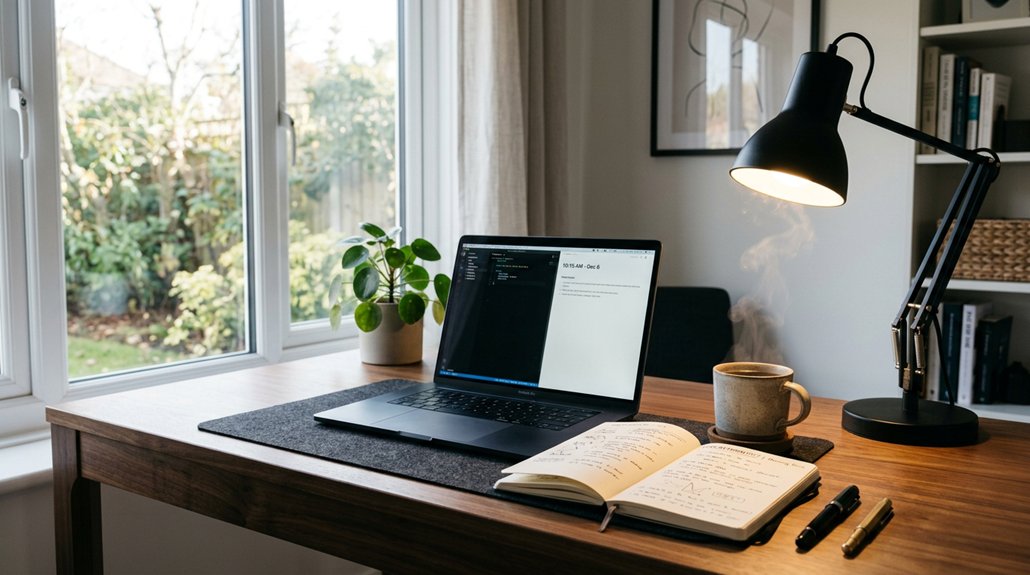
Proper lighting intensity and exposure duration are essential, as they influence both memory and long-term performance. A well-designed desk lamp with adjustable brightness and color temperature can help tailor your lighting to your specific needs, further enhancing focus and productivity. full-spectrum LEDs support a balanced light output that reduces eye strain and stimulates alertness, making it easier to stay focused. Positioning monitors side-on to windows reduces glare and eye strain, helping maintain mental clarity. Adding task lighting and using matte screens or anti-glare filters prevents harsh reflections that can distract you. Natural and warm lighting also play a crucial role, as they support a better mood and cognitive clarity, reducing fatigue. When your lighting setup encourages alertness and focus, you’ll find it easier to stay attentive and sharp throughout your workday.
Organize Your Workspace to Minimize Distractions
A cluttered workspace can quickly drain your focus and hinder productivity, making it harder to concentrate on important tasks. To optimize your workspace setup, follow these steps:
- Clear visual clutter by removing unnecessary items, freeing up your mental space.
- Organize your desk into zones—Focus, Support, and Recharge—to streamline workflow and reduce distractions.
- Practice cable management to eliminate visual noise, helping you stay engaged without fragmented focus.
- Incorporate flame-retardant materials in your cable management solution to enhance safety and prevent hazards.
Switch Between Sitting and Standing to Maintain Mental Momentum

Switching between sitting and standing during work sessions keeps your mind alert and prevents fatigue from setting in. Using standing desks allows you to alternate between sitting and standing, which can improve focus at work by boosting blood flow. This increased circulation delivers more oxygen and nutrients to your brain, helping you stay sharp and focused.
Following the 20-8-2 guideline—sitting for 20 minutes, standing for 8, and moving for 2—keeps your energy levels steady and reduces mental fatigue. Standing also engages core and leg muscles, enhancing circulation further.
Incorporating these brief standing periods during long tasks helps you overcome afternoon slumps, maintaining mental momentum and productivity throughout your workday.
Place Your Keyboard and Mouse Ergonomically for Better Focus
To stay focused, make sure your keyboard and mouse are positioned so your elbows stay close and your wrists stay straight. Keep your mouse right beside the keyboard to avoid reaching and reduce discomfort that distracts you.
Using a compact keyboard or wrist support can also help keep muscle tension down and maintain your concentration. opt for ergonomic features like adjustable tilt and split layouts to promote neutral wrist posture and minimize strain.
Optimal Keyboard Placement
Have you ever noticed how your focus drifts when your keyboard and mouse aren’t positioned correctly? Proper ergonomic placement can make a big difference.
To optimize your setup:
- Position your keyboard so your elbows stay close to your body and bent at about 90 degrees. This maintains neutral wrist posture and reduces muscle tension.
- Keep your mouse on the same level and close to the keyboard, avoiding awkward reaching that can cause shoulder and wrist strain.
- Use a compact keyboard or add forearm support if space is limited to promote relaxed arm positioning and sustained comfort.
- Consider using a keyboard tray to ensure proper height and tilt adjustments, promoting ergonomic accuracy and improving focus.
This alignment minimizes physical distractions that cause fatigue and discomfort. It also enhances concentration by reducing muscle tension, allowing you to focus longer and work more efficiently.
Wrist Support Strategies
Ensuring your keyboard and mouse are positioned correctly can greatly improve wrist support and, consequently, your focus. Your desk setup should keep your elbows close to your body and your wrists in a neutral, straight position to reduce strain. Using ergonomic wrist supports or forearm rests helps maintain spinal alignment and prevents muscle tension that distracts you. Keep the mouse immediately beside the keyboard to avoid overreaching, which increases wrist fatigue. Compact keyboards or adjustable trays aid in maintaining proper wrist alignment and elbows at about 90 degrees, minimizing discomfort that can break your concentration. Watch for early signs of wrist discomfort, like aching or stiffness, and adjust your setup accordingly. For optimal comfort, choosing a wrist rest with a memory foam core that provides firm, supportive cushioning can make a significant difference. A well-planned ergonomic wrist support strategy enhances your mental focus and productivity.
Arm and Shoulder Alignment
Positioning your keyboard and mouse so your elbows stay close to your body at roughly a 90-degree angle reduces muscle tension and helps you stay focused longer. Proper arm and shoulder alignment is essential for ergonomic comfort and sustained mental focus. Incorporating a split-layout keyboard can further promote natural arm positioning and reduce strain during extended use.
To optimize your setup:
- Keep your wrists neutral and aligned with your forearms while typing or clicking.
- Place your mouse directly beside your keyboard to avoid overreaching.
- Use a compact keyboard or forearm support to maintain proper posture and reduce fatigue.
These adjustments prevent strain that can distract or distract you during work. When your arm and shoulder positioning are ergonomic, you minimize discomfort that hampers cognitive performance, helping you stay sharper and more attentive throughout long tasks.
Maintain Good Posture and Incorporate Movement to Prevent Fatigue
Maintaining good posture and incorporating movement into your work routine are essential for preventing fatigue and enhancing focus. Alternating between sitting and standing every 20 minutes, based on the 20-8-2 guideline, keeps muscles engaged and promotes healthy circulation.
Prolonged sitting restricts blood flow and oxygen to your brain, leading to mental fatigue, while standing activates leg and core muscles, boosting alertness and cognitive function. Poor posture, like slouching or misaligned monitors, causes muscle tension and stiffness, which account for many work-related injuries. A well-designed electric standing desk with adjustable height options can significantly improve your ergonomic setup and support better posture throughout the day.
Incorporate at least 10-minute active breaks or light movements to reduce physical strain and sustain mental clarity. Adjustable ergonomic furniture, such as height-adjustable desks and lumbar-support chairs, helps maintain a neutral posture, minimizing fatigue and supporting sustained concentration.
Signs Your Desk Setup Is Holding Back Your Focus: and How to Fix It
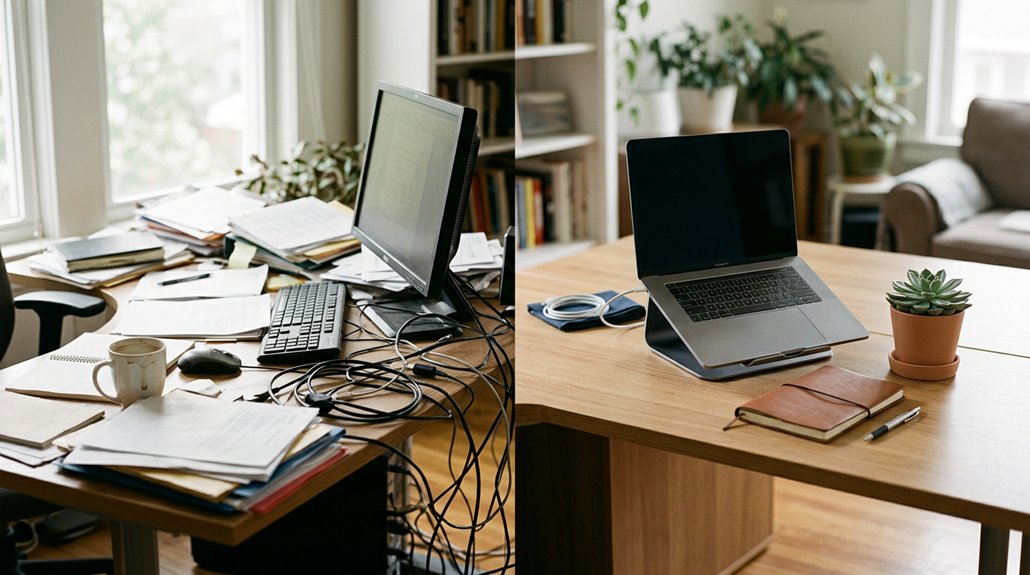
If you find yourself struggling to maintain focus, your workspace might be the culprit. Clutter, poor lighting, or uncomfortable ergonomic setup can all cause distraction and fatigue. Investing in high-quality ergonomic tools like an adjustable sit-stand desk converter with a wide adjustment range can make a significant difference.
Clutter Causing Distractions
Clutter on your desk can silently sabotage your focus by overwhelming your senses and competing for your attention. When your workspace is chaotic, it creates distractions that drain mental resources.
Here are three signs your desk clutter is holding you back:
- Increased mental fog that makes it harder to concentrate
- Frequent distractions from messes or tangled cables
- Fatigue and reduced creativity due to mental overload
A disorganized workspace signals to your brain that it’s time to clear the mental clutter. Messy cables and cramped layouts send discomfort signals that distract you during work tasks.
Poor Lighting Impact
A well-organized workspace isn’t enough if your lighting is off; poor illumination can quietly sabotage your focus and hinder your productivity. Poor lighting causes mental fog, eye strain, and headaches, making it tougher to concentrate and diminishing cognitive performance.
Screen glare from harsh or poorly positioned light sources creates discomfort and distraction, pulling you away from your tasks. Blue-enriched lighting can boost attention and alertness, but if too intense or used for too long, it may impair memory and long-term performance.
Positioning your monitor away from direct sunlight, using matte screens or anti-glare filters, and adding task lighting can reduce glare and improve visual comfort. Consistently poor lighting signals the need to optimize your desk’s illumination to maintain focus and maximize productivity.
Unadjusted Ergonomics
When your desk isn’t properly adjusted, it can quietly sabotage your focus by causing physical discomfort and distractions. Signs of unadjusted ergonomics include stiff shoulders, aching wrists, and a sore back caused by low monitors, unsupportive chairs, or distant keyboards, which directly hinder mental focus.
If your monitor is below eye level or too far away, it leads to neck and shoulder strain, diverting attention from your tasks. Poor posture from inadequate desk setup results in physical strain, especially in your back and neck, making it harder to concentrate.
Additionally, cluttered workspaces and harsh lighting increase mental overload and eye fatigue. Addressing these issues by adjusting your ergonomic setup restores neutral posture and boosts mental clarity, helping you stay alert and focused throughout the day.
Create an Adjustable Workspace That Supports Peak Concentration
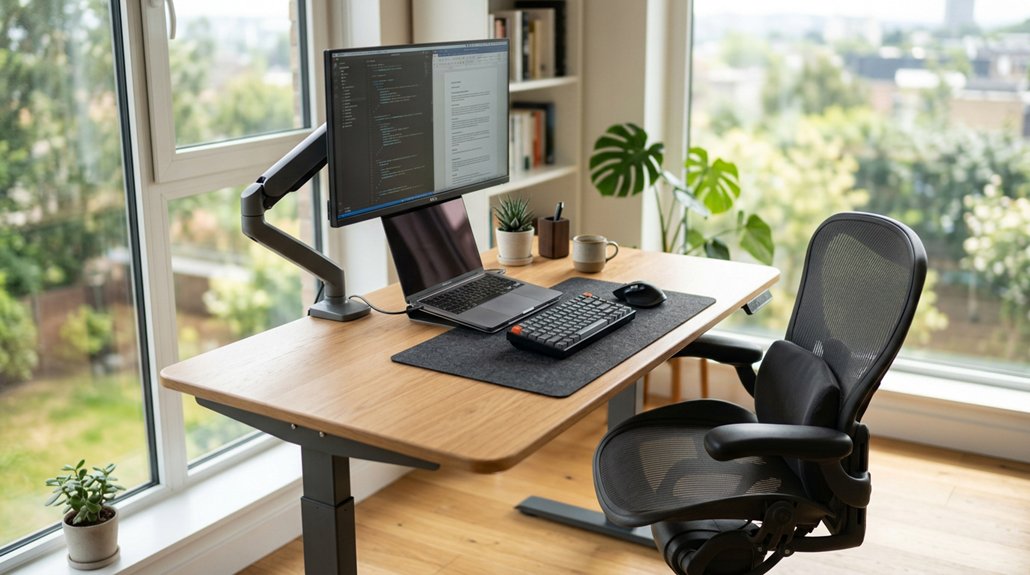
Creating an adjustable workspace is essential for supporting peak concentration, as it allows you to tailor your environment to your body’s needs and promote better posture. Using a sit-stand desk encourages regular posture shifts following the 20-8-2 rule—sitting for 20 minutes, standing for 8, and moving for 2—boosting your alertness and focus.
Ergonomic furniture with proper lumbar support and adjustable features reduces muscle tension and fatigue, helping maintain concentration. Ensuring your monitor is at eye level and about an arm’s length away prevents neck and shoulder strain, minimizing physical distractions.
Incorporating movement throughout the day keeps your energy high, and an organized, clutter-free workspace enhances mental clarity. Together, these adjustments create an environment optimized for improved attention and sustained cognitive performance.
Frequently Asked Questions
What Is the 20/8-2 Rule for Standing Desks?
The 20/8/2 rule guides you to sit for 20 minutes, stand for 8 minutes, and move lightly for 2 minutes. This cycle helps boost focus, reduce fatigue, and keep your energy levels steady while using a standing desk.
Do Standing Desks Help You Focus?
Yes, standing desks help you focus by increasing blood flow, boosting energy, and reducing fatigue. Alternating between sitting and standing keeps you alert, improves motivation, and maintains mental clarity throughout your workday.
Are Standing Desks Better for ADHD?
Standing desks are often better for ADHD because they encourage movement, improve blood flow, and reduce discomfort, which helps you stay focused longer. Alternating between sitting and standing keeps your mind alert and minimizes fidgeting.
How to Stay Focused at a Desk Job?
To stay focused at a desk job, alternate sitting and standing using the 20-8-2 rule, keep your workspace organized, maintain proper ergonomics, take short active breaks, and use suitable lighting to minimize distractions and boost concentration.
In Summary
By optimizing your desk setup with proper positioning, lighting, and organization, you can greatly boost your focus and comfort. Remember to adjust your workspace regularly, incorporate movement, and prioritize good posture. Small changes make a big difference in maintaining mental clarity and preventing fatigue. Keep your workspace flexible and ergonomic, and you’ll stay sharp and productive throughout your day. A well-designed desk isn’t just about comfort — it’s your secret weapon for better focus.