
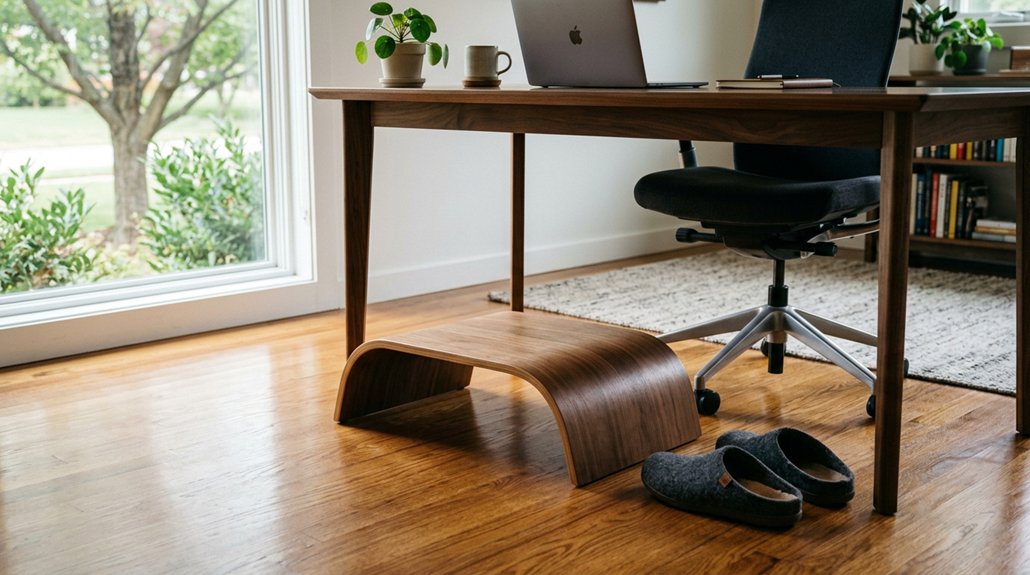
To improve your circulation, place your footrest directly in front of your feet and adjust it so your knees are at about a 90-degree angle, with your feet flat and your thighs parallel to the floor. Use a textured, non-slip surface and tilt it between 30° and 45° for natural foot positioning. Shift weight or alternate feet every 30-60 minutes, and incorporate movement or stretches. Keep learning to discover even more ways to optimize your posture and circulation.
Why Proper Foot Support Is Key to Better Circulation
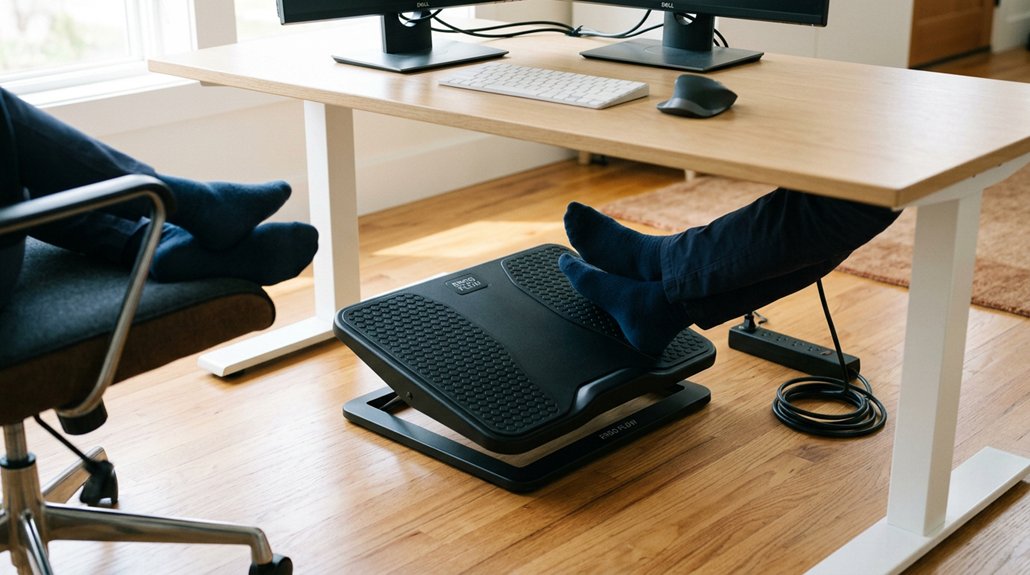
Proper foot support plays a crucial role in maintaining healthy circulation when you’re sitting for long periods. Using a footrest helps keep your feet flat and knees at a 90-degree angle, which promotes natural blood flow in your lower limbs.
This ergonomic support opens knee and hip angles, boosting circulation and reducing swelling or deep vein thrombosis risk. Dynamic footrests with rocking or tilting functions stimulate ankle and calf muscles, enhancing venous return and preventing blood pooling.
Additionally, a well-positioned footrest evenly distributes pressure across your feet, decreasing how much your thigh veins are compressed. Proper foot support also encourages better spinal and pelvic alignment, which reduces postural strain and muscle tension, further supporting healthy circulation during extended sitting sessions. Incorporating ergonomic design features like height adjustment and massage rollers can further optimize circulation benefits.
How to Place Your Footrest for Maximum Comfort
To get the most comfort and benefits from your footrest, carefully position it directly in front of your feet so they rest flat and your legs remain well-aligned. Use an adjustable footrest to set the height so your knees form a 90-degree angle or slightly open, encouraging better blood flow. Additionally, selecting a model with non-slip features ensures stability during use, preventing unwanted movement that can disrupt your posture. Tilt the footrest between 30 to 45 degrees to support natural foot positioning and allow for gentle rocking motion, which enhances circulation. Make sure it’s wide enough (15 to 24 inches) to accommodate your feet firmly without feeling crowded. Position it close enough to your chair so you can lean back comfortably into the backrest, promoting better spinal alignment and posture. Proper placement guarantees peak support, comfort, and circulation benefits.
What’s the Right Height and Angle for Your Footrest?
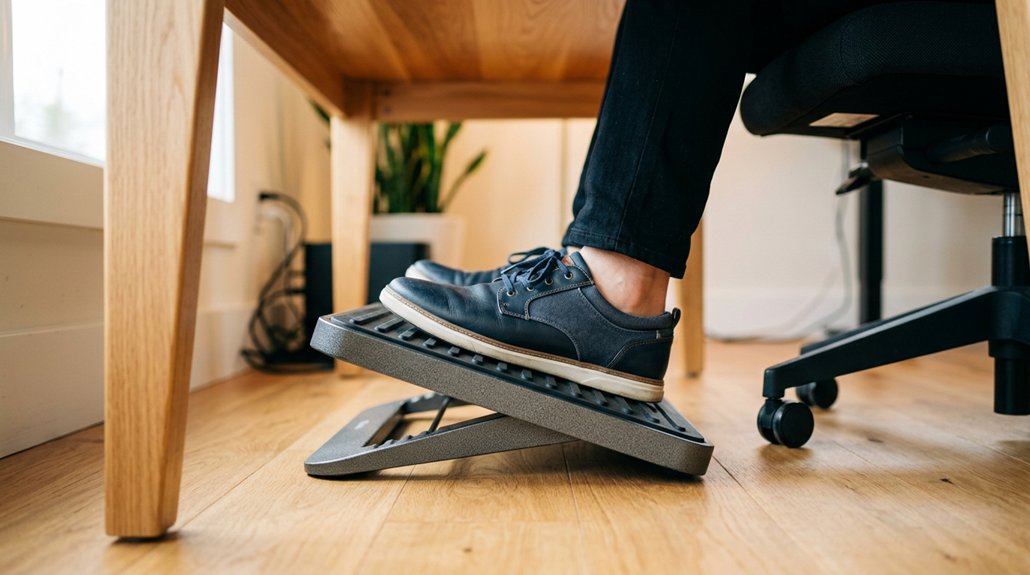
Have you wondered how to set your footrest for ideal comfort and circulation? The right footrest height typically ranges from 4 to 6 inches at the back, supporting your feet without applying thigh pressure.
An ergonomic footrest with an adjustable tilt between 30° and 45° helps promote natural foot positioning and better circulation. Proper posture is maintained by keeping your knees bent at about 90°, with thighs parallel to the floor.
Consider these guidelines:
- Adjust the footrest height to support feet comfortably without strain
- Use an adjustable tilt between 30° and 45° for a natural angle
- guarantee the width accommodates foot spacing, about 15 to 24 inches
- Personalize your setup for peak spine and hip alignment
- For optimal movement, select models that promote active leg motion during long periods of sitting
This helps improve circulation and supports proper posture during prolonged sitting.
Why Elevating Your Feet Slightly Off the Floor Helps Blood Flow
When you elevate your feet slightly, you encourage better ankle movement, which promotes healthy blood flow.
This position also reduces pressure on your veins, helping to prevent swelling and discomfort.
Keeping your feet raised just enough can make a noticeable difference in circulation and overall leg health.
Enhances Ankle Movement
Elevating your feet slightly on a footrest actively promotes ankle movement, which is essential for healthy blood circulation. When your feet rest on a well-designed footrest surface, it encourages ankle dorsiflexion and plantarflexion.
Gentle rocking motions on the footrest help maintain continuous ankle movement, preventing blood pooling and reducing the risk of deep vein thrombosis. Keeping your feet at a 30-45 degree angle supports a natural, dynamic ankle position, which aids circulation and reduces leg swelling.
The textured surface distributes pressure evenly, allowing comfortable ankle motion without slipping, further improving lower limb blood flow. Properly designed footrests with non-slip bases ensure stability during use, enhancing safety and effectiveness. Overall, regular ankle movement facilitated by a footrest guarantees ongoing muscle pumping and enhances oxygen delivery to your legs.
Reduces Venous Pressure
Raising your feet slightly on a footrest reduces venous pressure in your legs by helping blood flow back more efficiently to the heart. Proper foot elevation opens knee and hip angles, boosting distal lower limb blood flow and preventing venous pooling during long periods of sitting. Using a footrest minimizes pressure in leg veins, lowering the risk of varicose veins by reducing vein valve stress and encouraging circulation. It also promotes ankle movement, activating the muscle pump that aids venous return and prevents blood stasis. Maintaining your feet on a properly angled footrest prevents dangling legs and distributes pressure evenly. This balance reduces venous hypertension and leg swelling, making it an effective way to support healthier circulation. Choosing a footrest with adjustable height and angle settings can further enhance proper ergonomics and comfort during prolonged sitting.
How Dynamic Foot Rockers Boost Circulation During Work
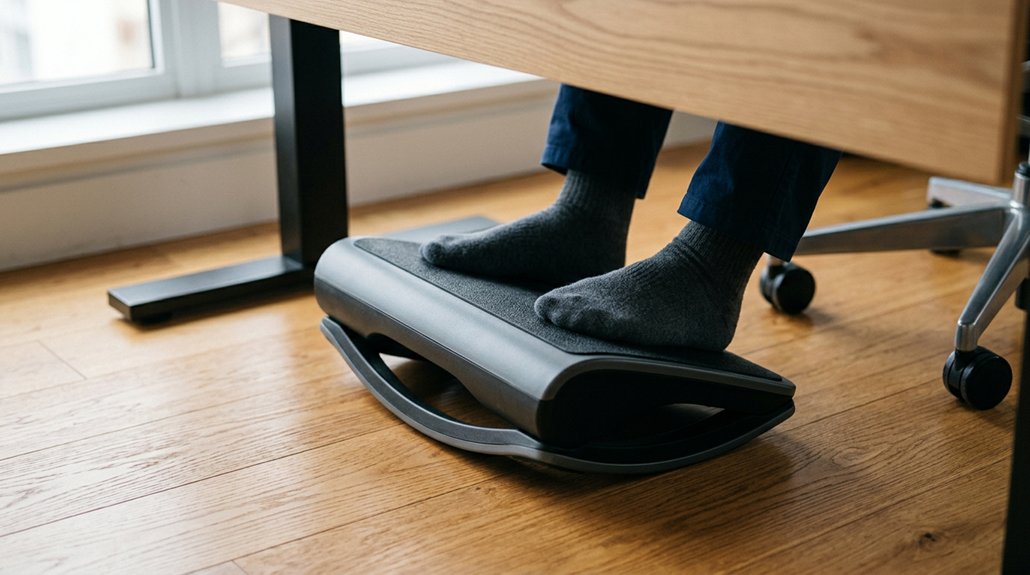
Dynamic foot rockers enhance circulation during work by encouraging continuous, rhythmic movement of the feet and ankles. This active movement throughout the day stimulates blood flow in the lower legs, helping to prevent conditions like deep vein thrombosis (DVT).
As you rock your feet back and forth, the natural ankle flexion and extension support venous return, reducing leg pressure and fatigue. Using a footrest helps reinforce this motion, keeping your legs active even while seated. High-density memory foam in cushions can also provide added comfort and support during these movements.
The benefits include better posture, less stiffness, and decreased swelling.
- Promotes continuous, rhythmic movement of feet and ankles
- Stimulates blood flow and reduces DVT risk
- Supports natural ankle flexion for improved circulation
- Keeps lower body vascular health active during long hours
Simple Tips for Using Your Footrest Effectively All Day
To get the most benefit from your footrest, make sure to adjust its height regularly so your feet stay flat and comfortable. Keep moving your feet or ankles often to boost circulation and prevent stiffness. Also, change your foot position periodically to keep your muscles active and support better blood flow all day. Incorporating a supportive ergonomic cushion can further enhance comfort and promote proper posture throughout the day.
Adjust Footrest Height Regularly
Adjusting your footrest height throughout the day is key to maintaining healthy circulation and comfort. Regularly changing the footrest height helps keep your knees and hips at ideal angles, promoting better blood flow and preventing stiffness. Incorporating ergonomic support by using tools like memory foam cushions can further enhance sitting comfort and reduce pressure points. By adjusting the footrest, you encourage subtle movement, which reduces stagnation and boosts circulation. Make sure your feet rest flat and comfortably, avoiding dangling or excessive pressure under your thighs, which can block blood flow.
For a truly ergonomic office setup, use a height-adjustable footrest between 4” and 12”. These frequent adjustments support shift weight and foot placement, decreasing the risk of swelling and varicose veins over time. Staying attentive to the footrest height helps you stay comfortable and promote circulation all day long.
- Change footrest height periodically to encourage movement
- Keep feet flat and supported for ideal blood flow
- Use adjustable footrests for ergonomic office setups
- Shift weight and foot position frequently
Incorporate Movement Frequently
Incorporating movement throughout the day maximizes circulation benefits from your footrest. By rocking your feet or engaging in subtle tapping, your footrest allows active sitting, which promotes movement and encourages blood flow.
Alternating foot placement regularly prevents stiffness and keeps muscles activated, reducing fatigue. Set short reminders to shift your weight or stand briefly every 30-60 minutes; using your footrest to facilitate this shift helps maintain healthy circulation.
Adjust the height and angle of your footrest so your knees stay at about a 90° angle with feet flat; this supports natural joint alignment during movement.
Small, consistent motions like tapping or rocking can stimulate vascular health without disrupting your workflow, making your seated work more comfortable and beneficial for your lower limbs.
Also, choosing a footrest with the right material comfort and adjustable features can further enhance your experience by providing better support during movement.
Maintain Proper Foot Position
For your footrest to support healthy circulation effectively, keeping your feet flat and fully supported on its surface is essential. This maintains a natural curve at your knees, promoting better blood circulation.
Position the footrest so your thighs stay parallel to the floor, reducing pressure on your thighs and aiding venous return. Use a footrest with an adjustable angle between 30-45 degrees to allow comfortable foot placement and subtle movements that stimulate circulation.
Regularly switch your feet to avoid static postures, which can cause stiffness. Also, choose a footrest with non-slip surfaces to keep your feet stable, preventing unnecessary muscle tension that can hinder blood flow. Proper foot positioning helps sustain healthy circulation and reduces fatigue during long sitting hours.
- Keep your feet flat and fully supported
- Maintain natural knee angle at 90°
- Adjust the angle of the footrest for comfort
- Use non-slip surfaces for stability
Signs It’s Time to Use a Footrest for Better Blood Circulation
Have you ever noticed numbness, tingling, or swelling in your legs and feet after sitting for a while? These signs indicate poor circulation, signaling it’s time to use a footrest. If you experience discomfort from prolonged sitting, muscle fatigue, or heaviness in your lower legs, elevating your feet can improve blood flow. Visible veins or varicose vein discomfort also suggest the need for better pressure relief. When maintaining proper knee and hip angles becomes difficult or your feet turn cold or pale, a footrest can help restore circulation and reduce muscle tension. Using an appropriately designed office chair mat can further enhance mobility and comfort during long periods of sitting.
How to Combine Footrest Use With Active Sitting and Stretching
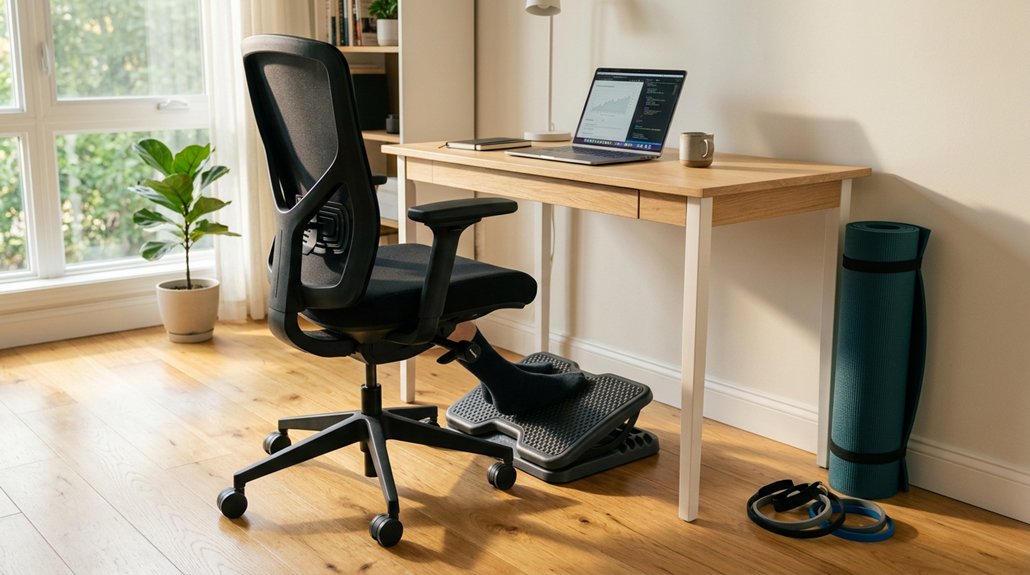
Using a footrest alone can improve circulation, but pairing it with active sitting and stretching makes the benefits even stronger. By rocking or shifting your feet on a dynamic footrest, you encourage frequent postural adjustments that promote blood flow in your lower legs.
Pairing a footrest with active sitting and stretching enhances circulation and reduces leg fatigue.
Adding periodic foot and ankle stretches while resting your feet on the footrest helps reduce stiffness and boosts circulation during long sitting sessions. Elevate your feet at a 30-45 degree angle to open knee and hip angles, enhancing distal lower extremity blood flow and fighting venous pooling.
Micro-movements like foot rocking or weight shifting support natural muscle activity, reducing leg fatigue and deep vein thrombosis risk. Combine these practices with regular standing breaks and targeted stretches for peak circulation benefits.
- Use a rocking footrest for micro-movements and postural shifts
- Incorporate foot and ankle stretches while resting on the footrest
- Elevate feet at a 30-45 degree angle to improve blood flow
- Pair with standing breaks and leg stretches for maximum circulation
Adjusting Your Footrest for Different Tasks and Postures
Adjusting your footrest for different tasks and postures guarantees peak comfort and circulation throughout your workday. Use the footrest height and tilt to match your activity. For sitting tasks, keep the footrest between 4-6 inches at the back to support the natural knee angle and promote blood flow. When standing or doing sit-stand tasks, alternate placing one foot on a footrest at 4-12 inches to shift weight and activate muscles. Always position your feet flat for best alignment, which helps support the natural pelvic tilt and reduces lower back pressure. Customize the footrest angle within 30° to 45° for typing or reading, supporting relaxed foot placement and reducing leg fatigue.
| Task | Adjustments |
|---|---|
| Desk work | Footrest height 4-6 inches, tilt support |
| Reading or typing | Slight tilt, support feet flat |
| Standing tasks | Alternate feet at 4-12 inches, keep rest flat |
| Dynamic sitting | Use tilting footrest for movement |
| Relaxed postures | Adjust to support the natural posture, reduce leg fatigue |
Choosing a Footrest With Textured Surfaces and Non-Slip Features
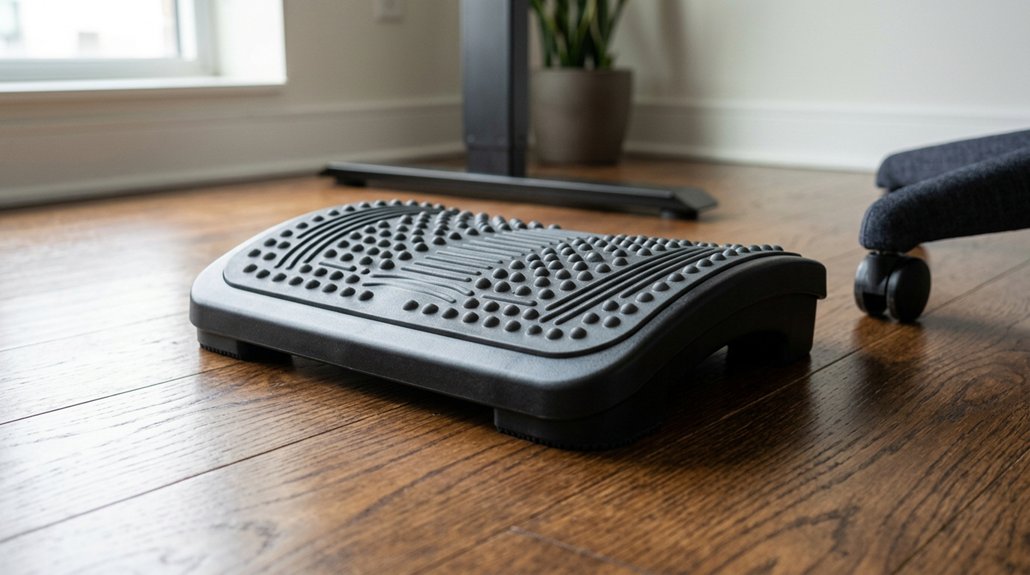
Selecting a footrest with textured surfaces and non-slip features enhances both comfort and safety during extended periods of sitting. These features help stimulate circulation by encouraging gentle foot movements and providing massage effects. Textured surfaces, like grooves or bumps, distribute pressure evenly, reducing foot pain and pressure points.
Non-slip features guarantee your footrest stays in place, preventing slips that can disrupt posture or circulation. Durable non-skid bases hold the footrest securely on smooth floors, supporting safe, consistent use.
When choosing ergonomic tools, opt for a footrest that combines adjustable height with textured and non-slip surfaces for personalized support that promotes better lower extremity circulation. This improves your comfort and health during long sitting sessions.
- Textured patterns for pressure distribution
- Non-slip bases for stability
- Adjustable height features
- Enhanced circulation support
Common Mistakes That Reduce the Benefits of Your Footrest
Choosing a footrest with textured surfaces and non-slip features is only effective if you employ it correctly. One common mistake is placing your feet unevenly or only partially on the footrest, which can lead to poor seated posture and reduce circulation benefits.
Avoid setting the footrest too high or too low; awkward knee and hip angles can restrict blood flow and cause discomfort. During long periods of sitting, failing to keep your feet flat on the floor and knees at about 90° diminishes the ergonomic advantages.
Staying static with your feet in a fixed position limits circulation improvement and can cause stiffness. Neglecting to use the footrest consistently allows pressure to build in your thighs, increasing the risk of varicose veins and swelling.
Finding the Best Footrest for Your Workspace Setup
To find the best footrest, start by choosing one with adjustable height and tilt to match your desk and chair setup comfortably.
Look for durable materials like metal or high-quality plastic with textured surfaces to prevent slipping and guarantee stability.
Consider dynamic options, like rocking footrests, if you want to promote active sitting and boost circulation.
Adjustable Height and Tilt
Adjustable height and tilt features are essential for customizing your footrest to fit your workspace perfectly. An ergonomic footrest with adjustable height, ranging from 4 to 12 inches, guarantees your feet are comfortably supported, reducing leg dangling and promoting better blood flow.
An adjustable tilt, between 30° and 45°, allows natural foot positioning and encourages dynamic movement, further enhancing circulation. By fine-tuning these features, you can open your knee and hip joints, optimizing lower extremity blood flow during long periods of sitting.
Look for footrests with the following qualities:
- Adjustable height for personalized fit
- Tilt control between 30° and 45°
- Wide enough to support your foot stance
- Non-slip textured surfaces for stability
These options help maximize the health benefits of your ergonomic footrests.
Material and Surface Texture
Material and surface texture play a significant role in maximizing your footrest’s effectiveness and comfort. The right footrest features textured surfaces or massage rollers that stimulate blood flow and reduce leg fatigue by encouraging subtle foot movements. Non-slip materials and grooves guarantee secure footing, preventing slips while allowing natural foot shifts to boost circulation.
Durable, high-quality materials like metal or aluminum provide long-lasting support and stability, resisting warping or cracking under pressure. Soft memory foam or cushioned footrests help distribute pressure evenly, easing foot pain during extended periods of sitting. Additionally, adjustable surface angles and tapered designs enhance ergonomic alignment, maintaining natural foot positioning.
Choosing a footrest with the proper material and textured surface helps optimize circulation and overall comfort throughout your workday.
Tips for Maintaining Good Circulation and Posture Long-Term
Maintaining good circulation and posture over the long term requires intentional strategies that promote movement and proper alignment during extended sitting sessions. Using a footrest under your desk helps to increase comfort and support neutral position, reducing strain on your lower back.
To help to increase circulation, alternate your feet on a dynamic footrest, such as a rocking model, to stimulate blood flow and prevent stiffness. Keep your thighs parallel to the floor and pelvis in neutral alignment to support spinal health and lower lumbar strain.
Incorporate intermittent standing and footrest use every 30-60 minutes to encourage postural variation and vascular health. Choose ergonomic solutions with textured, non-slip surfaces for stability and subtle movement, aiding circulation and reducing fatigue over time.
- Use a footrest to promote neutral position
- Alternate feet on a dynamic footrest
- Take short standing breaks regularly
- Select ergonomic solutions with textured surfaces
Frequently Asked Questions
Are Foot Rests Good for Circulation?
Yes, footrests are good for circulation because they encourage movement and proper positioning. By elevating your feet and shifting your weight, you promote blood flow, reduce swelling, and prevent conditions like DVT during long periods of sitting.
When Should a Footrest Be Used?
You should use a footrest whenever sitting for extended periods, especially if your feet can’t comfortably touch the floor, if your posture feels unnatural, or during static standing or sitting to promote circulation and reduce fatigue effectively.
How to Properly Use a Foot Rest?
To properly use a footrest, place it flat under your feet at a 90-degree knee angle, adjust its height for full support, and keep shifting your feet to enhance circulation and prevent stiffness during long sitting periods.
Does Footrest Help With Varicose Veins?
Yes, a footrest helps with varicose veins by promoting active sitting, encouraging leg movement, and reducing blood pooling. Use it regularly to maintain proper circulation, alleviate discomfort, and prevent vein progression through improved blood flow.

Leave a Reply