To prevent RSI, incorporate exercises like crab to bridge to stretch your chest, scapular push-ups for shoulder blade stability, and shoulder rolls for tension relief. Don’t forget finger and wrist stretches, such as spreading fingers and wrist rolls, to boost flexibility and circulation. Take frequent breaks to move and adjust your ergonomic setup—using supportive devices like wrist supports and adjustable chairs. Keep practicing these routines regularly, and you’ll discover more effective tips to stay injury-free throughout your workday.
How Breaks Prevent RSI: Tips for Staying Safe at Work

Taking regular breaks is essential for preventing repetitive strain injuries (RSI) because it allows your muscles, tendons, and nerves to recover from constant use. When you pause work every 30 to 60 minutes, you reduce microtrauma caused by repetitive stress, lowering the risk of developing RSI.
During these breaks, simple movements like shaking out your hands or stretching your wrists help improve blood flow and maintain muscle mobility. Alternating between sitting and standing also relieves sustained postures that contribute to strain.
Consistently practicing these habits encourages relaxed shoulders and proper wrist positioning, preventing nerve compression and tendon inflammation. Paying attention to ergonomic glove features such as support, adjustable fit, and device compatibility can further help maintain correct hand posture and reduce discomfort during long work sessions. Following the “Rules of Thumb,” such as adjusting posture and taking mindful movement breaks, supports your upper extremity health and keeps repetitive stress at bay.
Finger Stretches to Improve Flexibility and Ease Tension
Finger stretches can greatly improve flexibility and reduce tension from repetitive tasks. By regularly extending, pulling, and pressing your fingers into various positions, you strengthen tendons and increase mobility in your fingers and palms. Incorporating ergonomic grip features into your routine can also help minimize hand fatigue and discomfort.
Stretching Finger Flexor Tendons
Stretching the tendons that control finger movements is especially effective in enhancing flexibility and reducing tension. These exercises can help keep your finger flexor tendons loose, prevent stiffness, and reduce strain from repetitive tasks.
To maximize benefits, incorporate routines like extending your arm with the palm facing away and fingers down, then massaging and pulling each fingertip toward the chest for 10 seconds. Spreading your fingers and stretching the palm forward boosts blood flow and mobility.
Twisted finger clasp exercises, crossing arms and pulling wrists side to side, improve flexibility. Pressing palms together in a “prayer” position and pulling apart at the knuckles creates tension relief.
Consistently practicing these stretches 2-3 times daily helps prevent injury and maintains healthy tendons. Using ergonomic supports with adjustable positioning can further enhance comfort and reduce strain on your fingers and wrists during prolonged use.
- Extend arm with palm away, fingers down, gently pull fingertips toward chest
- Spread fingers and stretch the palm forward
- Cross arms, clasp wrists, and twist side to side
- Press palms together in a prayer pose, then pull apart at knuckles
- Perform these exercises regularly for peak flexibility
Enhancing Finger and Palm Mobility
Enhancing finger and palm mobility is essential for maintaining flexibility and reducing tension, especially after repetitive tasks or prolonged periods of typing.
To support a neutral position, start with finger stretches like pressing your palms together and pulling fingers apart at the knuckles, forming a tent shape—this improves finger flexibility and reduces joint stiffness.
The Twisted Finger Clasp, crossing arms, clasping palms, and gently pulling wrists side to side, boosts wrist and finger mobility by engaging multiple joints.
Massaging fingers from pinky to thumb and pulling each fingertip toward your chest for 10 seconds helps relieve tension and promotes blood flow.
Wrist rolls with fingers curled in soft fists, in both directions, improve circulation, aiding sustained hand flexibility and mobility.
Incorporating high-density memory foam cushions can also help reduce pressure points and support proper posture during extended periods of work.
Wrist Stretches to Reduce Tension and Boost Mobility
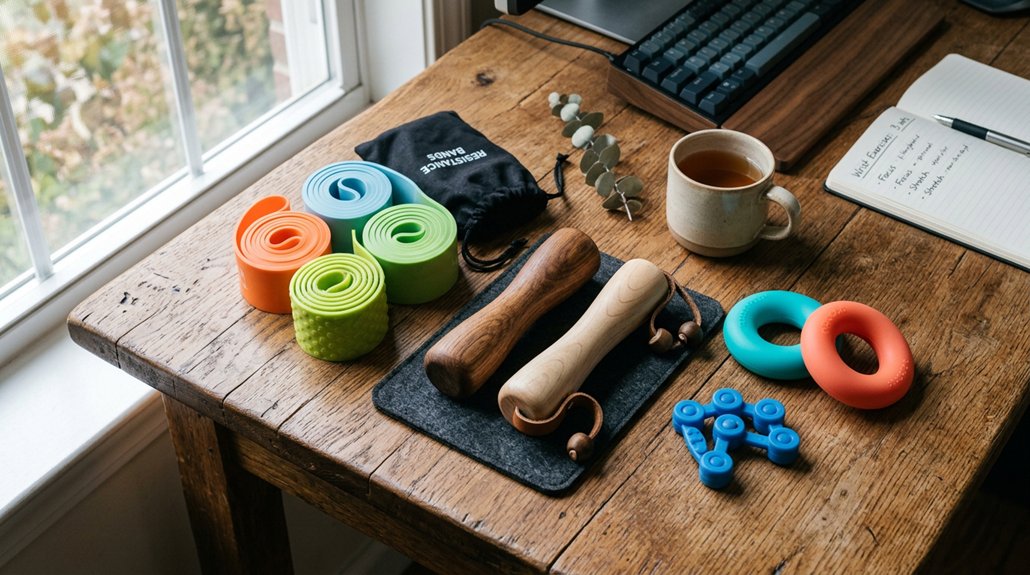
Focusing on inner wrist flexibility and overall mobility can make a big difference in reducing tension. Incorporate exercises like wrist rolls and finger stretches to keep your wrists limber and comfortable. Using `supportive material` in your wrist exercises can further enhance comfort and effectiveness. Regularly practicing these techniques helps prevent strain during long hours of typing or repetitive tasks.
Inner Wrist Flexibility
Wondering how to improve your wrist mobility and help relieve tension from repetitive movements? Focusing on inner wrist flexibility is key. Incorporate one-arm wrist stretches by extending your arm with the palm away and fingers pointing down, then gently pulling your fingers toward your chest for 30-60 seconds.
Flip your hand so your palm faces your body and pull your fingertips toward you to enhance underside wrist mobility. Wrist rolls—curl your fingers into soft fists and roll your wrists 10 times in each direction—boost circulation and flexibility.
Keep your shoulders relaxed and maintain a neutral wrist position during these stretches to help relieve built-up tension. Regularly practicing these exercises 2-3 times daily supports better tissue mobility and helps prevent RSI.
Wrist Mobility Techniques
Wrist mobility techniques, such as targeted stretches and rotations, can effectively reduce tension and increase flexibility in your wrists. Keep your wrists in a neutral, flat position while typing and taking frequent breaks to prevent strain and maintain mobility. Incorporate wrist rolls by curling your fingers into soft fists and rotating your wrists ten times in each direction, alternating touches between inner and outer wrists to promote circulation. The one-arm wrist stretch is also beneficial—extend your arm with your palm away, fingers down, and gently pull your fingers toward your chest with the opposite hand for 30-60 seconds. Diversify wrist movements by switching mouse hands and practicing finger stretches. Additionally, using ergonomic mouse pads with features like gel wrist supports and adjustable angles can help maintain proper wrist positioning and further reduce strain. These techniques help reduce tension and boost overall wrist mobility, lowering the risk of RSI.
Wrist Rolls for Better Circulation and Flexibility
Wrist rolls are an effective way to boost circulation and flexibility in your hands and forearms. By curling your fingers into soft fists and rotating your wrists 10 times in each direction, you help reduce stiffness and improve joint mobility.
Alternating touches—inner wrists to fingertips and outer wrists—during the rolls promotes full range of motion and helps strengthen wrist tendons. Performing 10 forward and 10 backward rolls supports joint lubrication, which is essential for reducing stiffness from repetitive tasks like typing or mouse use.
Incorporating wrist rolls 2-3 times daily can help reduce tension and enhance blood flow, ultimately aiding in prevention of repetitive strain injuries. Consistent practice keeps your wrists more flexible, resilient, and ready for everyday activities.
Posture and Shoulder Exercises to Relieve Tension and Maintain Alignment

Maintaining proper posture and relieving shoulder tension are essential for preventing discomfort and injury during prolonged periods of sitting or repetitive activities.
To keep your shoulder aligned and reduce strain, perform propped knee slides with neck rotation, ensuring you keep your shoulder frame solid throughout. Incorporate crab to bridge exercises to stretch your pectorals and maintain proper ear, shoulder, and hip alignment, promoting better upper body posture. Use straight-arm scapular push-ups to engage your mid-back and shoulder blades, improving shoulder stability with controlled movements.
Practice shoulder rolls—rolling shoulders forward, upward, then back and down—completing five rolls in each direction to release tension. Remember to keep your shoulders relaxed, with ears aligned over shoulders and hips, supporting ergonomic posture and preventing strain. Ensuring your adjustable armrests support multi-directional movements can also help maintain optimal positioning and reduce muscle fatigue during long work sessions.
Forearm and Upper Arm Stretches to Prevent Muscular Imbalance
Regularly stretching your forearms and upper arms helps you strengthen opposing muscle groups and maintain muscle flexibility. These exercises promote balanced muscle engagement, reducing the risk of imbalance and injury. Incorporating these stretches into your routine supports better posture and long-term arm health. Additionally, using adjustable straps and ergonomic support devices can enhance your posture correction efforts and prevent muscular strain.
Strengthen Antagonist Muscles
Strengthening your antagonist muscles through targeted forearm and upper arm stretches is essential for preventing muscular imbalance that can lead to RSI. Proper therapy exercises address this by improving muscle balance, coordination, and stability.
Incorporating stretches like wrist rolls and shoulder shrugs helps boost flexibility and circulation, reducing tension in opposing muscle groups. High-density memory foam cushions can also help maintain proper posture during exercises, preventing additional strain.
By consistently adding these stretches into your routine, you promote balanced muscle length and strength, preventing dominance of certain muscles that cause strain and pain. Maintaining this balance guarantees your muscles work harmoniously, reducing the risk of RSI. To deepen your understanding, focus on these exercises’ purpose: restoring equilibrium and supporting injury prevention efforts.
- Improve circulation and flexibility
- Maintain balanced muscle strength
- Support joint stability
- Reduce muscular tension and overuse
- Enhance muscle coordination
Maintain Muscle Flexibility
To prevent muscular imbalance and reduce the risk of RSI, focusing on stretches that enhance muscle flexibility in your forearms and upper arms is essential.
One effective stretch involves placing palms facing down on a surface, with fingers pointing toward your body, then leaning back while keeping palms flat. This helps maintain flexibility and prevents tightness. You should also perform one-arm wrist stretches by pulling fingers toward your chest for 30-60 seconds on both sides, targeting both the palm and back sides of your wrists.
Finger and wrist stretches, like the finger stretch and twisted finger clasp, improve wrist and finger mobility, reducing tension in your forearm muscles. Incorporate shoulder rolls and upper extremity reaching exercises to support overall upper limb flexibility and muscle balance.
Balance Upper Limb Muscles
Balancing your upper limb muscles is essential to prevent muscular imbalances that can lead to RSI. Incorporating targeted stretches and exercises can help you maintain muscle symmetry, supported by physical therapy techniques.
Focus on stretches like the forearm one-arm wrist stretch, which targets both the top and underside of your wrists, promoting flexibility. Shoulder rolls combined with forearm stretches ease tension and support muscular balance in your upper arm. The finger-wrist-shoulder stretch, with interlaced fingers and extended arms, helps lengthen muscles from fingers to shoulders.
Strengthening exercises like straight arm scapular push-ups boost the mid-back and shoulder blades’ stability. Regularly alternating stretches for both flexor and extensor muscles prevents tightness and muscular imbalance, reducing RSI risk.
Recognizing Early Signs of RSI to Address Symptoms Quickly
Recognizing early signs of RSI is essential for preventing long-term damage, as these symptoms often serve as warning signals that your body needs attention. If you notice dull, aching pain that worsens with repetitive tasks or prolonged positions, don’t ignore it.
Sensations like numbness, tingling, or an urge to shake or stretch your wrists can indicate developing nerve irritation linked to repetitive movements. Tenderness and tightness over muscles, tendons, or joints, especially after extended use, are key signs to watch for.
Persistent discomfort that continues after activity or disrupts your sleep calls for immediate action. Responding quickly by modifying activity and making ergonomic adjustments helps prevent severe injury and chronic pain associated with repetitive actions, ensuring you address symptoms before they escalate.
Ergonomic Setup Tips for Optimal Repetitive Task Performance
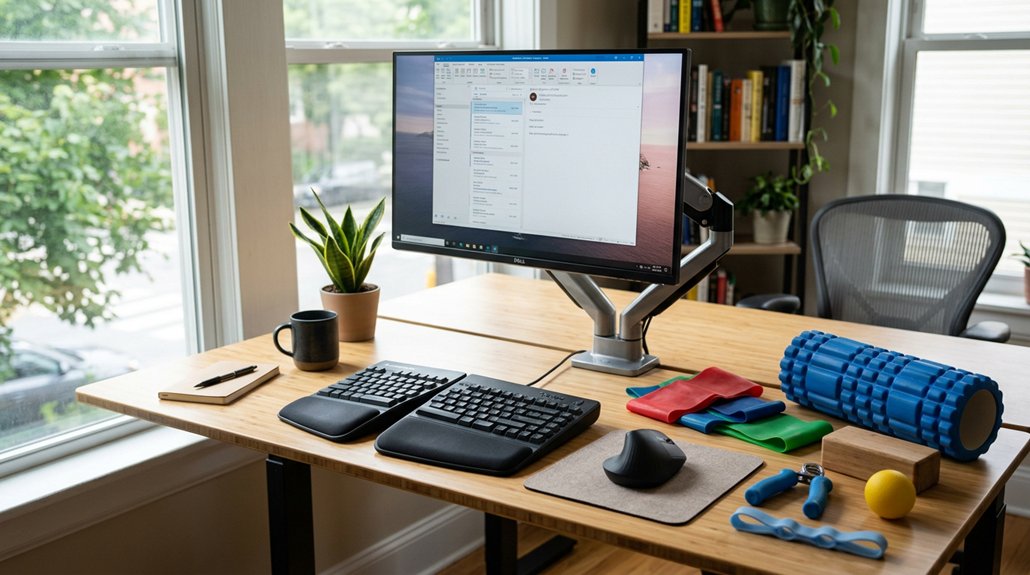
Setting up your workspace with ergonomic principles can greatly reduce the risk of RSI symptoms worsening. Keep your upper extremities supported with relaxed shoulders, and align your ears, shoulders, hips, and eyes straight ahead to minimize strain.
When typing, bend your elbows at a comfortable angle and keep your wrists in a neutral, flat position to prevent tendon and nerve compression. Use a swivel chair and dual monitors to maintain proper trunk alignment and limit neck rotation. Alternating between sitting and standing throughout the day promotes circulation and reduces muscle fatigue.
To improve comfort, consider these tips:
- Adjust your chair height so your elbows bend comfortably.
- Position monitors at eye level.
- Support your lower back.
- Take regular breaks to stretch.
- Vary your mouse usage to avoid fatigue.
Creating a Routine: How to Stay Consistent With RSI Prevention Exercises
Establishing a consistent routine for RSI prevention exercises is essential to making them a regular part of your workday. Set specific times, ideally 2-3 times daily, to perform exercises for about 5 minutes each session. Use reminders or alarms to prompt breaks, helping you stay on track despite a busy schedule.
Incorporate a variety of stretches and nerve glides, like Median and Ulnar Nerve Glides, and remember to spread your fingers wide during stretches to enhance flexibility. Alternate between sitting and standing positions to promote circulation and reduce fatigue.
Track your progress and adjust the exercise frequency based on how your body responds, ensuring you stay motivated and avoid overuse. Consistency is key to preventing RSI symptoms effectively.
Combining Movement, Posture, and Ergonomics for Long-Term RSI Prevention
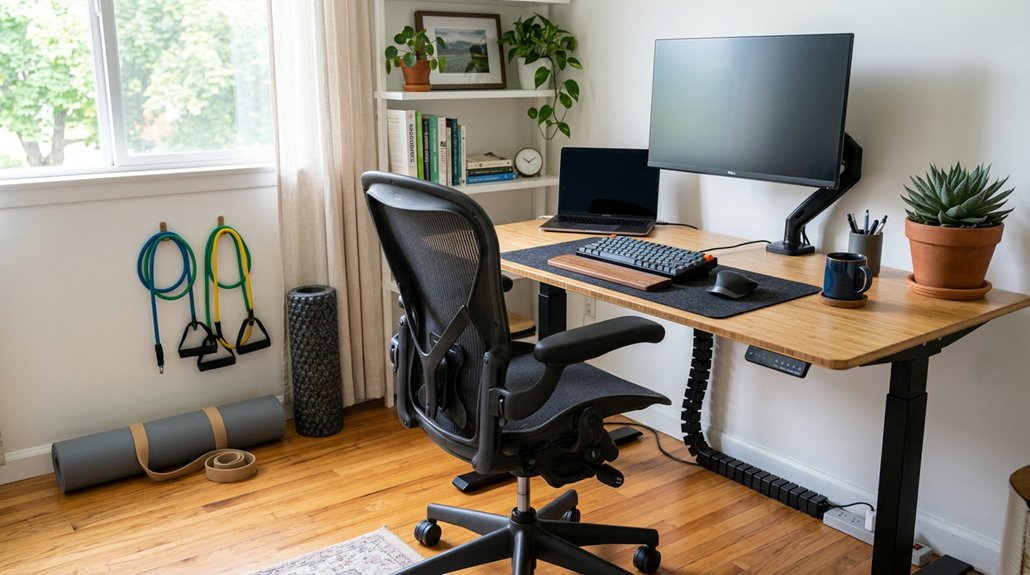
Building on your routine of RSI prevention exercises, incorporating proper posture and ergonomic adjustments amplifies their long-term benefits. Maintaining neutral wrist positions, aligned shoulders, ears, and hips minimizes strain on the median nerve and surrounding muscles. Alternating between sitting and standing, along with using varied mouse options, prevents repetitive muscle fatigue and encourages balanced movement.
Postural exercises like crab to bridge and scapular push-ups promote shoulder alignment and upper extremity stability, reducing natural tension that can cause nerve compression. Regular movement breaks every 1-2 hours, including Shoulder Rolls and Wrist Rolls, improve blood flow and decrease muscle tightness.
Consistent practice of stretching, strengthening, and ergonomic principles improves nerve mobility, flexibility, and muscle balance, creating a sustainable, long-term defense against RSI.
Frequently Asked Questions
Does Stretching Help With RSI?
Stretching definitely helps with RSI by increasing blood flow, improving flexibility, and reducing tightness. You should do targeted stretches like median nerve glides and wrist rolls regularly to prevent symptoms and support your range of motion effectively.
What Is the 2 Hour Pain Rule?
The 2 Hour Pain Rule means if your pain lasts over two hours after activity, you should rest, modify movements, and take breaks. It helps prevent overuse injuries by signaling you to slow down and recover early.
What Is the Best Way to Avoid RSI?
To avoid RSI, you should set up an ergonomic workspace, take regular breaks, perform targeted stretches and postural exercises, stay mindful of your posture, alternate hands and positions, and relax your shoulders during repetitive tasks.
How to Fix RSI Quickly?
To fix RSI quickly, you should rest, reduce repetitive movements, and perform nerve glides, finger stretches, and wrist stretches regularly. Maintain ergonomic posture, take breaks often, and stay relaxed to promote faster healing and reduce pain.