
To improve your thoracic spine, try seated twists, shoulder blade squeezes, and thoracic extensions over your chair. Incorporate Cat-Cow stretches and spinal rotations regularly to increase mobility and reduce stiffness. Make sure to take short movement breaks every 30 minutes and practice deep breathing to promote better posture and breathing. Stick with these exercises consistently, and you’ll discover simple strategies to maintain flexibility and comfort during long hours at your desk.
Why Thoracic Mobility Is Key for Desk Workers
Maintaining good thoracic mobility is essential for desk workers because prolonged sitting can lead to stiffness and limited movement in the mid-back. When you sit for hours, your thoracic spine becomes less flexible, which worsens your posture. A lack of proper ergonomic support mechanisms can contribute to decreased mobility and discomfort. Poor posture, like forward head positioning and rounded shoulders, often results from decreased thoracic mobility. This not only causes discomfort but also puts extra strain on your neck and shoulders. By improving thoracic mobility, you counteract these effects, helping you maintain an upright posture and reducing tension. Exercises that increase spinal flexibility, especially in rotation and extension, restore natural movement. Better thoracic mobility supports your core stability and breathing, promoting healthier posture and reducing the risk of musculoskeletal pain caused by prolonged sitting.
Signs You Might Have a Stiff Thoracic Spine
When your thoracic spine becomes stiff, it’s often noticeable through certain movement challenges and discomforts. You might struggle with:
- Limited twisting of your upper back, feeling pinched or restricted.
- Tightness between the shoulder blades, making it hard to relax your upper back.
- Discomfort or pain in your neck and shoulders after long periods of sitting.
- Difficulty taking deep breaths, feeling your ribs aren’t expanding fully.
These signs indicate reduced thoracic mobility, impacting your upper back and overall posture. Improving flexibility in this area can also help prevent back support pillow discomfort during prolonged sitting. You might also notice tension headaches or persistent neck stiffness, caused by compensatory strain from a stiff thoracic spine. Recognizing these symptoms helps you identify the need for targeted exercises to relieve pain and restore movement.
How Sitting Prolongs Thoracic Stiffness and Its Effects
Sitting for long periods can cause your thoracic spine to become stiff and lose its natural movement. This stiffness can lead to poor posture, muscle tension, and discomfort in your neck and shoulders. A lack of proper support can also contribute to posture-related issues, exacerbating discomfort over time. Over time, it also limits your breathing and increases the risk of pain and mobility issues.
Posture Degeneration Risks
Prolonged sitting steadily decreases thoracic spine mobility, leading to posture degeneration over time. When you stay seated too long, your thoracic spine becomes stiff, intensifying forward head and rounded shoulders.
This restricted movement causes your muscles and joints to stiffen further. A lack of movement also prevents the natural distribution of pressure and encourages stiffness in the thoracic region, which can exacerbate postural issues.
Visualize:
- The thoracic spine becoming less flexible, like a rusty hinge.
- Your head jutting ahead, straining your neck muscles.
- Shoulders rounding forward, pulling your chest inward.
- Tension building in your upper back, creating discomfort and limited extension.
Without movement, your posture worsens, increasing strain on nearby areas. Over time, this degenerative cycle reduces overall spinal function, heightening risks of pain, tension headaches, and breathing difficulties, making proactive exercises essential for prevention.
Restricted Movement Consequences
Extended periods of poor posture restrict the natural movement of your thoracic spine, leading to stiffness in the muscles and joints. Prolonged sitting often causes forward head posture and rounded shoulders, which limit thoracic mobility and reduce upper back flexibility.
This stiffness impairs your ability to twist and extend the spine, affecting daily movements and deep breathing. When the thoracic spine becomes immobile, it forces compensatory strain on your neck and lower back, increasing discomfort and injury risk.
Over time, age-related changes and sedentary habits worsen these effects, further decreasing spinal flexibility. Reduced thoracic mobility not only causes immediate pain but also hampers core stability and diaphragmatic function, escalating long-term musculoskeletal health issues and impacting your overall posture.
Tension and Discomfort
When you sit for long periods, poor posture habits—such as leaning forward and rounding your shoulders—quickly lead to stiffness in your thoracic spine. This reduces thoracic mobility and makes your upper back feel tight and sore.
As your thoracic mobility worsens, you might notice:
- Limited rotation, making twisting movements uncomfortable
- Reduced extension, causing difficulty in straightening up
- Increased tension in shoulder and neck muscles
- Restricted rib cage movement, impairing deep breathing
These effects not only cause discomfort but also heighten strain on other muscles, leading to further pain and stiffness. Sitting for extended periods worsens thoracic stiffness and tightness, making it harder to maintain an upright posture without effort. Incorporating targeted mobility exercises can help improve flexibility and relieve tension in this area.
Benefits of Regular Thoracic Stretching and Mobility Exercises
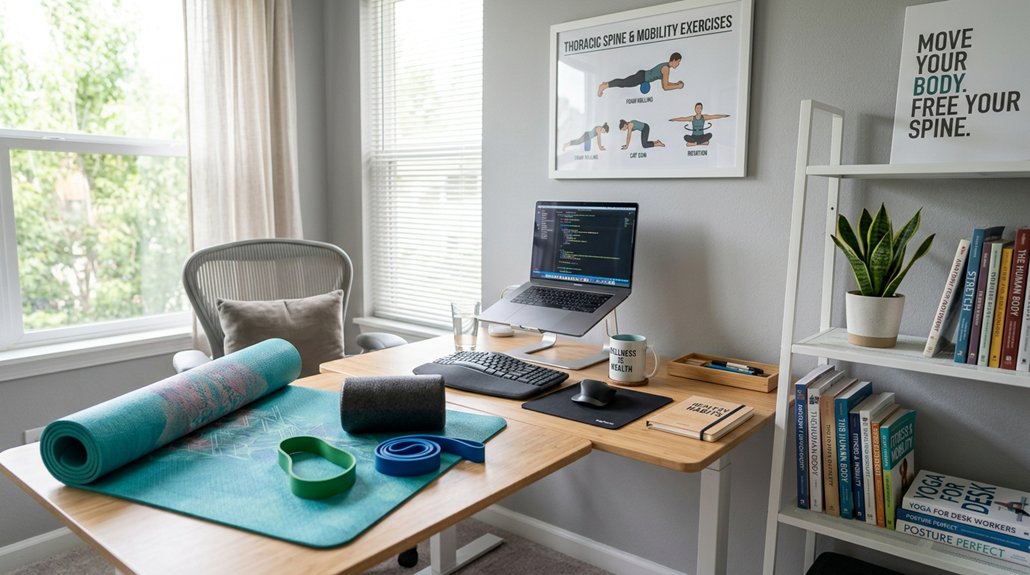
Regular thoracic stretching and mobility exercises offer considerable benefits for desk workers by improving mid-back flexibility and counteracting the stiffness caused by sitting for long periods. These exercises, like Thoracic Mobility Exercises, help enhance your range of motion in the thoracic spine, making movements more fluid and reducing postural strain.
As you increase mobility, you’ll notice improved posture, which decreases the tendency to slouch and helps align your spine properly. This not only eases discomfort but also lowers the risk of neck and shoulder pain. Incorporating smart feedback systems can further assist in maintaining correct postural exercises for maximum benefit.
Consistent practice boosts core stability, involving your abdominals, pelvic floor, and diaphragm, promoting better balance and strength. Just 5-10 minutes of daily mobility work can considerably decrease stiffness and improve your functional movement and work productivity.
Best Exercises to Improve Thoracic Mobility During Work
To improve your thoracic mobility during work, incorporating seated rotation techniques and desk-based stretches can make a real difference.
Simple exercises like slow seated twists, Cat-Cow stretches, and chest openers help counteract stiffness and promote better movement. Regularly integrating these strategies into your routine can keep your spine flexible and reduce discomfort throughout the day.
Seated Rotation Techniques
Seated rotation exercises are a simple yet effective way to enhance thoracic mobility during work hours. To perform a Seated Thoracic Rotation, sit upright with your feet flat on the floor. Place one hand on the chair backrest, then gently twist your torso to the side, holding for 15-30 seconds.
Visualize this as:
- Keeping your hips stable while rotating your upper body.
- Focusing on elongating your mid-back during the twist.
- Maintaining a steady, controlled movement without forcing it.
- Repeating this movement 8–10 times per side daily.
This Seated Spinal exercise targets thoracic rotation, helping improve flexibility and reduce stiffness caused by prolonged sitting. Regular practice boosts thoracic mobility, easing neck and shoulder discomfort during desk work.
Desk-Based Stretch Strategies
Incorporating simple stretching strategies into your workday can greatly improve thoracic mobility and reduce discomfort from prolonged sitting. The seated thoracic stretch, involving slow, controlled twists on each side, enhances thoracic rotation and eases stiffness.
The seated spinal twist, held for 15-30 seconds, effectively releases spinal tension and encourages better seated thoracic movement without leaving your desk. Shoulder blade squeezes, repeated 10-15 times, strengthen upper back muscles, supporting proper posture and alleviating chest tightness caused by sustained sitting.
The Cat-Cow stretch, performed 10-12 times on all fours or seated, promotes thoracic flexibility and relieves posture-related tension. Utilizing active sit/stand desks can further encourage dynamic movement and improve thoracic mobility throughout the day. These desk-based stretch strategies help you maintain mobility, reduce strain, and support your upper back, especially around the shoulder blades.
Step-by-Step: Doing Thoracic Rotation at Your Desk
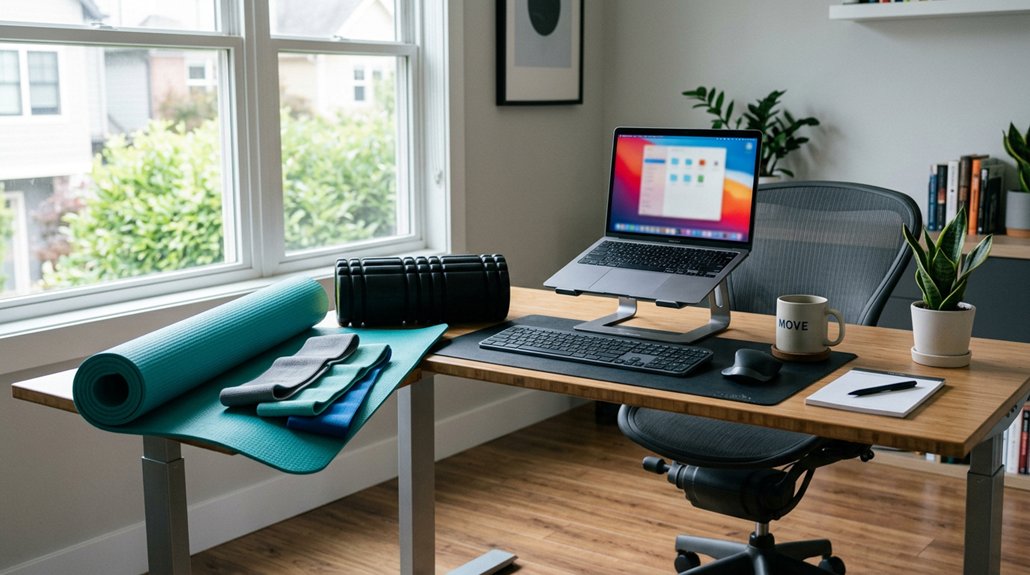
Performing thoracic rotations at your desk is a simple way to improve your mid-back mobility without interrupting your day. To start:
Enhance your mid-back mobility effortlessly with simple seated thoracic rotations at your desk.
- Sit upright with your feet flat and place your left hand on the backrest for stability.
- Gently twist your upper body to the left, bringing your right arm across your chest to deepen the twist. Keep your hips facing forward.
- Hold the twist for 15 to 30 seconds, breathing deeply to enhance thoracic mobility and stretch your mid-back.
- Slowly return to center and repeat on the right side, aiming for 8 to 10 controlled rotations.
Avoid forcing the twist beyond your comfort, and maintain a proper posture to prevent strain while increasing upper body flexibility. Incorporating posture-conscious movement helps prevent discomfort and promotes better spinal health throughout your workday.
Incorporate Cat-Cow and Spinal Mobilizations Into Your Routine
To effectively improve your thoracic mobility, dedicate 5-10 minutes daily to Cat-Cow stretches and spinal mobilizations. The Cat-Cow exercise, performed on hands and knees, involves inhaling to arch your back and exhaling to round it, enhancing thoracic extension through gentle movement. Aim for 8-12 slow repetitions to boost flexibility and counteract the effects of prolonged sitting.
Spinal mobilizations like seated or lying spinal twists also increase thoracic rotation, reducing stiffness and discomfort. Incorporating these exercises regularly promotes better thoracic extension, helping to address forward head posture and rounded shoulders common in desk workers.
Additionally, they support ribcage expansion and diaphragmatic breathing, alleviating tension headaches and neck tension caused by poor ergonomics. Make them a daily habit for improved mobility and posture. leveraging supportive ergonomic arm supports can further optimize your workspace and reduce strain during these stretches.
Simple Breathing and Stretching Moves to Improve Posture
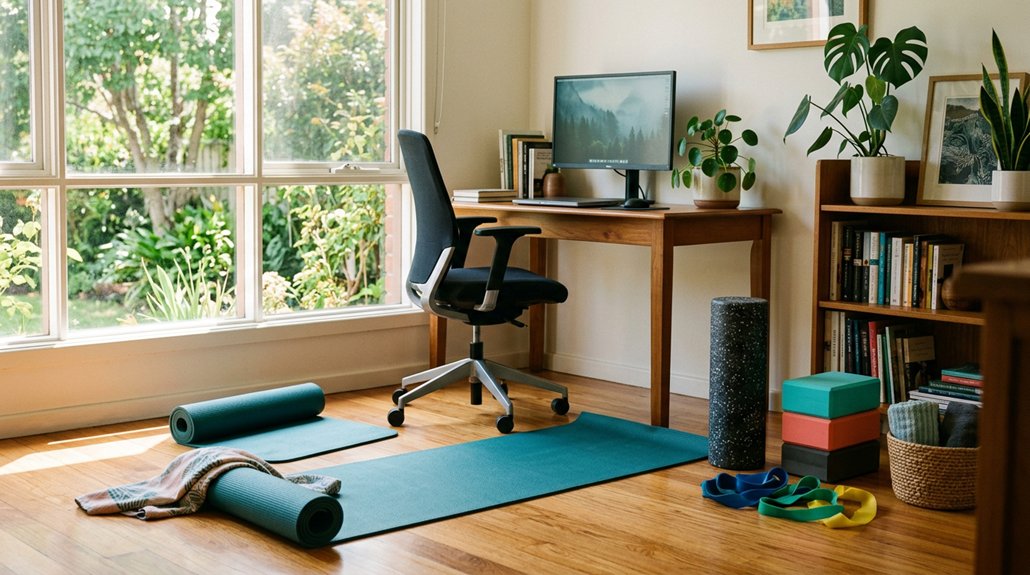
Practicing simple deep breathing and gentle stretching can greatly improve your posture and relieve tension. By focusing on controlled movements and breath, you enhance flexibility in your thoracic region and reduce discomfort from sitting too long. Incorporating biofeedback features from some posture devices can further reinforce proper alignment during these exercises.
Incorporating these quick routines into your day helps keep your spine aligned and your muscles relaxed.
Deep Breathing Techniques
Deep breathing techniques can greatly enhance your posture by opening up the chest and relieving tension in the shoulders and upper back. When you practice thoracic mobility through deep breathing exercises, you activate your diaphragm and expand your rib cage, counteracting the cramped posture from desk work.
Incorporate movements like:
- Inhale deeply, filling your lungs and expanding your chest.
- Exhale slowly, engaging your core as your ribs contract.
- Perform spinal twists with gentle breathing, promoting thoracic rotation.
- During seated thoracic extensions, focus on controlled, full breaths to deepen the stretch.
These techniques help release upper back tightness, improve lung function, and encourage better alignment. Consistent practice of deep breathing during stretches like foam roller exercises or cat-cow moves supports thoracic mobility and relaxed posture.
Gentle Stretch Routines
Incorporating gentle stretching routines into your daily schedule can effectively counteract the stiffness caused by prolonged sitting at a desk.
Seated stretches like the Seated Thoracic Rotation help improve thoracic mobility—perform 8-10 slow rotations per side to loosen up your mid-back. The Cat-Cow stretch, done seated or on all fours, involves 10-12 slow reps focusing on spinal flexion and extension, resetting your posture and relieving tension.
The Seated Spinal Twist, holding each side for 15-30 seconds with feet flat and gentle twisting, boosts thoracic rotation and reduces discomfort. Pair these stretches with slow, controlled breathing during Child’s Pose or Thoracic Extension to enhance rib cage mobility.
These simple moves support better posture and help alleviate desk-related mid-back tightness efficiently.
Posture Adjustment Tips
To improve your posture while working at a desk, combining simple breathing techniques with targeted stretches can make a noticeable difference. Focus on enhancing thoracic mobility, easing chest tightness, and supporting proper shoulder alignment.
Here’s how:
- Perform seated thoracic rotations for 1-2 minutes, twisting gently to increase mid-back flexibility.
- Incorporate seated pec stretches, opening your chest and reducing slouching.
- Practice shoulder blade squeezes, holding for 5 seconds to strengthen upper back muscles.
- During stretches like cat-cow, breathe slowly and deeply, focusing on ribcage expansion to support diaphragmatic flexibility and release shoulder tension.
Taking movement breaks every 30 minutes to stretch and perform light thoracic extensions will further correct posture and reduce stiffness.
Create a Daily Stretching Routine for Lasting Back Relief
Establishing a daily stretching routine is essential for desk workers to maintain back health and prevent stiffness. Incorporate exercises that target thoracic mobility and help relieve back tension. These stretches are low-impact and highly effective over time. Aim for 5–10 minutes, 4–5 days a week, to see lasting results.
| Exercise | Repetitions |
|---|---|
| Seated Spinal Twist | 8–12 times per side |
| Cat-Cow | 10–12 slow repetitions |
| Thoracic Extension Over Chair | 8–12 reps |
| Open Book Stretch | 6–8 reps per side |
These movements gently open the upper back, improve thoracic rotation, and counteract the effects of prolonged sitting, helping you stay flexible and comfortable throughout your day.
Tips to Keep Your Thoracic Flexibility During Long Sitting Periods
Prolonged sitting can lead to increased stiffness and poor posture, but regularly incorporating movement and stretches can make a significant difference. To maintain thoracic mobility during long sitting periods, take action with simple exercises.
- Picture yourself doing seated thoracic rotations, twisting gently from side to side to loosen tight muscles.
- Imagine practicing cat-cow stretches at your desk, arching and rounding your back to improve flexibility.
- Visualize shoulder blade squeezes, pinching your shoulder blades together to strengthen postural muscles.
- Envision doing seated spinal twists, turning your torso gently, which helps reduce muscle tightness and enhances thoracic flexibility.
Consistently performing these exercises during breaks not only boosts thoracic mobility but also helps prevent discomfort, neck strain, and compensatory issues from prolonged sitting.
Ergonomic Tips to Support Thoracic and Spine Health
Proper ergonomic setup plays a crucial role in supporting your thoracic and spinal health during long hours at the desk. Adjust your workspace so your monitor is at eye level, and choose a chair that supports the natural curve of your thoracic spine to prevent forward rounding and stiffness. Taking movement breaks every 30 minutes is key; perform simple exercises like seated spinal twists or shoulder blade squeezes to boost thoracic mobility. Use lumbar support cushions or adjustable chairs to encourage an upright posture, reducing strain on your thoracic region. Incorporate standing or walking intervals during work to lessen continuous load and improve alignment. Keep your shoulders relaxed and retracted, avoid forward head posture, and stay aware of your posture to prevent stiffness and discomfort.
| Tip | Action | Benefit |
|---|---|---|
| Monitor height | Eye level | Reduces neck strain |
| Support contact | Lumbar cushions | Promotes upright posture |
| Movement breaks | Thoracic exercises | Enhances mobility |
| Standing intervals | Walk or stand | Improves alignment |
| Posture awareness | Relax shoulders | Prevents stiffness |
When Persistent Back Tension Requires Professional Help
Even with good ergonomic setup and regular movement breaks, some desk workers may still experience persistent back tension that doesn’t improve over time.
Persistent back tension can linger despite proper ergonomics and breaks, indicating deeper mobility or posture issues.
This could signal underlying issues with thoracic mobility or poor posture, requiring professional assessment. If self-managed exercises aren’t helping, consider consulting a physical therapist who can create a personalized plan. Imagine a therapist guiding you through:
- Targeted thoracic mobility exercises to loosen stiff areas.
- Strengthening routines to support your back muscles.
- Hands-on techniques to release tension.
- Customized strategies to correct posture imbalances.
Seeking professional help guarantees you address root causes, preventing tension from spreading to your neck, shoulders, or lower back. Local clinics like Physiopros Performance Rehab are equipped to provide tailored interventions for persistent back issues in desk workers.
Combine Mobility and Strengthening for Overall Back Health
Combining thoracic mobility exercises with strengthening routines creates an all-encompassing approach to improving back health for desk workers. Incorporating movements like Cat-Cow and Seated Spinal Twist enhances thoracic mobility, enabling better extension and rotation.
Pair these with strengthening exercises such as scapular squeeze, which targets the muscles between your shoulder blades. This combination helps counteract muscle weakness caused by prolonged sitting and supports proper spinal alignment.
Regularly practicing these routines for 5-10 minutes, 4-5 days a week, boosts back flexibility and core stability, reducing neck and shoulder tension common in desk jobs. Integrating mobility and strengthening exercises encourages balanced body weight distribution across the spine, minimizes compensatory strain, and promotes overall functional movement for long-term back health.
Frequently Asked Questions
What Is the Best Exercise for Thoracic Spine?
The best exercise is the Cat-Cow stretch, as it promotes thoracic mobility, encourages spinal flexion and extension, and improves posture after long hours of sitting. Regular practice helps reduce stiffness and enhances overall spinal health.
What Would Help With Back Pain From Sitting at Desk at Work?
To relieve back pain from sitting at your desk, incorporate thoracic rotation and shoulder blade squeezes regularly, stretch with Cat-Cow and Cobra stretches, and take frequent movement breaks, keeping your back mobile and reducing tension effectively.
How Do I Decompress My Thoracic Spine?
To decompress your thoracic spine, perform gentle stretches like thoracic extensions over a chair or foam roller, incorporate backbends such as Cobra pose, and practice spinal twists. Breathe deeply to enhance relaxation and mobility.
What Does a Tight Thoracic Spine Feel Like?
A tight thoracic spine feels like restricted twisting, neck and shoulder stiffness, tension headaches, and difficulty breathing or rotating your upper back. You might also notice discomfort between shoulder blades, especially after sitting for a long time.

Leave a Reply