To optimize airflow, you should place windows on opposite walls for cross-ventilation, allowing air to flow freely through your space. Alternatively, positioning windows on adjacent walls creates diagonal airflow, enhancing circulation. Installing windows on the north and south sides can maximize natural ventilation, while avoiding east and west sides helps reduce overheating. If you want to discover more tips to boost airflow and keep your home comfortable, keep exploring these strategies.
Where Should You Place Windows for the Best Airflow?
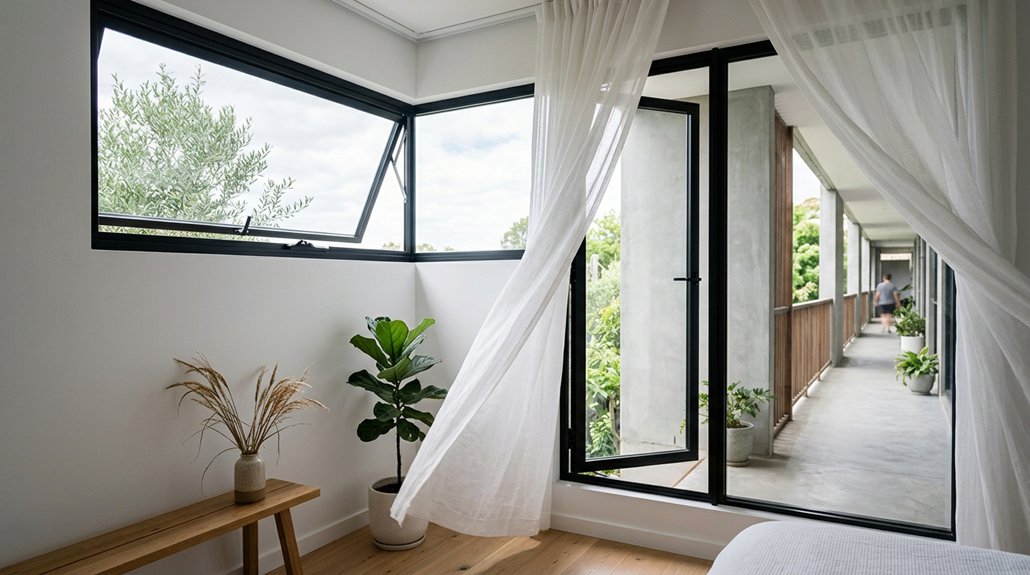
Have you ever wondered where to place your windows for best airflow? The key is to position windows on opposite or adjacent walls. This setup allows air flow to create effective cross-ventilation, bringing fresh outdoor air into your indoor space and pushing stale indoor air out. Placing windows on the north and south sides maximize natural ventilation because they capture prevailing winds while avoiding overheating from east or west sunlight. To boost passive cooling, align windows with local wind directions using wind rose data. Installing taller windows that are lower and higher on walls facilitates vertical air movement—warm air escapes from the top, and cooler air enters from below. Remember, unobstructed windows guarantee consistent airflow, helping maintain a comfortable indoor climate all year round. Additionally, utilizing air-purifying plants near windows can enhance indoor air quality by filtering airborne pollutants while promoting a fresher environment.
How to Position Windows to Catch the Breeze and Enhance Ventilation
To maximize natural ventilation, carefully consider how you position your windows relative to the prevailing wind directions. Place windows on opposite or adjacent walls to create cross-ventilation, allowing fresh air to enter on one side and stale, warm air to exit the other. Align windows with local wind patterns to effectively channel breezes through your indoor space. For vertical airflow, position windows higher on one wall and lower on the opposite to promote warm air escape and cooler air intake. Avoid east and west sides to reduce overheating and sunlight exposure. Keep window openings unobstructed by furniture or heavy treatments to maintain clear airflow routes. Properly installed soundproofing curtains can also help manage temperature and noise, indirectly enhancing ventilation efficiency. Here’s a visual guide:
| Window Placement | Effect |
|---|---|
| Opposite walls | Cross-ventilation increases |
| Adjacent walls | Diagonal airflow, better circulation |
| Higher/lower | Vertical airflow enhances cooling |
| Aligned with wind | Maximize breeze capture |
How to Remove Obstructions and Choose the Right Window Sizes
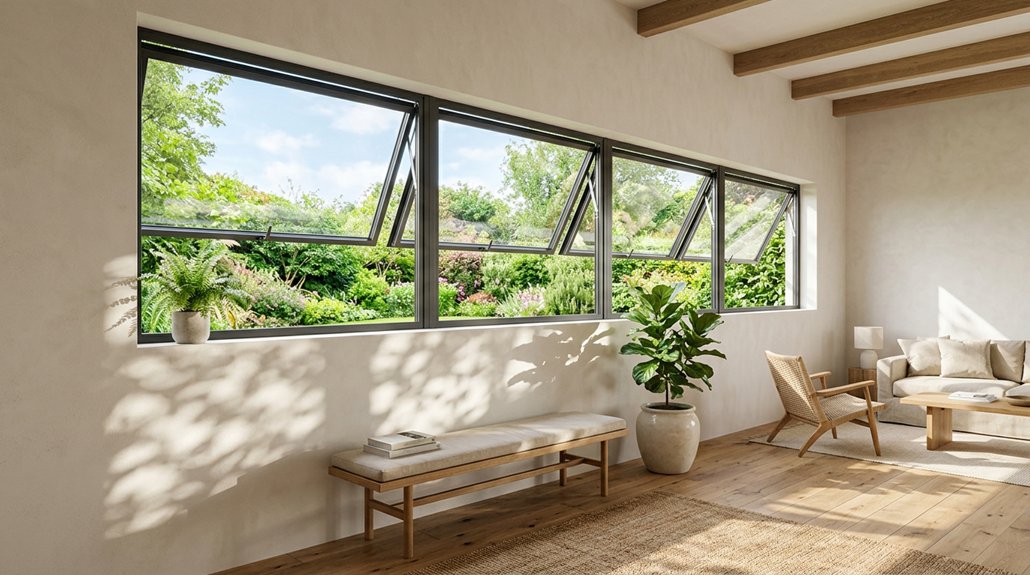
Removing obstructions and selecting the right window sizes are essential steps for optimizing natural airflow in your space. Clear away large furniture, heavy curtains, or dense landscaping to keep airflow pathways open, still allowing fresh air to enter freely.
Choose larger windows and taller heights to increase air exchange volume and improve ventilation efficiency. Position windows strategically on opposite walls to facilitate cross-ventilation, which maximizes airflow through the room. Avoid placing windows too low, as this can hinder effective circulation and create warmer indoor environments.
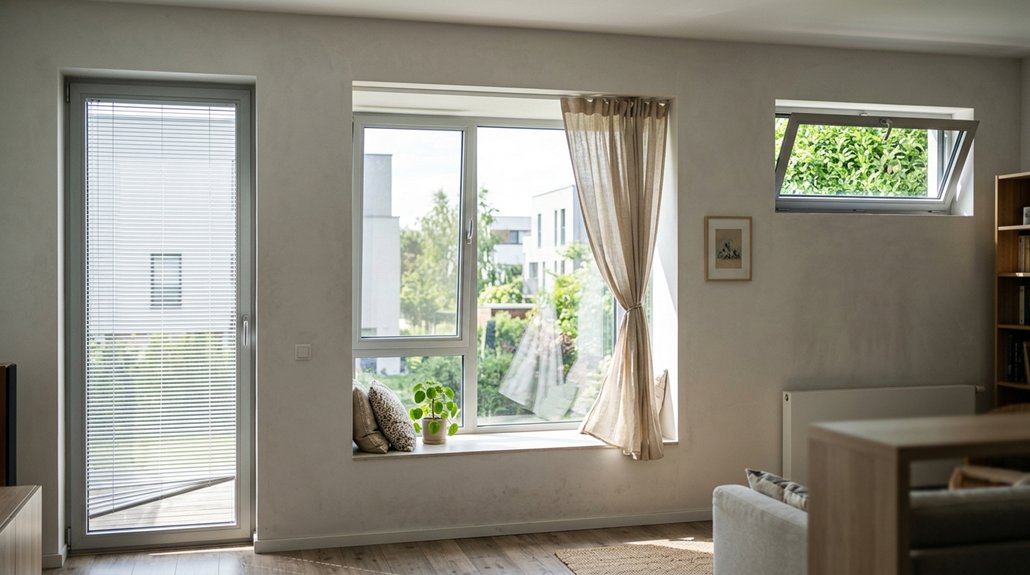
Consider window styles like casement or double-hung that open fully or partially at top and bottom, allowing air to flow vertically and directionally. Incorporating awning windows can further reduce reliance on mechanical cooling by better controlling airflow and outdoor protection.
Frequently Asked Questions
What Type of Window Is Best for Airflow?
You should choose casement windows for airflow, as they open fully outward, maximizing ventilation and sealing tightly. They provide the best natural airflow, especially when you want to improve circulation and maintain energy efficiency in your space.
What Is the Golden Ratio for Window Placement?
The golden ratio for window placement is around 61.8% of the wall height from the floor, with spacing and size following this ratio. This optimizes natural light, airflow, and aesthetic harmony in your space effectively.
Is It Better to Open Top Windows or Bottom for Air Circulation?
You should open both top and bottom windows to maximize airflow. Bottom windows bring in cool, fresh air, while top windows allow warm, stale air to escape, creating a continuous vertical cycle that improves overall ventilation and comfort.
Is It Better to Have Windows Facing East or West?
You should prefer east-facing windows because they catch cooler morning sunlight, help with morning ventilation, and align with breezes for better airflow. West-facing windows can cause overheating, so reducing their size minimizes heat buildup and enhances comfort.