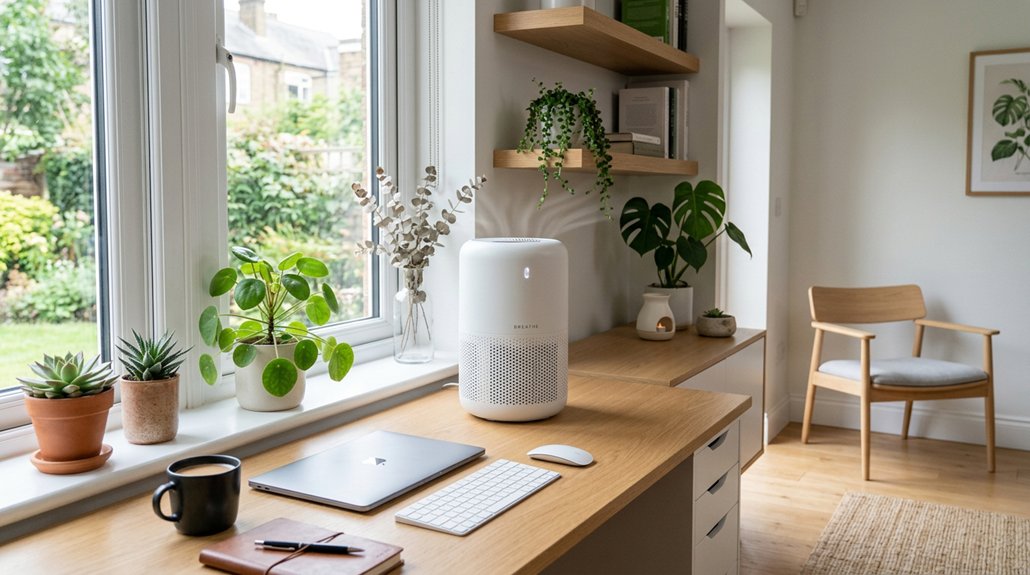
To keep your air purifier silent during work, position it away from walls and noise-reflective surfaces, and elevate it on stable stands or casters. Use models with adjustable fan speeds, preferably around 50 dB, for quieter operation. Regularly clean filters and choose those with larger surfaces to prolong life and reduce noise. Proper vibration damping and maintenance help minimize rattling. Implementing these tips guarantees a peaceful environment, and if you continue exploring, you’ll discover even more ways to enhance your workspace silence.
Why Quiet Air Purifiers Help You Focus at Work
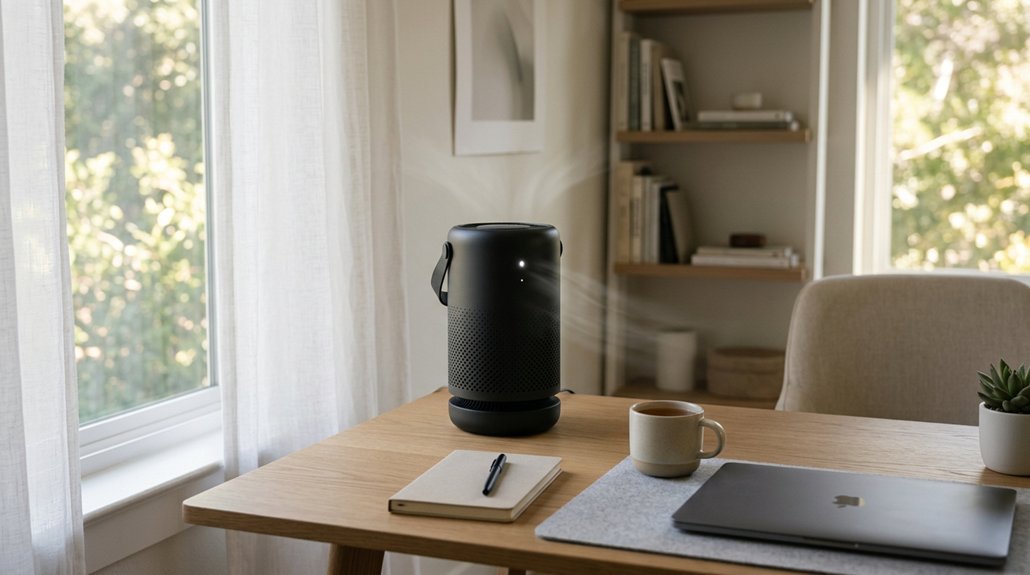
Quiet air purifiers help you focus at work by minimizing disruptive noise that can break your concentration. When you choose quiet air purifiers, you get a low noise level—around 50 decibels—that produces soothing white noise similar to a refrigerator hum. This calming background sound helps you stay alert without distraction. Incorporating models with a higher air exchange rate, such as those that achieve 4-5 air changes per hour, can further improve air quality while maintaining noise levels suitable for focused work. Lower fan speeds not only reduce noise but still effectively filter airborne particles, making them perfect for continuous use during focused work sessions. Portable air purifiers designed for offices often feature noise ratings and Energy Star certification, ensuring they’re energy-efficient and quiet enough for all-day operation.
How to Choose the Quietest Fan Speed for Your Office
To choose the quietest fan speed, look for models that run around 50 dB, similar to a refrigerator, which balances noise and air cleaning efficiency.
You’ll want to set the fan speed low enough to keep noise minimal but still provide adequate purification for your room size. Opt for purifiers with adjustable speeds and check their decibel ratings to find the most peaceful setting.
Noise Level at Different Speeds
Choosing the right fan speed for your air purifier is key to maintaining a peaceful office. The noise level varies with fan speeds, so selecting the lowest effective setting helps keep sound disruptions minimal.
For a quiet office environment, aim for a noise level at or below 50 decibels, comparable to a refrigerator hum. Use lower fan speeds that still deliver sufficient Clean Air Delivery Rate (CADR) to filter your room effectively.
Opt for models with multiple fan speeds and clearly stated noise ratings, which let you customize performance based on your needs. Larger capacity purifiers can run at lower speeds, providing quieter operation while maintaining peak air quality.
Optimal Settings for Comfort
Setting the right fan speed on your air purifier guarantees you a balance between effective air cleaning and a comfortable, quiet workspace. Aim for low fan speeds (≤50 dB), which produce a background noise similar to a refrigerator hum while maintaining filtration.
Choose an air purifier with a higher CADR rating relative to your room size; this allows you to run it at quieter, lower fan speeds without losing cleaning power. Look for models with washable prefilters to trap larger particles, reducing strain on the primary filter and enabling quieter operation.
Additionally, consider air purifiers with air-quality sensors that automatically adjust fan speeds to the lowest effective level, maintaining comfort. Position your purifier away from direct workstations but within the room for ideal airflow at reduced speeds.
An important factor to consider is the noise level, ensuring it remains within a comfortable range for focused work and minimal distraction.
The Best Placement Tips for Silent Air Purification
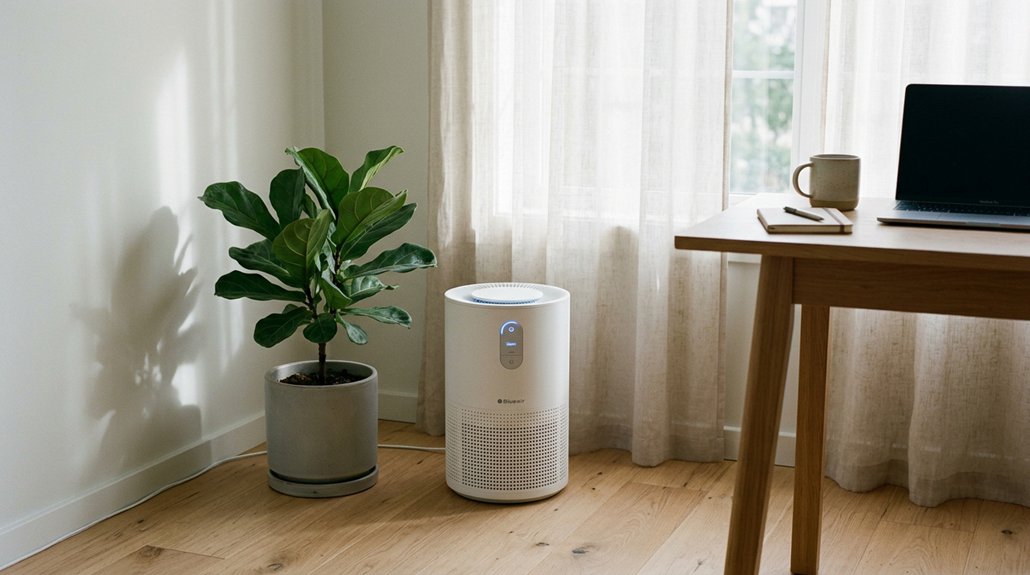
To keep your air purifier silent, choose a spot away from walls, corners, and reflective surfaces that could cause noise echoes. Make sure it’s close to pollution sources like work areas to run at lower fan speeds, and elevate it slightly off the floor to reduce vibrations. Keep the unit accessible for maintenance, as clogged filters can increase noise over time. Additionally, selecting panels with effective sound absorption can help further dampen noise and echo within your workspace.
Optimal Spot Selection
Positioning your air purifier carefully can make a significant difference in maintaining quiet operation while keeping the air clean.
To optimize placement, locate the unit near pollution sources like a pet area or fireplace for effective filtering at lower, quieter speeds. Keep it away from high-traffic walkways and corners to minimize interaction noise and guarantee unobstructed airflow. Place the air purifier on a stable surface such as a sturdy table or shelf to reduce vibration noise.
For workspaces, position it near your breathing zone but not directly in front of you, so you get clean air without fan noise distractions. Additionally, placing the purifier away from curtains or sound-absorbing soundproofing curtains can prevent muffling of the purifier’s airflow and keep noise levels low.
Remember these tips:
- Near pollution sources
- Away from walkways
- On a stable surface
- Near your breathing zone
Avoid Obstructed Areas
Guaranteeing your air purifiers aren’t obstructed by walls, furniture, or corners is essential for quiet, efficient operation. Obstructions can block airflow, causing the fan to work harder and increasing noise levels.
Keep the intake and exhaust vents clear with several inches of space to promote smooth air flow and silence fan noise. Position your air purifier near pollution sources but in open areas where air can circulate freely without being trapped or redirected by obstacles. Avoid placing purifiers under desks or in tight corners, as these spots can cause sound echoing and amplify noise.
Using elevated stands or wheels helps keep air purifiers off the floor and clutter-free, reducing vibrations that contribute to louder noise. Proper placement guarantees peak airflow and quiet performance. Effective placement strategies ensure your air purifier operates at optimal noise levels and efficiency.
Maintain Proper Elevation
Placing your air purifier close to the floor helps capture settled dust and particulate matter more effectively, all while keeping noise levels down. To enhance silencing and efficiency, elevate the purifier slightly off the ground using stands or casters. Proper elevation prevents vibrations against hard surfaces and maintains good airflow. Avoid positioning purifiers too high or near ceilings, as this limits their ability to filter settled particulate matter and may require higher fan speeds. When choosing placement, consider these tips: – Keep air purifiers on unobstructed surfaces for peak airflow – Position near sources of particulate matter for better capture – Use models with larger capacity to run at lower speeds – Adjust fan speeds to maintain airflow with minimal noise. Proper elevation maximizes silence and cleaning performance simultaneously. Additionally, selecting a model with adjustable fan speeds and quiet operation features can further improve your air purifier’s performance while keeping noise to a minimum.
Picking Low-Noise Air Purifiers With High Efficiency
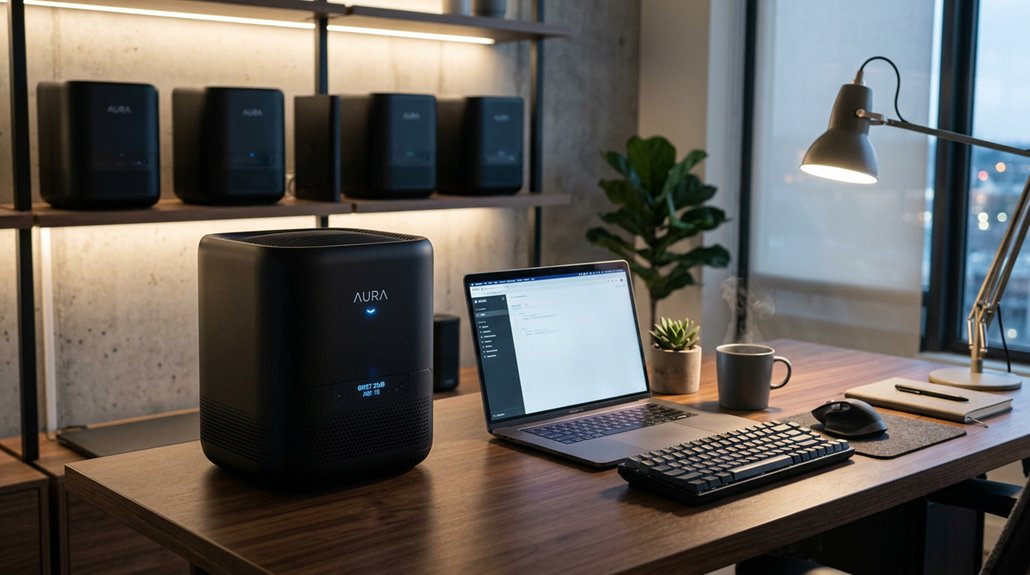
Choosing a low-noise air purifier that still delivers high efficiency doesn’t have to be a challenge. Look for air purifiers with a noise level around 50 dB, comparable to a refrigerator hum, for quiet operation during work.
Opt for models with larger capacity and higher CADR ratings so they can run at lower fan speeds, reducing noise without sacrificing filtration. Washable prefilters are beneficial too, trapping large particles early and allowing the main filters to work with less effort, further minimizing noise.
Additionally, select Energy Star-certified purifiers, which operate efficiently and quietly for continuous use. Devices with air-quality sensors will automatically adjust fan speeds, maintaining a peaceful environment while ensuring your air remains clean and healthy. Including units with safety certifications can also provide added assurance of reliable, quiet operation.
How Filter Design Affects Noise and Performance
The design of your filters directly impacts both noise levels and how well your purifier works. Thicker, denser filters can slow airflow and increase noise, while lightweight materials help keep things quiet. Properly sealing the filter and choosing vibration-absorbing materials can further reduce sound and improve performance. Additionally, incorporating blower motor design elements, such as quiet brushless motors, can significantly enhance the overall quietness and efficiency of the purifier.
Filter Thickness and Density
Filter thickness and density directly impact both the noise level and the performance of your air purifier.
Thicker filters, like MERV 13 panels, improve filtration but increase airflow resistance. This often requires higher fan speeds, which generate more noise. Dense filter media capture smaller particles but cause higher pressure drops, demanding stronger fans that can be noisier.
To keep things quiet:
- Use multiple filters in parallel to reduce resistance and airflow restriction
- Select filters with an appropriate balance of thickness and density
- Opt for thinner or less dense filters when noise reduction is a priority
- Pair with fans capable of handling higher resistance without ramping up noise
Balancing filter design with your fan’s capacity guarantees effective purification without unwanted noise.
Fan Speed and Airflow
Enhancing fan speed is key to balancing noise levels with effective air purification, especially when filter design influences airflow resistance. Lower fan speeds reduce noise considerably, often producing a calming white noise around 50 dB, while still delivering adequate airflow for silent operation. Multi-filter box designs lower airflow resistance, letting fans move air more efficiently and quietly at high filtration rates. Using a standard 20-inch box fan with multiple filters—like four to eight 20×20 inch filters—can achieve clean air delivery rates around 1000 CFM without excessive noise. Carefully selecting filters with ideal thickness and MERV ratings minimizes pressure drops, supporting quieter operation. Airtight construction and smooth airflow pathways further decrease turbulence, ensuring consistent silent air purification.
| Fan Speed Adjustment | Resulting Airflow & Noise |
|---|---|
| Lower speed | Quieter (~50 dB), adequate airflow |
| Higher speed | Louder, higher airflow |
| Multi-filter setup | Reduced resistance, quieter operation |
| Regular filter updates | Maintains ideal airflow and noise levels |
| Smooth airflow design | Decreases vibrations, quieter airflow |
Material Vibration Absorption
Material vibration absorption plays a crucial role in minimizing noise and enhancing the performance of air purifiers. By reducing vibrations from the filters and housing, you guarantee quieter operation.
To achieve this, consider using:
- Thick glue and duct tape in filter box joints to dampen vibrations
- Diagonal braces for added support and vibration reduction
- Multiple filters in a box format, decreasing airflow resistance and vibration
- Dense fiber HEPA filters like 3M 1900 or 2200 with stable frames to maintain airtight seals
Additionally, secure filter housings with ratchet straps or hand spring clamps to prevent rattling. Positioning the air purifier on rotating casters instead of fixed ones can also absorb vibrations, keeping noise levels low during work.
Properly addressing vibration helps your air purifier run silently and efficiently.
How Multi-Filter Systems Reduce Noise and Improve Air Quality
Multi-filter systems actively reduce noise by spreading airflow resistance across several filters, allowing fans to run at lower speeds while still delivering high-quality air. With multiple 20×20 inch MERV 13 filters in a box design, the fan’s workload decreases, enabling quieter operation—less than 50 dB—similar to a refrigerator hum. This setup maintains high CADR and improves air quality by capturing 90% of bacteria-sized particles and 75% of virus-sized particles on the first pass. The expanded filter surface area prolongs filter life and keeps airflow steady. Here’s how multi-filter setups benefit you:
| Feature | Benefit | Result |
|---|---|---|
| Multiple filters | Distributes airflow resistance | Quieter operation |
| Larger surface | Prolongs filter life | Long-lasting filtration |
| Lower fan speeds | Less noise, maintains air quality | Silent, efficient cleaning |
How to Reduce Vibrations and Rattling in Your Air Purifier
Reducing vibrations and rattling often comes down to addressing the contact points and stability of your air purifier. To minimize noise from vibrations and rattling, make certain the purifier is on a stable surface. Use rubber or silicone pads under its feet to absorb vibrations and prevent rattling on hard floors.
Secure loose panels and filters with strong adhesive or tape to stop movement-induced noise during fan operation. Regularly tighten screws and fasteners in the housing to reduce structural rattling caused by vibrations.
Additionally, choose a fan designed for low vibration, which features balanced blades and soft mounts. By taking these steps, you’ll keep your air purifier quieter and more stable, creating a more peaceful environment during work or relaxation.
Tips to Keep Your Air Purifier Quiet All Day Long
Keeping your air purifier quiet all day long is achievable when you optimize its settings and placement. Set it to the lowest fan speed, around 50 dB, similar to a quiet refrigerator hum. Choose a unit with a larger capacity than your room size so it can clean effectively at quieter speeds. Use models with washable prefilters to reduce the need for high-speed operation. Position your air purifier away from walls and obstacles for better airflow and less strain on the fan. Regularly replace HEPA air and activated carbon filters to prevent clogs that increase noise. Proper placement and maintenance keep the noise level low, making your workspace peaceful.
| Tip | Benefit |
|---|---|
| Lower fan speed | Quiet operation |
| Larger capacity | Effective cleaning at low speeds |
| Proper placement | Less fan strain |
| Tip | Benefit |
| Washable filters | Less frequent high-speed use |
| Regular filter maintenance | Reduced noise from clogging |
| Maintain airflow | Consistent, quiet performance |
Easy Maintenance Tips for Quiet and Effective Operation
Regularly maintaining your air purifier is key to guaranteeing it runs quietly and effectively. You can keep noise levels low by cleaning washable prefilters gently or vacuuming them to prevent clogging.
Replace HEPA filters every 6-12 months, as recommended, to reduce strain on the fan and minimize noise. Make sure all filter seals and joints are airtight and secure; loose fittings can cause vibration and rattling sounds.
Position your air purifier on a sturdy, level surface, away from walls and corners, to prevent sound resonance. To maintain peak operation, operate your purifier on low or medium fan speeds, around 50 dB, balancing air cleaning efficiency with quiet performance.
Proper maintenance guarantees your purifier remains quiet and works at its best.
Balancing Silence and Air Quality in Your Office Space
Achieving a peaceful office environment involves more than just maintaining your air purifier; it requires thoughtful placement and selecting models that balance effective cleaning with quiet operation.
To improve air quality without noise disruptions, choose purifiers with noise levels around 50 dB, similar to a refrigerator hum. Larger capacity units allow you to run fans at lower speeds, maintaining the clean Air Delivery Rate (CADR) necessary for your space while keeping noise levels low.
Models with washable prefilters and filter service indicators help sustain peak performance quietly, avoiding loud motor noise or frequent replacements. Position the purifier away from direct workstations to minimize noise disturbance and guarantee efficient circulation of clean air.
Opt for Energy Star certified units for optimized airflow and continuous silent operation, promoting a productive, peaceful environment.
Frequently Asked Questions
What Is the 2/3 Rule for Air Purifiers?
The 2/3 rule for air purifiers means you run the unit at about two-thirds of its max fan speed. This balances strong air cleaning with quieter operation, helping you maintain a peaceful, effective environment without excessive noise or filter wear.
How to Purify Air at Work?
You can purify air at work by selecting quiet HEPA filters with proper CADR, placing them near pollution sources, and using models with auto-adjust features, ensuring effective, silent filtration that maintains a healthy environment without disrupting your workflow.
Would an Air Purifier Help My COPD?
Yes, an air purifier can help your COPD by removing airborne particles like dust, smoke, and allergens that worsen your symptoms. Choose one with a True HEPA filter for best results and operate it continuously for ideal air quality.
Can I Use an Air Purifier at Work?
Yes, you can use an air purifier at work. Choose a quiet model with a low noise level, suitable size, HEPA filters, and maintain it regularly to effectively improve air quality without disrupting your workday.