To control noise in shared office spaces, identify common sources like conversations, phone calls, and equipment sounds. Add physical barriers such as acoustic panels, quiet zones, and desk dividers to absorb or block noise. Use sound masking systems and noise-canceling headphones to minimize distractions further. Establish behavior guidelines and encourage staff to keep voices low. Implementing these strategies can greatly boost focus and productivity—keep exploring to discover more effective solutions.
Why Noise Is Disrupting Your Office Productivity
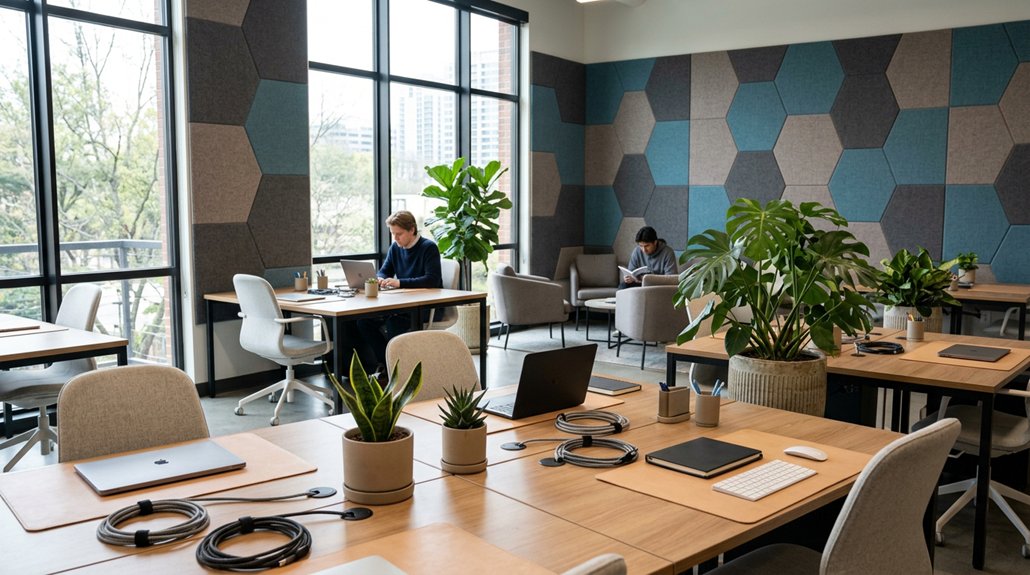
Noise in shared offices can greatly hinder your productivity, especially when it exceeds recommended levels. When noise exceeds 50 dB, it hampers your cognitive performance, making it harder to concentrate on complex tasks.
Excess noise over 50 dB impairs focus and reduces cognitive performance in shared office environments.
Speech intelligibility within the 300 Hz to 3000 Hz frequency range is particularly disruptive, increasing mental fatigue and impairing your ability to focus by up to 66%. Background noises like phone calls, conversations, and typing act as constant distractions, lowering motivation and task accuracy.
Elevated noise levels also trigger psychological stress responses, causing muscle tension and mental exhaustion. Even moderate ambient noise, if speech-based or intelligible, interrupts your thought processes and communication clarity.
Using effective acoustic treatments can significantly reduce these disturbances and improve your overall workspace environment. This environmental disruption diminishes overall office productivity and hampers your ability to perform at your best.
Identify the Main Noise Sources in Your Space
Start by observing which noise sources are most disruptive in your office, such as conversations, keyboard typing, or equipment like printers and HVAC systems.
Pay attention to how background sounds and sudden noises, like chair movements or coughing, increase the overall noise level.
A good understanding of your environment can help you choose the right noise-canceling headphones to effectively minimize these distractions.
Identifying these hotspots helps you understand where to focus your efforts to reduce interruptions and improve focus.
Common Office Noise Sources
Shared office environments are filled with various sounds that can disrupt productivity, often emerging from everyday activities and equipment. Common Office Noise sources include phone calls, conversations, and keyboard typing, which reach about 65–75 dB at 1 meter. Ambient sounds like coffee machines and printers also contribute. HVAC systems and computer equipment generate continuous background noise, adding to overall noise transmission. External sources like traffic and construction can enter through poor insulation, heightening distractions. Physical activities such as chair movements, footsteps, and door openings further increase noise levels. Here’s a quick overview:
| Noise Source | Typical Sound Level | Description |
|---|---|---|
| Human Conversations | 65–75 dB | Conversations and phone calls |
| Equipment Noise | Varies, high | Printers, HVAC, computers |
| Footsteps & Movements | Moderate | Chair shifts, door open/close |
| Ambient & External Noise | Varies | Traffic, construction |
Understanding these sources helps manage noise transmission in shared workspaces. Additionally, many offices are implementing sound masking solutions, such as white noise, to help mitigate distractions effectively.
Impact of Background Sounds
Identifying the main background sounds in your workspace is essential because they greatly impact your focus and stress levels. In open office layouts, sound travels easily through hard surfaces and lack of barriers, intensifying background noise. Common noise sources include phone calls, conversations, keyboard typing at 65–75 dB, and ambient equipment like printers and HVAC systems. These sounds, especially conversations within the speech intelligibility range of 300 Hz to 3000 Hz, can disrupt concentration and trigger stress responses. External sounds such as traffic and construction further contribute if windows and walls aren’t well insulated. Regularly monitoring noise levels with meters or feedback helps you understand key sources. Addressing these issues allows you to prioritize effective acoustic treatments and create a calmer, more focused environment. Additionally, using soundproofing curtains with dense fabric layers can significantly reduce noise infiltration and echo, enhancing your workspace’s acoustic comfort.
Recognizing Disruptive Behaviors
Recognizing disruptive behaviors in your office involves paying close attention to the specific sounds that break concentration and cause stress. Common disruptive noise behaviors include elevated talking, loud phone calls, typing noises, sneezing, throat clearing, and squeaky shoes. Background conversations in the mid-frequency range (300 Hz to 3000 Hz) can reduce cognitive performance by up to 66% during complex tasks, highlighting their impact on noise exposure. Colleagues screaming on phone calls or speaking loudly create extreme volume levels, greatly distracting others and increasing frustration. Internal office equipment like printers, HVAC systems, and computers also contribute to background noise and mask speech, adding to overall disruption. Recognizing these disruptive noise behaviors is essential for implementing effective controls and maintaining a focused, low-stress work environment. Additionally, understanding noise levels and how different sound sources contribute can help in designing strategies to mitigate their effects.
Add Physical Barriers and Acoustic Treatments to Reduce Noise
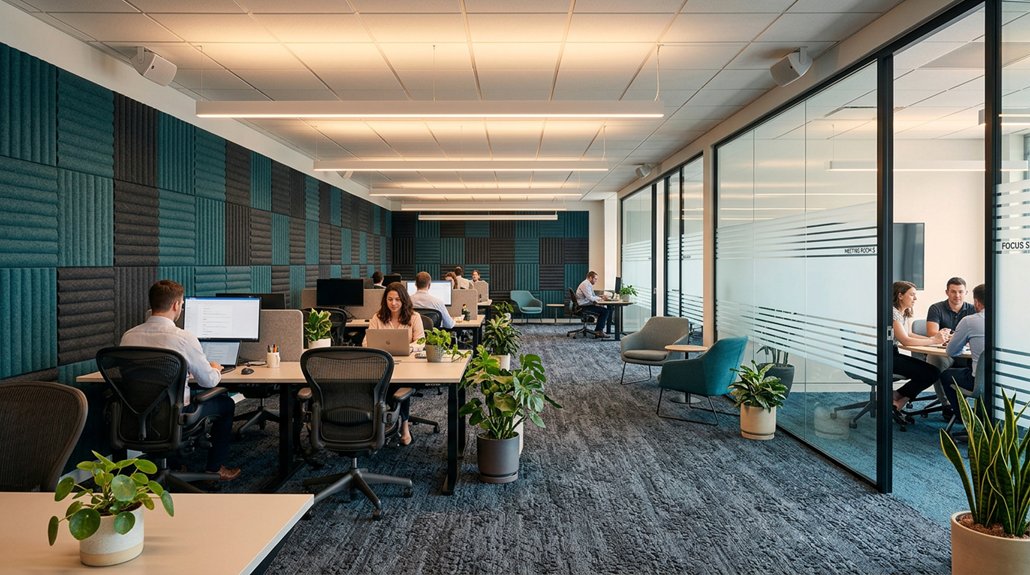
Adding physical barriers and acoustic treatments can greatly cut down noise in your shared office. Position soundproof partitions and acoustic panels at key reflection points to target problem areas effectively. Utilizing floor protection such as office rugs and mats can also help absorb sound and reduce echo in open spaces.
Using these strategies helps create a quieter, more focused workspace for everyone.
Strategic Barrier Placement
Strategic placement of physical barriers and acoustic treatments is essential for effectively reducing noise in shared offices. By using acoustic partitions, you block direct sound paths, preventing noise from spreading between workstations. Positioning solid wood bookshelves with open shelving as physical dividers lowers sound levels by 15–20 dB, adding privacy and structure. Applying fiberglass acoustic panels on walls and ceilings at reflection points absorbs sound energy, reducing ambient noise and reverberation. Combining soundproof desk dividers with soft furnishings enhances sound absorption and minimizes sound leakage. Proper sealing at wall joints and door edges further prevents noise leaks. Incorporating durable materials like steel or plastic supports stability and supports heavier accessories, ensuring the effectiveness of acoustic treatments. Here’s a guide to effective barrier placement:
| Barrier Type | Placement Strategy | Effectiveness |
|---|---|---|
| Acoustic partitions | Between noisy zones or high-traffic areas | Reduce airborne noise |
| Physical dividers | Around individual workstations | Block direct sound |
| Sound absorption panels | At reflection points on walls and ceilings | Minimize reverberation |
| Solid bookshelves | As room dividers or between desks | Lower noise levels |
Effective Acoustic Panel Use
Effective use of acoustic panels considerably enhances noise control in shared offices by absorbing sound waves and minimizing reflections. Proper placement at key reflection points on walls and ceilings helps cut noise by 10–15 dB.
To maximize their effectiveness, consider these strategies:
- Install acoustic wall panels at reflection points on walls and ceilings to target primary sound waves.
- Combine acoustic panels with physical barriers like floor-to-ceiling partitions and desk dividers to cut ambient noise by up to 70% and boost speech privacy.
- Use suspended ceiling acoustic tiles or hanging cloud panels to lower overhead reverberation, decreasing overall distractions.
- Incorporate recycled-material acoustic panels around desks and add soft furnishings like carpets and drapes to absorb sound and further reduce noise levels.
- Choose panels with adhesive coatings that prevent ghosting and support long-term use without degrading surface quality.
This layered approach creates a quieter, more focused shared office environment.
Use Sound Masking and Tech Tools to Minimize Distractions
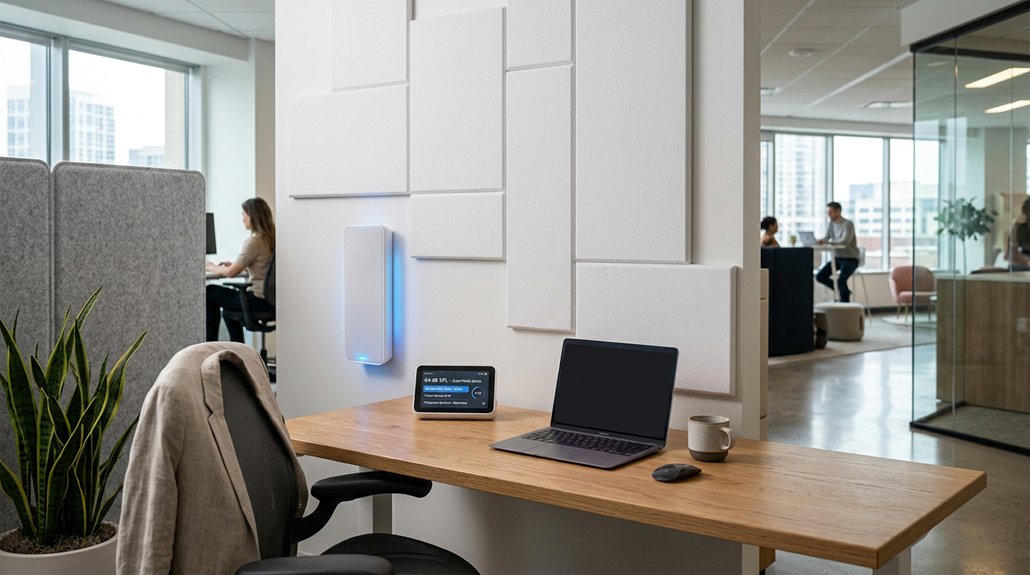
Using sound masking and technological tools can greatly reduce distractions in shared office spaces. Sound masking systems emit low-level white noise at around 42 dB, blurring speech and diminishing ambient noise that disrupts focus. Pairing this with acoustic panels enhances noise reduction without hindering communication.
Noise-canceling headphones let you block out external sounds and signal “do not disturb” during deep work. Regularly monitoring ambient noise with noise meters guarantees levels stay below 50 dB, creating an environment conducive to concentration. Additionally, mobile apps help schedule “no-call zones,” minimizing interruptions from calls and conversations during critical periods.
Combining sound masking with these tech tools creates a controlled, quieter workspace that supports productivity and reduces stress caused by disruptive noise.
Create Quiet Zones and Set Behavior Guidelines for Staff
To make shared office spaces more conducive to focused work, establishing designated quiet zones and clear behavioral guidelines is essential.
You should create quiet zones equipped with acoustic panels and soft furnishings to reduce noise and foster concentration. Set behavioral guidelines that regulate phone calls, conversations, and the use of common areas to maintain acceptable noise levels. Additionally, encourage employees to lower their voice volume, even within soundproof phone booths, to preserve acoustic privacy.
To implement effectively:
- Clearly define quiet zones and communicate their purpose.
- Use acoustic panels to absorb sound and minimize noise carryover.
- Establish behavioral guidelines for phone and conversation volumes.
- Apply gentle reminders from community managers to reinforce etiquette.
Consistent enforcement guarantees these measures foster a respectful, distraction-free environment.
Gather Feedback and Adjust Your Noise Control Strategies
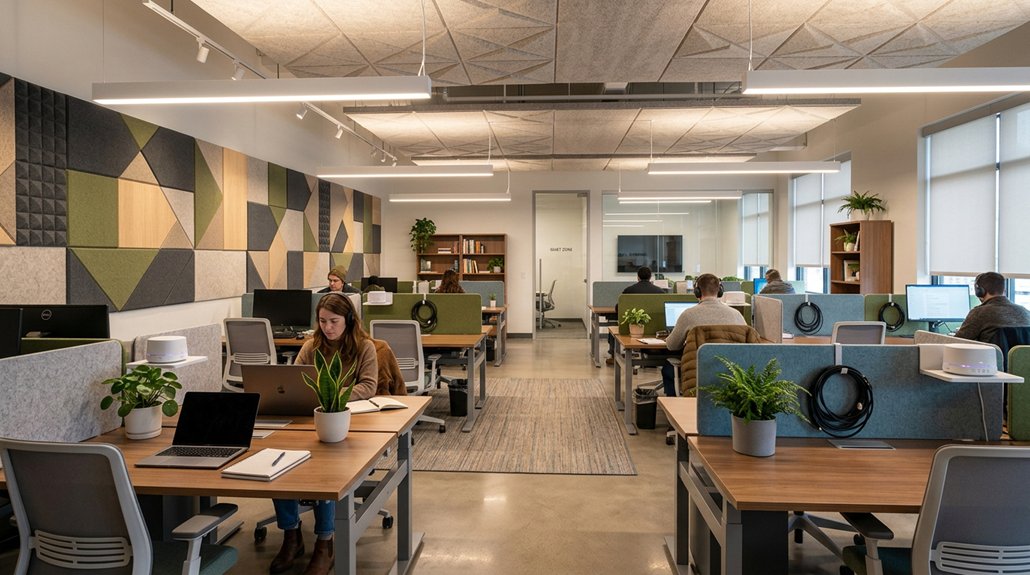
Gathering regular feedback from members is essential to understanding how well your noise control measures work and where improvements are needed. Listening to feedback helps identify persistent noise issues and assess the effectiveness of current soundproofing measures.
By analyzing member comments and concerns, you can make targeted adjustments, such as adding acoustic panels or expanding quiet zones, to enhance noise control. Using noise measurement tools alongside feedback provides objective data to validate complaints and refine strategies.
Engaging members in this process fosters shared responsibility and encourages adherence to noise etiquette policies. These iterative improvements guarantee that your workspace strikes a balance between productivity and comfort, adapting to changing needs and ensuring an ideal acoustic environment for everyone.
Frequently Asked Questions
How to Reduce Noise in a Shared Office?
To reduce noise in your shared office, you can install acoustic panels, arrange desks in back-to-back layouts, use soundproof booths and headphones, add soft furnishings, and set clear quiet zones; all help maintain a peaceful, productive environment.
How to Reduce Background Noise in Office?
You can reduce background noise in your office by installing acoustic panels, using soft furnishings, installing soundproof dividers, sealing gaps around doors and windows, and implementing sound masking systems to create a quieter, more productive workspace.
How to Soundproof a Shared Room?
To soundproof a shared room, you seal gaps with acoustic caulking, add soundproof doors, install thick insulating materials, arrange desks strategically, incorporate barriers, and use sound masking systems to effectively minimize noise transmission.
How Do I Block Noise From My Roommates?
You can block your roommates’ noise by arranging your desks back-to-back, adding acoustic panels or bookshelves nearby, using rugs and curtains to absorb sound, and wearing noise-canceling headphones during focused work sessions.