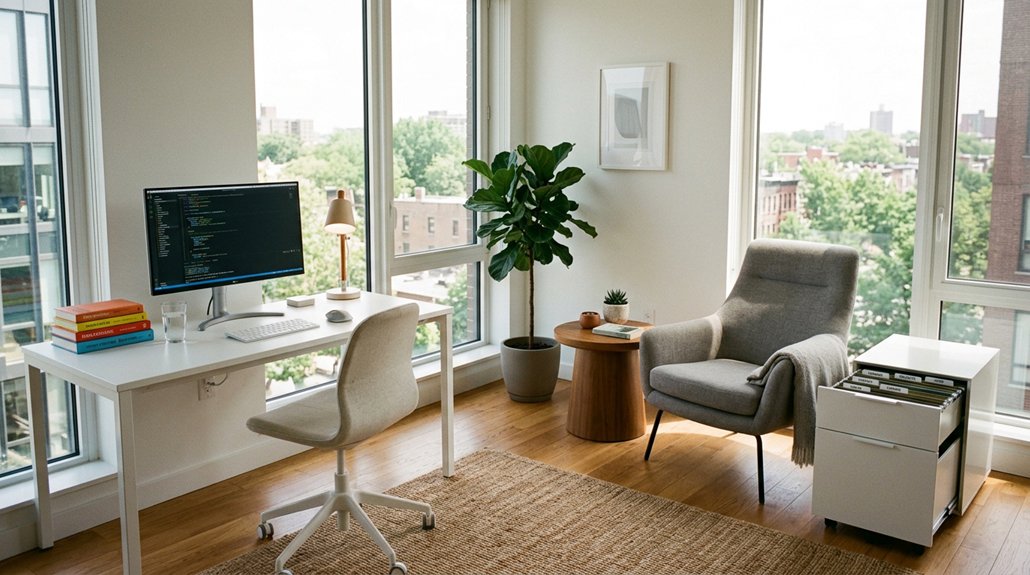
To effectively zone your workspace, start by clearly identifying your tasks—dedicate quiet, soundproof spaces for focused work and vibrant, flexible areas for collaboration. Use furniture and lighting to signal each zone’s purpose, making it easy to switch between tasks. Incorporate modular pieces that can adapt to changing needs, ensuring seamless shifts. Want to discover more ways to optimize your setup? Keep exploring for practical tips that make your workspace work better for you.
Why Workspace Zoning Can Transform Your Office Environment
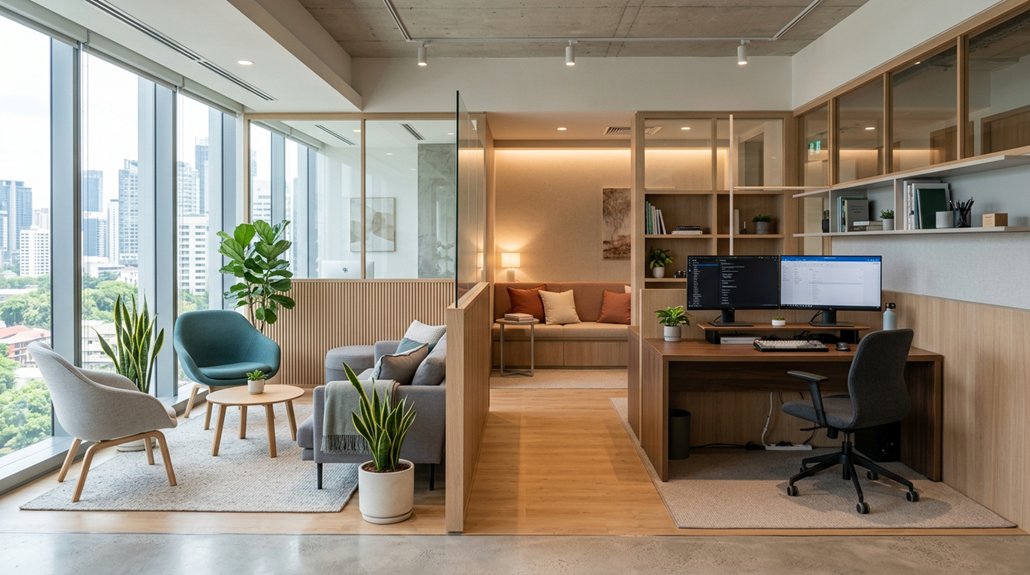
Workspace zoning can dramatically transform your office environment by creating clearly defined areas tailored to specific tasks. With effective space planning, you establish different zones such as quiet areas for focused work and collaboration zones for teamwork. Proper organization with desk organizers supports these zones by keeping essentials accessible and reducing clutter, enhancing the overall functionality. These defined areas help improve productivity by reducing distractions and promoting effective communication. Meeting rooms foster project discussions, while relaxation zones give employees space to recharge. Using modular furniture allows you to easily adapt zones as needs change, keeping your work environment flexible and functional. Well-designed zoning also enhances space utilization and supports employee well-being. When each area serves its purpose, workflow becomes more efficient, and user behavior aligns with intended functions. Overall, workspace zoning creates a more organized, engaging, and productive office.
How to Identify and Design Zones That Match Your Tasks
To design zones that truly support your tasks, start by systematically categorizing what gets done in your office. Identify work areas for focused tasks, like deep concentration, and set up soundproof, ergonomic furniture in focus zones to minimize distractions.
For collaboration, create collaborative zones with large tables, whiteboards, and digital displays, fostering teamwork and dynamic interactions. Allocate separate zones for administrative duties, placing necessary tools like printers and filing systems nearby to boost efficiency.
Incorporate flexible zones with modular furniture that can easily adapt to different tasks or group sizes. By matching your zones to specific work types, you guarantee a streamlined office design that enhances productivity and comfort across all activities. Additionally, consider implementing monitor hood solutions to reduce glare and eye strain, especially in zones designated for computer work.
Flexible Solutions to Seamlessly Switch Between Focus and Collaboration

Seamlessly switching between focus and collaboration requires thoughtful planning and adaptable solutions. You can use modular furniture and movable partitions to quickly reconfigure your workspace, creating designated collaboration areas and focus zones that suit various work styles. Incorporating adjustable-height desks, like the DUMOS Adjustable Standing Desk on Wheels or the Techni Mobili Sit-to-Stand Laptop Cart, allows users to easily transition between sitting and standing positions to suit different tasks. Clear visual cues and differentiated lighting—soft, dim lights for focus zones and bright, vibrant illumination for teamwork areas—help signal the intended task mode. Employing adjustable furniture features enhances flexibility and comfort, making transitions smoother. Incorporate portable technology like wireless connectivity and screens to support seamless changes and diverse meeting formats. Noise management is essential; employ soundproof booths or noise-canceling headphones to guarantee concentration in focus zones, while lively, collaborative areas remain engaging. With comfortable seating and adaptable setups, you’ll improve workflow, making it easy to switch between tasks without hassle or disruption.
Frequently Asked Questions
What Is the 3 3 3 Rule for Tasks?
The 3 3 3 Rule for tasks means you group your work into three sets of three tasks each, helping you stay focused, organize efficiently, and reduce overwhelm. It makes managing large workloads more manageable and productive.
What Is the 1/3/5 Rule for Tasks?
The 1/3/5 rule guides you to focus on one big task, three medium tasks, and five small tasks daily. You organize your workspace accordingly, helping you prioritize, reduce overwhelm, and boost productivity by clearly dividing tasks.
What Are the 4 P’s of Productivity?
You focus on the 4 P’s of productivity—prioritization, planning, persistence, and performance—to manage tasks efficiently. You prioritize important tasks, plan your workflow, stay persistent through obstacles, and monitor your progress to stay on track and improve.
How Do You Physically Organize Your Workspace?
You should designate specific areas for each task, use physical dividers, arrange tools nearby, and choose ergonomic furniture. Color-code or label zones to keep everything organized, helping you work efficiently and stay focused throughout your day.