For ideal comfort and posture, your desk should typically be between 60 and 75 cm deep. This allows you to maintain a proper monitor distance, keep essentials within easy reach, and avoid strain on your neck and upper back. Taller users might need deeper desks, while smaller spaces may require shallower options. Choosing the right depth depends on your work type, body size, and workspace. Stick around to discover more tips for setting up an ergonomic workspace.
Why Choosing the Correct Desk Depth Matters for Your Posture
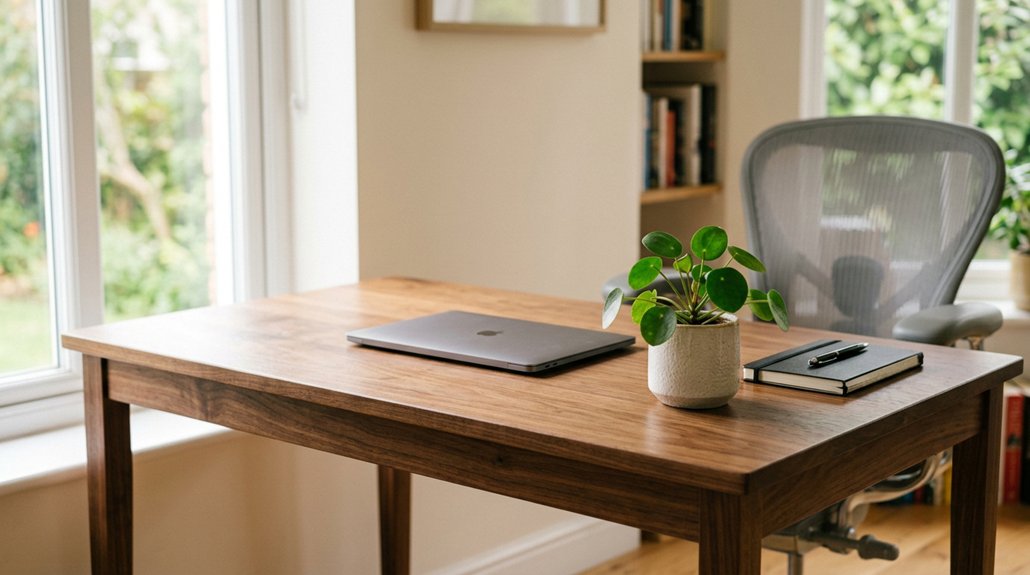
Have you ever wondered why your posture feels strained after long hours at your desk? The answer often lies in your desk depth. An ergonomic desk depth of 60–75 cm helps position your monitor at the recommended 50–75 cm viewing distance, reducing eye strain and encouraging a neutral posture.
When the desk is too shallow (<55 cm), you might feel cramped, causing poor alignment. If it’s too deep, you tend to lean forward, straining your neck and upper back. Proper desk depth keeps your keyboard, monitor, and work items within easy reach, preventing you from overextending your arms.
A well-designed dimension and size setup promotes a natural head position over your spine, which minimizes neck strain and the risk of musculoskeletal disorders. A well-chosen desk depth is essential for maintaining healthy, comfortable posture during long work sessions.
How to Pick the Ideal Desk Depth for Your Work and Body
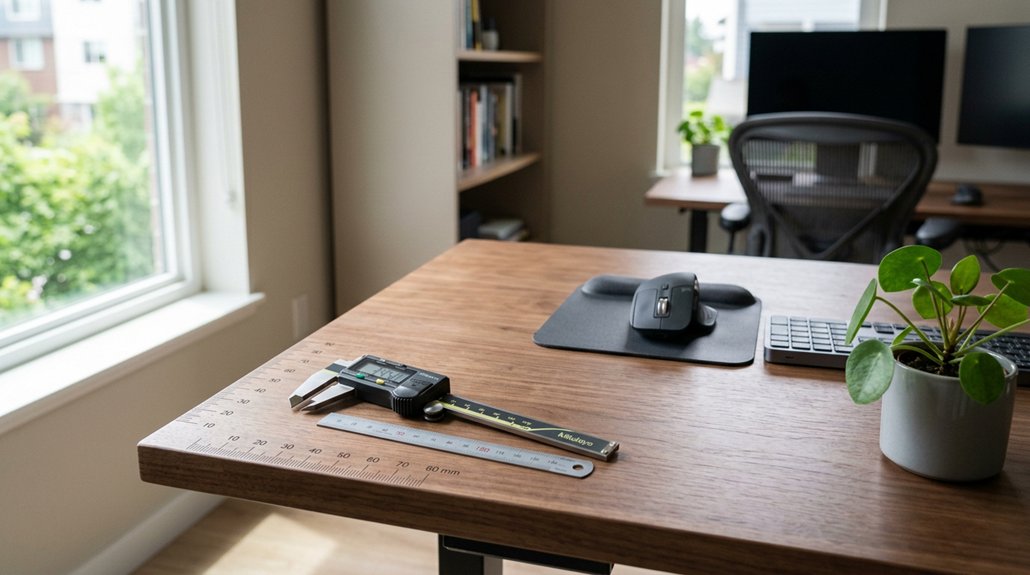
Choosing the right desk depth begins with understanding your specific work needs and body dimensions. The ideal desk depth typically ranges from 60 to 75 cm (23.6 to 29.5 inches), ensuring comfortable viewing and easy access to your equipment. Proper desk depth can also influence monitor riser stability, helping you maintain an ergonomic setup that reduces strain. Taller users should select a deeper desk within this range to maintain ergonomic monitor viewing distance and prevent strain. For writing or reading tasks, a depth of 60 to 70 cm (23.6 to 27.6 inches) offers enough space for paperwork without clutter. Professionals juggling multiple monitors or tools benefit from a deeper desk—75 cm or more—to avoid cramped reach. When choosing, consider your workflow, body size, and workspace environment to balance reachability, surface area, and productivity.
Select a desk depth between 60 and 75 cm for comfort and easy access tailored to your work needs.
- Adapt desk depth to your body size and work routine
- Prioritize comfortable viewing distances for monitors
- Increase depth for multi-monitor setups and creative tasks
- Avoid strain by balancing surface space with reachability
- Find a workspace environment that enhances productivity
What Are the Benefits and Drawbacks of Common Desk Depths?
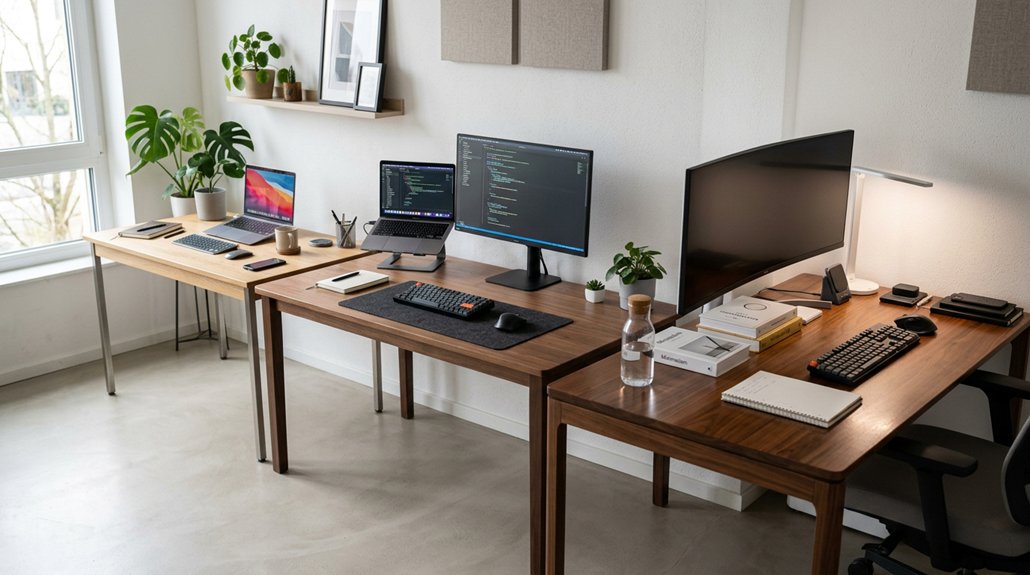
Ever wondered how different desk depths can impact your workspace? A standard desk with a 60 cm depth offers a good balance of space and usability, accommodating most computers and paperwork comfortably.
Deeper desks of 70–75 cm provide ample surface area for multiple monitors and creative workflows, supporting an ergonomic posture but needing more room.
Shallow desks of 45–50 cm are a compact solution, ideal for small or minimalist setups, but limit your workspace organization and may increase digital eye strain.
Overly deep desks—80–90 cm—are excellent for specialized tasks like drafting or multi-monitor setups but can crowd smaller offices and cause inefficient space use.
Considering adjustable monitor stands can help optimize your workspace regardless of desk depth, ensuring comfort and flexibility in your setup.
How to Customize Your Desk Depth Based on Your Work and Space
Selecting the right desk depth depends heavily on your specific work demands and the space you have available. To customize your desk depth effectively, consider your work type—60–75 cm suits computer tasks, while 75–90 cm supports multitasking or creative setups with multiple monitors or tools.
Your height and arm length influence monitor distance, preventing overreaching for shorter users and ensuring comfort for taller ones. Assess your workspace arrangement to avoid overcrowding—shallow desks (around 50 cm) work well in small rooms, while larger offices can accommodate deeper desks (70 cm or more).
Using adjustable accessories like monitor arms and keyboard trays can help optimize your ergonomic setup and space efficiency. When standard options don’t fit, opt for a custom-sized desk that supports both posture and workflow. Additionally, monitor reach plays a crucial role in choosing the right desk depth to ensure comfortable viewing angles and prevent strain.
Best Tips for Creating a Comfortable and Efficient Workspace
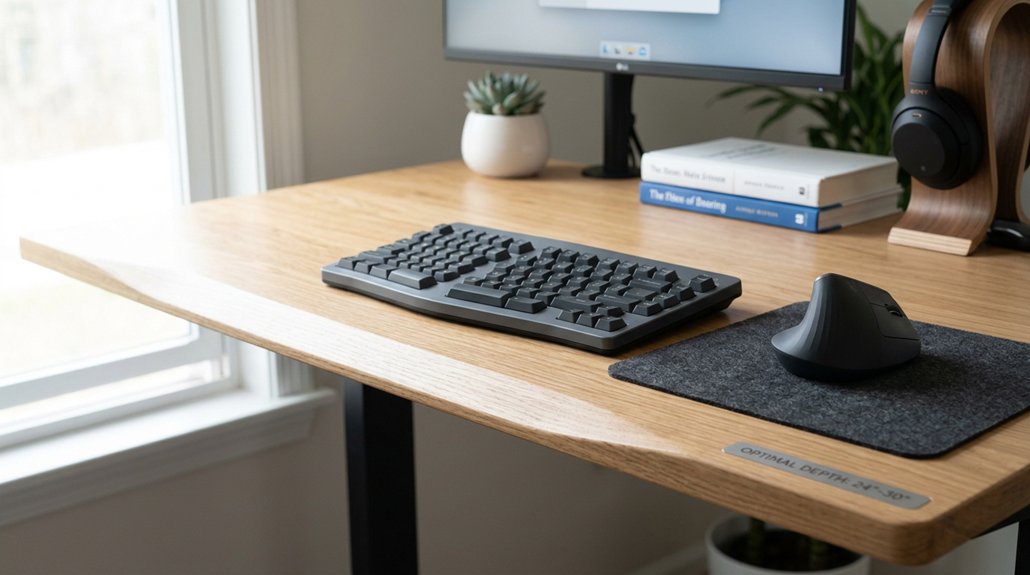
Creating a comfortable and efficient workspace starts with paying attention to your equipment placement and overall layout. Aim for a desk depth of 60–75 cm (24–30 inches) to keep your monitor, keyboard, and other essentials within arm’s reach, supporting good ergonomics. Consider the height range of your standing desk, such as models that extend from around 27.5 to over 46 inches, to ensure it accommodates your natural standing and sitting postures comfortably. Position your monitor about 50–75 cm away, with the top at or just below eye level, to reduce neck and eye strain. Use accessories like monitor arms and keyboard trays to customize your setup, optimizing desk surface area and organization. Keep your workspace clutter-free to easily accommodate multiple devices and paperwork without feeling cramped. Pair your desk with a height-adjustable chair or standing desk to promote healthy posture and flexibility throughout the day, ensuring your workspace is both comfortable and productive.
Frequently Asked Questions
Is 2 Feet Deep Enough for a Desk?
Yes, a two-foot-deep desk is generally enough for basic computer work and writing. It fits a monitor and keyboard comfortably, supporting good ergonomics, but may be tight for multi-monitor setups or extra workspace needs.
Is Standing Desk Better for a Herniated Disc?
Standing desks are better for herniated discs because they promote better spinal alignment, reduce pressure, and allow you to alternate positions. Using the right setup and supportive accessories enhances comfort and helps manage your condition effectively.
Is 40 Too Deep for a Desk?
A 40-inch desk can be too deep if you have limited space or shorter arms, making reaching difficult and risking poor posture. However, if you need extensive workspace and have a large room, it can work well.
How Tall Should a Desk Be for a 5’5″ Person?
If you’re 5’5″, aim for a desk around 26 to 28 inches tall. This height supports ergonomic posture, keeps your elbows at a comfortable 90 degrees, and prevents strain, especially with an adjustable desk for ideal comfort.