
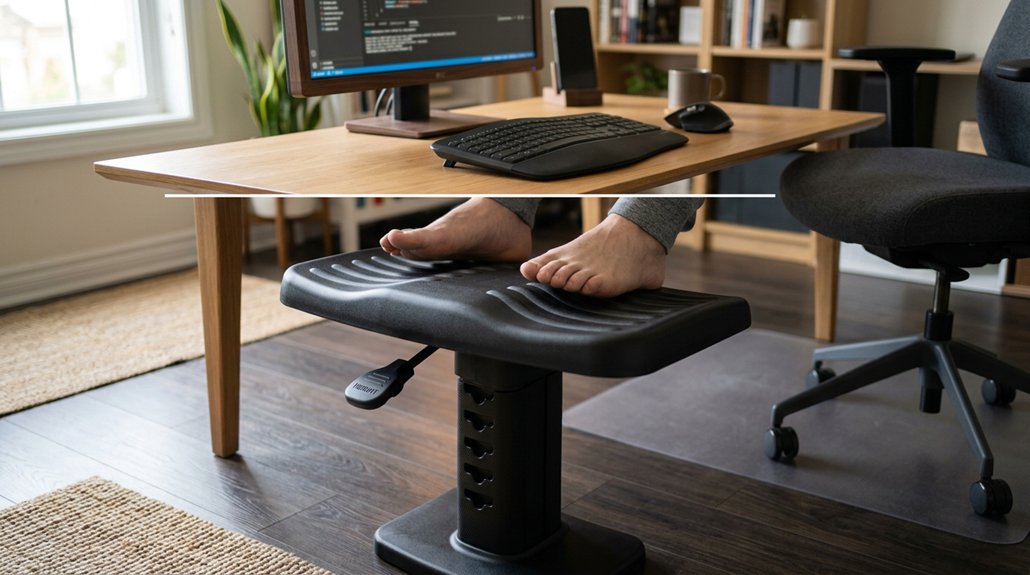
To support your desk setup, look for an ergonomic footrest with adjustable height, tilt, and rocking features to customize your comfort. Make sure it has a non-slip base for stability and a shape that fits your feet naturally. Durable materials like plastic or cushioned surfaces balance comfort and longevity. Massaging or textured surfaces can boost circulation and reduce fatigue. Want to discover how to choose the best one for your needs? Keep exploring for more tips.
Why an Ergonomic Footrest Can Alleviate Posture Problems
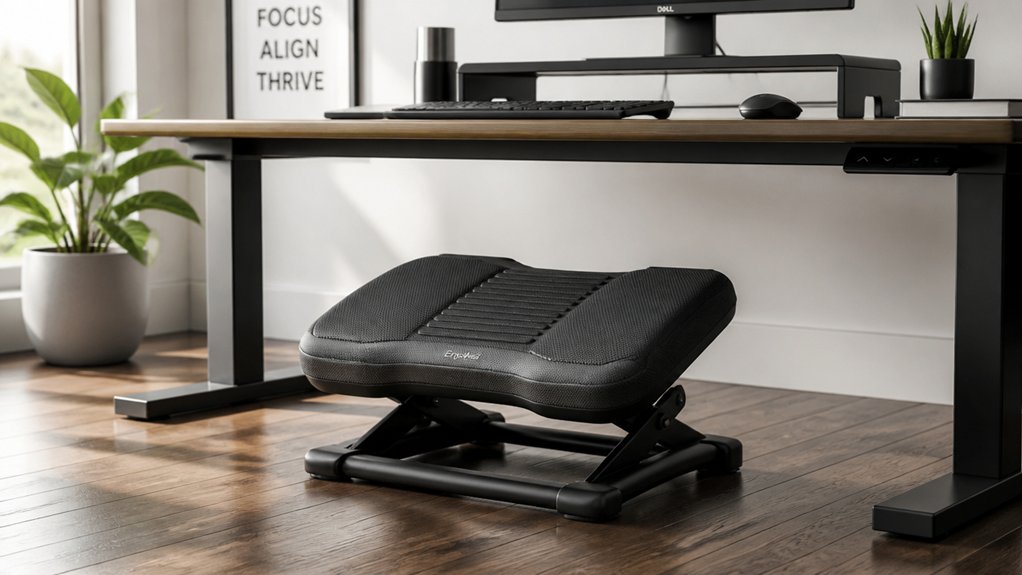
Have you ever noticed how slouching or dangling feet can cause discomfort at your desk? An ergonomic footrest guarantees proper foot placement, supporting your feet and helping you maintain a natural knee angle. This promotes better sitting posture and reduces strain on your lower back.
An adjustable height feature allows you to customize the footrest for peak support, preventing slouching and leg tucking. Using a footrest encourages you to sit closer to the desk with relaxed knees and proper hip alignment, which in turn improves your upper body posture and lessens neck and shoulder tension.
Additionally, a well-designed ergonomic footrest stimulates circulation, reduces pressure on your thighs, and alleviates leg fatigue and numbness. Incorporating a footrest with non-slip bottoms can also enhance stability and safety during use. Overall, it’s a simple tool to help you stay comfortable and avoid common posture-related problems.
Essential Features to Look for in a Footrest
When choosing a footrest, look for adjustable height and tilt options to suit your chair and body position. A stable, non-slip surface is essential to prevent slipping and guarantee safety throughout your workday. Additionally, prioritize a durable, comfortable surface material that’s easy to clean for long-term use. Incorporating non-slip pads and textured platforms can enhance stability on various flooring types and improve user safety.
Adjustable Height Range
Choosing a footrest with an adjustable height range is essential for customizing your workspace to fit your body and chair. An adjustable height foot rest typically offers a range from about 3.9 to 6.7 inches, allowing you to find the ideal foot placement for comfort and support.
Height adjustability is key for maintaining ergonomic alignment, helping you fine-tune your desk footrest to match your chair height and footwear. Multiple height settings, through removable bases or built-in mechanisms, enable quick adjustments for different users and postures.
A wider adjustment range, like 3.75 to 6.75 inches, supports dynamic shifts between sitting and standing. This prevents dangling feet or elevated legs, improves circulation, and reduces fatigue during long periods of sitting.
Non-Slip Stability
A stable footrest is essential for maintaining an ergonomic workspace, as it prevents unwanted movement that can disrupt your posture. Look for a non-slip surface, such as anti-skid coatings or textured surfaces, to guarantee your footrest stays in place on hardwood, carpet, or tile flooring. A stable base with weighted bases or non-slip grips enhances security during rocking or foot adjustments, offering consistent support. Many foam footrests incorporate slip-resistant features both on the platform and underneath, providing extra grip. Verify that your chosen footrest has these stability features to prevent slips or shifts during extended use, keeping your feet comfortably supported. Additionally, materials like textured rollers and anti-slip coatings can further improve stability and circulation during active use.
Surface Material Quality
The surface material of a footrest plays a crucial role in comfort and durability. You might prefer a foam footrest with a cushioned surface like memory foam, which offers pressure relief and enhances long-term comfort, often with a washable cover made from breathable fabric.
Alternatively, a hard surface provides durability and easy cleaning, especially if it has a non-slip coating or textured pattern to prevent foot sliding. Some models include raised nodules or massaging beads, stimulating foot movement and helping relieve tension during extended sitting.
Keep in mind that softer materials, like memory foam, reduce fatigue but may wear faster, while hard surfaces last longer but offer less cushioning. Choosing the right surface material hinges on balancing comfort, hygiene, and durability for your desk setup.
How Adjustable Heights and Angles Make You More Comfortable
- Achieve ideal posture with customizable height and tilt.
- Enhance circulation through tilt and rocking features.
- Find comfort tailored to your workspace and body.
- Select footrests with breathable cover materials to maintain comfort during extended use.
Why Non-Slip Bases Are Key for Stability and Safety
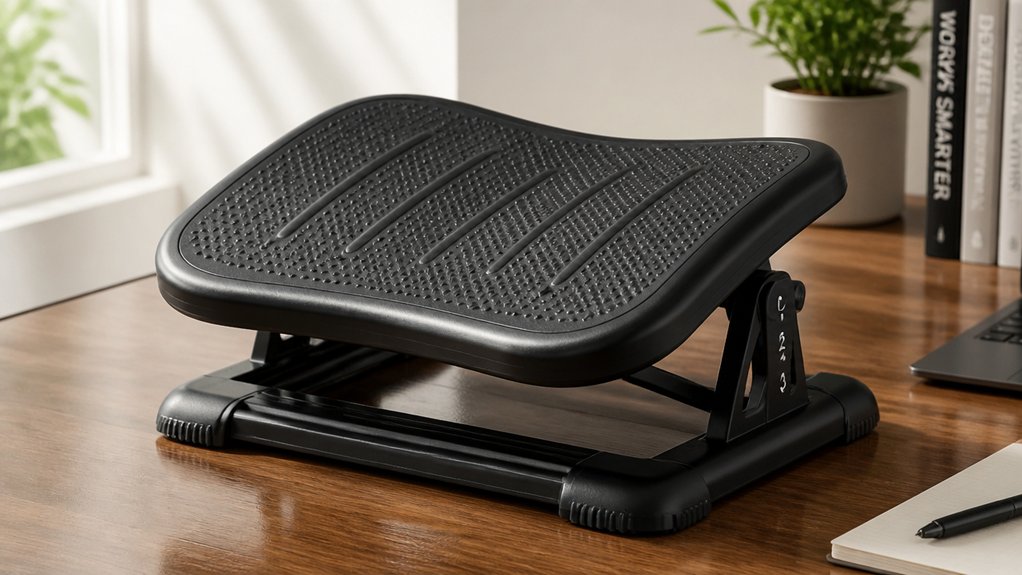
Guaranteeing your footrest stays in place during use is essential for maintaining stability and safety. Non-slip bases, such as rubber pads or anti-skid coatings, prevent footrests from sliding on various floor types, offering consistent stability.
These features are especially vital for adjusting or rocking footrests, allowing smooth movement without unwanted shifting. A secure placement reduces the risk of slips that could lead to discomfort or safety hazards, protecting you during long work sessions. Footrests with non-slip surfaces also support proper foot positioning, which promotes ergonomic posture and minimizes strain.
Picking the Right Size and Shape for Your Legs
Choosing the right size and shape guarantees your feet stay comfortable and supported throughout the day. Look for a platform wide enough (15-20 inches) and deep enough (7.9-11.8 inches) to accommodate your foot size without overhang. An ergonomic shape with cushioning helps prevent slipping and evenly distributes pressure, making your workspace more comfortable. Incorporating a slip-resistant base ensures stability on various surfaces, enhancing safety during extended sitting periods.
Optimal Footrest Dimensions
Selecting the right footrest dimensions is essential for maintaining comfort and proper posture during long desk hours. An ideal footrest provides enough space for proper foot placement and supports your legs effectively. Aim for a footrest platform width of at least 20.1 inches and a depth of around 11.8 inches to guarantee it comfortably fits your feet without feeling cramped. Additionally, choose a footrest with adjustable height and angle to achieve prime alignment of your knees and ankles. Look for an ergonomic shape that supports both feet evenly and avoids restriction. Non-slip surfaces and a stable base are critical for safety and usability. Keep in mind that compact sizing with ample platform dimensions helps maintain your legroom and ergonomic posture over time. Incorporating a footrest with Durable, non-toxic materials can ensure safety and longevity in your setup.
Ergonomic Shape Benefits
An ergonomic footrest shaped to fit your feet comfortably encourages better posture and reduces discomfort over long periods of sitting. An ergonomic shape provides a roomy platform size that supports both feet evenly, preventing cramped positions and sore feet.
A well-designed footrest also incorporates non-slip materials to ensure stability during use, enhancing safety and posture.
Ideal footrest dimensions, like a minimum width of around 20 inches and a depth of 7.9 to 11.8 inches, guarantee natural foot placement. Contoured or slightly angled footrests help maintain a knee angle close to 90 degrees, supporting proper leg alignment and reducing foot pain.
Features like non-slip textured surfaces stabilize your feet, improving posture often and preventing slipping. Selecting a shape that avoids sharp edges and tight fits allows natural foot movement, boosting blood flow and improving circulation, which reduces fatigue and keeps you comfortable during extended sitting sessions.
Material Choices That Combine Durability and Comfort
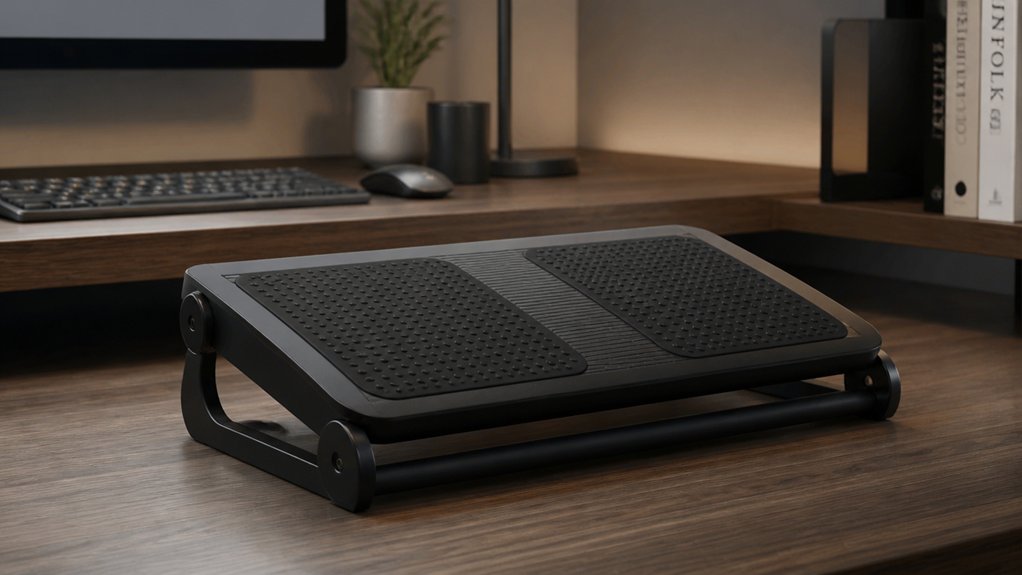
When it comes to designing footrests that last and feel good, the materials you choose play a crucial role. Durable options like steel or high-quality plastic frames guarantee stability and long-lasting use. Cushioned surfaces, such as memory foam covered with washable fabric, mold to your feet for pressure relief and comfort. Textured plastic or rubber platforms with massaging nodules stimulate circulation and reduce fatigue. Moreover, incorporating anti-slip features ensures the footrest stays firmly in place during use, enhancing safety. To maximize stability and safety, look for: 1. Non-slip bases with rubber pads or anti-skid coatings to prevent sliding on various floors. 2. Easy-to-clean surfaces that resist dirt and stains. 3. High-quality materials that balance durability with ergonomic comfort. Selecting these features guarantees a sturdy, cushioned, and hygienic footrest that supports your desk setup reliably.
Using Rocking and Massaging Footrests to Boost Circulation
Incorporating rocking and massaging features into your footrest can greatly enhance circulation and comfort during long hours at your desk. Rocking footrests promote gentle foot and ankle movements, helping to reduce stiffness and encourage blood flow.
Massaging footrests, with textured surfaces or rolling massage nodes, stimulate acupressure points to improve circulation and lessen leg fatigue more effectively than static rests. Adjustable rocking footrests allow you to customize tilt angles and height, ensuring proper knee angles and ideal foot placement for better active sitting.
Combining rocking motions with massage features supports circulation, prevents pressure buildup under thighs and lower limbs, and reduces risks like DVT linked to prolonged sitting. These features promote active engagement of your feet, easing discomfort during extended work periods.
How to Match Your Footrest Features to Your Work Style and Space
Matching your footrest features to your work style and space guarantees peak comfort and ergonomics.
First, consider an adjustable footrest with height and tilt options ±20° if your workspace is shared or has variable chair heights. This helps maintain proper alignment easily.
Second, choose a rocking or textured footrest if your work involves long periods of sitting with minimal foot repositioning, encouraging gentle movement and circulation.
Third, if your desk area is limited, opt for a compact, stable footrest with non-slip rubber pads to maximize legroom and provide consistent support.
For versatile setups, look for footrests with quick adjustability and portability to adapt as your posture changes. Prioritize surface material and cushioning—memory foam for softness or durable plastic for easy cleaning—to match your comfort preferences.
Frequently Asked Questions
Should You Use a Footrest at Your Desk?
Yes, you should use a footrest if your feet don’t rest flat on the floor. It supports your knees, improves circulation, and promotes good posture, helping reduce discomfort and preventing long-term musculoskeletal issues during desk work.
What Is the Best Footrest for Under a Desk?
The best footrest for your desk offers adjustable height and tilt, a stable non-slip base, and a comfortable surface like memory foam or textured plastic. It promotes ergonomics, reduces fatigue, and adapts to your chair and foot positioning needs.
Does Footrest Help With Varicose Veins?
Yes, a footrest helps with varicose veins by improving blood circulation, supporting proper posture, and reducing leg pressure. Using a rocking or angled footrest can further stimulate calf muscles, enhancing venous return and alleviating symptoms.
What Makes a Good Footrest?
A good footrest offers adjustable height and tilt, a spacious, ergonomic platform, and stability features like anti-slip pads. Comfortable materials and textured or rocking surfaces help improve circulation, reduce fatigue, and support proper posture during long sitting hours.

Leave a Reply