To assess strain injury risk at home, watch for signs like stiffness, discomfort, or weakness during repetitive tasks. Adjust your workspace with proper chair height, monitor position, and foot support to reduce strain. Use safe lifting techniques, keep movements gentle, and take regular breaks to stretch. Maintain good posture whether sitting or standing, and incorporate movement into your day. Exploring these tips further can help you protect your muscles and soft tissues effectively.
How to Recognize Repetitive Movements That Lead to Strains
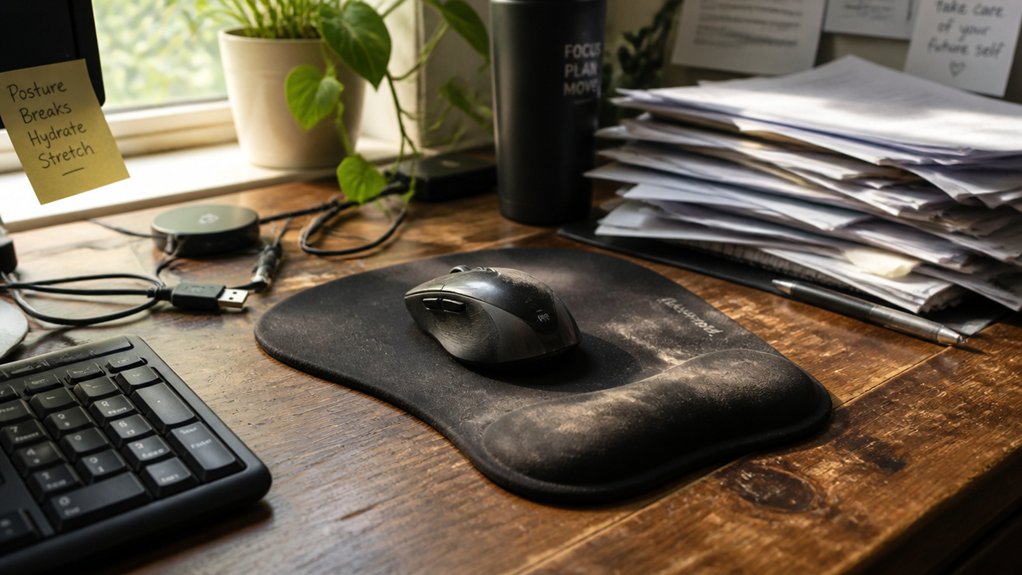
How can you tell if your usual movements might be causing strain? Pay attention to signs like stiffness, discomfort, or weakness after repeating certain tasks.
Repetitive movements involving frequent bending, lifting, or twisting can fatigue muscles, increasing your risk of strains and sprains. If you’re doing the same hand or arm motions—like typing or cleaning—for long periods, you’re more prone to muscle and tendon strains.
Strain injuries often happen when tasks involve forceful efforts or awkward postures, such as reaching or kneeling repeatedly. Not taking breaks during these activities worsens muscle fatigue, swelling, and inflammation, leading to strain.
Recognizing these patterns early helps prevent more serious injuries by adjusting your movements or incorporating rest. Additionally, using supportive items like ergonomic seat cushions can help reduce pressure and strain during prolonged seated tasks.
Tips for Setting Up an Ergonomic Workspace at Home
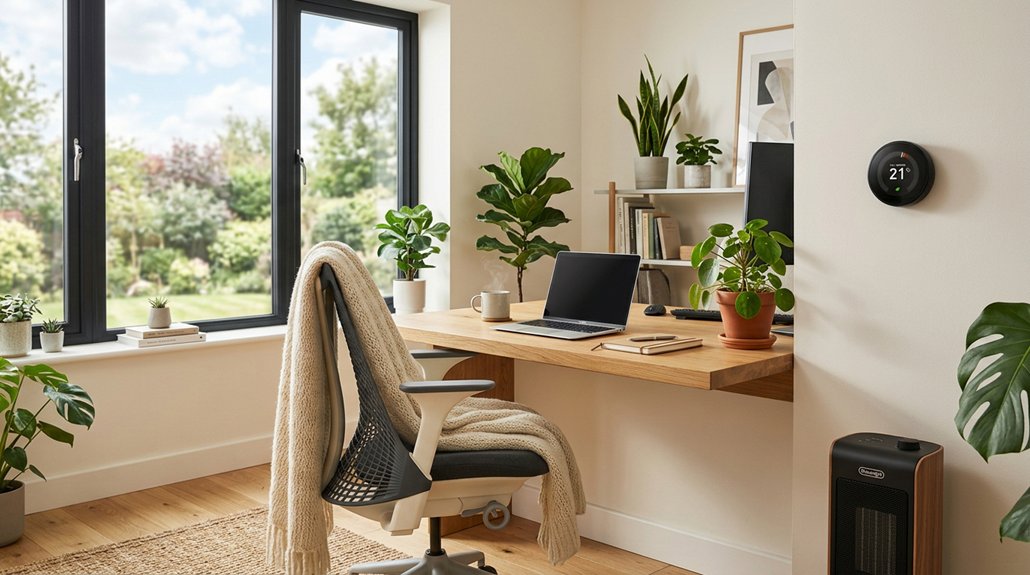
Setting your workspace properly can greatly reduce strain and discomfort. Make sure your desk height allows your elbows to stay level and your monitor is at eye level, about 20-30 inches away. A multi-dimensional adjustment on your chair can help fine-tune support and comfort for prolonged periods. Adjust your chair so your feet rest flat on the floor, supporting your lower back and promoting good posture.
Proper Desk Height
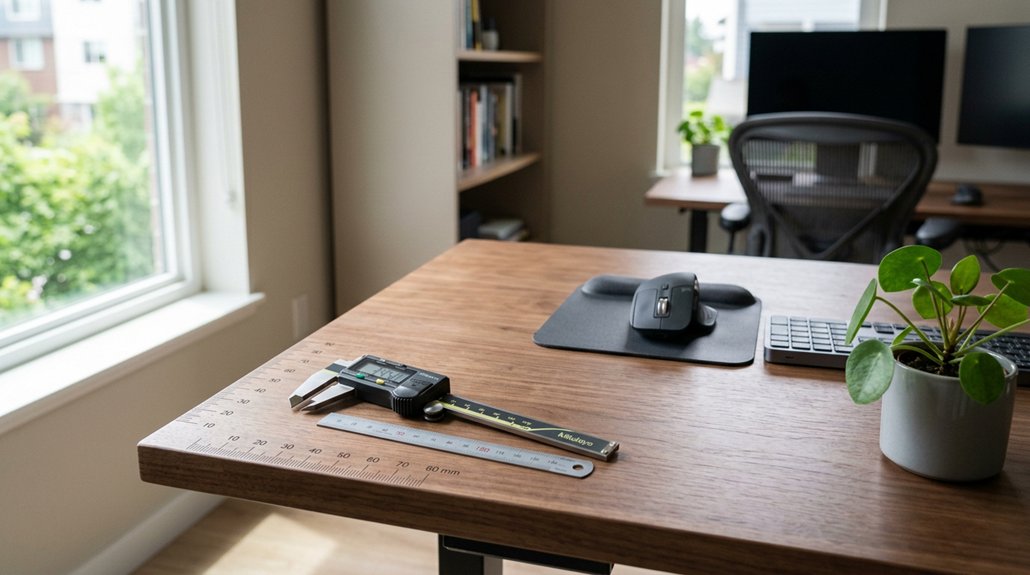
Ever wonder if your desk is the right height for comfortable, injury-free working? Make sure your desk is set so that your elbows are at a 90-degree angle when typing. Keep your forearms parallel to the floor to reduce muscle strain.
Make sure your wrists stay straight, not bent upward or downward, which helps prevent tendon stress. Adjust your desk height so your feet rest flat on the floor or on a footrest, promoting good posture and easing lower back tension.
If possible, use an adjustable desk and chair that allow you to switch between sitting and standing, preventing prolonged static posture. Proper desk height can greatly reduce discomfort and strain, keeping you comfortable and focused during long work sessions for ergonomic support.
Ergonomic Chair Position
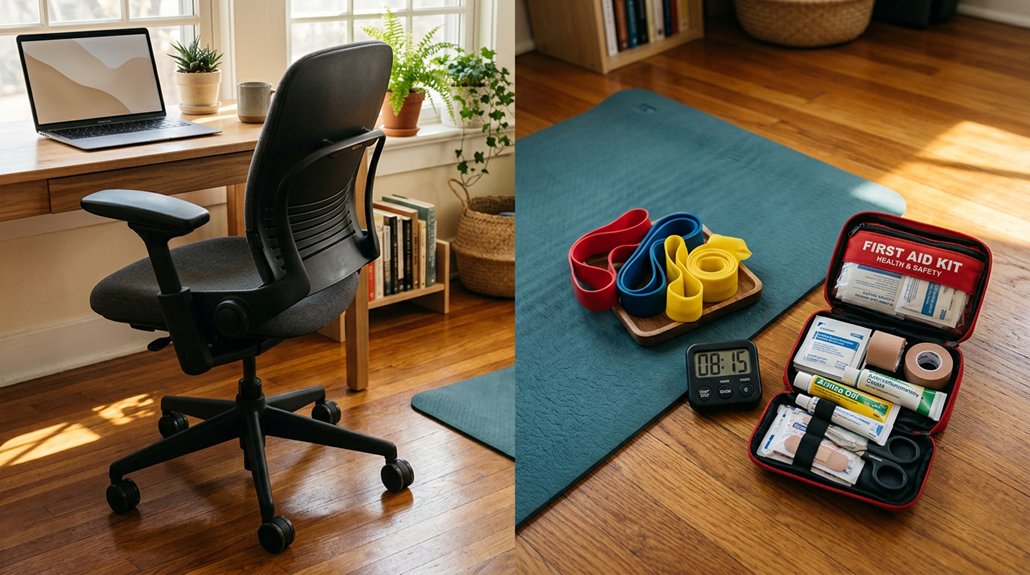
Creating an ergonomic workspace at home begins with properly positioning your chair to support good posture throughout the day. If you have prolonged sitting, correct chair positioning helps prevent strain and discomfort. Setting your chair height so that your feet rest flat on the floor or a footrest, with knees at roughly 90 degrees, reduces muscle tension. Adjust the height so your hips are slightly higher than your knees, encouraging proper alignment and lowering lower back pressure. Make sure lumbar support follows the natural curve of your lower spine to prevent stiffness. Keep armrests adjusted so your elbows form a 90-degree angle, easing shoulder and neck strain. Finally, leave about 2-3 inches between the chair’s edge and your knees to promote circulation and avoid nerve compression during extended sitting sessions. Additionally, choosing an ergonomic stool or chair with adjustable features, like height and tilt, can further support healthy posture and active sitting habits.
Signs of Muscle Discomfort to Watch For During Activities

You’ll notice persistent ache, tightness, or stiffness in your muscles during activities, which shouldn’t be ignored. A supportive ergonomic setup, including properly adjusted lumbar pillows, can help alleviate some of these discomforts. Pain when moving or performing routine tasks can signal that your muscles are strained. Pay attention to these signs to prevent minor discomfort from turning into a more serious injury.
Persistent Aching Sensations
Have you noticed a dull, persistent ache in your muscles or tendons during daily chores? These persistent aching sensations can be signs of early muscle strain or overuse that need attention before they worsen.
If the dull pain or discomfort doesn’t subside with rest, it could indicate a potential injury. Pay attention if you experience aching that reduces your range of motion or causes stiffness during routine tasks, as this may reflect inflammation or muscle fatigue.
Repetitive movements like lifting or bending often trigger these sensations, signaling your muscles are overworked. Additionally, if you notice weakness or instability along with the aching during activities, it suggests strain is worsening and requires preventive action.
Recognizing these symptoms early can help you avoid more serious injuries at home, especially when considering proper supportive cushions to reduce strain during prolonged sitting.
Muscle Tightness and Stiffness
Muscle tightness and stiffness are common signs that your muscles are under strain and need attention during daily activities. You may notice difficulty moving joints smoothly or a feeling of heaviness, especially after repetitive or awkward tasks. Persistent stiffness can reduce your range of motion and increase your risk factors for strains. Early indicators include mild discomfort or muscle fatigue that worsens with continued activity or poor posture. Stiff muscles may feel tender to touch, sometimes with slight swelling, signaling potential strain. Monitoring muscle tightness after lifting, bending, or standing helps you recognize when to rest or stretch, preventing injury.
Being aware of material comfort, such as the supportive ergonomic supports, can help reduce muscle tension during prolonged activities.
Pain When Moving
Wondering why moving sometimes causes discomfort? Pain or discomfort in your muscles or tendons during or after activity can be an early sign of a strain injury.
If you notice stiffness or a reduced range of motion while doing daily tasks, it may indicate a developing muscle strain. Swelling or inflammation around a muscle that hurts when you move is another common symptom.
You might also feel weakness or instability, making it hard to lift objects or bend. Persistent discomfort that worsens with repetitive motions or specific postures at home should raise a red flag.
Paying close attention to these signs helps you catch strain injuries early, so you can rest and seek proper treatment before they worsen. Being aware of foam densities used in support products can also help ensure you choose the right level of support to prevent aggravating an injury.
Safe Techniques for Heavy Lifting and Load Management
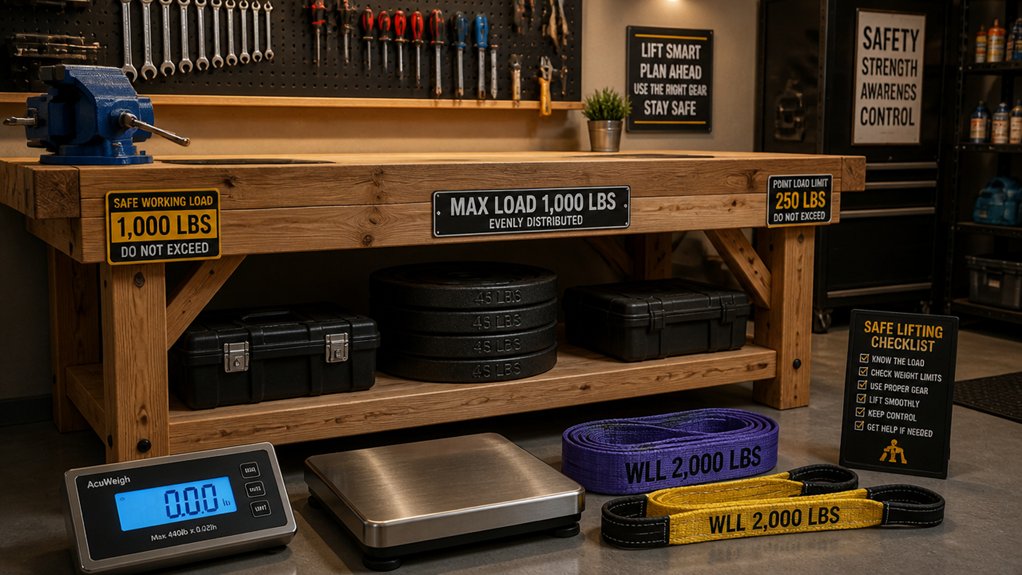
To reduce the risk of strain injury while lifting heavy objects, it’s essential to use safe techniques that prioritize proper body mechanics. The National Institute recommends bending your knees and using your leg muscles rather than your back. Keep loads close to your body to lessen spinal pressure and fatigue. Always turn your whole body by moving your feet instead of twisting your torso. Mechanical aids, like carts or dollies, can greatly reduce physical effort. Additionally, take regular breaks to prevent muscle fatigue during prolonged lifting tasks.
| Technique | Benefit |
|---|---|
| Bend knees, lift with legs | Protects spine from strain |
| Keep load close to body | Reduces muscle fatigue |
| Use mechanical aids | Minimizes muscle strain |
| Turn with your feet | Avoid twisting injuries |
How to Maintain Good Posture While Sitting and Standing
Using proper body mechanics while lifting heavy objects is essential, but maintaining good posture throughout your day is equally important to injury prevention.
To do this, keep a neutral spine by aligning your ears over your shoulders and shoulders over your hips when sitting or standing. Use ergonomic chairs with lumbar support to promote the natural curve of your lower back and avoid slouching during long periods of sitting. Keep your feet flat on the floor or on a footrest, ensuring your hips and knees form roughly 90-degree angles for better weight distribution.
When standing, avoid locking your knees and distribute your weight evenly on both feet for stability. Remember to adjust your posture regularly and take breaks to stretch, reducing muscle fatigue and minimizing strain injuries.
Simple Ways to Incorporate Movement and Stretching Daily
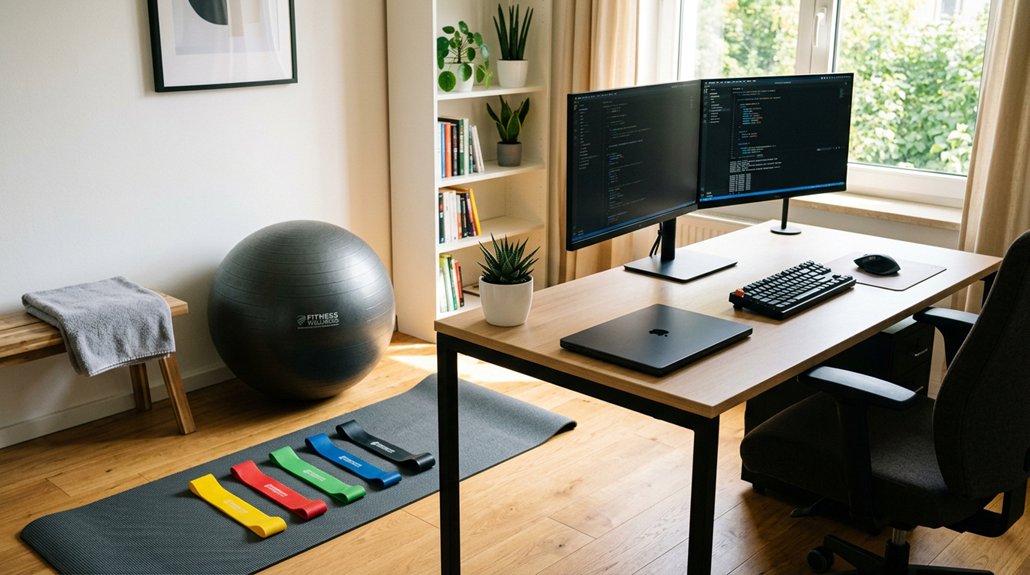
Incorporating movement and stretching into your daily routine can greatly reduce the risk of strain injuries at home. Break up your day with short stretching sessions every hour, focusing on areas like your neck, shoulders, back, and legs to help reduce stiffness and improve circulation.
Use household chores such as cleaning or gardening as opportunities for gentle, intentional movements that engage different muscle groups and help reduce static postures. Practice simple exercises like arm circles, ankle rotations, and neck tilts while watching TV or on phone calls, keeping muscles flexible.
Set reminders to stand, walk, and stretch for five minutes, at least three to four times daily, to help reduce the effects of prolonged sitting or standing. Incorporate practical tasks, like reaching or climbing stairs, to naturally promote muscle activity and lower injury risk.
Apps and Tools to Help Improve Your Posture and Prevent Strains
With the rise of smart technology, you now have access to apps and tools designed to monitor and improve your posture, helping prevent strain injuries. Posture-tracking apps like Upright Go and Lumo Lift use sensors to monitor your alignment in real-time, alerting you when you slouch to protect your soft tissue.
Ergonomic assessment tools such as Ergotron’s WorkFit help you set up your home workspace correctly, reducing awkward postures that strain muscles. Software like Ergonomics Apps and Posture Reminder send scheduled alerts for posture checks and micro-breaks, minimizing repetitive strain.
Some apps connect with wearable devices to analyze movement patterns and inactivity, offering tailored exercises for strengthening and stretching. These tools help prevent strain by promoting proper posture and protecting your soft tissue from unnecessary stress.
Frequently Asked Questions
How to Assess a Muscle Strain?
To assess a muscle strain, look for localized pain during or after activity, visible swelling or tenderness, stiffness, limited movement, weakness, or recent repetitive movements that could have caused the injury. Trust your body’s signals.
What Are Two Ways to Prevent a Strain?
You can prevent a strain by lifting with your legs, not your back, and maintaining good posture during activities. These actions help reduce muscle stress, preventing injuries and keeping you comfortable during daily tasks at home.
What Are Good Ways to Reduce Your Risk of Injury?
To reduce your injury risk, you should keep walkways clear, use secure handrails, install good lighting, and store items at waist level. Additionally, practice regular stretching and move mindfully during daily activities for better muscle flexibility.
What Are Six Signs and Symptoms of Strain Injuries?
You might notice pain or tenderness, swelling, stiffness, weakness, limited movement, and discomfort when performing activities, all indicating a strain injury. Recognizing these signs helps you seek appropriate care before worsening occurs.