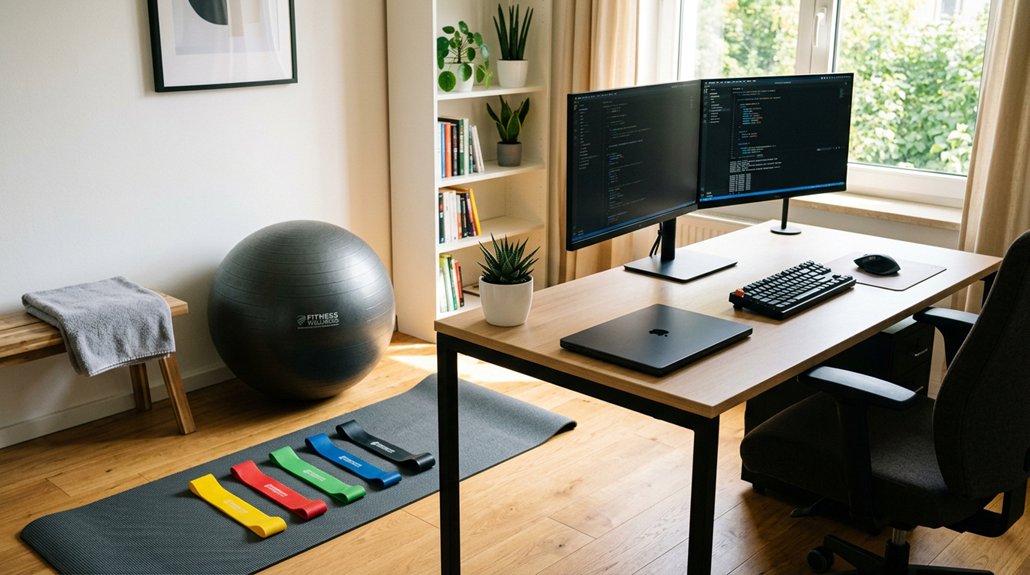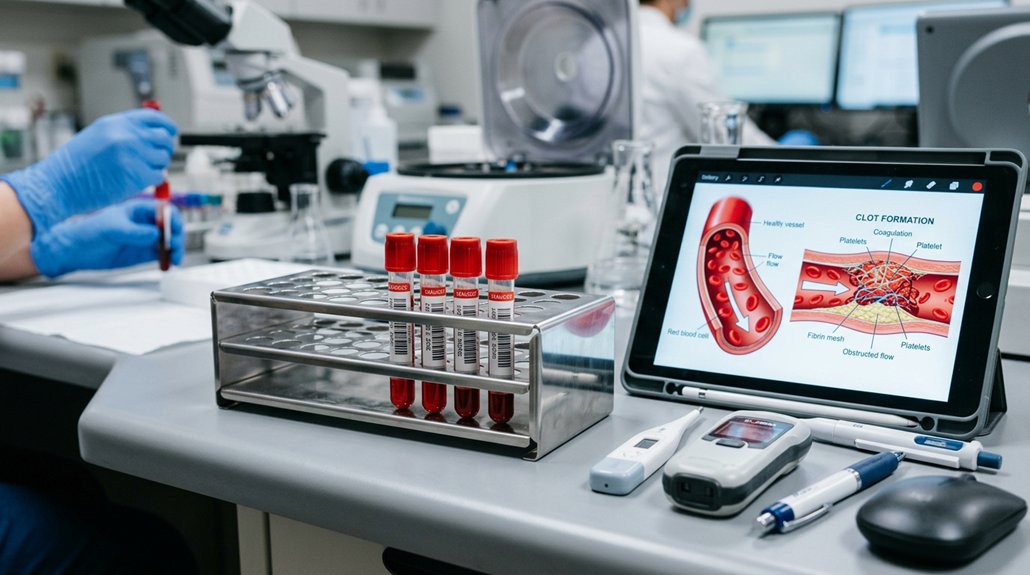
To stop blood clots, stay active regularly by walking or stretching every 2-3 hours, and avoid staying seated over an hour. Wear compression stockings to boost circulation and elevate your legs above heart level when possible. Maintain a healthy weight, exercise at least 150 minutes weekly, and stay well-hydrated to keep your blood thin. If you want to find out more effective strategies, there’s plenty more you can do to protect your circulatory health.
Why Sitting for Long Periods Can Increase Your Blood Clot Risk
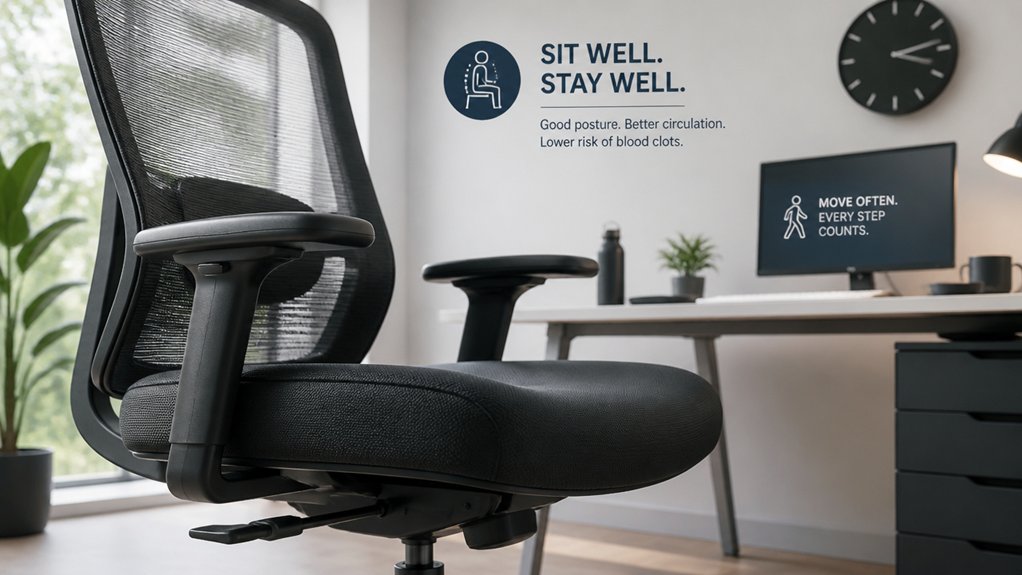
Sitting for long periods reduces blood flow in your legs, which can greatly increase your risk of developing deep vein thrombosis (DVT). When you stay stationary for too long, blood can pool and become thicker, creating a prime environment for clots to form. Traveling or sitting during work for extended periods worsens this, as immobility leads to stasis—a key factor in blood clot risk. Without frequent movement, your leg muscles aren’t contracting, so the pumping action that helps return blood to the heart slows down. This stagnation encourages clots or deep vein thrombosis development. Incorporating adjustable footrests can help promote better circulation by enabling you to change your foot and leg positions and engage the muscles even while seated. To reduce your risk, avoid sitting for a long time, especially during travel, and make efforts to move around regularly. Maintaining good blood flow is essential for preventing blood clots and ensuring healthy circulation.
How to Keep Blood Moving and Prevent Clots During Long Days
To keep blood flowing and reduce clot risk during long days, you should incorporate regular movement and specific strategies into your routine.
- Walk around or stretch every 2-3 hours during prolonged sitting or travel.
- Avoid crossing your legs or sitting for more than an hour to prevent blood pooling.
- Wear compression stockings to improve circulation and reduce venous stasis.
- Elevate your legs about 6 inches above heart level periodically to help blood return efficiently.
- Stay hydrated throughout the day, supporting blood fluidity and decreasing the risk factors for blood clots.
- Using ergonomic footrests can promote better leg positioning and improve circulation during sedentary tasks.
These simple steps help prevent blood clots, especially during long periods of immobility, whether at work, travel, or relaxing.
Recognizing symptoms of a blood clot early is also key.
Lifestyle Changes to Lower Your Overall Blood Clot Risk

Making meaningful lifestyle changes can markedly lower your overall blood clot risk. Achieving a healthy weight reduces pressure on veins and improves blood flow, helping to prevent blood clots. Engaging in at least 150 minutes of physical activity weekly boosts circulation and stops blood clots from forming. During long travel or periods of immobility, stand, walk, or stretch every 2-3 hours to prevent blood pooling. Smoking cessation is essential; smoking damages blood vessels and increases clotting tendencies. Staying well-hydrated keeps blood thin, easing blood flow. Incorporate these strategies for a thorough approach:
| Lifestyle Change | Impact |
|---|---|
| Maintain healthy weight | Lowers blood clot risk |
| Regular physical activity | Prevents blood pooling |
| Avoid immobility | Enhances circulation |
| Quit smoking/vaping | Reduces clotting tendencies |
| Stay hydrated | Keeps blood flowing smoothly |
A better understanding of how blood vessel health impacts clot formation can help tailor preventive measures.
Frequently Asked Questions
What Stops Blood Clots Naturally?
You stop blood clots naturally by staying active, moving your legs regularly, staying well-hydrated, maintaining a healthy weight, avoiding long periods of immobility, and eating anti-inflammatory foods that support your vascular health and prevent clot formation.
What Breaks up Blood Clots Fast?
You can break up blood clots quickly with clot-busting drugs like tPA, which dissolve clots rapidly when administered promptly. Medical professionals may also perform procedures like thrombectomy to physically remove large clots, restoring blood flow fast.
What Is the Biggest Cause of Blood Clots?
The biggest cause of blood clots is prolonged immobility or limited movement, which slows blood flow, increasing the risk of venous thromboembolism, especially after surgery, with certain health conditions and medication use also greatly contributing.
What to Drink to Reduce Blood Clots?
You should drink plenty of water to stay hydrated, enjoy green tea for antioxidants, consume omega-3-rich beverages, and include natural fruit juices without added sugar. Avoid sugary and caffeinated drinks to help reduce blood clot risk.