To avoid thoracic outlet syndrome at your desk, focus on maintaining good posture by positioning your monitor at eye level and using an ergonomic chair with proper lumbar support. Take frequent breaks to stretch your shoulders and neck, and avoid overhead or repetitive movements. Keep your elbows at a 90-degree angle and your arms close to your sides. Managing stress and practicing daily stretches can also help. Keep these tips in mind to protect your nerves and stay comfortable throughout the day. If you want to learn more, you’ll find helpful strategies to stay healthy and avoid nerve issues.
How Poor Desk Posture Contributes to TOS Risk
Poor desk posture directly increases your risk of developing Thoracic Outlet Syndrome because it alters the space around key nerves and blood vessels. When you adopt a forward head posture, your neck muscles strain, and pressure builds on the thoracic outlet, the narrow space between your collarbone and first rib. This compression impairs blood flow and nerve function, leading to symptoms like numbness and tingling. Additionally, rounded shoulders from slouching further reduce space in the thoracic outlet, aggravating nerve compression. Holding these positions for prolonged periods tightens muscles like the scalenes, which can constrict the brachial plexus nerve bundles. Poor ergonomics, such as improper monitor height or reaching forward, exacerbate this issue, increasing your TOS risk markedly. Proper ergonomic adjustments can help maintain optimal posture and reduce nerve compression.
Set Up Your Desk for Better Alignment
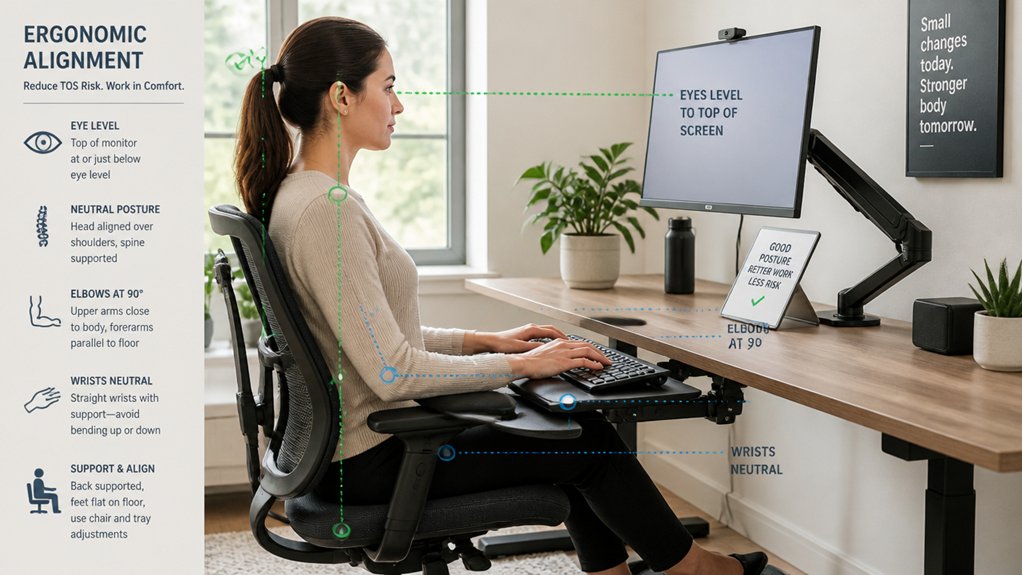
To reduce your risk of thoracic outlet syndrome, setting up your desk for better alignment is essential. When sitting at a desk, position your computer monitor at eye level so your head and neck stay neutral, reducing strain on the thoracic outlet. Use an ergonomic chair with armrests that support your shoulders, allowing your elbows to rest at a 90-degree angle, which prevents shoulder elevation. Keep your feet flat on the floor or on a footrest, with hips and knees at about 90 degrees to promote proper posture. Maintain a straight, well-supported back to avoid slouching and forward head posture that can compress nerves and blood vessels. Finally, arrange your keyboard and mouse close enough to keep your shoulders relaxed and minimize reaching, reducing nerve compression risks. Incorporating adjustable armrests can support healthy posture and adapt to your ergonomic needs throughout the day.
Adjust Your Chair to Support Neutral Posture

Adjusting your chair to the correct height helps keep your feet flat on the floor and your hips and knees at 90 degrees, promoting proper alignment.
Make sure your lumbar support is positioned to support your lower back’s natural curve without forcing you into slouching.
Use armrests to relax your shoulders and prevent unnecessary tension around your thoracic outlet.
Proper Chair Height
Setting your chair to the correct height is essential for maintaining a neutral posture that helps prevent thoracic outlet compression. When your hips and knees form roughly 90-degree angles, your spine stays aligned, reducing unnecessary strain on your neck muscles and lowering pressure on the thoracic outlet.
Make sure your feet rest flat on the floor or a footrest for stable, even weight distribution. Your chair seat should be level, supporting your pelvis and preventing misalignment. Adjust armrests so your shoulders relax away from your ears, which relaxes your neck muscles and minimizes thoracic outlet stress.
Avoid sitting too high or low relative to your desk, keeping your eyes level with your monitor. Proper chair height promotes comfort and reduces the risk of thoracic outlet issues.
Lumbar Support Placement
Proper lumbar support placement is essential for maintaining the natural inward curve of your lower spine, which helps prevent strain on the thoracic outlet. You should adjust your chair’s lumbar support so it fits snugly against the small of your back, preventing slouching and promoting proper spinal alignment. Utilizing a high-density memory foam lumbar cushion can provide customized support that adapts to your spinal shape, enhancing comfort and posture. When your lumbar support properly supports your lower back, your hips stay aligned under your torso, reducing unnecessary tension through the thoracic outlet area. Use a chair with adjustable lumbar support to fine-tune its position for your unique spinal curve, enhancing ergonomic comfort. Good lumbar support encourages an upright sitting posture and distributes pressure evenly, which reduces fatigue from static positioning and minimizes the risk of thoracic outlet compression over time.
Take Regular Breaks to Relieve Nerve and Muscle Tension
Taking regular breaks during your workday is essential to prevent nerve and muscle tension that can contribute to thoracic outlet syndrome. By taking frequent breaks, you interrupt sustained muscle contractions and reduce pressure on the nerves passing through the thoracic outlet.
Standing up and walking around can boost blood circulation and ease muscle tightness in your neck and shoulders. During your breaks, try gentle stretches or mobility exercises to relieve tension. Visualize:
- Moving around to loosen tight muscles
- Performing chest-opening stretches to improve posture
- Retracting your scapulae to reduce nerve compression
Additionally, choosing ergonomic seating with features like adjustable height and supportive cushions can help maintain proper posture and reduce strain. These short breaks help prevent pain, numbness, and weakness. Incorporating movement into your routine is key to avoiding nerve compression and maintaining healthy posture throughout your workday.
Incorporate Ergonomic Shoulder and Neck Exercises Daily
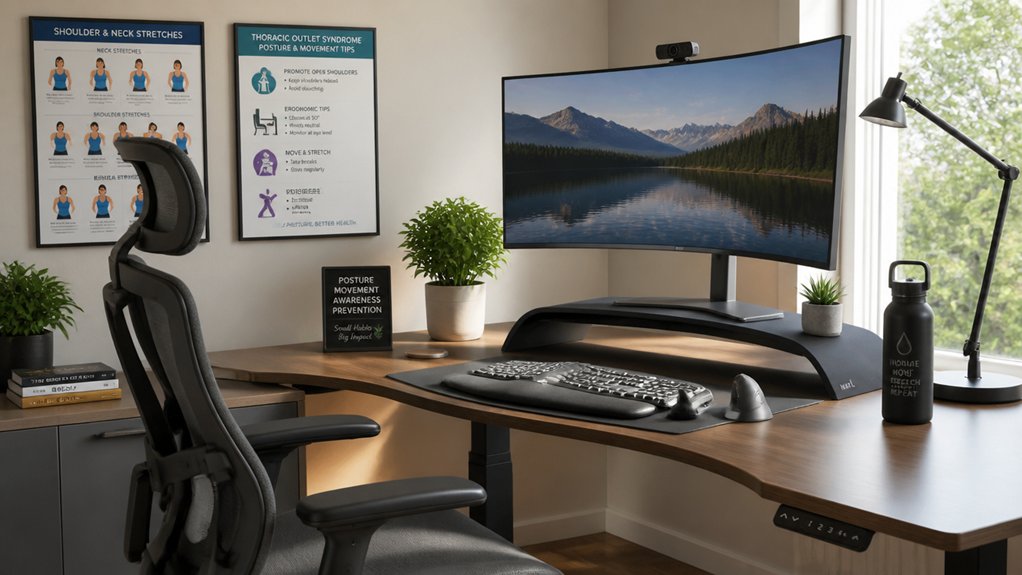
Incorporating ergonomic shoulder and neck exercises into your daily routine can greatly reduce the risk of thoracic outlet syndrome. These exercises strengthen the upper back and shoulder stabilizer muscles, relieving pressure on the thoracic outlet.
Start with scapular retractions, holding each for 5 seconds, and repeat 10-15 times. Incorporate doorway chest stretches for 20-30 seconds, two to three times, to open your chest and reduce tightness. Gentle neck side stretches on each side, lasting 20-30 seconds, can improve mobility and decrease nerve compression. Additionally, using ergonomic arm supports that support proper alignment can help maintain a healthy posture during work sessions. Focus on posture-improving motions that activate muscles lightly—avoid overhead or heavy lifting. Using ergonomic tools like foam rollers and resistance bands during these exercises supports better posture and can supplement physical therapy efforts, helping prevent thoracic outlet syndrome symptoms at your desk.
Use Supportive Tools Like Armrests and Footrests
Using supportive tools like armrests and footrests can greatly improve your posture during long periods at your desk.
Properly adjusted armrests lift your shoulders away from your chest, easing muscle tension and reducing compression in the thoracic outlet area. Footrests provide stable support for your feet when your chair is too high, promoting even weight distribution and better alignment.
When both are set correctly, your joints stay at roughly 90-degree angles, helping you sit perpendicular to gravity. This alignment prevents strain and nerve compression that may lead to thoracic outlet syndrome.
Imagine:
- Resting your elbows comfortably on armrests, avoiding shoulder shrugging
- Keeping feet supported by footrests, preventing dangling legs
- Maintaining a neutral, relaxed posture during long work hours
Avoid Overhead and Repetitive Movements at Work
To reduce your risk of TOS, try to limit overhead tasks like reaching or lifting above chest level. Use proper techniques and assistive devices when unavoidable, and take frequent breaks to rest your shoulders. Incorporating adjustable footrests can help promote better posture and reduce overall strain during long periods of sitting. Simple posture exercises can also help keep your shoulders stable and prevent unnecessary strain.
Limit Overhead Tasks
Refraining from lifting or reaching your arms above shoulder level during work tasks can greatly reduce pressure on nerves and blood vessels in the thoracic outlet. Overhead movements—like painting, swimming, or tennis serving—can sensitize nerves and worsen Thoracic Outlet Syndrome symptoms.
To protect yourself, limit these activities or modify your routine. Keep your arms below chest or waist level and take frequent breaks. Use ergonomic tools and workstation adjustments to minimize overhead reaching.
Additionally, choosing an adjustable monitor arm, such as those with a long or articulating extension, can help maintain optimal monitor positioning without raising your arms unnecessarily, aligning with ergonomic best practices. Visualize:
- Keeping your hands at desk level while working
- Using extension tools to avoid straining over your head
- Staggering tasks to prevent repetitive overhead movements
Use Proper Technique
Adopting proper technique at work can greatly reduce strain on the thoracic outlet. Keep your arms maintained at shoulder height, avoiding raising them above chest level. This prevents nerve and blood vessel compression that contributes to thoracic outlet syndrome.
When performing tasks, modify or replace overhead activities like reaching or lifting with safer options or assistive devices. Use ergonomic tools and adjust your workstation to support proper arm positioning, reducing the need for repetitive overhead movements. Additionally, ensuring your monitor setup includes adjustable monitor stands can help maintain optimal ergonomic posture and prevent strain. Be mindful of tasks that involve reaching, painting, or similar motions; find alternatives that keep your arms in a neutral, relaxed position. Consistently applying proper technique helps protect your nerves and vessels, decreasing the risk of developing thoracic outlet compression while working at your desk.
Take Frequent Breaks
Taking regular breaks during work is essential for preventing thoracic outlet compression. Frequent movement helps reduce sustained muscle contraction that can press on nearby nerves and vessels, increasing thoracic outlet syndrome and pain risk.
During breaks, stand up, stretch, and move to keep muscles loose. Avoid overhead arm movements, such as reaching above shoulder height, which can worsen compression. Instead, modify tasks that require raising your arms—use step stools or rearrange your workspace so your arms stay below chest level.
Gentle shoulder and neck stretches during breaks can improve circulation and relieve tightness in the thoracic outlet area. Remember, regular movement breaks are key to preventing poor posture and static positions, both major triggers for thoracic outlet syndrome symptoms at your desk.
- Imagine yourself standing, stretching arms and neck gently
- Picture yourselves lowering shelves or reaching on a step stool
- Envision frequent, light movements breaking up long periods of static posture
Manage Stress to Prevent Muscle Tightness and Compression
Since emotional stress can cause muscle tightness in your neck, shoulders, and upper back, managing your stress levels is essential for preventing thoracic outlet compression.
When stress accumulates, it leads to poor posture and sustained muscle contractions that worsen nerve compression. Practicing relaxation techniques like deep breathing, meditation, and progressive muscle relaxation can help reduce muscle tension and ease pressure on the thoracic outlet area. Regularly lowering your stress levels prevents ongoing muscle tightness that can narrow your thoracic outlet.
Managing stress not only decreases muscle tension but also supports better posture during long desk hours. By staying mindful of your emotional health, you can minimize the risk of muscle tightness and keep thoracic outlet syndrome symptoms at bay.
Stretch Before and After Work to Stay Flexible
Incorporating regular stretches into your daily routine can greatly improve your flexibility and help prevent thoracic outlet compression. Starting with doorway stretches or corner stretches before and after work opens your chest and shoulders, reducing pressure on the thoracic outlet.
Neck side stretches held for 20-30 seconds per side enhance neck mobility and relieve nerve tension. To boost upper back strength, perform scapular retractions that target shoulder stabilizers, promoting better posture and preventing nerve compression.
During breaks, gentle chest and shoulder stretches increase blood flow, diminish muscle tightness, and lower TOS risk. Remember to stretch without pain, focusing on mild tension.
Visualize yourself:
- Opening your chest doorway
- Gently tilting your neck side to side
- Squeezing shoulder blades together
Learn More About TOS Symptoms and Prevention Strategies
Recognizing TOS symptoms like neck or shoulder pain, numbness, and weak grip is key to catching issues early.
You can prevent these problems by adjusting your workspace—keeping shoulders relaxed, using proper ergonomic setup, and taking regular breaks.
Watching for signs of nerve compression helps you act quickly and reduce the risk of worsening symptoms.
Recognize TOS Symptoms
How can you identify the early signs of thoracic outlet syndrome (TOS)? Recognizing symptoms early is key.
You might notice numbness, tingling, or a pins-and-needles sensation in your fingers or hand, signaling nerve or blood vessel compression.
Additional signs include:
- Neck, shoulder, and arm pain with weakness or decreased grip strength
- Coldness and arm fatigue after minimal activity
- Persistent tingling, swelling, or weakness in your arm
These symptoms suggest your nerves and blood vessels are being affected, which is common in TOS.
Monitoring these signs helps you act quickly, so you can make ergonomic adjustments at your desk. Early detection allows for timely intervention, reducing the risk of worsening symptoms or nerve and vessel damage.
Prevention Through Ergonomics
Implementing proper ergonomic practices at your workstation plays a crucial role in preventing thoracic outlet syndrome. To avoid compressed nerves and blood vessels, keep your monitor at eye level and relax your shoulders.
Maintain good posture by choosing an ergonomic chair with supportive backrest and armrests that help align your head, torso, and hips vertically. Position your keyboard and mouse so your elbows form roughly 90-degree angles, and keep your elbows close to your body to reduce shoulder elevation and prevent rounded shoulders.
Take regular breaks every 25-45 minutes to stand, stretch, and boost circulation. Use supportive tools such as footrests and ergonomic accessories to promote neutral spine posture and even weight distribution.
These steps can greatly lower your risk of thoracic outlet compression at your desk.
Signs of Nerve Compression
Paying attention to the signs of nerve compression can help you catch thoracic outlet syndrome early. Nerves affected by TOS often cause numbness and tingling, like pins and needles, in your fingers or hand. You might also notice weakness in your grip or frequent arm fatigue after minor activities.
Persistent pain or ache in your neck, shoulder, arm, or hand can signal ongoing nerve pressure in the thoracic outlet area. If these symptoms worsen with repetitive overhead movements or poor posture—such as forward head position or rounded shoulders—it’s a sign that nerve compression could be worsening.
Recognizing these signs early, and making ergonomic adjustments, can help prevent the progression of nerve issues and preserve nerve health in thoracic outlet syndrome.
Frequently Asked Questions
Does Sitting Make Thoracic Outlet Syndrome Worse?
Yes, sitting can worsen Thoracic Outlet Syndrome if you maintain poor posture. Slouching, forward head position, and prolonged sitting decrease circulation, increase muscle tension, and compress nerves and vessels, making symptoms worse over time.
How to Sit at the Desk to Avoid Shoulder Pain?
To avoid shoulder pain, sit upright with your head, torso, and hips aligned, keep your eyes level with the monitor, rest your arms on armrests, and keep elbows at 90 degrees while supporting your feet evenly.
What Activities Worsen Thoracic Outlet Syndrome?
Activities like hunching over your keyboard, reaching overhead, carrying heavy bags, sitting static for long periods, and lifting with poor form worsen thoracic outlet syndrome. These actions compress nerves and vessels, intensifying symptoms and muscle strain in your neck and shoulders.
What Is the Fastest Way to Fix TOS?
The fastest way to fix TOS is by correcting your posture immediately, aligning your head, shoulders, and hips, taking frequent breaks to stretch and retract your scapula, and using ergonomic setups to reduce strain, easing symptoms quickly.