For a healthy office environment, aim to keep indoor humidity between 40% and 60%, ideally around 40-45%. Maintaining this range helps prevent issues like dry eyes, sore throat, static shocks, and reduces mold growth. If humidity drops below 30%, you’ll face discomfort and health risks, while above 50-60%, mold and dust mites can become a problem. Staying within these limits supports comfort, productivity, and well-being—continue to find out how to achieve this balance effectively.
Understanding the Ideal Indoor Humidity Range for Offices
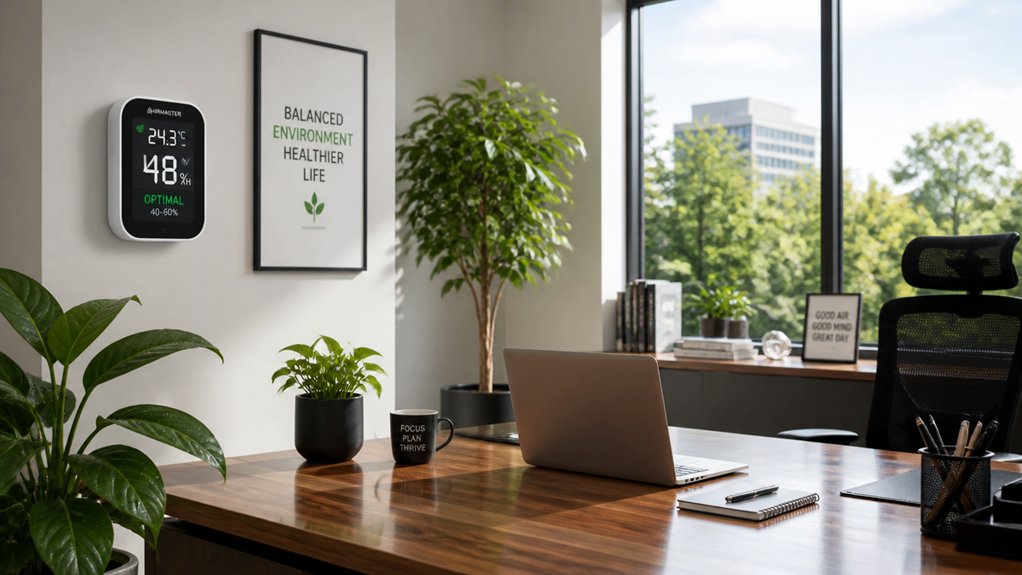
Understanding the ideal indoor humidity range is essential for creating a comfortable and healthy office environment. Maintaining proper indoor humidity levels helps prevent dryness-related symptoms like dry eyes, sore throats, and skin irritation. A humidifier’s mist output can be precisely controlled to sustain this optimal range and improve overall air quality. The recommended range is between 40% and 60% relative humidity, with peak comfort around 40-45%. When indoor humidity levels drop below 40%, you might notice increased discomfort, but levels below 30% become too low, impacting employee wellbeing and productivity.
Conversely, humidity levels above 50% can encourage mold growth and dust mites, leading to respiratory issues and allergies. Staying within this range balances comfort and health, reduces stress, and supports overall indoor air quality, making your office a healthier, more productive space.
How Low Humidity Impacts Employee Comfort and Health
When indoor humidity drops below 40%, you’ll likely notice dry eyes, sore throat, and rough skin, which can make working uncomfortable.
If it dips under 30%, your risk of respiratory irritation and catching colds increases, often mistaken for other health issues. Low humidity also weakens mucous membranes, making you more prone to viruses like the flu and worsening conditions like eczema.
Dryness-Related Discomforts
Low humidity levels in your office can cause immediate discomfort, leading to symptoms such as dry eyes, sore throat, and dry skin. Dry air strips moisture from your mucous membranes and skin, making you feel irritated and uncomfortable.
When indoor humidity drops below 40%, you may notice increased static shocks and a general sense of dryness that hampers concentration. As humidity falls below 30%, these discomforts worsen, potentially causing breathing difficulties and further irritation of the sinuses.
These issues are often mistaken for illness or poor air quality rather than a direct result of low humidity. Sustained exposure to dry air can decrease your overall comfort, increase fatigue, and reduce productivity.
Keeping humidity within the recommended 40-60% range helps prevent these dryness-related symptoms.
Increased Illness Risk
Low indoor humidity levels can greatly increase the risk of illness among office workers. When relative humidity drops below 40%, you may notice symptoms like dry eyes, sore throat, and dry skin, which are often mistaken for illness but are actually humidity-related.
Low humidity below 30% creates an environment where airborne viruses, such as the flu, survive longer and spread more easily. Dry indoor air also irritates your mucous membranes and causes static shocks, further compromising your respiratory health.
Prolonged exposure to low humidity can lead to fatigue and difficulty concentrating, decreasing productivity and overall well-being. Monitoring office humidity with hygrometers often reveals levels below recommended standards during winter months, correlating with higher reports of dryness, sickness, and absenteeism among employees. Ensuring appropriate air quality levels with proper humidity control can significantly improve overall workplace health.
Causes of Insufficient Indoor Moisture in Workplaces
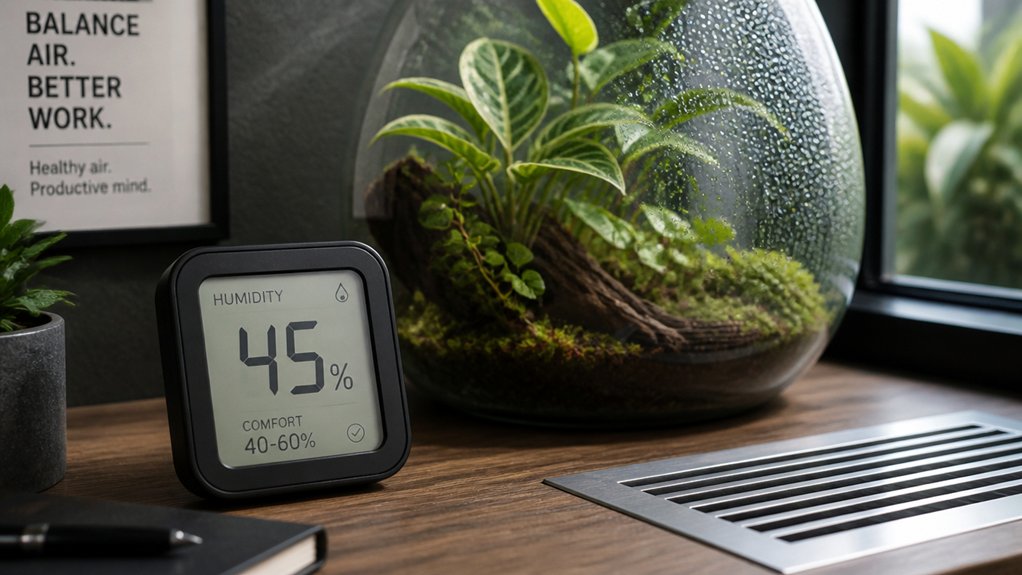
Many heating and ventilation systems, especially during winter, actively reduce indoor moisture by warming the air without adding humidity, causing the environment to become dry. HVAC units often lack integrated humidifiers, so humidity levels drop when heating is excessive. Additionally, excessive ventilation pulls in cold, dry outdoor air, further lowering indoor moisture. Sometimes, humidification systems are turned off intentionally to save energy or due to maintenance issues, worsening dryness. Older buildings typically lack advanced humidity control, making prolonged dryness common. Here’s a quick overview:
| Cause | Effect | Solution |
|---|---|---|
| Lack of humidification | Low indoor moisture | Install humidifiers |
| Cold outdoor air | Further reduces humidity | Use air purification systems |
| Energy-saving practices | Turn off humidification systems | Maintain humidity devices |
| Outdated buildings | Prolonged dry conditions | Upgrade HVAC systems |
A lack of proper humidity regulation can also make environments more uncomfortable and impact health.
Signs That Indoor Humidity Is Too Low
When indoor humidity drops below the ideal range, you’ll notice several clear signs that the air is unnaturally dry.
In a dry indoor environment, your eyes may feel gritty or sore, and your skin could become dry and flaky. You might also experience a dry throat or increased static shocks when touching objects or people.
During winter months, these issues become more common as heating systems lower indoor moisture levels. If your hygrometer shows relative humidity under 30%, it indicates excessively dry indoor air, which can cause breathing discomfort and skin irritation.
Prolonged exposure to low humidity may lead to fatigue and reduced concentration. Recognizing these signs helps you understand when your office’s environment needs moisture to support comfort, health, and productivity. Incorporating humidifiers can help restore optimal humidity levels and improve overall indoor air quality.
How HVAC and Building Design Influence Office Humidity
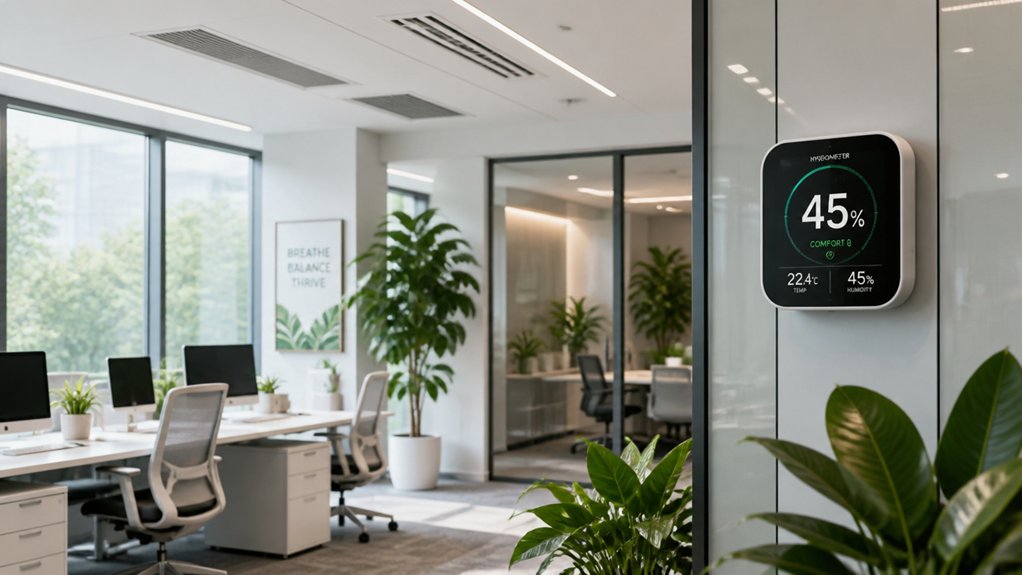
Your HVAC system plays a critical role in maintaining comfortable humidity levels by heating or humidifying the air as needed. Building materials and design choices, like insulation and ventilation, also influence indoor moisture, either helping to retain or lose it. Properly integrating these elements guarantees your office stays within the ideal humidity range for health and comfort. Additionally, selecting mats made from PVC-free polyurethane or memory foam can support flooring durability and safety, contributing to a healthier overall environment.
HVAC System Functions
HVAC systems play a crucial role in controlling indoor humidity levels, directly impacting office comfort and health. They regulate moisture through several functions, ensuring a balanced environment.
For example:
- Heating air without adding moisture in winter often drops humidity below the ideal 40–60% range.
- Air conditioners help remove excess moisture during hot months, preventing dampness.
- Heat recovery ventilation exchanges indoor air with outdoor air, which can affect humidity levels.
- Integrated humidification systems in large buildings add moisture when needed, preventing dryness.
- Many smart plugs support energy monitoring, enabling better management of HVAC operation and maintaining optimal humidity levels.
Properly maintained HVAC systems are essential for stable humidity. Poor design or upkeep can worsen low humidity issues, especially if outdoor dry air infiltrates or humidification components are missing. Building design choices also influence HVAC effectiveness in maintaining healthy office humidity.
Building Material Impact
Building materials and overall building design greatly influence indoor humidity levels, especially in office environments. The type of building materials used impacts how humidity is managed and maintained indoors. A thorough understanding of soundproofing fabrics and their moisture absorption properties can help optimize indoor comfort and air quality. For instance, materials like wood are highly sensitive to humidity fluctuations caused by inadequate HVAC regulation. When indoor humidity drops below ideal levels, wood can warp or crack, leading to costly repairs. Conversely, excessive moisture trapped by materials or poorly designed spaces can result in high humidity, fostering mold growth and damage. The design of ventilation systems, combined with the choice of materials, affects indoor air quality by either allowing dry outdoor air to enter or trapping moisture inside. Properly considering building materials in the design process helps guarantee a balanced humidity level, promoting a healthier office environment.
Design and Ventilation
The way a building is designed and how its ventilation systems are implemented play essential roles in regulating indoor humidity levels. Poor design or improper ventilation can cause the office humidity level to fall below the healthy range. Using full-spectrum LEDs and proper lighting can also reduce eye strain, indirectly affecting comfort levels related to humidity.
For example, HVAC systems often heat air without adding moisture, especially in winter, resulting in dry indoor air. Excessive ventilation can also introduce cold outdoor air that further reduces humidity.
To maintain ideal office humidity levels, consider these design elements:
- Balancing air exchange rates to prevent over-ventilation
- Incorporating integrated humidification within HVAC systems
- Upgrading older buildings lacking humidity control
- Improving insulation and ventilation efficiency
These strategies help guarantee the office environment remains comfortable, healthy, and conducive to productivity.
Devices and Technologies to Maintain Healthy Indoor Humidity
Maintaining healthy indoor humidity levels in office spaces involves deploying a range of devices and technologies designed to add moisture when needed. These include steam humidifiers, evaporative humidifiers, and fine mist humidifiers, all aimed at keeping the relative humidity between 40–60% RH, supporting ideal indoor air quality.
HVAC systems with integrated humidification components help add moisture during heating seasons, preventing indoor air from falling below 40% RH. For smaller areas or individual workspaces, portable or localized humidifiers offer effective solutions without requiring major upgrades.
Pairing these devices with continuous monitoring tools like hygrometers and smart humidification systems allows real-time adjustments, preventing discomfort and health issues caused by improper humidity. Regular maintenance guarantees reliable performance and safe indoor air quality.
Practical Ways to Safely Increase Office Humidity
To safely increase office humidity, start by using humidifiers such as steam, evaporative, or fine mist types to raise indoor moisture levels gradually and reliably. This helps maintain ideal humidity levels in the workplace, ideally between 40–60%RH, which supports comfort and health.
Consider these practical tips:
- Use portable humidifiers in areas that need extra moisture.
- Regularly monitor humidity with hygrometers to keep levels above 40%RH.
- Implement localized humidification in specific zones where integrated systems are unavailable.
- Encourage staff hydration and micro-breaks to alleviate dryness symptoms while mechanical humidification adjusts indoor moisture.
Coordinating with facilities management guarantees HVAC systems operate effectively to prevent prolonged low humidity, helping create a healthier office environment.
How to Measure and Monitor Indoor Humidity Effectively
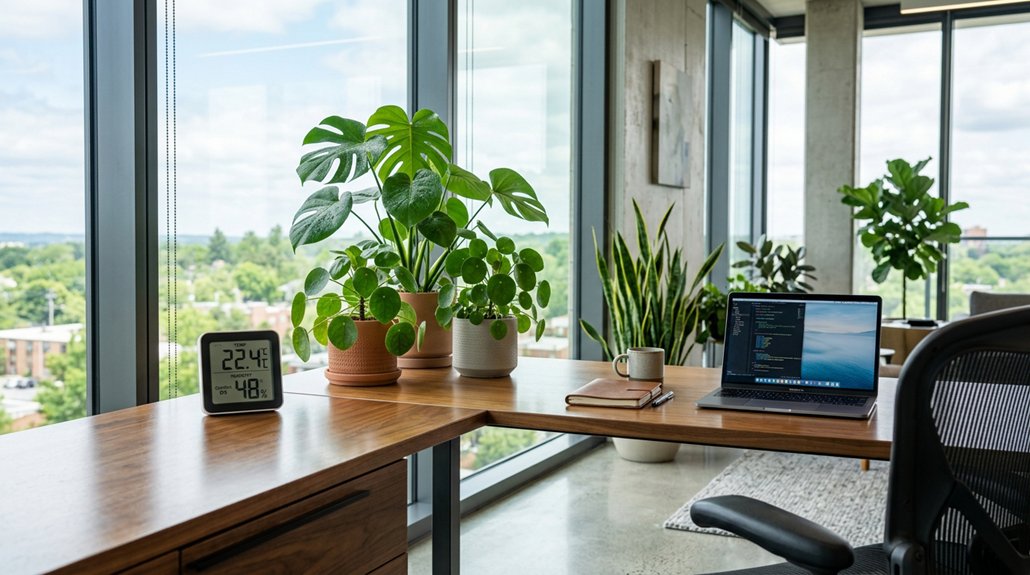
Accurately measuring and monitoring indoor humidity levels guarantees a comfortable and healthy office environment. Use hygrometers to regularly track relative humidity (%RH) and temperature, especially during winter or dry seasons when levels tend to drop below 40%RH.
Place humidity sensors in multiple zones or rooms to capture localized variations, ensuring thorough data. Monitor RH continuously or multiple times daily to identify fluctuations—levels under 40%RH signal low humidity, while over 60%RH can cause health issues.
Combining humidity readings with employee symptom logs and environmental data like temperature and ventilation offers a clearer assessment of indoor air quality. Digital HVAC systems or standalone monitors with alert functions help maintain ideal humidity between 40–60%RH, supporting comfort and health in your office.
Preventing Excess Humidity and Mold Growth in Offices
Excess humidity in office environments can quickly lead to mold growth and dust mite proliferation, which pose health risks and compromise indoor air quality. To prevent this, keeping indoor relative humidity below 50-60% RH is essential.
Excess humidity fosters mold and dust mites, threatening health and air quality indoors.
High humidity often causes condensation on windows and damp surfaces, signaling too much moisture. You should:
- Use proper ventilation to keep airflow steady
- Regularly maintain HVAC systems for efficient humidity control
- Address leaks and moisture sources promptly
- Consider dehumidifiers in coastal or waterfront buildings
Seasonal Changes and Their Effect on Office Humidity Levels
As outdoor temperatures drop, the influence of outdoor climate on indoor humidity becomes more apparent, with cold, dry air entering your office and lowering RH levels.
During winter, these levels tend to decrease, especially late in the workday, leading to discomfort and health issues. Changes in seasonal ventilation practices can also impact humidity, making it essential to adapt your office environment accordingly.
Outdoor Climate Influence
Seasonal changes greatly influence office humidity levels, especially as outdoor conditions shift throughout the year. During colder months, outdoor low relative humidity causes indoor air to become drier, making it challenging to maintain the ideal 40-60%RH in your workplace.
Excessive ventilation, common in winter, brings in cold, dry outdoor air that reduces indoor humidity further. In cooler climate regions, the influx of dry outdoor air is frequent, often resulting in discomfort and static electricity issues.
Additionally, humidity levels tend to drop late in the workday, further impacting indoor comfort. To keep your office environment healthy, it’s essential to monitor outdoor climate effects, especially during seasonal changes, and implement active humidity control strategies as needed.
Winter Humidity Decline
During winter, outdoor air tends to be cold and dry, which directly impacts indoor environment humidity levels. As outdoor humidity drops, indoor relative humidity often falls below 40%, especially because heating systems warm the air without adding moisture. These systems reduce indoor moisture content, often bringing RH levels under 30%.
Consequently, the indoor environment becomes dry, leading to occupant discomfort like dry eyes, sore throats, and static shocks. Studies show that humidity levels decrease markedly late in the workday during winter, aligning with colder outdoor temperatures.
Maintaining indoor humidity between 40% and 60% during winter helps counteract dryness, supporting employee health and productivity. Addressing these seasonal changes is essential for creating a healthy office environment year-round.
Seasonal Ventilation Changes
Changes in ventilation patterns throughout the seasons have a significant impact on office humidity levels. During winter, seasonal ventilation changes often bring in cold, dry outdoor air, dropping indoor relative humidity below the ideal 40-60%. You’ll notice humidity decreases late in the workday as more dry outdoor air is ventilated. Excessive ventilation during seasonal heating can push humidity below 30%, leading to discomfort and health issues.
HVAC systems typically warm indoor air without adding moisture, which worsens low humidity caused by seasonal ventilation changes. To maintain a healthy environment, you should:
- Monitor humidity regularly during seasonal shifts
- Limit unnecessary ventilation in winter
- Use humidifiers if needed
- Guarantee HVAC systems include humidity control features
Addressing seasonal ventilation changes helps sustain comfortable and healthy humidity levels.
Setting Humidity Guidelines for a Healthy Workplace
Setting humidity guidelines is essential for creating a healthy and comfortable workspace, and it starts with establishing clear target levels. For a healthy workplace, aim for an indoor relative humidity between 40% and 60%, with an ideal range around 40-45%.
Maintaining humidity below 40% can cause dryness-related symptoms like dry eyes, sore throat, and skin irritation, affecting your health and comfort. Consistent monitoring with hygrometers helps identify areas with problematic humidity levels, enabling targeted adjustments.
Larger offices benefit from integrated humidification systems that stabilize humidity, promoting better occupant wellbeing and productivity. Remember to avoid humidity levels below 30% to prevent health risks and above 50-60%, which can encourage mold growth and respiratory issues.
Clear, well-maintained guidelines support a healthier, more comfortable work environment for everyone.
Emerging Technologies for Sustainable Indoor Humidity Control
Emerging technologies in sustainable indoor humidity control are transforming how office buildings maintain ideal moisture levels while reducing energy consumption. Advanced humidifiers like steam, evaporative, and fine mist models help keep relative humidity between 40–60% RH, ensuring a healthy indoor environment.
Smart sensor-integrated HVAC systems monitor humidity in real-time and make automatic adjustments, boosting energy efficiency and occupant comfort. Heat recovery ventilation combined with humidity controls reduces energy use while maintaining moisture levels.
Smart sensors optimize humidity control in real-time, enhancing energy efficiency and occupant comfort.
Additionally, localized humidity control units are gaining popularity for targeted zones, allowing precise management without affecting the entire building. With IoT and AI-driven analytics, these systems can predict moisture fluctuations and optimize performance sustainably.
These innovations make healthy, comfortable office environments more energy-conscious and efficient.
Frequently Asked Questions
What Is a Good Humidity Level for an Office?
A good humidity level for an office is between 40% and 60%. You should aim to keep it within this range to stay comfortable, prevent dryness or mold growth, and promote better health and productivity for everyone.
What Humidity Level Is Bad for COPD?
Humidity levels below 30% are bad for COPD because they dry out your airways, causing irritation and making breathing harder. Stay above 30%, ideally between 40% and 60%, to protect your respiratory health and comfort.
What Is the Best Humidity Level for Eczema?
You should keep indoor humidity between 40% and 60%. This range helps prevent dry skin and irritation, supports your skin’s moisture barrier, and reduces eczema flare-ups, creating a comfortable office environment.
Is 70 Percent Indoor Humidity Too High?
Yes, 70% humidity is too high for an indoor office. It can promote mold growth, dust mites, and damage building materials, while also making you feel sluggish and less focused. Keep humidity below 60% for comfort and health.