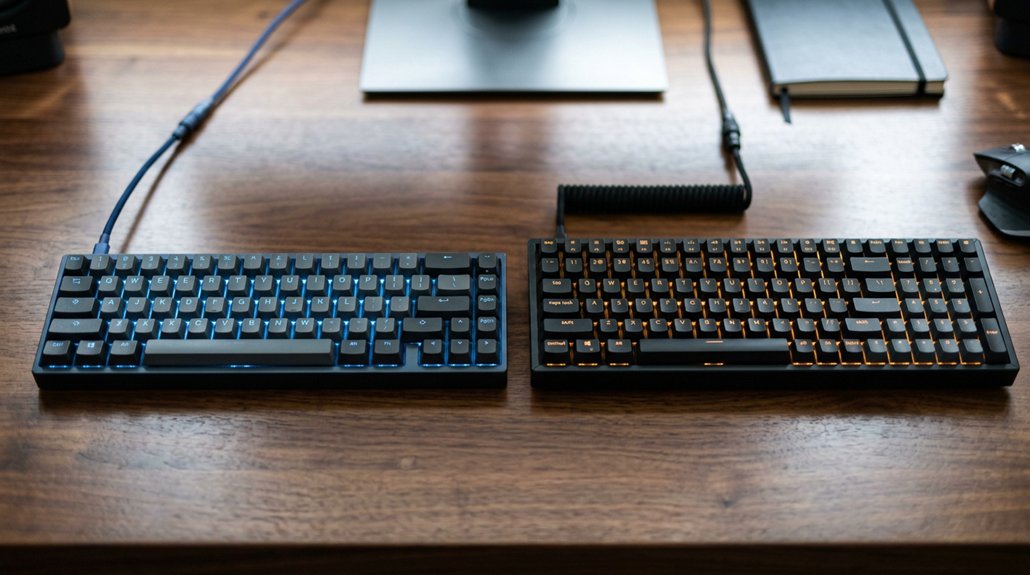
Dvorak places about 70% of keystrokes on the home row, reducing finger movement and increasing efficiency, while QWERTY spreads common keys across the board, causing more stretching. Dvorak balances hand workload and encourages inward strokes, making it more ergonomic and potentially reducing fatigue. In contrast, QWERTY is less optimized for comfort but familiar to most users. To understand how these differences impact your typing experience, keep exploring these layouts further.
How Dvorak and QWERTY Layouts Differ in Design
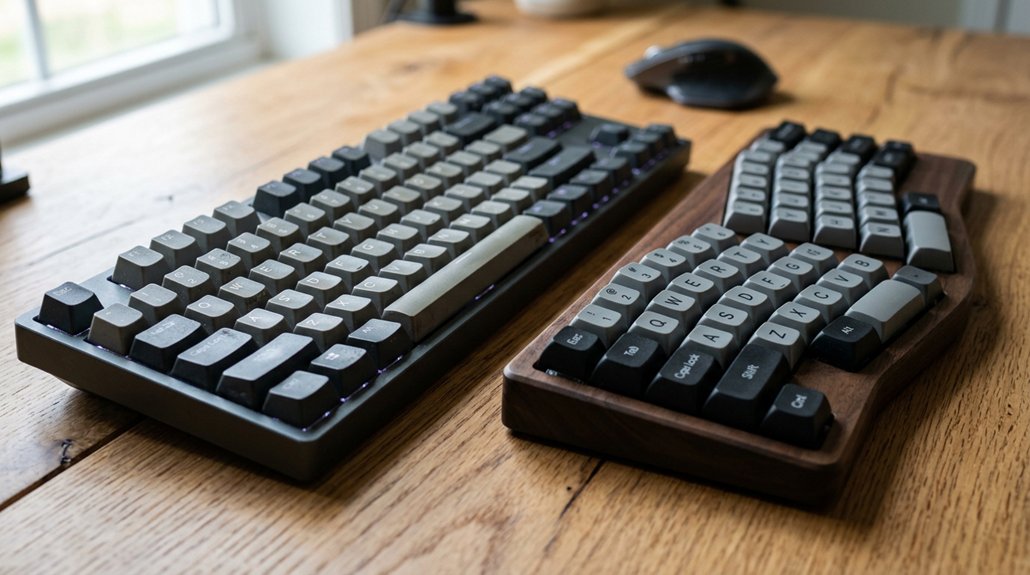
Have you ever wondered how the design of Dvorak and QWERTY layouts impacts your typing?
The Dvorak keyboard layout places about 70% of keystrokes on the home row, boosting typing efficiency by reducing finger movement. Unlike the QWERTY keyboard layout, which scatters common letters across the keyboard, Dvorak groups vowels on the left and frequent consonants on the right, encouraging better hand alternation. The design favors inward strokes moving toward the middle fingers, minimizing awkward stretches that cause fatigue.
While QWERTY places more load on the left hand, Dvorak allocates roughly 56% of strokes to the right hand, aligning with right-hand dominance. Punctuation keys in Dvorak are closer to the home row for easier access, improving overall ergonomics.
How Layout Choices Affect Typing Speed and Hand Fatigue
Layout choices directly influence your typing speed and how quickly your hands tire. The Dvorak layout places about 70% of keystrokes on the home row, reducing finger movement and lowering hand fatigue compared to QWERTY, which only has 32%. A well-designed ergonomic layout can further enhance comfort by minimizing awkward wrist positioning and finger strain. The Dvorak layout requires about 63% less finger motion, potentially decreasing repetitive strain injuries and improving comfort. It promotes balanced hand alternation and positions frequently used vowels and consonants strategically, lessening finger overuse, particularly on the dominant right hand. While some find that Dvorak results in quicker adaptation and less fatigue, overall typing speed benefits vary based on training and familiarity. Conversely, QWERTY’s design causes more awkward finger motions and uneven workload, increasing hand fatigue over long periods.
Which Keyboard Layout Is Better for Ergonomics and Comfort?
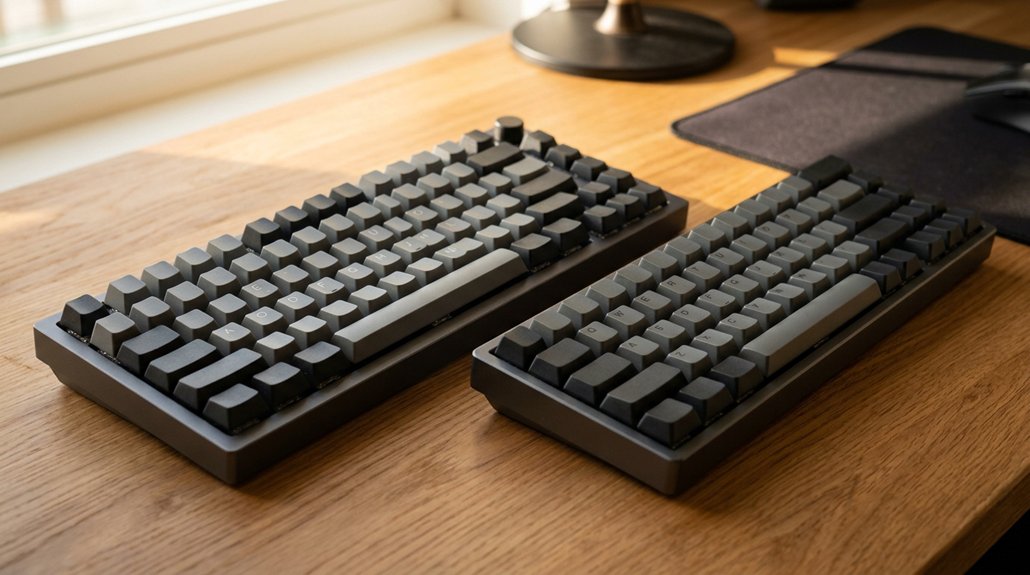
Which keyboard layout offers better ergonomics and comfort? Dvorak’s design prioritizes reducing finger movement by placing about 70% of keystrokes on the home row, compared to QWERTY’s 32%. This minimizes strain and enhances typing comfort. Dvorak also limits bottom-row strokes, which are harder to reach, decreasing effort and discomfort.
It promotes hand alternation and inboard stroke flow, decreasing awkward motions and reducing repetitive strain injuries. While QWERTY requires more stretching across upper and lower rows, increasing fatigue, Dvorak balances workload more evenly, with 56% of keystrokes on the right hand.
Although scientific proof is limited, many users report improved ergonomics and fewer strains, making Dvorak a more comfortable option for long-term typing.
Frequently Asked Questions
Can I Switch Between Dvorak and Qwerty Easily on My Existing Computer?
Yes, you can switch easily on your computer. You just need to change your keyboard layout settings in your operating system, then select Dvorak or QWERTY whenever you want to switch between them effortlessly.
Are Any Programming Languages More Suited to One Layout Over the Other?
Certain programming languages with frequent special character use, like Python or JavaScript, may feel easier on QWERTY due to symbol placement. Yet, switching layouts doesn’t substantially impact coding, so choose based on comfort and convenience for your workflow.
How Do Keyboard Shortcuts Differ Between Dvorak and Qwerty Layouts?
You’ll find keyboard shortcuts differ because they rely on specific keys, and Dvorak shifts key positions. You might need to relearn shortcuts or customize them, but basic commands often remain similar across both layouts.
Is There Any Impact on Mobile Device Typing With These Layouts?
You might notice slight differences when typing on mobile devices with these layouts. Dvorak can feel more efficient, but it may take time to adapt, and some apps may have optimized input options for QWERTY, affecting your experience.
Do Learning Curves Vary Significantly Between Dvorak and Qwerty Users?
Your learning curve varies based on your familiarity, but generally, Dvorak users may require more time initially due to its unfamiliar layout. However, over time, Dvorak can become more efficient than QWERTY for many users.
In Summary
Choosing between Dvorak and QWERTY ultimately depends on your priorities. If you want potentially faster typing and less hand fatigue, Dvorak might be worth trying. However, if you’re comfortable with the traditional layout and value widespread familiarity, QWERTY remains a solid choice. Both layouts have their benefits, so consider your typing habits and ergonomic needs before making a switch. Either way, optimizing your typing comfort can make a big difference.