Good air circulation directly boosts your productivity by keeping indoor air clean and oxygen-rich. It reduces pollutants like CO2, PM2.5, and VOCs that impair focus, cause fatigue, and slow down decision-making. Proper ventilation also prevents headaches and lethargy, helping you stay alert and clear-headed. You’ll perform better when airflow is optimized, which supports your overall well-being at work. To discover practical ways to improve your environment and maximize efficiency, keep exploring how ventilation makes a difference.
Is Poor Air Circulation Secretly Sabotaging Your Productivity?

Have you ever felt sluggish or unfocused while working indoors? Poor indoor air quality might be the hidden culprit behind your decreased productivity. Elevated CO2 levels from poor air circulation can slow your response times and reduce accuracy on tasks needing attention and memory.
Insufficient ventilation allows pollutants like PM2.5 to accumulate, causing short-term issues like impaired working memory and inhibitory control. Offices with low ventilation rates can drastically decrease cognitive performance, even in younger adults. This decline in mental clarity translates directly into slower decision-making and problem-solving.
Additionally, acute exposure to poor airflow can leave you feeling fatigued, with headaches and difficulty concentrating. Improving air circulation through better ventilation and filtration can boost your mental sharpness and overall work performance, leading to real productivity gains. Incorporating air quality monitoring can help you identify and manage these issues proactively.
How Indoor Air Pollutants Impact Your Focus and Decision-Making
Indoor air pollutants directly impair your ability to focus and make sound decisions, often without your realizing it. Elevated indoor levels of fine particulate matter (PM2.5) slow your cognitive speeds and weaken inhibitory control, reducing your mental clarity. High carbon dioxide (CO2) levels from poor ventilation further impair response times and accuracy in tasks that rely on working memory. Acute spikes in pollutants can cause immediate drops in cognitive function, even in younger adults. When these pollutants combine, the negative effects intensify, leading to more errors and diminished decision-making skills. Proper air circulation plays a critical role in mitigating these pollutants and preserving cognitive performance. Visualize your environment with this imagery:
| Air Quality Element | Effect on Focus | Impact on Decision-Making |
|---|---|---|
| PM2.5 | Slower processing | Reduced accuracy |
| CO2 | Delayed responses | Impaired judgment |
| Both together | Greater distraction | Greater mistake rate |
| Normal levels | ideal cognitive functioning | Sharp decision-making |
Why Good Ventilation Supports Your Brain Health
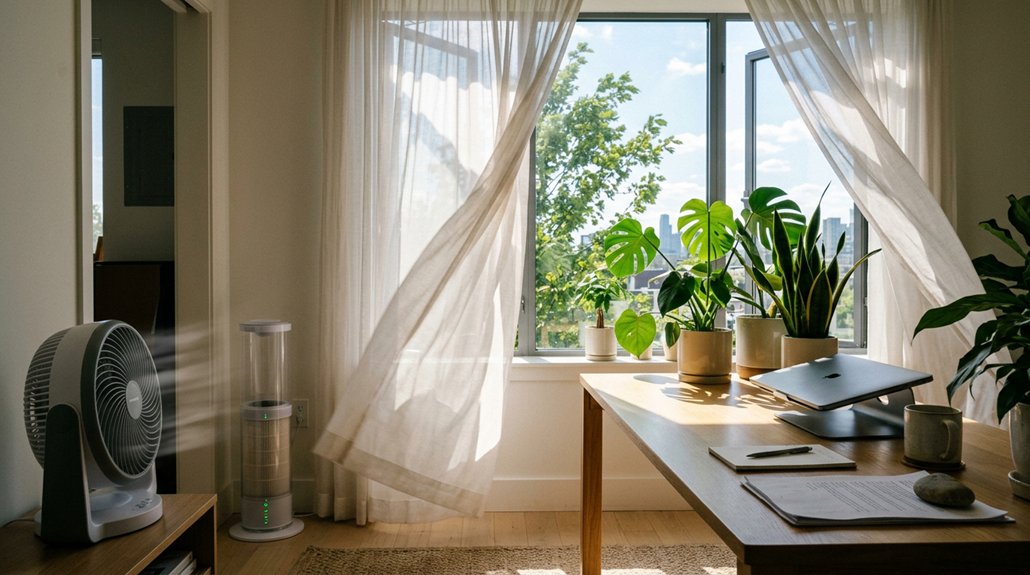
Good ventilation plays a crucial role in supporting your brain health by maintaining ideal air quality. When your indoor air quality is good, carbon dioxide levels stay in check, preventing cognitive impairments like slower response times and decreased accuracy.
Elevated CO2 can cause fatigue, headaches, and impair decision-making, hindering your productivity. Research shows that standard indoor pollutant levels in offices can considerably impact brain function, even for younger adults.
Increasing ventilation rates effectively reduces carbon dioxide and fine particulate matter (PM2.5), which are linked to short-term declines in cognitive speed and working memory. Proper air circulation sustains better mental clarity by reducing pollutant buildup, helping you stay alert, focused, and capable of making sound decisions throughout your workday. Ensuring the use of fire-resistant materials in ventilation systems and acoustic panels also contributes to a safer, healthier environment.
Understanding Indoor Pollutants That Affect Your Concentration
Poor air quality directly impacts your ability to concentrate by introducing pollutants that interfere with cognitive functions. Indoor air quality is affected by pollutants like fine particulate matter (PM2.5), elevated carbon dioxide (CO2), and volatile organic compounds (VOCs).
High CO2 levels from poor ventilation cause fatigue and headaches, making it harder to focus. VOCs emitted by cleaning products, furniture, and carpets can irritate your respiratory system, distracting you and reducing concentration. Even in younger adults, these pollutants slow response times and decrease accuracy on cognitive tasks.
Biological contaminants such as mold and bacteria, thriving in damp environments, can lead to illness and absenteeism. Incorporating airflow capacity and proper ventilation strategies can significantly improve indoor air quality and support mental clarity.
Managing indoor air quality by reducing VOCs and increasing ventilation directly supports your mental clarity and sustained focus throughout the day.
The Science Behind Indoor Air Quality and Brain Function
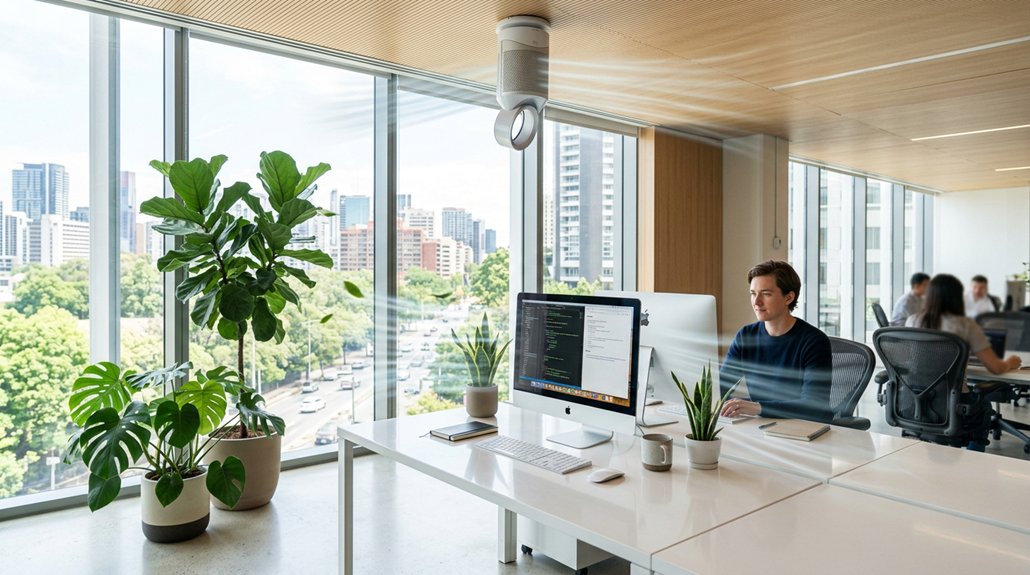
When ventilation is inadequate, pollutants like CO2 and PM2.5 accumulate, directly impairing your brain’s ability to function efficiently. Poor indoor air quality leads to elevated CO2 levels, which slow down cognitive processing speed and decrease accuracy in tasks involving inhibitory control and working memory.
Higher concentrations of fine particulate matter (PM2.5) cause short-term declines in attention and decision-making skills. Studies monitoring office workers show that increases in CO2 and PM2.5 independently and together diminish cognitive performance, affecting response times and task accuracy.
Proper air circulation helps reduce these indoor pollutants, maintaining peak brain function. This, in turn, prevents fatigue, headaches, and decreased concentration, ultimately boosting worker productivity by ensuring your indoor environment supports clear thinking and sharp focus.
How Increasing Airflow Can Reduce Fatigue and Headaches
By increasing airflow, you improve air exchange, which helps remove harmful pollutants like VOCs and excess CO₂ that cause headaches and fatigue. A well-ventilated space also supports the use of air-purifying plants, which enhance indoor air quality further. Better ventilation also boosts oxygen levels, keeping your mind alert and reducing tiredness throughout the day. When airflow improves, you’ll notice fewer headaches and a clearer, more focused work experience.
Improved Air Exchange
Enhancing air exchange in office environments directly improves indoor air quality, which can greatly reduce fatigue and headaches among employees. Better air circulation lowers indoor carbon dioxide (CO2) levels, a factor Harvard studies link to decreased cognitive function, fatigue, and discomfort. Improving airflow also reduces indoor pollutants like VOCs and PM2.5, which contribute to lethargy and malaise. When ventilation effectively replaces stale air with fresh oxygen, cognitive function speeds up, and accuracy during tasks improves. This results in sharper concentration and sustained alertness. Regularly utilizing personal space heaters with safety features and thermostats can further support consistent temperature regulation, enhancing overall air quality and comfort. Research shows offices maintaining ventilation above minimum standards experience fewer reports of headaches and fatigue-related productivity drops. By increasing air exchange, you create a healthier workspace that supports mental clarity, boosts productivity, and minimizes common symptoms of poor indoor air quality.
Reduced Pollutant Buildup
Increasing airflow through proper ventilation actively reduces the buildup of pollutants like CO2 and VOCs, which are directly linked to fatigue and headaches. Effective ventilation systems help keep pollutant concentrations low, preventing their accumulation that leads to discomfort and decreased focus. Additionally, maintaining monitor privacy screens with proper airflow can prevent heat buildup and ensure optimal working conditions. Harvard’s 2021 study shows that improved ventilation rates decrease CO2 levels, enhancing cognitive function and reducing symptoms such as lethargy. Proper air circulation also prevents the buildup of fine particulate matter (PM2.5), known to cause irritation and mild headaches. OSHA standards require adequate ventilation to maintain low pollutant levels, helping minimize fatigue-related declines in productivity. Real-time monitoring confirms that increasing ventilation beyond minimum standards consistently lowers pollutant concentrations, improving comfort and alertness by reducing headache and fatigue triggers.
Enhanced Oxygen Levels
When airflow is improved, indoor oxygen levels rise, directly reducing fatigue and headaches caused by low oxygen intake. Better indoor air quality supports your cognitive function by preventing declines in concentration, decision-making, and response times linked to stagnant air. A well-designed air circulation system can also help disperse indoor pollutants, further enhancing overall workspace health. Increased ventilation rates boost oxygen availability, which studies show markedly decreases symptoms of lethargy and cognitive impairment, leading to higher productivity. Proper air circulation also minimizes the buildup of indoor pollutants that can trigger headaches, helping you stay focused and reducing absenteeism. Facilities with optimized airflow demonstrate clear improvements in employee well-being and performance by maintaining fresh, oxygen-rich air and reducing indoor air contaminant buildup.
Simple Ways to Improve Office Air Circulation
Improving office air circulation starts with optimizing your ventilation systems and ensuring filters are regularly replaced. You can also use portable air purifiers to quickly reduce airborne pollutants, boosting focus and productivity.
Additionally, opening windows and utilizing fans help increase natural airflow and keep fresh air moving throughout your workspace.
Optimize Ventilation Systems
Optimizing your office ventilation system is a straightforward way to enhance air quality and boost productivity. Proper ventilation guarantees fresh air enters the space while removing indoor pollutants, which directly impacts cognitive function.
Increasing ventilation rates above code-minimum levels can markedly reduce indoor CO2 and particulate matter, improving workers’ mental clarity and accuracy. Regular HVAC maintenance and prompt filter replacements keep airflow consistent and pollutants at bay, preventing fatigue and concentration issues.
Installing real-time indoor air quality monitors allows you to adjust airflow dynamically for peak conditions. Additionally, adding portable HEPA filters in work areas complements your existing system by capturing fine particles linked to slower task performance.
Simple improvements in ventilation, like increasing fresh air intake and controlling humidity, create healthier environments that support productivity and mental performance.
Use Air Purifiers Effectively
Using air purifiers effectively can make a noticeable difference in office air quality and productivity. High-efficiency air purifiers like the Coway Airmega ProX, which filter 99.999% of pollutants, are essential for large spaces.
Place air purifiers near pollutant sources and in high-occupancy areas to maximize their benefit, ensuring ideal air circulation and contaminant removal. Regularly maintain and replace filters to keep performance high and continuously improve indoor air quality.
Combining purifiers with proper ventilation helps lower CO2 and VOC levels, which can impair response times and accuracy. Additionally, integrating real-time indoor air quality (IAQ) monitoring allows you to make proactive adjustments, maintaining healthy airflow and creating a safer, more productive office environment.
Incorporate Natural Airflow
Incorporating natural airflow into your office setup can greatly enhance overall air quality and comfort. Opening windows and doors promotes cross-ventilation, reducing indoor CO2 levels and supporting cognitive function. Using ceiling fans or portable fans helps circulate air efficiently, preventing pollutant buildup like PM2.5, which hampers productivity. Designing with operable windows, vents, or louvers encourages fresh air exchange, complementing mechanical systems. Positioning workstations near natural airflow sources can lower pollutant concentrations, boosting concentration and work performance. Keeping pathways unobstructed guarantees effective air movement, creating healthier environments that encourage higher productivity.
| Idea | Implementation |
|---|---|
| Cross-ventilation | Open windows and doors regularly |
| Fans for circulation | Use ceiling or portable fans |
| Workstation placement | Near sources of natural airflow |
Which Ventilation Systems Help Maximize Productivity?
Which ventilation systems are most effective in maximizing productivity? These systems improve indoor air quality by maintaining higher air exchange rates, reducing CO2 and PM2.5 levels. This results in better cognitive speed, working memory, and task accuracy for office workers.
Advanced systems with real-time indoor air quality monitoring dynamically adjust ventilation to keep pollutant thresholds low, supporting cognitive function. Incorporating high-efficiency filtration, like HEPA filters, removes allergens and fine particles, further boosting work performance.
Proper design also combines ventilation with environmental controls for temperature and humidity, creating healthier office conditions. Consider:
- Increased air exchange rates
- Real-time indoor air quality monitoring
- HEPA filtration integration
- Combined environmental controls
These features collectively maximize productivity through optimized indoor air quality and airflow.
Best Practices to Maintain Healthy Indoor Air Quality
Effective ventilation systems play a key role in maintaining healthy indoor air quality, but their benefits depend on proper maintenance and operation. Regular HVAC upkeep, including timely filter changes, improves air exchange and cuts indoor pollutants, supporting better employee performance. Increasing ventilation beyond code minimums can reduce fatigue and boost cognitive function. Using real-time indoor air quality monitoring allows you to adjust the system promptly, preventing pollutant buildup. Combining ventilation with supplemental air purification, like HEPA filters, further removes allergens and particles. Prioritize these practices to sustain peak indoor environments.
| Practice | Benefit |
|---|---|
| Regular HVAC maintenance | Enhances air exchange and reduces pollutants |
| Increasing ventilation | Improves cognitive function and productivity |
| Monitoring indoor air quality | Enables quick system adjustments |
| Employing air purification | Removes allergens and particles |
| Maintaining filters | Guarantees consistent air quality |
Can Air Purifiers and Fans Keep Your Air Fresh and Clear?
Ever wondered if air purifiers and fans can truly keep your indoor air fresh and clear? They can, especially when used together.
Air purifiers with HEPA filters remove up to 99.999% of airborne particles like PM2.5, drastically reducing pollutants that impair cognitive function. Fans enhance air circulation, helping to lower CO2 levels linked to slower responses and reduced accuracy.
Combining these tools maintains healthier indoor environments, as supported by studies showing improved mental performance.
To optimize results:
- Reduce airborne pollutants with air purifiers
- Improve ventilation with fans
- Keep CO2 levels low
- Prevent fatigue and headaches
Together, air purifiers and fans create an environment that fosters focus and productivity, ensuring your indoor air stays fresh and clear.
Natural Ventilation Versus Mechanical Systems : What Works Best?
You need to evaluate how airflow control efficiency differs between natural and mechanical systems, especially in varying weather and outdoor conditions.
Natural ventilation relies on outdoor air quality and can be unpredictable, while mechanical systems offer consistent control over indoor air quality.
Balancing environmental impact factors, such as energy use and sustainability, can help determine which approach works best for maintaining productivity.
Airflow Control Efficiency
Choosing between natural and mechanical ventilation depends on how well each system controls airflow to maintain indoor air quality. Mechanical ventilation offers precise, consistent airflow rates, ensuring pollutant levels stay low and indoor air quality improves, which boosts productivity. Its integration with high-efficiency particulate air (HEPA) filters and monitoring systems enhances pollutant removal beyond natural airflow capabilities.
Natural ventilation’s effectiveness fluctuates with weather, building design, and occupant behavior, often resulting in inadequate air exchange and pollutant buildup.
Key points include:
- Mechanical systems deliver reliable and adjustable airflow.
- They maintain stable indoor air quality, critical for productivity.
- Higher efficiency in removing indoor pollutants compared to natural means.
- Consistent airflow enhances cognitive function and reduces errors.
Choosing mechanical ventilation minimizes indoor pollutant variability, maximizing productivity.
Environmental Impact Factors
When comparing natural ventilation to mechanical systems, it’s essential to take into account how each method impacts indoor air quality and energy use. Natural ventilation provides variable air exchange, reducing indoor pollutant levels but depending on weather and building design. Mechanical ventilation systems offer controlled, consistent airflow, effectively removing indoor CO2 and PM2.5, which research links to better cognitive performance and less fatigue. Higher mechanical ventilation rates enhance response times and accuracy in cognitive tasks, while inadequate ventilation causes CO2 buildup, impairing attention. Combining both strategies optimizes indoor air quality by balancing natural airflow with the consistent performance of mechanical systems.
| Ventilation Type | Pros | Cons |
|---|---|---|
| Natural Ventilation | Reduces pollutant buildup, energy-saving | Inconsistent, weather-dependent |
| Mechanical Systems | Consistent airflow, improves indoor air quality | Higher energy consumption, costs |
| Hybrid Approach | Balanced efficiency and air quality | Complex system integration |
Long-Term Benefits of Proper Air Circulation for Employee Well-Being
Proper air circulation offers significant long-term benefits for employee well-being, extending beyond immediate comfort to support overall health and productivity.
Consistent ventilation reduces indoor levels of CO2 and PM2.5, which can impair cognition, slow responses, and decrease accuracy. Maintaining good air quality over time lowers respiratory illness risks, reduces fatigue, and minimizes sick leave, boosting overall health.
Additionally, it stabilizes temperature and humidity, creating a more comfortable and focused environment.
Prioritizing proper air circulation can lead to:
- Improved employee health and reduced absenteeism
- Enhanced cognitive function and task performance
- Decreased healthcare costs for organizations
- Sustained employee productivity over the long term
Common Mistakes That Hinder Effective Airflow in Offices
You might block air vents with furniture or equipment, which disrupts airflow and leads to stagnant, polluted air in certain areas.
Relying solely on windows for ventilation without proper control can create inconsistent air exchange and draft issues. These mistakes make it harder for your office to maintain a healthy, productive environment.
Blocked Air Vents
Blocked air vents are a common mistake that can greatly hinder airflow in offices. When vents are obstructed, ventilation rates drop, causing indoor CO2 levels to rise.
Elevated CO2 impairs cognitive function, slowing response times and reducing accuracy. Additionally, obstructed vents trap pollutants like PM2.5, leading to short-term declines in cognitive speed and working memory.
Common obstructions—such as furniture, boxes, or equipment—disrupt the distribution of fresh air, worsening air quality and productivity.
To maintain peak airflow, consider these points:
- Keep vents clear of obstructions
- Regularly inspect for blockages
- Avoid placing furniture directly in front of vents
- Guarantee proper ventilation system maintenance
Poor Window Usage
When windows remain closed in busy office environments, indoor CO2 levels quickly rise, leading to slower decision-making and decreased accuracy. Poor window usage, like keeping windows shut in overcrowded spaces, causes poor air quality and impairs worker performance.
Failing to regularly open windows reduces ventilation, allowing pollutants and fine particulate matter (PM2.5) to accumulate indoors. This buildup causes short-term cognitive declines and increases fatigue, even among younger employees.
Common mistakes—such as opening only a few windows or blocking airflow—restrict fresh air circulation, negating the benefits of ventilation. Relying solely on sealed windows without proper ventilation worsens indoor air quality, which has been linked to slower work pace, more errors, and decreased productivity.
Proper window management is essential for maintaining a healthy, efficient indoor environment.
Action Steps to Boost Office Air Circulation and Office Productivity
Enhancing office air circulation is a crucial step toward boosting productivity, as improved air quality directly impacts cognitive function and fatigue levels.
To achieve this, start by increasing ventilation rates to reduce CO2 levels, which enhances focus and accuracy. Guarantee your HVAC system undergoes regular maintenance, including timely filter replacements and cleaning, to maintain peak airflow and minimize pollutants that lead to fatigue.
Adopting coding-minimum or higher ventilation standards also improves air quality, supporting task efficiency. Finally, incorporate real-time indoor air quality monitors and air purification devices like HEPA filters to sustain a healthy environment. Consider these actionable steps:
- Increase ventilation rates
- Regularly maintain HVAC systems
- Implement real-time air quality monitoring
- Use effective air purification technologies
Frequently Asked Questions
What Are the 5 Main Factors That Affect Productivity?
The five main factors affecting productivity are air quality, temperature, humidity, task complexity, and health. You can boost your productivity by maintaining good air circulation, managing environmental conditions, and addressing health and task demands effectively.
What Are the Effects of Air Circulation?
Improving air circulation boosts your productivity by reducing indoor pollutants, which helps clear your mind, speeds up decision-making, and decreases fatigue. Better airflow supports healthier work environments, leading to sharper focus and higher overall efficiency.
Is It Good to Run in Poor Air Quality?
Running in poor air quality isn’t ideal; it exposes your lungs to harmful pollutants, causes respiratory irritation, and can reduce endurance. To stay healthy, choose indoor workouts or run when pollution levels are low.
How Does Air Pollution Impact Productivity?
Air pollution harms your productivity by slowing cognitive responses, decreasing accuracy, and increasing errors. Even below regulatory standards, pollution reduces your ability to focus, especially for complex tasks, leading to presenteeism and higher economic costs in your workload.