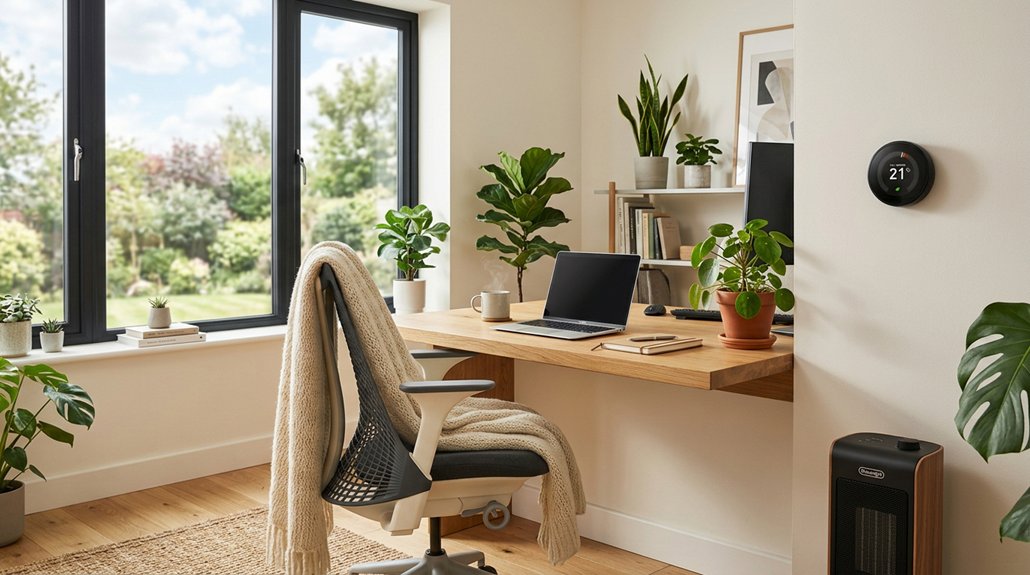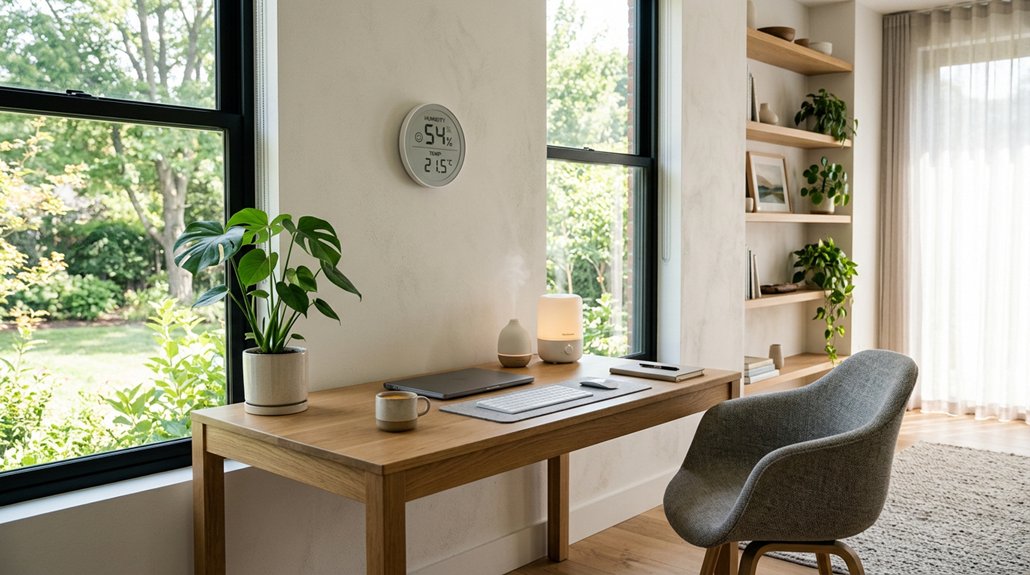
For a comfortable home office, aim to keep indoor humidity between 40% and 60%. This range helps prevent dryness or excess moisture, which can cause discomfort, static shocks, mold, and damage to your equipment. Maintaining proper humidity supports better focus, reduces fatigue, and makes your space more enjoyable. If you want to learn how to effectively control humidity year-round and avoid common mistakes, keep exploring these tips.
What Is the Ideal Indoor Humidity Level for Your Home Office?
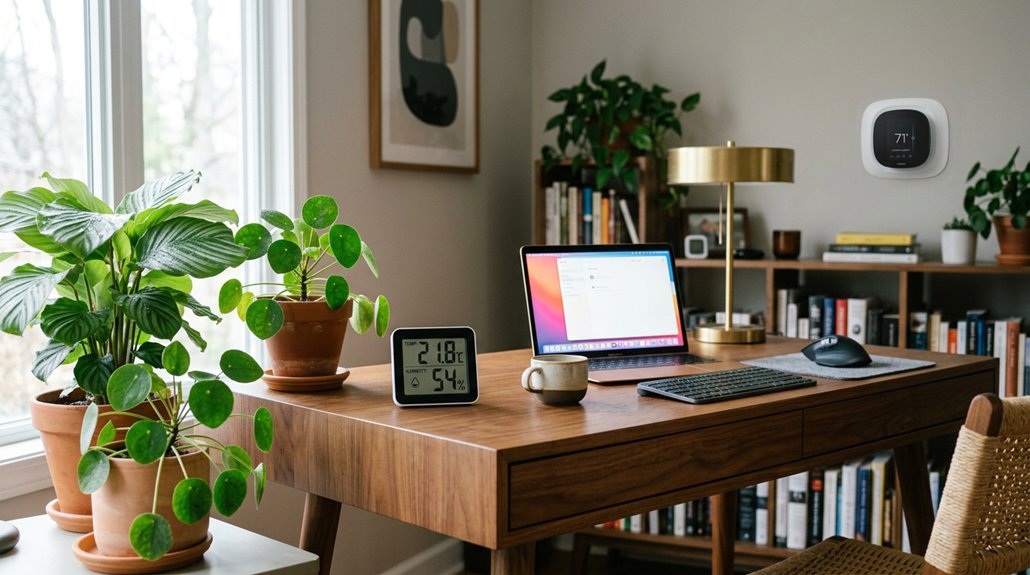
Have you ever wondered what the perfect humidity level is for your home office? The ideal indoor humidity levels fall between 40% and 60% percent relative humidity. Staying within this range helps keep you comfortable and productive. A quiet, easy-to-use humidifier can help maintain consistent humidity levels without disrupting your work environment. When humidity is too low, below 30%, you may experience dryness, static electricity, and respiratory discomfort. Conversely, if it exceeds 60%, mold can grow, and sleep quality may decline. Maintaining the right humidity protects your electronic equipment from static discharge and excessive moisture damage. To achieve this, you can use humidifiers or dehumidifiers and guarantee good ventilation. Keeping your indoor humidity levels within this safe range creates an environment conducive to your well-being and better work performance.
How Does Indoor Humidity Affect Your Comfort and Productivity?
When your home’s humidity is off, it can directly impact your sleep quality and ability to focus during the day. Low humidity may cause dry eyes and throat, making it harder to stay alert, while high humidity can lead to poor sleep and fogged thinking. Maintaining balanced indoor moisture helps keep your mind sharp and your body comfortable. Ensuring optimal humidity levels also supports the effective operation of air filtration systems, which rely on proper humidity to maximize their efficiency.
Impact on Sleep Quality
Indoor humidity levels directly influence your sleep quality, shaping how rested and alert you feel during your workday. When relative humidity levels stay within 40-60%, your body experiences fewer disruptions during sleep, leading to more restorative NREM and REM phases.
Conversely, too dry (<30%) or too humid (>60%) indoor air can increase stress responses, making it harder to fall asleep and stay asleep. Low humidity encourages respiratory discomfort and eye irritation, causing physical discomfort that interrupts rest. Excess moisture fosters mold growth and musty odors, worsening allergies and respiratory issues. Incorporating proper humidity control measures helps maintain optimal indoor conditions.
Maintaining proper humidity control in your home office supports better sleep by reducing physical discomfort and promoting a more restful, uninterrupted sleep cycle—essential for your daily productivity and overall well-being.
Effect on Cognitive Function
Maintaining ideal indoor humidity levels between 40% and 60% directly supports your cognitive performance by minimizing physical discomfort and reducing stress. When the relative moisture in your home office stays within this range, you’re less likely to experience dehydration, which can cause fatigue and decrease your concentration. Proper moisture levels also prevent mucous membrane irritation, helping you stay alert and focused. Incorporating flicker-free technology in lighting can further reduce eye strain, enhancing overall comfort during long work sessions.
Conversely, low humidity below 30% increases fatigue and hampers cognitive function, while high humidity above 60% can disturb sleep, indirectly affecting daytime productivity. Balanced moisture levels prevent respiratory issues and eye irritation, promoting sustained comfort. Controlling indoor humidity manages airborne pollutants and static electricity, creating a safer workspace that enhances your brain’s ability to function at its best.
Signs Your Home Office Has Too Little or Too Much Humidity
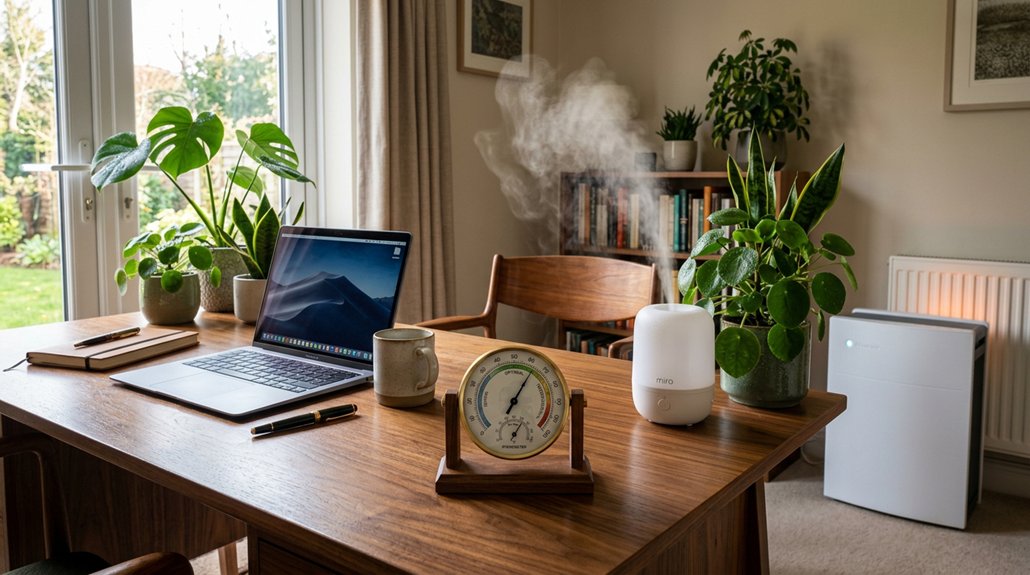
If your home office feels uncomfortably dry or damp, it’s a sign your humidity levels may be off. You might notice dry skin, static shocks, or warped furniture with too little moisture, or mold spots, musty odors, and condensation if there’s too much. Ensuring proper ventilation and airflow can help maintain soundproofing curtains’ effectiveness, as they often work better in balanced environments. Recognizing these signs early can help you maintain a healthy, productive workspace.
Recognizing Dry Air Symptoms
Recognizing whether your home office has too little or too much humidity is essential for your comfort and health. Dry air often leads to dry skin, irritated eyes, sore throats, and increased respiratory issues like coughing and chest congestion. You might notice static shocks and cracking or warping furniture. Conversely, high humidity causes condensation, mold, musty odors, and worsened allergy or asthma symptoms. Use this table to identify signs:
| Symptoms of Dry Air | Symptoms of Excess Moisture |
|---|---|
| Dry, itchy skin | Mold spots on walls or ceiling |
| Static shocks | Musty smell |
| Cracked wooden furniture | Condensation on windows |
| Sore throat, irritated eyes | Persistent dampness |
| Humidity levels can impact your overall comfort and indoor air quality, so keeping them balanced is crucial.
Identifying Excess Moisture Signs
How can you tell if your home office has too much moisture? High humidity causes several clear signs. You might notice damp corners, mold growth, and persistent musty odors, all indicating excessive moisture content.
Condensation on windows and walls suggests that humidity levels exceed 60%, disrupting comfort and risking property damage. Mold can also trigger allergies and worsen asthma symptoms.
On the other hand, if you experience frequent static shocks, cracked furniture, or warped wood, your air may be too dry, but signs like mold and musty smells point to excess moisture. Maintaining proper humidity levels can help prevent damage from both over- and under-moisturizing your space, especially with anti-glare screen protectors that reduce eye strain. Monitoring your environment and noting these signs helps you maintain the ideal humidity range, preventing health issues, property damage, and discomfort. Managing moisture levels optimizes your home office’s comfort and safety.
Simple Tips for Maintaining Humidity in Your Home Office Year-Round
Maintaining proper humidity levels in your home office throughout the year is essential for comfort and health. To achieve this, monitor your humidity with a hygrometer regularly.
In winter, use a humidifier to add moisture, aiming for 30-40% RH when outdoor temperatures are very low to prevent condensation problems. During humid summer months, deploy a dehumidifier in damp or basement areas to keep humidity below 60%, reducing mold and dust mites.
Ventilate your space daily with exhaust fans or open windows to balance moisture levels and minimize stale air. Proper insulation and sealing help prevent moisture intrusion.
Adjust your humidifying or dehumidifying devices as needed, and guarantee good airflow to maintain the proper humidity range consistently, creating a more comfortable and healthier home office environment. Incorporating non-slip surfaces can also enhance safety by preventing slips or falls on potentially wet floors.
How to Use Humidifiers and Dehumidifiers Safely and Effectively
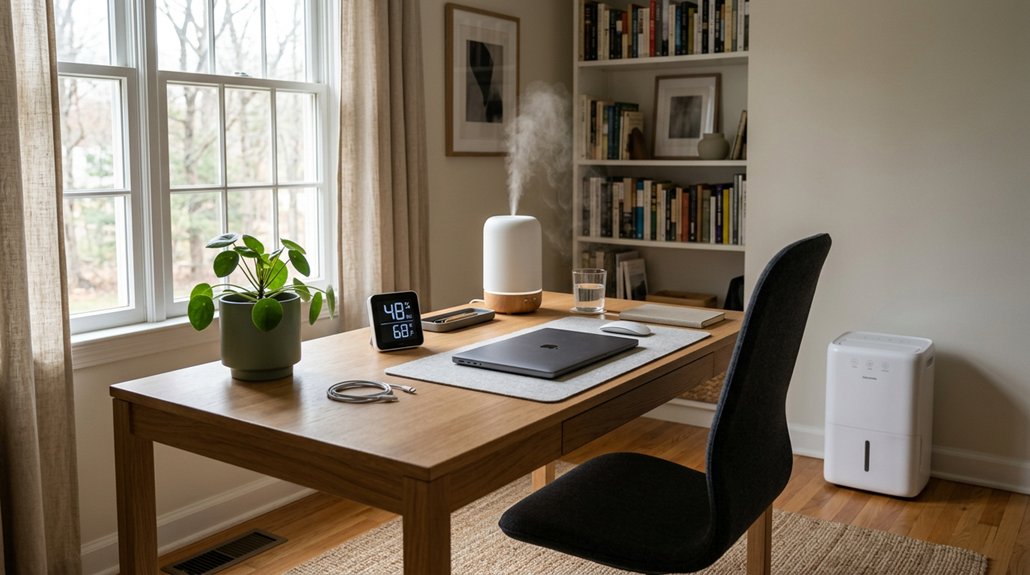
Using humidifiers and dehumidifiers effectively requires careful attention to their operation and maintenance to guarantee your home office stays comfortable and safe. To do this, keep indoor relative humidity between 40% and 60%.
Maintain indoor humidity between 40% and 60% for a comfortable, safe home office environment.
Use humidifiers cautiously in winter, running them briefly to avoid surpassing 30-40% RH, which can cause condensation and mold growth.
During summer, dehumidifiers—especially ENERGY STAR® rated with an EF ≥ 2.0—help reduce excess moisture and prevent basement dampness by maintaining around 50% RH.
Regularly clean and maintain your humidifiers and dehumidifiers to prevent bacteria and mold buildup, ensuring safe, efficient operation.
Finally, monitor humidity levels with a reliable hygrometer and adjust settings as needed to avoid excessive dryness or moisture.
How Ventilation and Air Circulation Help Control Indoor Humidity
Proper ventilation and air circulation are essential for keeping indoor humidity levels in the ideal 40-60% range. Using exhaust fans and opening windows helps release excess moisture, preventing it from building up. Good air circulation distributes humidity evenly across your home office, reducing condensation and mold growth. Whole-house ventilation systems provide a steady exchange of fresh air, balancing humidity and reducing allergens. Sealing leaks around windows, doors, and pipes limits moisture intrusion, while regular HVAC maintenance guarantees proper airflow. Together, these strategies keep your environment comfortable and healthy.
| Ventilation Method | Humidity Control Benefits |
|---|---|
| Exhaust Fans | Remove excess moisture |
| Opening Windows | Increase airflow, lower humidity |
| Whole-House Systems | Balance humidity, improve air quality |
| Sealing Leaks | Prevent moisture intrusion |
| HVAC Maintenance | Enhance airflow, prevent stagnation |
Insulation and Sealing Strategies to Prevent Moisture Problems
To prevent moisture issues in your home office, focus on proper insulation installation techniques that raise surface temperatures and reduce condensation.
Sealing air leaks around windows, doors, and pipes stops unwanted moisture from entering, helping to maintain stable humidity levels. Incorporate mechanical ventilation to guarantee good airflow without losing the benefits of tight sealing, keeping your space both comfortable and dry.
Proper Insulation Installation Techniques
Effective insulation installation is essential to prevent moisture problems in your home office. Properly installed insulation helps raise the surface temperatures on walls and ceilings, reducing condensation and mold growth caused by excess moisture. Seal leaks around windows, doors, pipes, and openings to stop moisture intrusion and unwanted air leaks that can throw off humidity levels. Incorporating vapor barriers with your insulation further blocks external moisture from penetrating interior spaces, protecting your walls and overall structure. Use the following strategies:
| Technique | Benefit | Key Focus |
|---|---|---|
| Proper insulation placement | Enhances surface temperature, prevents condensation | Guarantees insulation helps moisture control |
| Seal gaps and leaks | Prevents moisture from air infiltration | Maintains consistent humidity levels |
| Vapor barriers | Blocks external moisture entry | Protects against dampness and mold |
| Regular inspection | Ensures long-term moisture control | Maintains effective insulation |
| Combining insulation & sealing | Optimal moisture management | Keeps your space comfortable and dry |
Sealing Air Leaks Effectively
Sealing air leaks around windows, doors, pipes, and other openings is a crucial step in preventing moisture intrusion that can raise indoor humidity and cause condensation issues. Proper air sealing keeps unwanted moisture out, reducing the risk of mold growth and wall damage.
When you eliminate unintended air leaks, you also prevent excess ventilation that can make indoor air too dry in winter or too humid in summer. This helps maintain balanced humidity levels in your home office.
To achieve effective sealing, inspect all openings regularly, use weatherstripping, caulk, or sealant where needed, and guarantee all gaps are airtight. Remember, sealing alone isn’t enough; mechanical ventilation systems should be in place to bring in fresh air without compromising your humidity control or energy efficiency.
Ventilation for Moisture Control
Proper ventilation works alongside air sealing and insulation to keep moisture levels balanced in your home office. A good ventilation system guarantees fresh air exchange, removing excess moisture to the air that could cause mold or dampness. Sealing leaks around windows, doors, and pipes prevents outside moisture from intruding, helping maintain consistent indoor humidity.
Mechanical ventilation compensates for reduced natural airflow caused by insulation, effectively controlling humidity levels. Whole-house or office ventilation systems also eliminate odors and pollutants, enhancing indoor air quality.
Regular HVAC maintenance and installing proper vapor barriers further support moisture management by controlling airflow and dampness. By integrating these strategies, you prevent condensation buildup and maintain a comfortable, dry environment for your workspace.
Seasonal Humidity Control Tips for Winter and Summer
Adjusting your home office humidity levels according to the season helps prevent common issues like dryness, mold, and condensation. In winter, aim for an ideal humidity of 30-40%, balancing humidifier use to avoid excess moisture that causes condensation. During summer, keep RH below 60% to prevent mold and musty odors, especially with air conditioning. Using dehumidifiers in damp areas like basements can help maintain around 50% RH, ensuring a healthier indoor environment. Proper ventilation and fixing leaks are essential year-round to balance moisture levels.
| Season | Tips |
|---|---|
| Winter | Use humidifiers, keep RH at 30-40%, avoid condensation. |
| Summer | Use dehumidifiers, keep RH under 60%, improve ventilation. |
| Year-round | Fix leaks, maintain good airflow to balance moisture levels. |
| All | Adjust devices seasonally to sustain an ideal indoor environment. |
Common Mistakes That Disrupt Humidity Balance at Home
Many common mistakes can throw off your home’s humidity balance, making it harder to maintain a healthy and comfortable environment. For example, using whole-home humidifiers without monitoring can push Levels above 60% RH, encouraging mold growth and condensation on windows and walls.
Poor ventilation in kitchens and bathrooms traps excess moisture, raising indoor humidity and causing musty odors. Ignoring leaks around doors, windows, or pipes allows outdoor moisture to enter, disrupting the ideal humidity range.
Relying solely on central HVAC systems without supplemental devices can lead to air that’s either too dry (below 30% RH) or too humid (above 60% RH). Additionally, overwatering houseplants or placing water containers near heat sources can unintentionally increase Levels beyond the best 40-60% range, destabilizing your home’s comfort.
How Proper Humidity Supports Equipment Longevity and Prevents Damage
Maintaining the right humidity levels in your home office directly impacts the longevity and functionality of your equipment. When you keep indoor relative humidity between 40% and 60%, you support thermal comfort while preventing dry air.
Proper humidity reduces static electricity, which can cause electrostatic discharge damage to sensitive electronics. It also minimizes dust buildup, lowering the risk of overheating and short circuits.
Without adequate moisture, materials like plastic and wood become brittle, increasing chances of cracks or mechanical failures. Controlling humidity also prevents corrosion and moisture accumulation inside devices, protecting data and extending hardware lifespan.
Next Steps for a Comfortable, Healthy Home Office Environment
Creating a comfortable and healthy home office environment requires proactive steps to manage humidity levels effectively. Make sure you regularly monitor the amount of moisture in your indoor air, aiming for 40% to 60% relative humidity.
During dry winter months, use humidifiers to add moisture and prevent issues like sore throats, dry skin, and static shocks. In warmer seasons, employ dehumidifiers or increase ventilation to keep humidity below 60%, reducing mold growth and musty odors.
Adjust your HVAC settings and humidity devices as needed to maintain a balanced environment that supports both your comfort and equipment safety. Additionally, take micro-breaks, stay hydrated, and guarantee good airflow, all of which help alleviate discomfort caused by humidity fluctuations and enhance your focus and productivity.
Frequently Asked Questions
What Is a Comfortable Humidity Level for an Office?
A comfortable humidity level for your home office is between 40% and 60% RH. You’ll notice better comfort, fewer respiratory issues, less static, and less dust, helping you stay productive and healthy in your workspace.
Is 70 Percent Indoor Humidity Too High?
Yes, 70 percent humidity is too high for your home office. It can cause discomfort, promote mold growth, and damage equipment. Keep humidity below 60 percent to maintain a healthier, more comfortable environment and prevent potential health issues.
What Humidity Level Is Bad for COPD?
For COPD, humidity below 30% dries out your mucous membranes, worsening symptoms, while above 60%, it fosters mold and dust mites, triggering allergies and respiratory distress. Keep your home between 40-60% for relief.
Is 40% Humidity Too Low in a House?
A 40% humidity level isn’t too low; it’s actually within the comfortable range. You can generally feel safe and comfortable at this level, which helps prevent dryness and static, but stay mindful of personal comfort and adjust if needed.