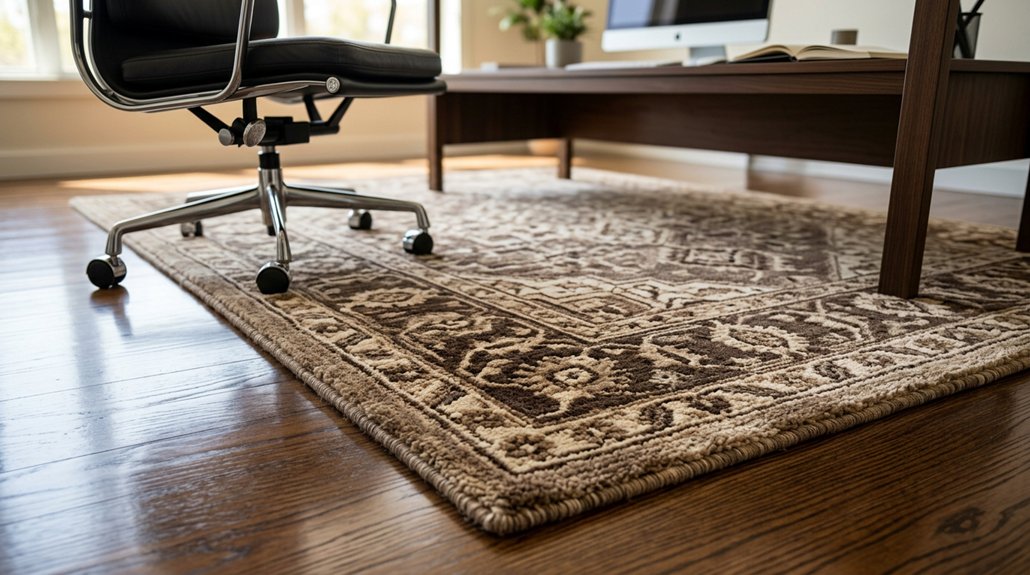
To reduce workplace noise, choose dense, plush carpets made from materials like wool or nylon, which absorb sound and minimize echoes. Opt for high-pile styles with thick, dense fibers and add quality underlays, such as foam or felt, to boost soundproofing. Layering rugs or using carpet tiles in high-traffic areas also helps dampen impact noise. Keep these tips in mind, and you’ll discover even more effective ways to create a quieter office environment.
Understanding How Carpets Reduce Office Noise
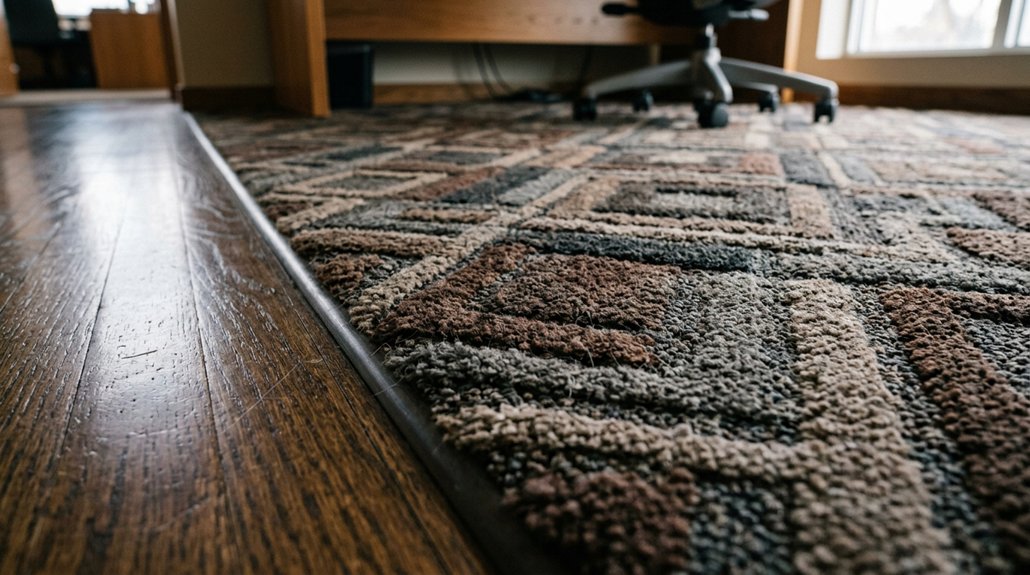
Carpets help reduce office noise by actively absorbing sound waves, preventing them from bouncing around the room. When you choose a carpet with a thick pile and dense fibers, like wool or nylon, you enhance sound absorption, which cuts down on echo and reflections. Adding a high-quality underlay made of rubber, foam, or felt can boost noise reduction by up to 70%. Incorporating floor protection features such as slip resistance and cushioning layers further contribute to a quieter, more comfortable workspace.
What Carpet Materials Are Best for Soundproofing?
Have you ever wondered which carpet materials provide the best soundproofing benefits for your office? Wool carpets with dense, soft fibers can cut down sound transmission by up to 46%, making them highly effective. Cut-pile carpets like plush or Saxony absorb more noise than looped styles due to their plush, thick texture. High-density synthetic fibers such as nylon or polypropylene also offer durable sound absorption, ideal for busy environments. Combining carpets with acoustic-backed underlays—rubber, foam, or felt—further reduces impact noise and airborne sounds. Multi-layer carpets, featuring thick piles and quality backing, deliver the best soundproofing performance. Additionally, choosing dense, thick fabrics for carpets enhances their ability to trap sound vibrations.
How Do Pile Height and Density Affect Noise Reduction?
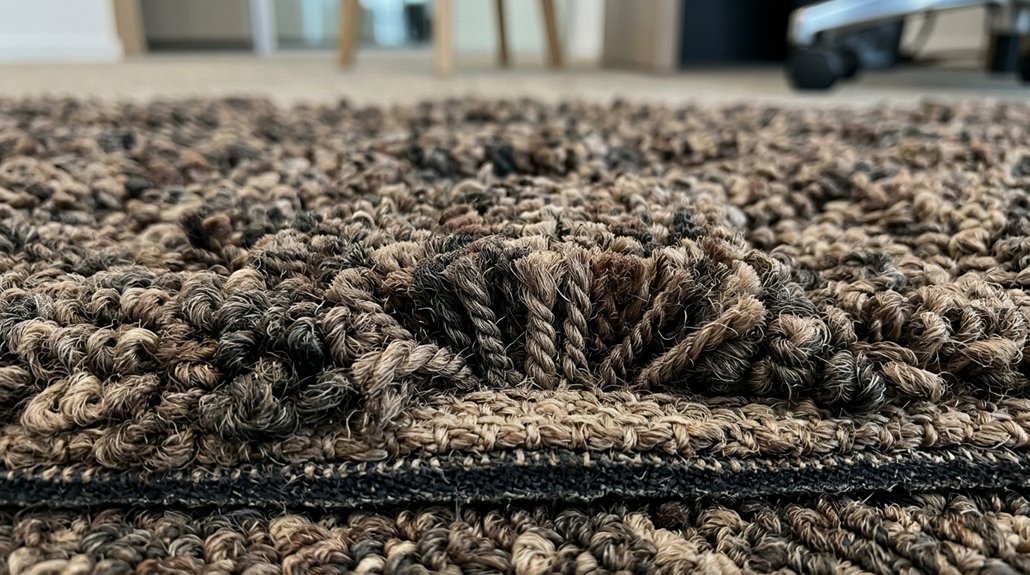
You’ll find that increasing pile height creates more air pockets, helping to absorb and reduce noise better.
Denser carpets with tightly packed fibers block sound waves more effectively, cutting down echoes in your workspace.
Combining higher piles with thick underlays can boost noise reduction even further, making your environment much quieter.
Pile Height and Noise Absorption
The height and density of carpet pile play a crucial role in how effectively they absorb sound in a workspace. Higher pile height creates more air pockets, enhancing noise absorption and reducing impact noise. Dense, plush piles trap airborne and impact sounds better than low-pile options. Carpets with a pile height of at least ½ inch and tight weaving optimize soundproofing by minimizing sound reflection and echo. Increasing pile density also broadens the range of noise frequencies you can reduce, improving overall noise reduction. Multi-layered piles or rugs with thick pile backed by quality underlays can cut noise transmission by up to 40%. For optimal performance, choosing fire-resistant carpets crafted from sustainable, recycled materials can further ensure a safe and eco-friendly environment.
Density and Sound Blocking
Higher pile height and increased fiber density greatly boost a carpet’s ability to block and absorb noise in the workplace. Dense fibers create more air pockets that serve as natural sound absorbers, enhancing sound blocking and reducing reverberation. Additionally, the material composition of carpets influences their soundproofing qualities, with thicker, plush fibers providing superior noise reduction. Thick materials like dense wool or synthetic pile rugs with plush, cut-pile styles can cut noise transmission by up to 46%. Combining these fibers with a quality pad further improves sound absorption by dampening vibrations and minimizing sound reflection from hard floors. Multi-layered carpets with tight weaving and a minimum pile height of ½ inch markedly diminish echoes and background noise, helping speech clarity. Fundamentally, higher density and thicker construction work together to optimize noise reduction, making your work environment quieter and more conducive to focus.
How Can Underlays Boost Your Office Carpet’s Soundproofing?
Using a high-quality underlay beneath your office carpet can greatly boost soundproofing by reducing impact noise and vibrations. It also enhances sound absorption, making the workspace quieter and more comfortable. With the right underlay, you’ll create a more acoustically durable environment that minimizes noise disruptions. Choosing an anti-fatigue mat with a non-slip bottom and durable, moisture-resistant materials can further complement your efforts to create a quieter, more comfortable office space flooring materials and textures.
Impact Noise Reduction
Impact noise from footsteps, chair movements, and dropped objects can disrupt work focus and reduce comfort in office environments. To improve impact noise reduction, consider using a high-density underlay made from rubber, foam, or felt beneath your office carpet. These soundproof underlays absorb impact noise and prevent it from transmitting through the floor, greatly reducing disturbances caused by footsteps or furniture movement. A number of underlays incorporate anti-slip features to enhance stability and safety on various floor types. A layer at least half an inch thick can decrease impact noise transmission by up to 70%, creating a quieter, more comfortable space. Dense rubber underlays, combined with plush office carpets, offer excellent noise dampening and cushioning, minimizing vibrations and noise caused by everyday office activities. Layering underlays with additional rugs in high-traffic zones further amplifies soundproofing benefits.
Enhanced Sound Absorption
Adding high-quality underlays made of dense materials like rubber, foam, or felt can greatly boost your office carpet’s soundproofing by absorbing impact noise and airborne sound waves beneath the surface. An acoustic underlay enhances sound absorption, helping to minimize noise transmission across shared workspaces. Using noise levels-reducing materials further improves overall quietness in the office environment. Installing at least half an inch of these underlays can improve noise reduction performance by up to 70%, effectively dampening footstep and chair movement sounds. These underlays act as a cushioning buffer, dissipating vibrations and preventing them from traveling through the subfloor. When combined with soundproof carpets, they create a synergistic effect that cuts down echo and ambient noise, fostering a quieter, more focused office environment. Plus, soundproofing layers boost the durability and comfort of your office carpet.
Improved Acoustic Durability
High-density underlays made from materials like rubber, foam, or felt not only enhance sound absorption but also greatly improve your office carpet’s durability and overall acoustic performance. By adding a minimum half-inch thick sound-absorbing underlay beneath your thick carpet, you can cut noise transmission by up to 70%, making your soundproof floor much more effective.
These quality underlays act as cushioning layers that prevent sound vibrations from traveling through floors, minimizing distracting footstep and chair noises. Combining dense, plush office carpets with sound-absorbing rugs and underlays maximizes noise control, dampening impact noise and reducing echoes.
Additionally, durable underlays extend your carpet’s lifespan by supporting wear from regular traffic, maintaining better acoustic performance and creating a quieter, more focused work environment. Proper installation with soundproofing materials ensures optimal effectiveness and long-lasting noise reduction.
Which Types of Carpets Are Ideal for Quiet Work Environments?
Are you looking for carpets that effectively dampen noise in your workspace? Dense plush pile carpets, like wool carpets or thick synthetic rugs, excel at sound absorption and impact noise reduction.
If you prefer a softer feel, cut-pile carpets such as plush, Saxony, or frieze styles are ideal, as they absorb more noise than looped carpets. For maximum noise control, pair these carpets with high-quality underlays made of rubber, foam, or felt—these can cut noise transmission by up to 70%.
Multi-layer carpets with dense piles and sturdy backings are especially good at blocking both high- and low-frequency sounds. Additionally, choosing eco-friendly materials and low-VOC adhesives enhances indoor air quality while maintaining acoustic benefits.
How Do You Cover Your Office Floor for Maximum Soundproofing?
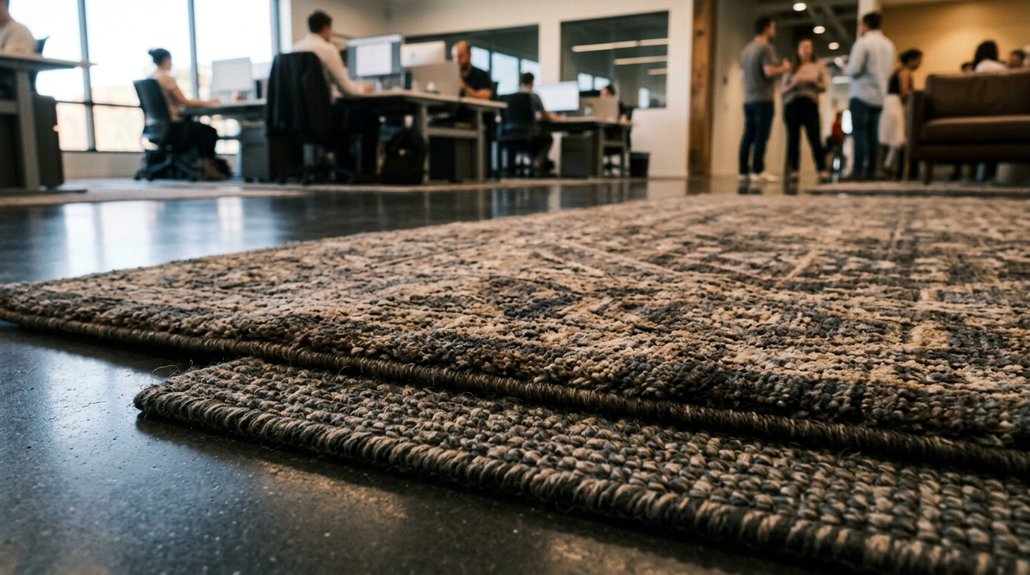
To achieve maximum soundproofing in your office, focus on how you cover the entire floor effectively. Use a thick, dense natural wall-to-wall carpet to absorb airborne and impact noise. Wool rugs and sound absorbing rugs complement this by reducing footstep impact and echoing sounds.
Underneath, install a high-quality rug pad, such as rubber or felt, at least half an inch thick, to enhance noise reduction by up to 70%. Make certain edges are properly sealed with tack strips, padding, and baseboards to prevent sound leaks.
For high-traffic areas, layer additional rugs or carpet tiles to further diminish impact noise. Before installation, fix any unevenness in the subfloor to prevent creaks and vibrations, making your office as quiet as possible.
Can Layering Rugs and Carpets Improve Acoustic Performance?
Ever wonder how layering rugs and carpets can boost your office’s soundproofing? Layering rugs creates multiple sound-absorbing layers that trap airborne noise and impact vibrations, greatly improving acoustic performance.
Combining a dense, thick carpet with softer, high-pile rugs on top increases material density and surface texture, reducing echoes and footstep noise. Using soundproof floor mats made of felt or rubber beneath layers further enhances sound absorption and vibration isolation.
Multi-layered floor coverings can cut noise transmission by up to 40%, especially in spaces with hard flooring or high foot traffic. This flexible approach to soundproofing allows you to tailor noise management to your room’s needs, while also adding aesthetic appeal and comfort—ideal for offices, studios, and open workspaces.
What Additional Acoustic Solutions Enhance Carpet Effectiveness?
Enhancing your carpet’s soundproofing capabilities often requires combining it with other acoustic solutions. Installing acoustic panels or sound-absorbing wall art effectively reduces echo and airborne noise, amplifying overall noise reduction.
Layering area rugs or runners over existing carpet adds extra cushioning and dampens footstep and impact noise. Combining these with soundproof floor mats under rugs creates a layered defense, blocking subfloor vibrations and improving multi-floor noise impact reduction.
Soft furnishings like heavy curtains and upholstered furniture complement carpet’s sound absorption by reducing reflections and ambient noise. A holistic acoustic approach—addressing floors, walls, and ceilings—ensures balanced soundproofing, helping you create a quieter, more comfortable work environment beyond carpet alone.
How to Maintain Your Office Carpet’s Soundproofing Qualities Over Time
Maintaining your office carpet’s soundproofing qualities over time requires routine care and attentive upkeep. Regular vacuuming prevents dirt and dust buildup that can clog fibers and reduce the carpet helps in maintaining its sound absorption.
Routine care and regular vacuuming are essential for preserving your office carpet’s soundproofing qualities over time.
Promptly cleaning spills and stains preserves the density of the fibers and backing, ensuring their noise-blocking capabilities stay effective. Rotating rugs and carpets periodically helps distribute wear evenly, sustaining their acoustic performance across the space.
Using proper carpet cleaners designed for dense and plush materials avoids fiber damage that could compromise soundproofing. Additionally, inspecting and replacing worn-out underlays is essential, as they play a crucial role in impact noise reduction.
Consistent maintenance preserves your carpet’s ability to block both impact and airborne noise effectively over time.
Common Mistakes to Avoid When Soundproofing With Carpets
You need to choose carpets thick enough to absorb sound effectively; thin or low-density options won’t cut it.
Don’t forget about proper installation—missing out on quality underlays or leaving gaps allows noise to escape.
Also, avoid neglecting maintenance and placement, as these factors greatly impact your carpet’s acoustic performance over time.
Ignoring Carpet Thickness Limits
Ignoring the importance of carpet thickness can greatly undermine your efforts to diminish workplace noise. Thicker and denser carpets act as better soundproofing, blocking both impact noise and airborne sounds.
Low-density or thin carpets simply won’t absorb enough sound, leading to persistent echo and distractions. The carpet acts alone aren’t enough—you need a high-quality underlay to maximize noise reduction, as it can enhance soundproofing by up to 70%.
Skipping full-floor coverage or neglecting edge sealing creates sound leaks, decreasing efficiency. Opting for plush, dense piles improves impact noise control considerably more than looped or thin carpets.
Ultimately, understanding carpet thickness limits and choosing thicker, dense carpets with proper underlay guarantees you effectively minimize noise transfer, creating a quieter work environment.
Overlooking Maintenance Needs
While selecting the right carpet and underlay sets the foundation for noise reduction, neglecting ongoing maintenance can quickly undermine those efforts. Regular vacuuming prevents fibers from becoming compacted, keeping sound absorption effective. Promptly cleaning spills avoids stains and odors that weaken carpet backing and padding, reducing noise control. Low-quality or worn-out underlays diminish impact noise and airborne sound blocking. Overlooking wall-to-wall coverage or gaps at edges causes sound leaks, limiting soundproofing. Additionally, ignoring durability leads to premature wear, decreasing long-term noise reduction.
| Maintenance Tip | Impact on Soundproofing |
|---|---|
| Routine vacuuming | Preserves fiber sound absorption |
| Spill cleaning | Maintains backing integrity |
| Replace underlays | Guarantees impact noise blocking |
| Seal gaps | Prevents sound leaks |
| Monitor wear | Extends noise control lifespan |
Neglecting Proper Placement
Proper placement is essential for maximizing the noise reduction benefits of carpets, but many overlook critical areas where sound can escape or bypass the carpet layer. Neglecting proper placement means leaving hard floors uncovered, which allows impact noise to carry, reducing overall sound control.
Here are some common mistakes:
- Failing to cover entire floor areas, especially over hard floors where impact noise is high.
- Only placing rugs in low-traffic zones, ignoring impact noise hotspots like walkways or beneath desks.
- Using thin, low-density carpets without sound-absorbing underlays, which compromises soundproofing.
- Overlooking sealing carpet edges and gaps, enabling airborne and impact noise to escape.
Choosing the right rug options and strategically layering carpets can help soundproof a room effectively, especially in high-traffic areas.
What Are Cost-Effective Strategies for Installing Sound-Reducing Carpets?
Are you looking for budget-friendly ways to install sound-reducing carpets? You can maximize noise control with dense, plush carpets made of wool or synthetic fibers combined with quality underlays like rubber or felt, reducing impact noise up to 70%. Installing wall-to-wall carpeting across the entire floor, sealing edges with tack strips and baseboards, prevents sound leaks. For targeted areas like home office spaces, opt for carpet tiles, which offer modular noise control and easier maintenance. Layering area rugs or runners over existing carpets in busy zones boosts sound absorption without costly upgrades. Additionally, preparing your subfloor by repairing and leveling guarantees peak carpet installation and soundproofing performance.
| Strategy | Details | Benefits |
|---|---|---|
| Use Soundproofing | Pick dense plush carpets and quality underlays | Maximize impact noise reduction |
| Modular Noise Control | Install carpet tiles in key areas | Flexibility and easy maintenance |
| Seal Edges | Use tack strips and baseboards | Prevent sound leaks |
| Layer Area Rugs | Place rugs over carpets in high traffic zones | Boosts sound absorption |
| Prepare Subfloor | Repair and level before installation | Guarantees effective soundproofing |
Is Carpet the Right Solution for Your Office’s Noise Problem?
Weighing options to reduce workplace noise? Carpet reduces both impact noise and airborne noise with its excellent sound absorption qualities.
A dense pile and quality backing enhance its ability to muffle footsteps and ambient sounds. Thick, plush carpets made from wool or nylon combined with high-density underlays, like rubber or felt, can reduce noise transmission by up to 70%, making your office quieter and more focused.
Here are some key points to keep in mind:
- Dense pile carpets increase sound absorption.
- High-density underlays improve noise reduction.
- Wall-to-wall installation minimizes echo.
- Carpet alone isn’t enough—think about walls and ceilings too.
Frequently Asked Questions
What Type of Carpet Is Best for Noise Reduction?
You should choose dense, thick, cut-pile carpets made from wool or nylon for peak noise reduction. Pair them with high-quality sound-absorbing underlays and guarantee full coverage for maximum impact noise and airborne sound insulation.
What Is the Best Rug to Dampen Noise?
You should choose a thick, dense wool rug with at least ½ inch pile and a sturdy backing, like latex or felt. Adding a dense rug pad underneath enhances noise dampening, creating a quieter, more acoustically comfortable workspace ambiance.
What Carpet Reduces Noise?
You should choose dense, plush carpets made from wool or nylon, especially with sound-absorbing underlays like rubber or foam. These options effectively reduce airborne and impact noise, creating a quieter, more focused work environment.
What Type of Flooring Is Best for Noise Reduction?
You should choose thick, dense carpets made of wool, nylon, or synthetic fibers with plush pile, especially combined with high-density underlays like rubber or foam, to effectively reduce workplace noise by absorbing sound and minimizing echo.