To prevent muscle loss at your desk, incorporate movement every 45-60 minutes, like stretching or quick walks. Do desk exercises such as air squats, lunges, or push-ups to strengthen key muscles. Set up your workspace ergonomically to support good posture and reduce strain. Focus on consuming enough protein and staying hydrated to aid muscle repair. Building a routine of consistent activity and proper nutrition helps maintain your muscles long-term—keep exploring for more tips.
Why Sitting Too Long Causes Muscle Loss: And How to Prevent It
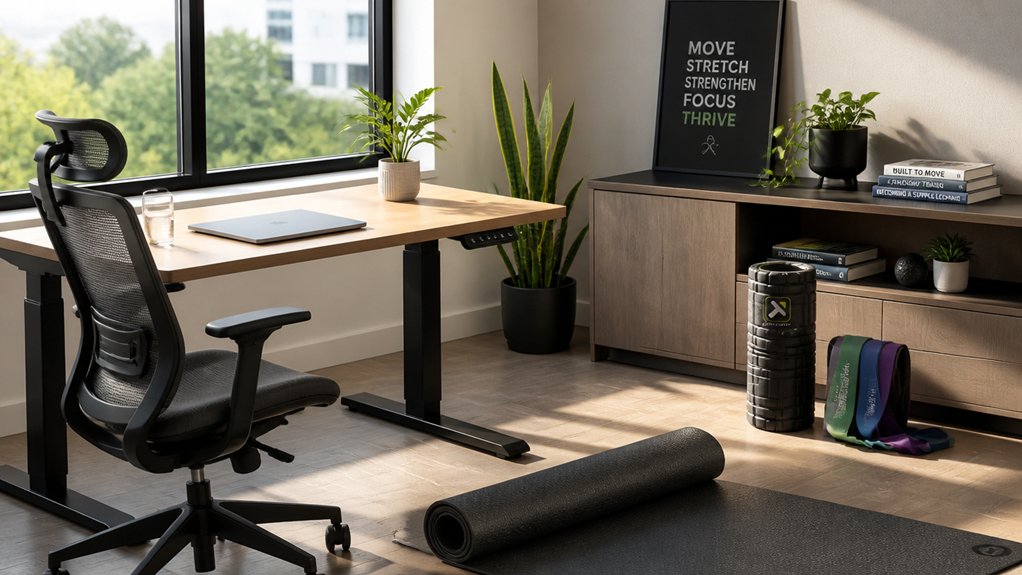
Prolonged sitting causes muscle loss because it reduces muscle fiber density and protein synthesis, signaling your body to break down muscle tissue. When you stay sedentary for hours, your muscles weaken, and circulation drops, especially in your hips and glutes.
This sedentary behavior accelerates muscle loss, lowering your muscle strength and increasing the risk of balance issues and frailty. Without regular movement breaks, your muscles don’t get the stimulation they need to stay healthy. Using ergonomic adjustable footrests can help promote better circulation and support proper posture during long periods of sitting.
To prevent this, incorporate simple desk exercises and short walks into your routine. Moving every 45-60 minutes and doing light activity boosts protein synthesis, helping preserve muscle tissue. Stretching and basic movements during your day are essential strategies to combat inactivity and keep your muscles strong.
Take Regular Movement Breaks to Keep Your Muscles Active
Taking regular movement breaks is essential to keeping your muscles active and healthy throughout the workday. Sitting too long leads to muscle fiber loss, weakening your strength and reducing muscle mass. Incorporating a height-adjustable footrest during periods of inactivity can encourage subtle leg movements, helping to maintain circulation and prevent stiffness. Every 45-60 minutes, stand up, stretch, or take a short walk to stimulate muscle protein synthesis, which helps preserve muscle integrity. These movement breaks boost circulation and improve posture by easing tight hip flexors and weak glutes caused by prolonged sitting. Incorporating habitual activity, like walking during phone calls or doing quick desk stretches, actively counters muscle deterioration from sedentariness. An exercise physiologist can guide you on effective movement strategies, ensuring your muscles stay engaged, functional, and resilient, even during busy work hours.
Desk Exercises to Strengthen Your Key Muscles
| Exercise | Targeted Muscle Group | Repetitions |
|---|---|---|
| Air Squats | Legs, glutes | 3 sets of 10 |
| Reverse Lunges | Thighs, hips | 3 rounds of 5 reps per leg |
| Inchworms | Core, shoulders | 5 reps |
| Touchdown Squats | Lower body, core | 3 sets of 10 |
| Single-leg Reaches | Hips, balance | 3 sets of 5 reps per leg |
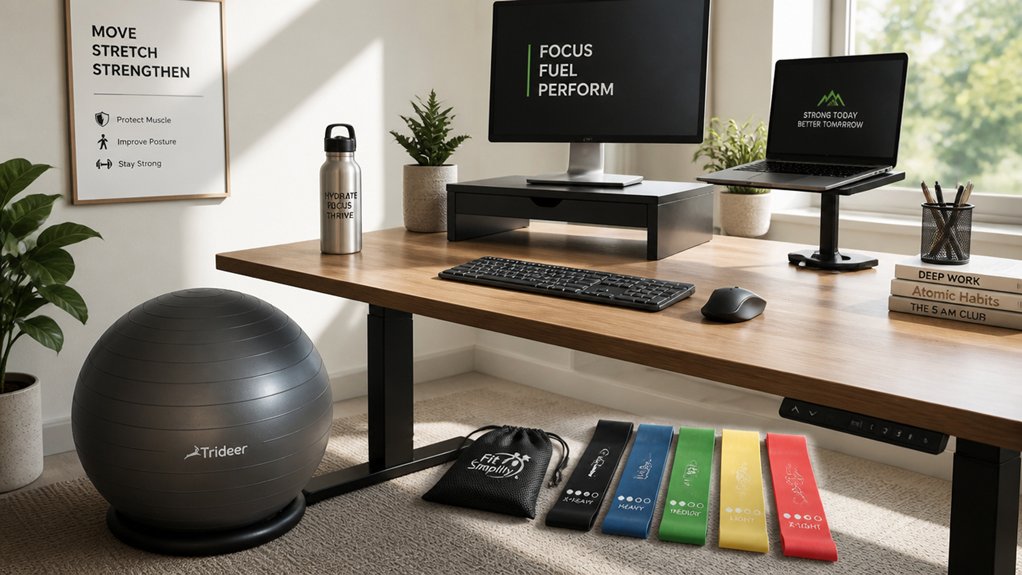
Desk exercises are an effective way to strengthen your key muscles and combat the negative effects of sitting all day. Doing bodyweight exercises like air squats and reverse lunges activates major leg muscles, helping prevent muscle loss and supporting muscle mass. Incorporating inchworms and touchdown squats engages your core and lower body, promoting stability. Single-leg reaches mimic hip hinging and improve balance, counteracting muscle weakening from prolonged sitting. Regularly performing these quick movements at your desk keeps muscle protein synthesis active, maintaining muscle health and preventing sarcopenia linked to inactivity. Proper ergonomic furniture can also enhance your posture during these activities. Stay consistent, and you’ll preserve your strength every day.
Set Up Your Desk for Better Posture and Muscle Health
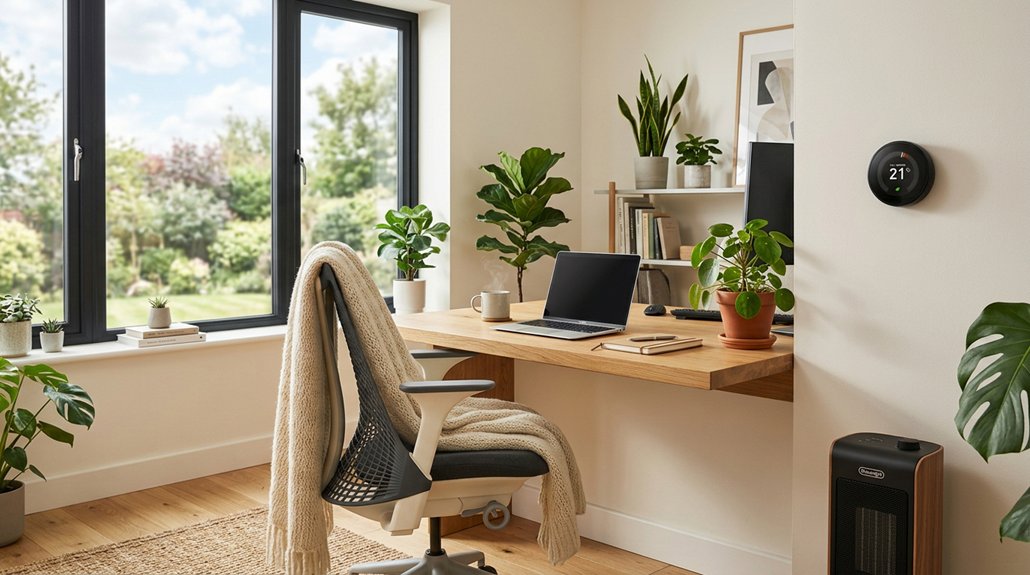
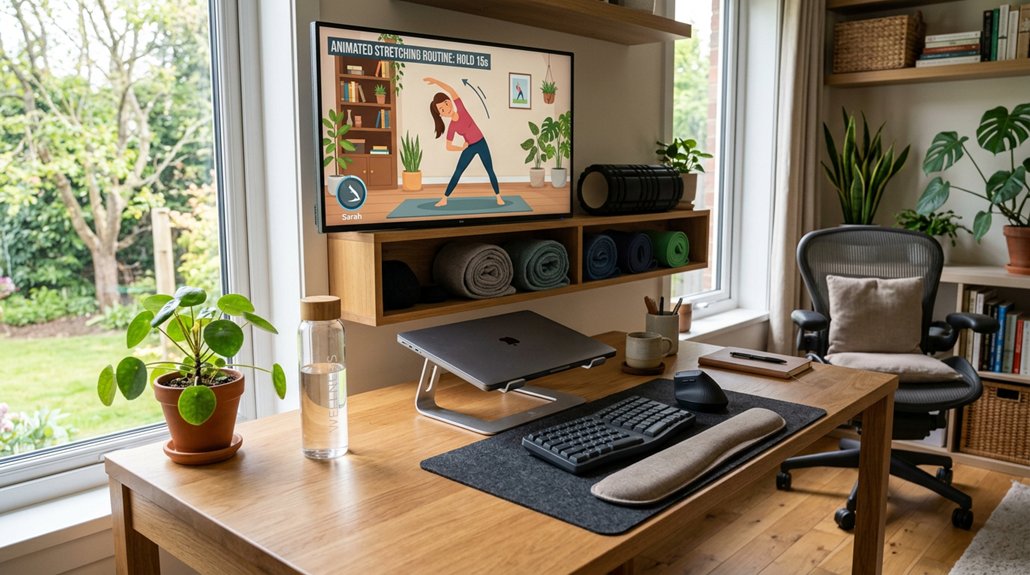
Setting up your desk properly is essential for maintaining good posture and supporting muscle health throughout the workday. Position your computer screen at eye level to keep your neck relaxed and prevent forward head posture that strains muscles.
Keep your feet flat on the floor or on a footrest, with knees at a 90-degree angle, to support proper lower body alignment and reduce muscle tension. Maintain relaxed shoulders by keeping your elbows close to your body and wrists straight while typing, which helps lessen muscle strain in your upper back and shoulders.
Use an ergonomic chair that supports the natural curve of your spine, promoting good posture and engaging core muscles. Place frequently used items within easy reach to avoid twisting or unnecessary reaching that can cause muscle imbalance.
Eat Protein and Stay Hydrated to Support Muscle Maintenance

Since you’re mostly sitting at a desk, it’s important to focus on fueling your muscles with enough protein and staying properly hydrated.
Consuming around 20-30 grams of high-quality protein 3-4 times a day helps support muscle repair and maintain muscle mass, even during long hours of inactivity. Eating enough protein from eggs, chicken, fish, or plant-based options prevents muscle breakdown caused by sitting too much.
Consuming 20-30 grams of protein 3-4 times daily supports muscle health during extended periods of sitting.
Staying hydrated is equally important, as it helps transport nutrients and promotes muscle function. To optimize muscle maintenance, consider these tips:
- Aim for grams of protein per meal for consistent muscle repair
- Incorporate protein-rich snacks throughout the day
- Use supplements like whey if you struggle to meet daily needs
- Drink plenty of water to stay hydrated and support nutrient transport
- Including proper ergonomic support can help reduce muscle fatigue and maintain comfort during long sitting sessions.
Build a Consistent Routine to Protect Your Muscles Long-Term
Creating a consistent routine helps your muscles stay strong over time, so set daily movement habits like standing or stretching every hour. Incorporating active under-desk movement can further enhance circulation and reduce stiffness. Vary your exercises to challenge different muscle groups and prevent plateaus, and set realistic progress goals to keep yourself motivated. Incorporating these habits into your workday makes long-term muscle preservation achievable and sustainable.
Establish Daily Movement Habits
Establishing daily movement habits is essential for protecting your muscles over the long term. Consistency helps prevent muscle fiber loss and maintains circulation, vital for preserving muscle mass. By picking a weight or doing light stretches throughout the day, you reinforce the health benefits of movement. Incorporating diverse movements, such as ergonomic tilt angle adjustments or different seated postures, can further enhance muscle engagement. Set aside small moments—like walking during phone calls or pacing during breaks—to counteract sedentary effects. These habits can include simple activities like leg lifts or quick walks, which add up over time.
Vary Your Exercises Regularly
Varying your exercises regularly is essential for maintaining muscle strength and preventing plateaus. When you vary your exercises, you target different muscle groups, promoting a balanced physique and consistent muscle mass.
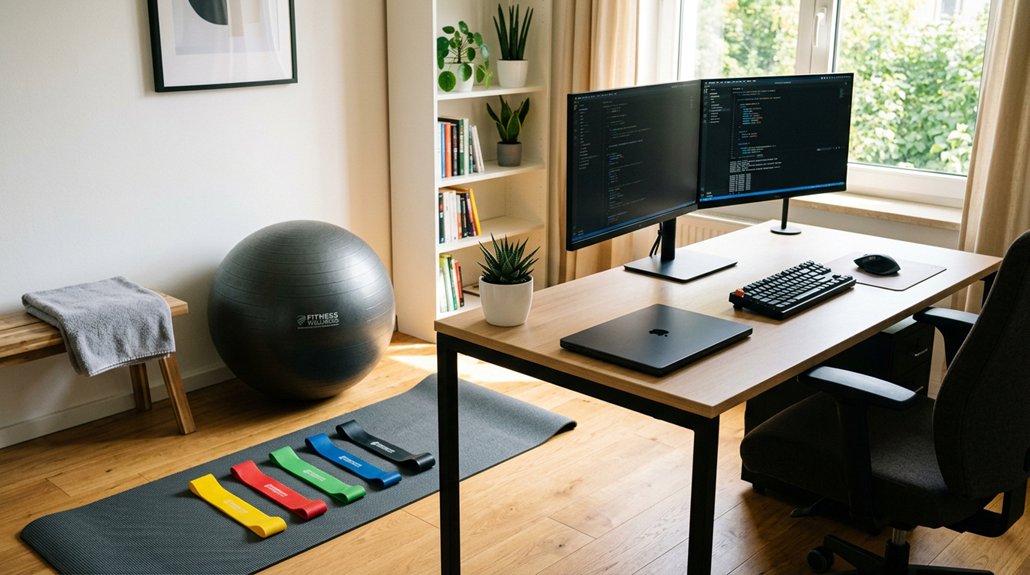
Incorporate resistance workouts like air squats, reverse lunges, and push-ups to challenge your muscles in diverse ways. Changing the type and intensity of your exercises prevents muscle adaptation, encouraging sustained protein synthesis and reducing the risk of muscle loss.
Compound movements such as planks and lunges engage multiple muscle groups, ensuring all-encompassing development. Building a routine that mixes different resistance exercises 3-4 times weekly keeps your muscles stimulated and strengthens them over time.
Regular variation is key to long-term muscle preservation, especially during extended periods of sitting. Additionally, using adjustable and ergonomic equipment like adjustable armrests can help maintain proper posture and support muscle health during work hours.
Set Realistic Progress Goals
Building a consistent routine is the best way to guarantee your efforts to prevent muscle loss pay off over the long term.
When you’re new to strength training, it’s crucial to set realistic progress goals that won’t overwhelm you. Start with simple targets, like completing 1 set of 8-15 repetitions of exercises such as squats or desk push-ups, and gradually build muscle over time.
Remember, consistency is key: aim for at least 2-3 exercise sessions weekly. To stay motivated, track small milestones—like adding reps or taking more activity breaks. Incorporate manageable habits, like stretching or walking during calls, to reinforce your routine.
These steps will help you avoid losing muscle mass and keep your muscles strong in the long run. Incorporating balance board accessories into your desk routine can also enhance stability and promote active engagement throughout the day.
Frequently Asked Questions
How to Build Muscle While Sitting at Your Desk?
You can build muscle at your desk by doing seated bodyweight exercises, like leg lifts, and resistance moves, such as heel lifts. Stand, stretch regularly, and eat enough protein to support muscle growth without leaving your seat.
How to Keep Muscle While on Tirzepatide?
To keep muscle while on tirzepatide, you should eat enough protein, engage in regular strength training, stay active with desk exercises, and guarantee your overall calorie intake remains adequate. These steps help preserve muscle mass effectively.
At What Age Do Muscles Decline?
Muscle decline begins around age 30, with 3-5% loss each decade, accelerating after 50. Without activity, you could lose up to 30% of your muscle mass between ages 50 and 70. Regular exercise helps prevent this.
What Vitamin Prevents Muscle Wasting?
Vitamin D prevents muscle wasting by supporting muscle function and strength. You should guarantee enough sunlight, food, or supplements to maintain healthy vitamin D levels, which helps reduce muscle loss and minimizes risks of falls and weakness.