To relieve lower back pain with stretches, focus on gentle, controlled movements that target tight muscles like hamstrings, hip flexors, and glutes. Try knee-to-chest, spinal twists, or cat-cow stretches, holding each for 15-30 seconds. Always warm up first and avoid forcing any stretch. Keep your posture aligned and breathe steady. Consistent stretching can improve flexibility, reduce tension, and promote better spinal health. Keep exploring for more effective techniques to help you find lasting relief.
What Causes Lower Back Pain: And How Can Stretching Help?
Have you ever wondered what causes lower back pain and how stretching might help? Lower back pain often results from strained muscles or tendons, nerve impingements like herniated discs, or poor posture that causes muscle imbalances.
Tight muscles, such as hamstrings, hip flexors, and gluteus, can distort spinal alignment and increase strain on your lumbar spine, leading to pain. Stretching helps loosen these tight muscles, improving flexibility and reducing tension.
When you stretch, especially targeted moves like the knee-to-chest, you directly relieve pressure from muscles and nerves around your lower back. This lengthening promotes better spinal mobility, corrects imbalances, and supports pain relief. Additionally, using ergonomic support cushions can help maintain proper posture and reduce pressure on the coccyx, further aiding in lower back health.
Ultimately, regular stretching can prevent further injuries by maintaining a healthier, more aligned back.
How Regular Stretching Can Relieve Your Back Pain
Regular stretching helps increase your flexibility and mobility, making your muscles less prone to strain. By targeting key muscle groups, it reduces tension and improves spinal support, easing back pain. A well-designed stretch routine can also help maintain the ergonomic shape of your back and neck, preventing misalignments. Consistent stretching also prevents future injuries by keeping your muscles balanced and body aligned.
Enhances Flexibility and Mobility
Stretching consistently enhances the flexibility and mobility of key muscles like the hamstrings, hip flexors, and lower back muscles, which are essential for maintaining proper spinal alignment. When these muscles are supple, they support your backbone better, reducing the strain that can cause lower back pain. Incorporating ergonomic supports, such as ergonomic headrests, can further promote proper posture during daily activities. Regularly stretching areas like the hamstrings and hip flexors lowers tension and improves overall movement, helping you avoid muscle imbalances. This increased flexibility also alleviates pressure on spinal discs and nerves, decreasing stiffness and discomfort. As your back muscles become more adaptable, your joints gain better mobility, preventing tightness that might lead to muscle strains or nerve impingement. Overall, consistent stretching encourages ideal spine support, easing lower back pain and promoting a healthier, more flexible back.
Reduces Muscle Tension
Consistently performing targeted stretches can greatly ease muscle tension in your lower back, which is a common cause of pain. When you hold stretches like the knee-to-chest or seated lower back rotational stretch for 15–30 seconds, muscles relax more effectively. This gradual relaxation helps reduce tightness that pulls your back toward discomfort. Incorporating ergonomic support, such as memory foam cushions with non-slip bottoms, can also help maintain proper posture and reduce strain during daily activities. Repeating these stretches regularly promotes blood flow, aiding in tissue repair and reducing spasms. Gentle stretches help lengthen tight muscles and improve flexibility, decreasing stiffness that often leads to chronic pain. By relaxing muscles in your lower back, you’ll notice a decrease in tension and discomfort, making everyday movements easier and less painful.
Staying consistent with these stretches can markedly lessen lower back tension and help you feel more comfortable.
Prevents Future Injuries
By maintaining a routine of daily stretching, you can greatly reduce the risk of future lower back injuries. Stretching helps prevent tight muscles from pulling on the spine, which can lead to strain and pain.
It keeps the muscles that support your lower back flexible and balanced, reducing imbalances that irritate nerves and stress the lumbar spine. Regular stretching also promotes harmony between muscles, bones, and joints, supporting your back during movement.
To visualize injury prevention:
- Loosening tight hamstrings and hip flexors
- Improving spinal alignment with gentle rotations
- Strengthening core muscles for stability
- Consistently maintaining mobility before pain worsens
- Utilizing supportive lumbar pillows, which help maintain proper spinal alignment during prolonged sitting.
Preparing Your Body for Safe and Effective Stretching
Before you begin stretching, it’s important to prepare your body to minimize the risk of injury and maximize benefits.
Start with a gentle warm-up, like marching in place or light walking for 5-10 minutes, to increase blood flow and warm your muscles. Focus on keeping your back straight and engaging your core muscles by gently tightening your abdominal muscles. This abdominal bracing stabilizes your spine and protects your lower back during stretches.
Use a yoga mat or carpeted surface for floor stretches to cushion and support your body, reducing discomfort. Remember to perform slow, controlled movements, avoiding bouncing or sudden jerks. If you experience new or sharp pain, stop and consult a healthcare professional before proceeding. Incorporating ergonomic footrests can also help maintain proper posture and reduce strain during these activities.
Best Stretches to Ease Lower Back Tension
Gentle stretching techniques can help release lower back tension and improve mobility. By targeting specific muscles like your lower back and hips, these stretches provide quick relief and prevent future discomfort. Incorporating ergonomic support features into your routine can enhance the effectiveness of these stretches and promote better posture overall. Involve consistent practice for lasting results and a pain-free back.
Gentle Stretching Techniques
To effectively alleviate lower back tension, incorporating gentle stretching techniques into your routine can make a significant difference. These stretches target back pain relief by relaxing tight muscles and increasing flexibility.
For example, lie on your back with knees bent, gently pulling one or both knees toward your chest, holding the stretch for 30–60 seconds. You can also perform lower back rotational stretches by lying on your back with knees bent and slowly rolling them side to side, holding each position briefly. Imagine your lower back opening up—relieved and relaxed.
Other effective stretches include arching and sagging your back on hands and knees or twisting your torso seated with crossed legs. Remember to hold each stretch comfortably, repeat the stretch multiple times daily, and focus on gentle, controlled movements. Incorporating ergonomic support such as coccyx seat cushions can further enhance comfort and promote proper spinal alignment during long sitting sessions.
Targeted Muscle Relief
Targeted muscle relief through specific stretches can effectively ease lower back tension by targeting the muscles that often become tight or strained.
For instance, the Knee-to-Chest stretch helps lengthen lower back muscles by pulling one or both knees toward your chest while lying on your back. Hold the stretch for 30–60 seconds to release tension.
Lower back rotational stretches involve gently twisting your knees side to side while keeping your shoulders grounded, promoting spinal rotation and easing muscle tightness, typically for 15–20 seconds.
The Cat-Cow stretch, performed on hands and knees, alternates between arching and sagging your back, improving flexibility and relieving tension.
These stretches work directly on the muscles that contribute to lower back pain, providing targeted relief. One important consideration is ensuring the ergonomic support for your back is adequate during these exercises to prevent further strain.
Step-by-Step: Knees to Chest Stretch for Back Relief
Start by lying flat on your back with your knees bent and feet flat on the floor. Place your hands on one knee and gently pull it toward your chest. Feel the stretch in your lower back muscles as you:
- Keep your knees bent for comfort and stability
- Sit your feet firmly on the floor
- Engage your core to support your spine
- Hold the position for 30 to 60 seconds, breathing deeply
As you pull your knee toward your chest, your pelvis tilts slightly, relieving tension. Relax your back and legs briefly before repeating with the opposite knee. Incorporating ergonomic kneeling chairs into your workspace can also help improve posture and reduce lower back strain.
Pelvic tilt gently releases tension in your lower back muscles before switching sides.
Do this for 3 reps on each side to effectively lengthen your lower back muscles and ease pain.
Gentle Rotational Stretches to Loosen Up Your Back
Gentle spinal twists can help you improve your back’s mobility and ease tension. When you perform these stretches, you’re engaging your core and back muscles to promote flexibility and reduce discomfort.
Doing them regularly can make a noticeable difference in how your back feels throughout the day.
Gentle Spinal Twists
Lying on your back with your knees bent and feet flat, you can perform gentle spinal twists to relieve lower back tension.
Gently roll your knees to one side, keeping your shoulders grounded, to stretch and relax your lower back muscles. Hold the twist for 5–10 seconds on each side, feeling the stretch through your spine. Repeating this 2–3 times in the morning and evening helps maintain flexibility and reduce stiffness.
As you do this, imagine:
- Your knees softly moving side to side
- Your shoulders staying relaxed and flat
- Your abdominal muscles keeping steady
- The gentle rotation easing your lower back tension
Avoid forcing the twist or overstretching to prevent discomfort and protect your muscles.
Enhance Back Mobility
Building on the relaxed spinal twists, incorporating gentle rotational stretches can further improve your back’s mobility. To do this, lie on your back with knees bent and feet flat on the floor. Gently roll your knees to one side, keeping your shoulders firmly on the ground to maximize spinal alignment. Hold the position for 5–10 seconds to relieve tension and loosen lower back muscles. Perform 2–3 repetitions on each side once in the morning and evening to boost flexibility and reduce stiffness. These lower back rotational stretches engage core muscles, supporting spinal stability. Consistent practice helps increase range of motion and prevents muscle tightness that can contribute to chronic discomfort.
| Movement Step | Key Focus |
|---|---|
| Knees bent, feet flat | Maintain stability |
| Gentle twist | Relieve tension |
| Hold for 5–10 sec | Improve mobility |
| Repeat on each side | Boost flexibility |
| Engage core muscles | Support spinal alignment |
Reduce Tension Effectively
To effectively reduce tension in your lower back, incorporate rotational stretches that gently loosen your muscles and improve flexibility. Lie on your back with knees bent and feet flat on the floor. Slowly rolling your knees to one side, keep your shoulders on the floor to target your lower back. Hold the position for 5-10 seconds before reversing to the other side.
Repeat 2-3 times on each side, ideally once in the morning and once in the evening, to consistently ease tightness. This gentle lower back rotational stretch engages your core, abdomen, and back muscles, promoting better spinal alignment. Remember to breathe relaxed and avoid painful movements to prevent aggravation while maximizing relief.
- Lying flat, knees bent, feet flat, and arms relaxed
- Slowly rolling knees to the side, keeping shoulders grounded
- Holding the position for 10 seconds, feeling the gentle stretch
- Repeating on the opposite side with control
Hip-Opening Exercises to Improve Flexibility and Reduce Pain
Incorporating hip-opening exercises into your routine can greatly improve flexibility and alleviate lower back pain. These exercises target your gluteal muscles, releasing tension that often contributes to discomfort.
For example, the Figure Four or Thread the Needle stretches help loosen tight hips, easing pain and increasing hip flexibility. The hip twist stretch, performed lying on your back and dropping knees side to side, relaxes lower back muscles and boosts mobility.
Tight hip flexors can cause spinal misalignment, leading to discomfort; stretching them with lunges or kneeling hip flexor stretches improves posture and reduces pain. Regularly doing these gentle stretches for 10–30 seconds multiple times daily helps balance muscles, supporting your spine and diminishing sciatic nerve irritation associated with lower back issues.
Strengthen Your Core With Simple Back and Abdominal Exercises
Strengthening your core muscles is a key step in relieving lower back pain, as a strong core provides essential support for your spine. By practicing core strengthening exercises, you can better stabilize your lower back and reduce discomfort.
For example, abdominal bracing involves tightening your abs as if compressing a soda can, engaging your core effectively. The bridge exercise, where you lift your hips to form a straight line from knees to shoulders, strengthens your glutes and lower back. Plank exercises challenge your endurance by holding a stable position on your forearms or with variations like lifting limbs.
To achieve results safely, gradually increase repetitions and hold times. Consistent core work enhances posture, decreases strain, and supports spinal alignment, easing your lower back pain over time.
Incorporate Stretching Into Your Daily Routine for Long-Term Relief
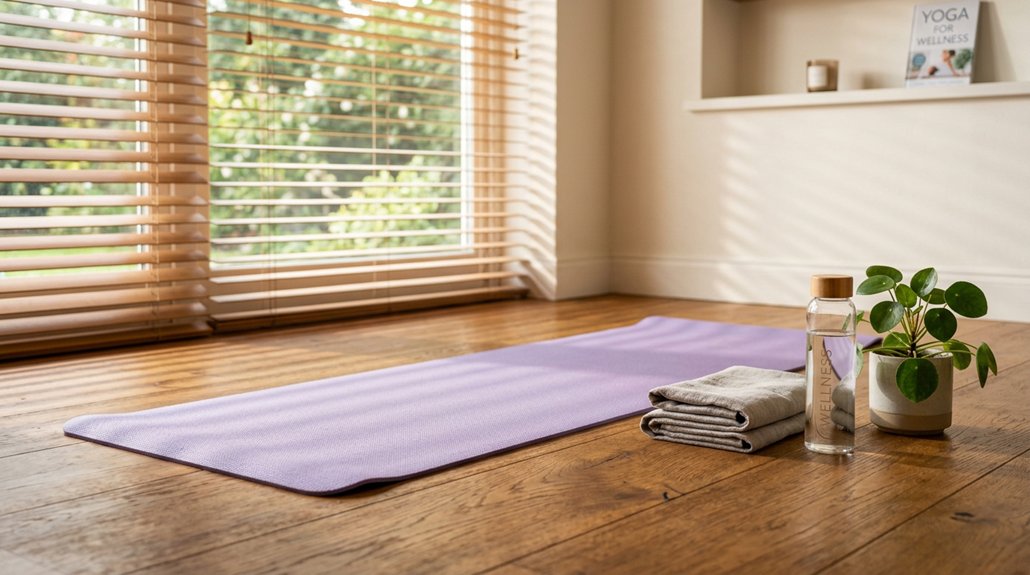
Establishing a daily stretching routine can greatly enhance your long-term back health by relieving tension and increasing flexibility.
Incorporate gentle stretches like the knee-to-chest and lower back rotational stretch twice a day, holding each for 15-60 seconds to target lower back pain. Include back exercises such as the cat-cow and seated lower back rotational stretch, performing them 3-5 times, twice daily, to maintain spinal mobility.
Be sure to stretch key muscles like hamstrings, hip flexors, and gluteals to prevent tightness that worsens lower back pain.
Keep your knees bent during stretches for comfort, and progress gradually by increasing stretch duration and repetitions without pain.
A consistent routine, combined with core support, guarantees long-term relief and healthier back function.
Tips to Prevent Straining During Back Stretching
To prevent straining during back stretching, it’s essential to warm up your muscles gently before you begin. This helps reduce back pain and prevents injury. Start with light movements, like marching in place or slow twists, to get blood flowing.
Warm up gently with light movements to prevent injury and reduce back pain before stretching.
When stretching, slowly roll into each position, avoiding bouncing. You should feel a stretch without sharp pain—if you don’t, adjust your position. Keep your shoulders relaxed and away from your ears, maintaining proper form.
When stretching the lower back, keep your knees bent slightly to avoid overstretching.
Remember to breathe steadily and never force a stretch beyond your comfort zone. These tips help you stretch safely, improve flexibility, and avoid aggravating back pain.
When to Avoid Certain Stretches and See a Healthcare Professional
Avoid stretching your lower back when experiencing sudden, intense pain, as rest is usually best to prevent further injury. If you feel sharp pain, worsening symptoms, or radiating pain to legs, stop immediately. These signs may indicate nerve impingement, requiring medical advice. Seek a healthcare professional if your pain persists beyond a few weeks despite gentle exercise. Red flag symptoms like leg weakness, numbness, fever, or loss of bladder or bowel control need urgent attention. For severe conditions such as herniated discs, a physical therapist should guide safe stretching routines. Knowing when to avoid certain stretches helps prevent aggravating your condition and guarantees you get appropriate care. When in doubt, consult a healthcare professional promptly.
| Symptom | Action | When to Seek Help |
|---|---|---|
| Sharp pain | Stop stretching immediately | Medical advice needed |
| Radiating pain to legs | Cease activity, consult a healthcare provider | Urgent assessment for nerve issues |
| Persistent pain beyond weeks | Seek medical advice | To rule out serious conditions |
| Red flag symptoms | Seek urgent care | Immediate medical attention required |
| Severe back conditions | Consult a physical therapist | For proper assessment and treatment |
Combining Stretching and Posture Habits for Better Back Health
Combining regular stretching routines with proper posture habits plays a crucial role in maintaining a healthy back and preventing pain.
When you incorporate movements like knee-to-chest stretches and trunk rotations into your daily routine, you help improve spinal alignment and reduce muscle strain that causes low back pain.
Incorporating gentle stretches and rotations daily enhances spinal alignment and eases muscle tension.
Maintaining a neutral spine by sitting up straight and practicing abdominal bracing during everyday activities supports core strength and stabilizes your lower back.
To visualize, think of:
- Sitting up straight with relaxed shoulders
- Performing seated trunk rotations during breaks
- Engaging your core with abdominal bracing during standing
- Stretching twice daily to improve flexibility
Together, these habits and stretches allow muscles and connective tissues to adapt, promoting long-term back health and minimizing discomfort.
Frequently Asked Questions
Should I Stretch My Lower Back Even if It Hurts?
No, you shouldn’t stretch your lower back if it hurts, especially if pain is new, severe, or worsening. Rest first, then consult a healthcare professional before attempting gentle, controlled stretches to prevent further injury.
What Is the Big 3 for Lower Back Pain?
The Big 3 for lower back pain are the Knee-to-Chest stretch, the Lower Back Rotational stretch, and the Bridge exercise. You target your flexibility and core strength, helping to reduce pain and support your spine effectively.
How to Fix a Tight Lower Back in 30 Seconds?
You can fix a tight lower back in 30 seconds by performing knee-to-chest stretches, gently rolling your knees side to side, tensing and relaxing your pelvic muscles, doing cat-cow stretches, and combining deep breathing to promote relaxation quickly.
What Is the Fastest Way to Cure Lower Back Pain?
The fastest way to cure lower back pain is to combine gentle stretches, core strengthening exercises, proper posture, and over-the-counter pain relief, along with rest and ice. Consistent, pain-free movements speed up recovery within days to weeks.