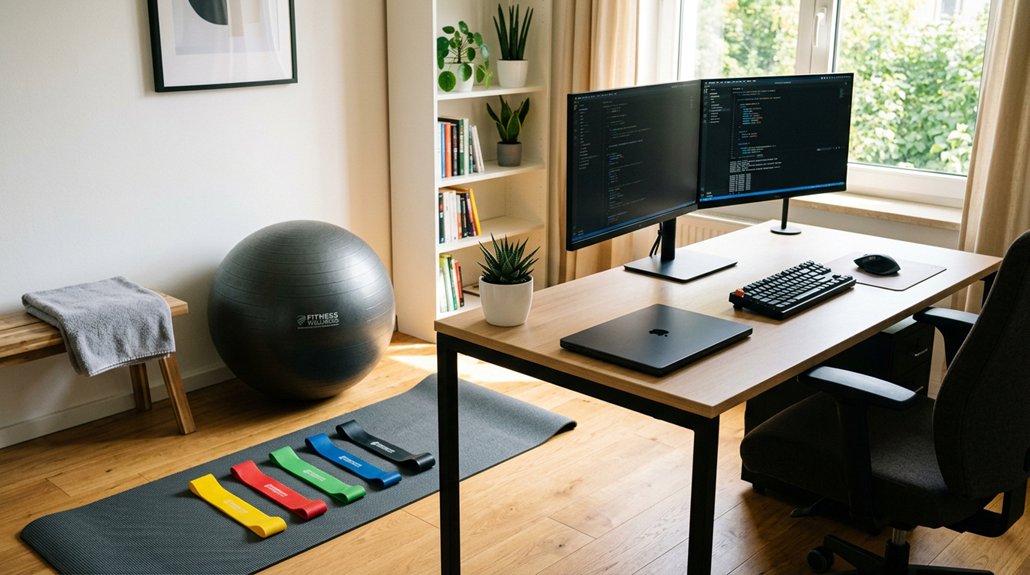
To relieve tight shoulders at work, focus on maintaining good posture, like keeping your computer screen at eye level and using supportive chairs. Take short breaks every 30-60 minutes to stretch with shoulder rolls, cross-arm stretches, or arm swings. Incorporate simple warm-up and mobility exercises before and during your day. Managing stress with breathing techniques and long-term habits like strengthening shoulder muscles and adjusting your workspace can prevent tightness. Keep going to discover more effective tips to maintain shoulder health.
How to Recognize Signs of Tight Shoulders and Their Causes
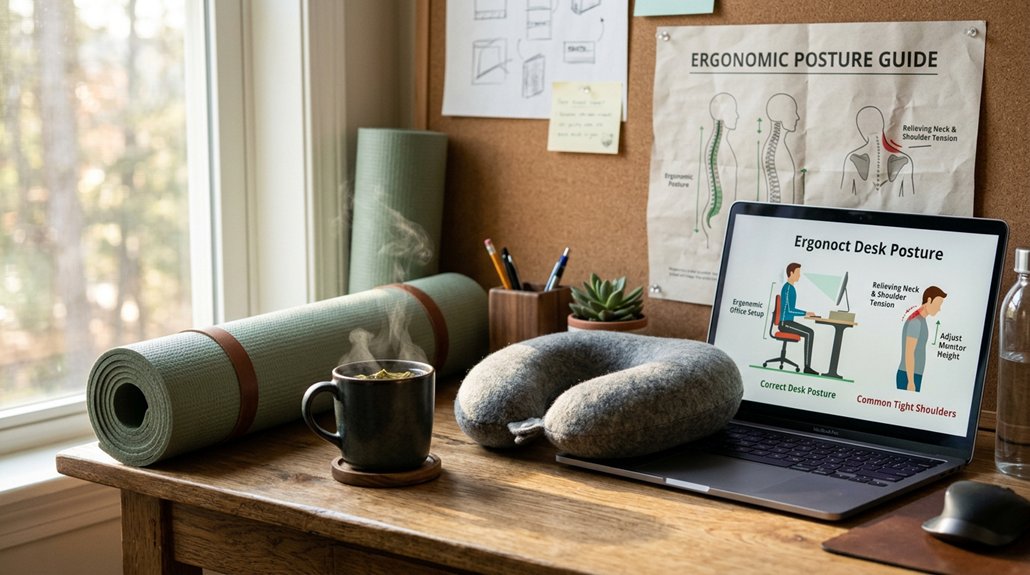
How can you tell if your shoulders are tight? You might notice stiffness, discomfort, or a limited range of motion when reaching or washing your hair. Shoulder tightness often causes pain in your upper back and neck, especially after prolonged sitting or repetitive movements.
Poor posture, like slouching or rounded shoulders, reduces circulation and worsens muscle tension. Muscle imbalances, where some shoulder muscles are overworked and others are weak, also contribute to tightness.
If you feel persistent stiffness or notice difficulty lifting your arms, it’s a sign your muscles are strained or tense. Recognizing these signs early can prevent further issues like frozen shoulder or rotator cuff problems. Addressing shoulder tightness helps restore mobility and eases discomfort caused by daily muscle tension. Additionally, ergonomic adjustments like kneeling chairs can promote better posture and reduce muscle strain during prolonged sitting.
Quick Ways to Relieve Shoulder Tightness During Work
When you’re sitting at your desk for long periods, shoulder tightness can quickly become uncomfortable and disruptive. To relief tight shoulders, perform shoulder rolls by maintaining good posture and rolling your shoulders up, back, and down 10 times, then forward and down 10 times. This helps increase mobility and loosen the shoulder muscles. Next, do standing arm swings for 1 minute, swinging arms forward and backward without raising your shoulders to improve circulation. You can also use the cross-arm stretch, bringing one arm across your chest and supporting it with the opposite arm for 30 seconds per side. Incorporate frequent shoulder raises by lifting your shoulders toward your ears, holding briefly, then lowering, to strengthen muscles and ease muscle soreness. Keep your shoulders relaxed and engage in these stretches regularly to prevent chronic tightness.
| Shoulder muscles | Stretch the muscles | Relieve tight shoulders |
|---|---|---|
| Shoulder rolls | Cross-arm stretch | Shoulder raises |
| Circulation | Flexibility | Upper body |
| Mobility | Loosen muscles | Short breaks |
| Regular practice | Prevent soreness | Keep your shoulders |
Adjust Your Workspace for Better Posture and Shoulder Health

Adjusting your workspace can make a significant difference in maintaining good posture and reducing shoulder strain. Keep your computer screen at eye level to prevent leaning forward, which can strain your shoulder and neck muscles. Use an ergonomic chair with proper lumbar and arm support to encourage a tall sitting posture that keeps your back muscles engaged and shoulders relaxed. Ensuring your armrests have proper multi-directional adjustability can help support your arms and minimize shoulder fatigue. Keep your keyboard and mouse close to avoid overreaching, which can cause shoulder and upper back tightness. Adjust your desk height so your forearms are parallel to the floor, helping your shoulders stay relaxed during work. Incorporate micro-breaks to stretch and reset your shoulder muscles, preventing stiffness and relieving tightness. Proper ergonomic adjustments support better posture and overall shoulder health throughout your workday.
Simple Warm-Up Movements to Loosen Your Shoulders Before Work
Starting your workday with simple shoulder warm-up movements can greatly reduce stiffness and prepare your muscles for the day ahead. Shoulder rolls, done in sets of 10 each way, promote circulation and help loosen shoulder muscles by easing tension in the upper back.
Shoulder raises, slowly lifting shoulders toward your ears, hold briefly, and then lower, improve mobility and warm-up the shoulder joint. Standing arm swings gently move your shoulders through flexion and extension, increasing readiness without raising the shoulders.
Standing arm lifts, raising fists from hips overhead while maintaining good posture, strengthen shoulder flexion and prepare muscles for activity. These warm-up movements require minimal space and no equipment, making them convenient to incorporate into your morning routine at your desk or small workspace. Additionally, incorporating posture correction practices can enhance muscle alignment and further reduce shoulder tension throughout the day.
Desk-Friendly Stretches to Relieve Shoulder Stiffness Throughout the Day

To combat shoulder stiffness during the workday, incorporating simple desk-friendly stretches can provide immediate relief and boost circulation. Shoulder raises and shoulder rolls, done multiple times daily, help reduce muscle tightness and improve shoulder mobility, easing pain and stiffness from prolonged sitting.
Cross-arm stretches at chest height loosen the rear deltoids and upper back muscles, alleviating tension caused by repetitive computer use. Standing arm swings, swinging your arms forward and backward without lifting your shoulders, promote blood flow and can be easily integrated during short breaks.
Additionally, gentle stretches like behind-the-back reaches and ear-to-shoulder neck stretches help release trapezius muscle tightness. Regularly practicing these stretches helps prevent chronic shoulder discomfort and maintains flexibility throughout your workday, especially when combined with ergonomic office chairs designed to support proper posture.
Use Heat or Cold Packs to Soothe Shoulder Tension Fast
Choosing whether to use heat or cold depends on your shoulder’s needs—heat relaxes muscles, while cold reduces inflammation.
Make sure to apply each with a cloth barrier and stick to recommended durations to avoid skin damage.
Timing your application before or after work tasks can help relieve tension quickly and safely.
Choosing Between Heat or Cold
Wondering whether to use heat or cold to relieve your shoulder tension? For tight shoulders and muscle relaxation, heat packs are your best bet.
Applying moist heat for 15-20 minutes helps loosen tissues, improve blood flow, and reduce stiffness, making movement easier. Use cold packs right after an injury or if inflammation and swelling are present; cold temporarily numbs sharp shoulder pain and reduces inflammation.
For chronic shoulder tension from sitting or stress, heat therapy often works better by easing muscle stiffness and increasing flexibility.
Alternating between heat and cold can give balanced relief—cold diminishes inflammation, while heat promotes circulation. Overall, if there’s no active inflammation, stick with heat to relax muscles and ease shoulder tension more effectively.
Additionally, choosing the right heating technology—such as graphene or carbon-fiber elements—can ensure rapid, even warmth for greater comfort during relief.
Proper Application Techniques
Applying heat or cold packs correctly can make a significant difference in relieving shoulder tension quickly and effectively.
If you feel tight shoulder muscles, you should apply heat to relax and loosen them. Use heat packs for about 15-20 minutes, ensuring you protect your skin with a cloth barrier to prevent burns.
After intense activity or if you experience sharp pain, apply cold packs for 10-15 minutes to reduce inflammation and numb discomfort. Always avoid direct contact with the skin to prevent frostbite or burns.
Alternating between heat and cold therapy can help improve circulation while minimizing swelling. Incorporating pressure relief cushions or supports in your workspace can further alleviate shoulder strain and promote better posture. Follow these techniques carefully to soothe your shoulder tension promptly and safely, promoting better mobility and relief even during busy workdays.
Timing and Duration
To quickly relieve shoulder tension at work, you should pay close attention to the timing and duration of heat or cold pack application. Applying heat packs for about 15-20 minutes before stretches helps loosen the back and upper shoulders, reducing tightness and improving mobility. Cold packs, limited to 10-15 minutes, effectively reduce inflammation and numb sharp pain after prolonged sitting or strain. Alternating between heat and cold therapy can further promote circulation and ease discomfort. Keep in mind the ideal duration to avoid skin irritation while feeling relief from tension. Here’s a quick guide:
| Therapy Type | Duration | Purpose | Best Use | Notes |
|---|---|---|---|---|
| Heat packs | 15-20 min | Loosen tight muscles | Before stretches, warming up | Enhances tissue elasticity |
| Cold packs | 10-15 min | Reduce inflammation, numb pain | After strain or repetitive work | Prevents skin irritation |
Additionally, enhancing your workspace with ergonomic support, such as lumbar pillows, can help maintain proper posture and reduce shoulder tension during extended work periods.
Schedule Short Breaks for Shoulder Movement and Mobility Exercises
Taking regular short breaks during your workday is essential for preventing shoulder stiffness and discomfort. By scheduling breaks every 30 to 60 minutes, you can perform simple mobility exercises like shoulder rolls and arm swings, which help reduce stiffness and boost circulation. A variety of ergonomic accessories, such as adjustable tablet stands, can also support a more comfortable working posture, minimizing strain.
Just 1-2 minutes of shoulder stretches, such as shoulder lifts or cross-arm stretches, during these breaks can greatly alleviate tension and improve your range of motion. Incorporating these exercises into your routine supports better posture and prevents injury from prolonged sitting and repetitive movements.
These quick movements are workplace-friendly, requiring little space or equipment, and can be easily integrated into your daily activities. Regular movement breaks keep your shoulders mobile, reduce tightness, and make your workday more comfortable.
Strengthen Supporting Shoulder Muscles to Prevent Tightness
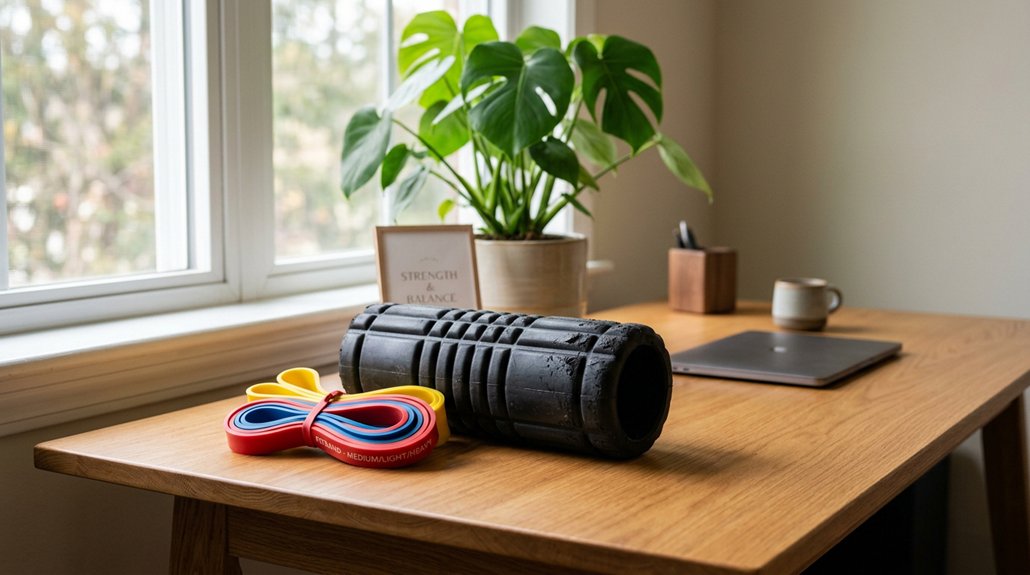
Incorporating shoulder strengthening exercises into your routine can greatly improve the stability and resilience of your shoulder joint. Focusing on the rotator cuff and the muscles that support your shoulders helps prevent tightness caused by repetitive work movements. Using ergonomic supports such as adjustable arm rests can help maintain proper arm positioning and reduce strain on shoulder muscles. Exercises to help include shoulder raises and standing arm lifts, which target the supporting muscles and maintain muscle balance. Working at shoulder level guarantees you’re engaging the right muscles without strain. Strengthening these muscles supports proper posture and prevents muscle imbalances common in desk-bound workers. Consistent training enhances shoulder flexibility and reduces stiffness. Gradually increasing resistance tailored to your needs promotes endurance, making your shoulders less prone to tightness and discomfort as you work throughout the day.
Manage Stress and Tension to Keep Your Shoulders Relaxed
Since stress and prolonged sitting often contribute to muscle tension in your shoulders and neck, managing stress is essential to stay relaxed. You can do this by practicing quick stretches like shoulder shrugs and shoulder rolls throughout the day. These help reduce accumulated tension and promote relaxation. Additionally, mindful breathing and brief breaks during computer work lower your physical stress response, easing tightness. Maintaining good posture while sitting tall instead of slouching minimizes strain. Trapezius stretches, such as the ear-to-shoulder stretch, are effective at relieving tension caused by stress. Incorporate the following techniques regularly:
| Technique | Purpose | Benefits |
|---|---|---|
| Shoulder shrugs | Release muscle tension | Quick relief from tightness |
| Shoulder rolls | Relax shoulders and neck | Enhance circulation |
| Ear-to-shoulder stretch | Stretch trapezius muscles | Reduce stress-related stiffness |
A proper ergonomic setup including supportive footrests can also help improve overall posture and reduce shoulder strain during long periods of sitting.
Develop Long-Term Habits for Shoulder Mobility and Pain Prevention

Developing long-term habits is essential for maintaining shoulder mobility and preventing pain over time. Incorporate shoulder rolls, shoulder raises, and cross-arm stretches multiple times daily to keep muscles supported and increase flexibility.
When stretching, keep your arms straight and at shoulder height, and slowly slide your shoulders back to improve alignment. Maintaining an upright posture throughout the day helps prevent muscle imbalances.
To loosen shoulder muscles, use heat therapy before work or after prolonged sitting. Break up long periods of sitting with standing arm swings or stretches, which promote blood flow and lessen stiffness.
Gradually increase movement intensity and duration, avoiding sudden overexertion. These consistent habits will help you sustain shoulder health, reduce tightness, and prevent pain over the long term.
Frequently Asked Questions
How to Relax Your Shoulders While Working?
To relax your shoulders while working, you should regularly perform shoulder rolls, stretch your arms across your chest, maintain good posture, and take brief breaks to move and shake out tension, preventing tightness and promoting circulation throughout the day.
Can Cortisol Cause Shoulder Pain?
Yes, high cortisol levels from chronic stress can cause shoulder pain by increasing muscle tension and inflammation. When your cortisol spikes, your shoulders become tight, and recovery slows, making pain more likely if you don’t manage stress effectively.
How to Loosen Tight Shoulders Fast?
To loosen tight shoulders fast, perform shoulder rolls, arm swings, and gentle shoulder raises regularly. Incorporate cross-arm stretches and take short breaks to maintain good posture. These quick actions boost circulation and relieve muscle stiffness efficiently.
What Causes Extremely Tight Shoulder Muscles?
You get extremely tight shoulder muscles from sitting too long with poor posture, repetitive movements, stress, and overuse. Age-related issues, injuries, or inflammation can also contribute, causing persistent stiffness and limited mobility.