To improve your posture, focus on core exercises like dead bugs, bird dogs, glute bridges, side planks, plank with shoulder taps, and modified versions for beginners. These moves target deep muscles that stabilize your spine and pelvis, supporting proper alignment. Engage your core throughout each exercise and gradually increase difficulty. Keep practicing consistently, and you’ll notice more stability and better posture. Stay with us to explore even more ways to strengthen those core muscles effectively.
How Do Core Muscles Support Your Posture and Balance?
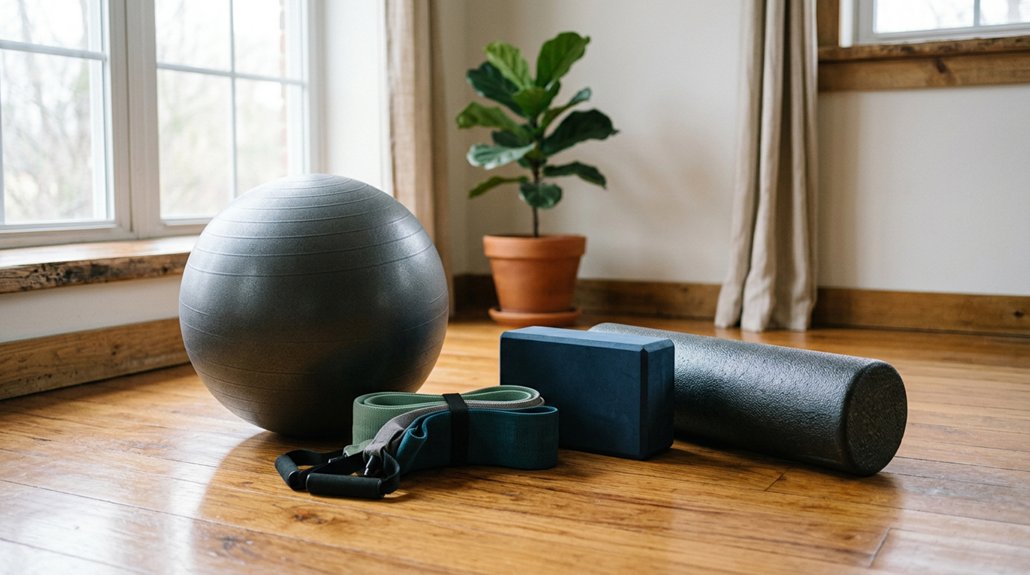
Have you ever wondered how your core muscles help maintain your posture and balance? Your core, especially the deep core muscles like the transverse abdominis and multifidus, stabilizes your spine and pelvis.
When these muscles engage, they keep your back aligned, preventing excessive arching or flexion that can cause poor posture. A strong core acts as a stabilizing corset during daily movements, supporting functional alignment and neutral positioning.
This not only enhances your balance but also reduces the need for other muscles to compensate. Proper activation of your core improves overall stability, helping you maintain better posture and avoid imbalances that may lead to pain or injury.
Maintaining core strength through targeted exercises further reinforces this support system, making your posture more resilient throughout the day.
How Can You Assess Your Current Posture and Core Strength?
Wondering where to start when evaluating your posture and core strength? Begin by standing sideways in front of a mirror to observe alignment. Check if your ears, shoulders, hips, knees, and ankles form a vertical line in a neutral position. Using a lumbar support pillow with adaptive foam cores can help maintain proper spinal alignment and improve posture during assessments. Assess your core strength with a simple plank, holding for 30-60 seconds, ensuring your body remains straight from head to toe without sagging or hiking hips. Use the pelvic tilt test by moving your pelvis forward and backward to find the neutral spine midpoint—this reveals your ability to control core stability during movement. Try basic exercises like dead bugs or bird dogs to monitor endurance, balance, and control, which depend on deep-core focused muscles. Watch out for compensatory movements or pain, signaling weakened or imbalanced deep core muscles affecting your posture.
Which Exercises Can Help Improve Your Posture?

Incorporating specific exercises into your routine can effectively enhance your posture by strengthening the muscles that support spinal alignment. Focus on core movements like the Dead Bug and Bird Dog, which target deep core muscles such as the transverse abdominis and multifidus, essential for keeping your back flat and spine upright.
Glute Bridges strengthen your posterior chain, supporting pelvic stability and helping maintain neutral spine alignment. Side Planks with Reach-Through train obliques and shoulder stabilizers, adding lateral core strength for better posture and shoulder health.
Plank with Shoulder Taps engages anti-rotation muscles, enhancing full-body control and preventing compensatory movements. Consistent strength training of these muscles helps support correct body positioning, reduces slouching, and minimizes low back pain. Proper support and ergonomic adjustments, such as arm supports, can also contribute to maintaining good posture during extended work or activity.
How to Add Functional Movements to Your Daily Routine?
Adding functional movements to your daily routine can considerably improve your posture and core stability when integrated consistently. Keep your body in neutral alignment by practicing mindful posture shifts, like pulling your belly button toward your spine while sitting or standing.
Incorporate simple bodyweight exercises such as pelvic tilts, bird dog, glute bridges, or modified planks during breaks to strengthen postural muscles that act as a natural body corset. Focus on slow, controlled movements like dead bug or side plank exercises to enhance balance and prevent muscle strain.
Incorporate 30-60 second holds of proper plank positions several times each day to build endurance in your core. Additionally, coordinate opposite arm and leg movements to activate deep core muscles, supporting better posture throughout your day. Incorporating adjustable straps and support features into your routine can further customize these movements for optimal spinal alignment.
What Ergonomic Tips Support Better Core Engagement While Working?

Have you considered how your workspace setup can directly influence your core engagement? The right ergonomic tips help keep your posture aligned and support your back.
Keep your spine neutral, maintaining natural curves without slouching or excessive arching. Distribute your weight evenly on both sit bones and keep your knees and hips at right angles, ensuring stability.
Engage deep core muscles by gently pulling your belly button toward your spine—think of zipping up tight pants—without holding your breath. Position your elbows directly below your shoulders and keep your glutes slightly active to promote core stability.
Use visual cues or a mirror to regularly check your posture and make corrections. Incorporating adjustable footrests can also help maintain proper leg positioning and reduce fatigue. These tips help maintain continuous core engagement, reducing strain and supporting better posture throughout your workday.
How to Safely Progress Your Core Exercises Over Time?
To progress your core exercises safely, start by gradually increasing resistance or difficulty while maintaining proper form. Focus on slow, controlled movements and keep your spine aligned to prevent injuries. Incorporating adjustable footrests or similar ergonomic tools can help maintain proper posture and support during exercise. As you build strength, you can extend hold times or try more advanced variations to challenge your core further.
Gradual Resistance Increase
Progressing your core exercises safely requires a deliberate approach that prioritizes proper form and gradual intensity. To keep your core engaged effectively, start with foundational exercises using body weight and focus on slow, controlled movements to establish proper technique.
When introducing resistance tools like bands or light weights, make certain you maintain neutral spine alignment and keep core to keep deep core muscle activation. Gradually increase resistance or complexity by shifting to more challenging variations, such as moving from knee-supported to full planks with shoulder taps, as your strength improves.
Monitoring for biofeedback cues can help you recognize when to adjust your effort and prevent overexertion, ensuring consistent progress. Always monitor for compensatory movements or loss of form, and reduce resistance if necessary. Consistently practice 2–3 times weekly, increasing repetitions or hold times gradually while emphasizing quality over quantity.
Focus on Proper Form
Focusing on proper form is essential to safely advance your core exercises over time. Always prioritize maintaining a neutral spine and good posture to prevent injury.
When performing core exercises, like planks or bridges, tilt your pelvis correctly and keep hips aligned to engage the right muscles and avoid compensatory movements. Use visualization techniques, such as maintaining a 90-degree elbow angle during planks, to guarantee proper positioning.
Breath control is vital—inhale during setup and exhale during engagement—to activate your deep core muscles without breath-holding.
Start with modifications like knee-supported planks or resistance bands, gradually progressing as your goal is a strong core and better posture. Strict form is key to effective, safe progression and long-term results. Additionally, wearing appropriate footwear can improve stability and reduce the risk of slips or imbalance during exercises.
How to Track Your Posture Improvements and Stay Motivated?

Keeping a posture journal helps you see your progress and stay focused on your goals. Setting small, achievable milestones keeps you motivated and makes improvement feel rewarding. A detailed record can also help you identify which exercises or cushions are most effective for your specific needs, pressure relief techniques, and optimize your posture improvement plan. Tracking your exercises and noting improvements guarantees you stay committed to better posture over time.
Use Posture Journals
Using a posture journal is an effective way to monitor your daily alignment habits and stay motivated on your journey to better posture. Posture journals help you record body positions and pain levels, making you more aware of poor posture patterns that might cause back pain or misaligned pelvic and spinal areas. A well-maintained journal can also help you identify adjustable lumbar cushions and other ergonomic features that support proper spine alignment.
Consistent entries encourage keeping your back straight during activities and practicing mindful movement. Tracking weekly progress with notes on energy, discomfort, and balance boosts motivation and helps you identify habits that improve spinal alignment.
Adding visual assessments or photos provides clear evidence of your progress, making goals more realistic. By actively recording these details, you’ll reinforce good habits and stay committed to strengthening your core and maintaining proper posture.
Set Small Goals
Setting small, achievable goals keeps you motivated and gives clear milestones to track your progress. Start by setting measurable goals, like holding a proper plank for 30-60 seconds or doing 3 sets of 15 glute bridges correctly.
Focus on maintaining proper starting position, ensuring your pelvic is neutral and your lower back is supported. Use visual aids like mirrors or record videos to objectively assess your alignment and muscle engagement. Repeat exercises consistently, gradually increasing reps or duration.
You can also measure balance and spinal alignment during workouts to monitor improvements. Celebrate milestones, such as mastering a modified plank or increasing reps in the bird dog exercise, as these small wins fuel your motivation and help you stay committed to your posture journey.
Frequently Asked Questions
Can Strengthening Core Fix Posture?
Yes, strengthening your core can fix your posture because it stabilizes your spine and pelvis, corrects imbalances, and supports neutral alignment. Consistent, mindful exercises like planks and bridges help you maintain better posture throughout daily activities.
Can I Correct Years of Bad Posture?
Yes, you can correct years of bad posture by consistently practicing deep core exercises like bird dog, dead bug, and glute bridges. With mindful, gradual effort and good form, you’ll retrain your muscles and improve alignment over time.
What Are the Big 3 Core Strengthening Exercises?
The Big 3 core strengthening exercises are Dead Bug, Bird Dog, and Glute Bridge. You lie on your back or hands and knees, engaging your deep core, back, and glutes to improve stability, alignment, and posture.
Can Core Exercises Help Gastroparesis?
Yes, core exercises can help gastroparesis by improving posture, reducing abdominal pressure, and supporting diaphragm function, which may enhance digestion. Gentle, low-impact routines strengthen deep core muscles, potentially alleviating some symptoms and promoting better gastrointestinal motility.