Using a footrest boosts your comfort, posture, and circulation during long sits. It helps keep your feet flat, reducing pressure on your legs, ankles, and lower back. By supporting natural joint angles, it prevents muscle tension and swelling, making you feel less fatigued. Plus, dynamic footrests encourage micro-movements that promote healthy blood flow. Keep going to discover how the right footrest can make a long day much more comfortable.
What Is an Ergonomic Footrest and Why Do You Need One?
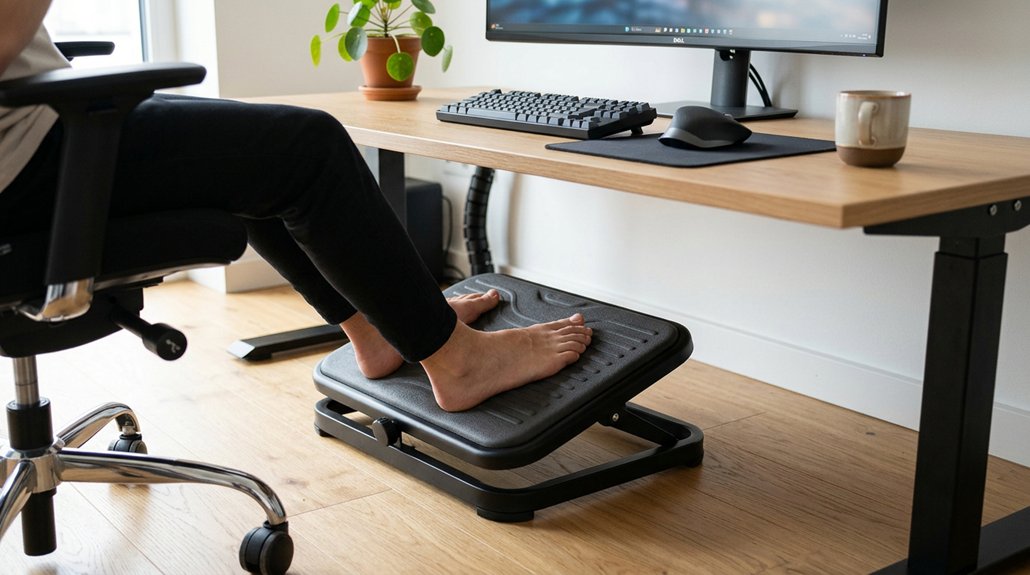
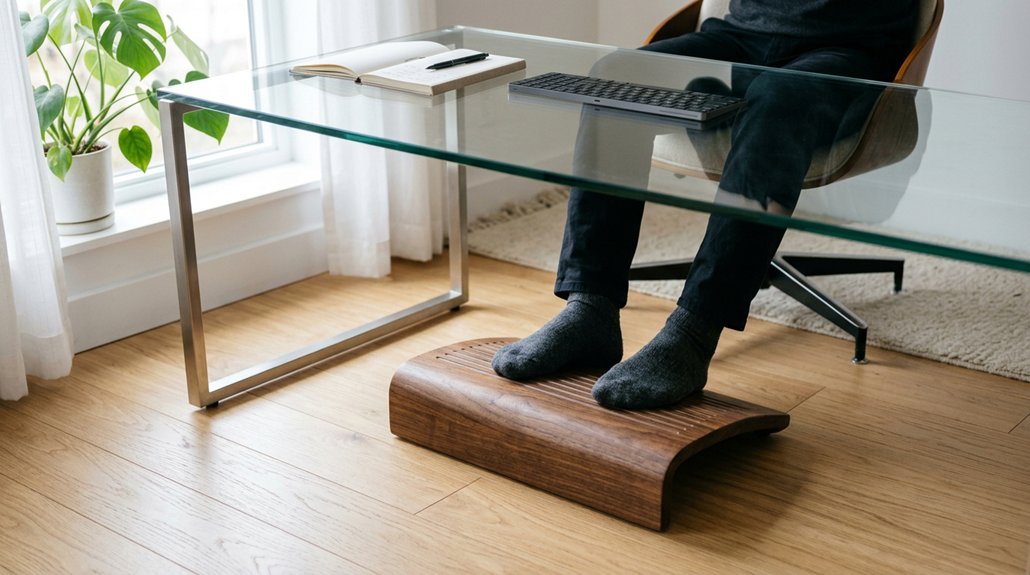
Have you ever wondered how to make long hours at your desk more comfortable and healthier? An ergonomic footrest is a simple yet effective device that supports your feet in a natural, comfortable position, promoting proper posture.
It helps keep your feet flat and your legs at ideal angles, which reduces strain on your lower back. By supporting your legs and feet correctly, it encourages better circulation, preventing numbness and fatigue. Many ergonomic footrests are adjustable, letting you customize height and angle for your unique needs. Some models even feature rocking or locking mechanisms to stimulate foot movement, keeping blood flowing. Incorporating the right height adjustability can make a significant difference in your comfort during extended sitting periods.
Using a footrest under your desk is a smart way to prevent common sitting-related issues, like back pain and circulation problems, especially during long work hours.
What Are the Key Health Benefits of Using a Footrest?
Using a footrest can improve your blood flow and reduce discomfort by supporting better circulation in your legs and feet. It also helps prevent conditions like varicose veins and swelling caused by prolonged sitting. Additionally, a footrest promotes proper posture, which can decrease muscle tension and lower back pain. Proper ergonomic adjustments, such as height and tilt features, further enhance these health benefits.
Promotes Blood Circulation
Elevating your feet with a footrest can greatly boost blood circulation in your lower extremities, reducing the risk of health issues like deep vein thrombosis (DVT) during extended periods of sitting.
When you use a footrest, you encourage movement and repositioning of your legs, which helps prevent blood pooling, leg swelling, and numbness. Dynamic footrests, like rocking designs, stimulate vascular health by promoting slight muscle activity, further improving circulation.
Additionally, elevating your feet opens knee and hip angles, facilitating better blood flow and reducing stiffness. Using a footrest helps you maintain better circulation, decrease leg fatigue, and reduce back pain, supporting longer, more comfortable sitting sessions. Incorporating footrests with natural rocking mechanisms can amplify these circulation benefits by promoting active leg movement.
Prevents Varicose Veins
Preventing varicose veins is a key benefit of incorporating a footrest into your workspace, as it encourages regular movement and reduces the pressure buildup in your leg veins. By elevating your feet, a footrest helps improve circulation, preventing blood from pooling in your legs and decreasing vein stress. Additionally, using a footrest with a textured surface or dynamic features can promote natural foot movement, which further aids in venous return. Dynamic footrests, like rocking models, stimulate muscle contractions in your calves, further enhancing venous return. Consistent use during long sitting periods reduces leg swelling and stiffness, which are factors that can worsen or lead to varicose veins. Using a footrest effectively lowers your vein pressure, making it easier to maintain vascular health over time and reducing your overall risk of developing varicose veins.
Supports Postural Alignment
Supporting proper postural alignment is one of the main health benefits of incorporating a footrest into your workspace. An ergonomic footrest helps keep your spine in a neutral position, which reduces lower back pain. It encourages proper hip and knee angles, distributing your body weight evenly and preventing slouching.
Elevating your feet with a footrest also lets you lean back into your chair and better utilize lumbar support. This lowers pressure on your posterior thighs and knee area, reducing discomfort during long periods of sitting.
Plus, dynamic footrests that rock or move promote active sitting, encouraging frequent postural adjustments. This not only supports musculoskeletal health but also minimizes stiffness. Foam cushions on some kneeling chairs help distribute weight and improve comfort during extended sitting sessions.
How Does a Footrest Improve Posture and Spinal Alignment?
Have you ever wondered how a simple footrest can enhance your posture? When you use one, it helps you sit with your feet properly supported, promoting a neutral sitting posture. This support keeps the natural curve of your spine intact and reduces lower back strain.
Elevating your feet opens your hip and knee angles, aligning your lower body and preventing slouching or forward leaning that misaligns your spine. By supporting your feet, a footrest allows you to lean back into the chair’s backrest, distributing your body weight more evenly.
Dynamic footrests, like rocking models, encourage small movements, reducing stiffness and promoting healthy spinal positioning. Additionally, using a footrest can help improve pressure distribution, minimizing discomfort during prolonged sitting sessions. Overall, a footrest helps you sit upright, ultimately improving posture and lowering back discomfort.
In What Ways Does a Footrest Promote Better Circulation and Reduce Leg Swelling?
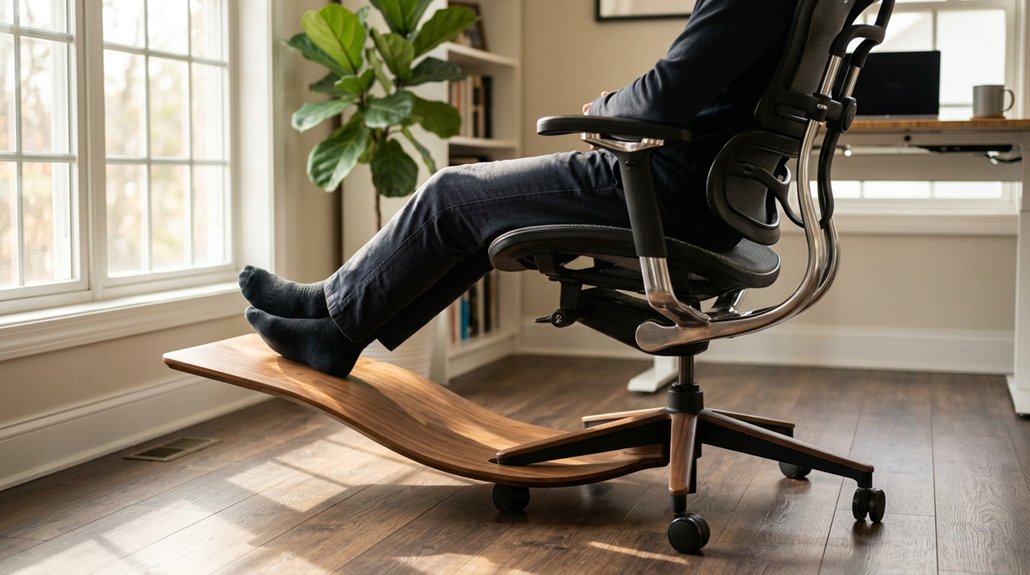
Ever wonder how a footrest can boost circulation? By elevating your feet, a footrest opens up knee and hip angles, which improves blood flow and encourages better circulation during long sitting periods.
Using a footrest also promotes subtle leg movements and dynamic foot positioning, reducing stiffness and helping venous return. This can prevent leg swelling and conditions like deep vein thrombosis.
Additionally, supporting your feet decreases pressure on veins, lowering the risk of varicose veins caused by static sitting. Dynamic footrests with rocking functions stimulate continuous blood flow, fighting numbness, swelling, and fatigue.
Why Is Foot Support Important for Preventing Foot and Ankle Pain?
Why is proper foot support crucial for preventing foot and ankle pain? Using a footrest provides this support by evenly distributing pressure on your feet, which helps reduce soreness and prevents conditions like plantar fasciitis.
Elevating and supporting your feet keep them in a natural position, lowering strain on your ankle joints and decreasing discomfort during long periods of sitting. A footrest also helps align your feet and ankles correctly, minimizing nerve compression that can cause pain. Additionally, dynamic footrests promote subtle movements, improving circulation and reducing stiffness.
Supporting your feet off the floor, especially if you’re shorter, prevents dangling and localized pressure in your ankles and heels. Proper foot support also helps in maintaining ergonomic alignment, which reduces overall musculoskeletal strain during extended sitting. Overall, proper support through a footrest is crucial for maintaining foot and ankle health during extended sitting.
What Are the Benefits of Dynamic Footrests for Active Sitting?
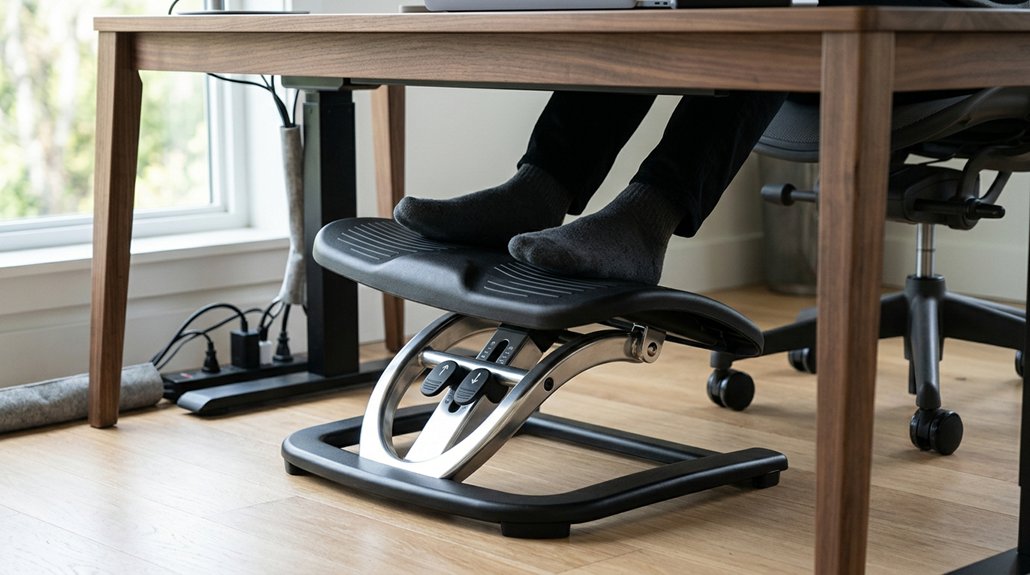
Dynamic footrests encourage you to keep moving and adjust your posture naturally throughout the day. This continuous movement improves your overall comfort and reduces stiffness, while also helping you stay more flexible in your sitting position. Incorporating a footrest like this can make a noticeable difference in how your body feels during long periods of sitting, especially when considering the importance of ergonomic support for maintaining health.
Promotes Continuous Movement
Using a dynamic footrest encourages you to make frequent postural adjustments, which helps reduce stiffness and muscle tension during prolonged sitting. The rocking footrest promotes continuous movement that keeps your legs active, preventing blood from stagnating. This subtle motion boosts circulation, lowering the risk of vascular issues like varicose veins.
With each gentle rock, you engage muscles naturally, contributing to better metabolic health and reducing discomfort. Incorporating a footrest into your workspace allows you to stay active without leaving your seat. This simple action supports overall lower limb health and keeps you alert throughout the day.
Regular movement from the footrest makes long sitting periods more comfortable and helps maintain your energy levels. Staying active with this tool is a small change that delivers significant health benefits.
- Keeps you moving without leaving your chair
- Reduces stiffness and muscle tension
- Boosts circulation during long sitting sessions
- Prevents blood pooling and swelling
- Supports overall lower limb health
Enhances Postural Flexibility
Active sitting with a footrest enhances your postural flexibility by allowing natural movement and adjustments throughout the day. Dynamic footrests, like rocking models, encourage subtle foot motions that help reduce strain and muscle tension. These movements promote frequent postural shifts, improving circulation and preventing lower extremity discomfort during long periods seated. The table below highlights how dynamic footrests support a flexible, upright posture:
| Benefit | How it Helps | Key Outcome |
|---|---|---|
| Promote movement | Encourages foot shifting | Reduce strain in lower back |
| Improve circulation | Stimulates blood flow | Prevent fatigue |
| Support posture | Enables natural weight shifts | Reduce discomfort |
| Enhance activity | Stimulates fidgeting | Boost overall energy |
| Improve spinal alignment | Supports intermittent adjustments | Minimize risks like sciatica |
How Can Footrests Help Shorter Users Sit More Comfortably?
Have you ever felt uncomfortable because your feet don’t reach the floor when sitting at your desk? A footrest can help address this issue by keeping your feet planted on a stable surface. This not only improves posture but also reduces strain on your legs and lower back.
A footrest helps improve posture and reduces strain by keeping your feet supported and stable.
By supporting your feet, a footrest helps you maintain a neutral sitting position, preventing dangling legs and uneven pressure.
Here are some ways it makes a difference:
- Keeps your feet stable and flat on a surface
- Promotes better spine and hip alignment
- Supports proper weight distribution
- Prevents circulation issues in your lower limbs
- Keeps you more comfortable during long periods of sitting
Using a footrest truly enhances your comfort, especially if your desk is designed for taller users.
What Features Should You Consider When Choosing an Ergonomic Footrest?
When choosing an ergonomic footrest, look for one with adjustable height and angle to fit your body perfectly.
Make sure it has a non-slip surface and is made from durable materials for stability and long-term use.
Also, consider portable options that are easy to move and suitable for your workspace.
Adjustable Height and Angle
Choosing an ergonomic footrest with adjustable height and angle is essential for customizing your seating experience. It allows you to find the perfect position that promotes proper hip and knee angles, supporting spinal alignment and reducing discomfort.
An adjustable footrest guarantees you can modify the height (usually between 4 to 12 inches) to suit your workspace and body size. The adjustable angle feature (around 30 to 45 degrees) helps keep your feet comfortably positioned, reducing plantar pressure.
These options also improve circulation and encourage movement, preventing stiffness and fatigue. When selecting, consider:
- Easy-to-use adjustment controls
- Range of height and angle settings
- Compatibility with different chair heights
- Stability during adjustments
- Durability of materials and non-slip surfaces
Non-Slip Surface Features
A footrest with a non-slip surface provides added security and stability during use, helping to prevent slips or falls as you shift positions.
An ergonomic footrest with textured or grooved surfaces enhances grip, allowing natural foot movement without restriction or discomfort. Materials like rubberized or patterned plastic are ideal, as they offer durability and strong non-slip properties.
Non-skid bases further improve stability by keeping the entire footrest secure on various floor types, even during rocking or shifting.
Choosing a footrest with a non-slip surface is essential for safety, especially if you tend to move your feet frequently. These features guarantee your footrest remains stable, supporting proper ergonomics and reducing fatigue throughout your workday.
Durable and Portable Design
The durability and portability of an ergonomic footrest are key factors to guarantee long-lasting support and versatility. A durable footrest, made from high-quality materials like metal, aluminum, or heavy-duty plastic, withstands regular use without cracking or breaking.
A portable design, featuring a lightweight and compact build, allows you to move it easily between workspaces or different areas. Opt for a footrest with an adjustable angle, typically 30-45 degrees, to customize your comfort and support.
Additionally, look for options with a width of 15-24 inches, providing enough space for natural foot movement and pressure relief. This combination of durable, portable, and adjustable features guarantees your footrest stays reliable and adaptable to your ergonomic needs.
- Lightweight and compact for easy transport
- Made from high-quality, long-lasting materials
- Adjustable angle for personalized comfort
- Wide enough to support natural foot placement
- Designed to withstand regular pressure without damage
Which Types of Footrests Are Best for Different Workspaces?
Wondering which footrest works best for your workspace? Multi-height adjustable footrests, like Steelcase models, are perfect for shared or variable setups, offering durability and customizable comfort.
Multi-height adjustable footrests like Steelcase models offer versatile comfort for various workspace setups.
If you sit for long periods and want to encourage movement, rocking footrests, such as those from Humanscale, promote dynamic circulation and reduce stiffness.
For those who switch between sitting and standing, stabilizing footrests like Safeco’s designs provide essential lower body support at sit-stand stations. Additionally, tall footrests from brands like Vivo and Safeco suit elevated counters or tall desks, adjustable from 4 to 12 inches.
Choosing the right type depends on your workspace configuration, height, and movement preferences, ensuring peak comfort and ergonomic support throughout your workday.
How Should You Properly Position and Use a Footrest for Maximum Comfort?
Have you ever noticed how proper footrest positioning can greatly boost comfort during long work hours? To achieve this, focus on the proper use of your footrest to improve your sitting posture.
Place the footrest directly under your feet and slightly in front, so you can lean back comfortably into your chair. Keep your feet casually resting on it to maintain open knee and hip angles, which helps blood flow.
Adjust the height and angle (between 30-45 degrees and 4-6 inches tall) to guarantee your feet are fully supported, avoiding dangling or pressure points. Using a dynamic footrest, like a rocking model, encourages micro-movements that stimulate circulation.
Regularly shift your foot placement to promote active sitting and prevent stiffness.
- Position under feet, slightly forward
- Keep feet relaxed on the footrest
- Adjust height and angle for support
- Use a rocking model for movement
- Shift feet often to stay active
What Are the Long-Term Benefits of Regularly Using a Footrest?
Regularly using a footrest offers significant long-term health benefits by promoting proper posture and enhancing circulation. It helps maintain spinal alignment, reducing the risk of lower back pain caused by poor sitting habits (Anderson & Tichenor, 2007).
Over time, improved circulation in your legs lowers the chances of developing dangerous conditions like deep vein thrombosis, varicose veins, and leg swelling (Lin et al., 2012; Tchsen et al., 2013). Consistent use encourages active sitting, which decreases muscle stiffness and physical fatigue during prolonged periods at your desk (Karakolis & Callaghan, 2014; Fenety, Walker & Keir, 1999).
Additionally, footrests evenly distribute pressure across your lower body, preventing soreness, foot pain, and plantar fasciitis, supporting overall musculoskeletal health.
How Do Footrests Help Reduce Sedentary Lifestyle Risks?
How do footrests combat the health risks associated with a sedentary lifestyle? Footrests encourage movement and help reduce the strain on your legs during long sitting periods. They stimulate blood flow and improve vascular health, which can lower the risk of circulatory problems like deep vein thrombosis (DVT).
Dynamic footrests, such as foot rockers, promote subtle physical activity, helping to prevent blood pooling and leg swelling. By supporting frequent postural adjustments, footrests also decrease muscle stiffness and fatigue. This active sitting encourages better circulation and flexibility, reducing discomfort over time.
Regular use of a footrest creates healthier habits, ultimately helping you mitigate health issues linked to prolonged inactivity and sedentary living.
- Stimulate blood flow to prevent DVT
- Reduce leg swelling and fatigue
- Encourage active sitting and movement
- Mitigate muscle stiffness and tension
- Support better overall circulation
Why Is Choosing a Sturdy, Adjustable Footrest Important for Your Health?
Why is choosing a sturdy, adjustable footrest essential for maintaining your health at work? A sturdy footrest provides stable support, preventing wobbling or cracking that can lead to poor posture and discomfort.
An adjustable footrest lets you set the height and angle to achieve proper hip and knee positions (30-45 degrees), which supports ideal spinal alignment and reduces lower back pain. It also accommodates different chair heights and shoe types, ensuring your legs aren’t dangling, which improves circulation and lowers risks like deep vein thrombosis and leg swelling.
Non-slip surfaces keep your feet secure during movement, encouraging active sitting. By enabling quick posture adjustments, a customizable footrest helps decrease fatigue, boost blood flow, and promote long-term ergonomic health during sedentary work hours.
Frequently Asked Questions
Is a Foot Rest Good for You?
Yes, a footrest is good for you because it improves your posture, reduces back pain, boosts circulation, and prevents varicose veins. It also keeps your feet supported and encourages active sitting, making long periods more comfortable.
Should Your Feet Be Flat on the Floor or Footrest?
Your feet should be flat on the floor or a footrest to keep your hips and knees at proper angles, support your back, improve circulation, prevent discomfort, and promote better posture during prolonged sitting.
Does Footrest Help With Varicose Veins?
Yes, a footrest helps with varicose veins by promoting better circulation, reducing pressure on leg veins, and encouraging micro-movements. It decreases stiffness and venous pooling, supporting your vascular health and lowering the risk of developing or worsening varicose veins.
When Should a Footrest Be Provided?
You should provide a footrest whenever your feet don’t comfortably reach the floor, or if you use an elevated chair or sit for extended periods, to support proper posture, reduce strain, and promote healthy circulation.