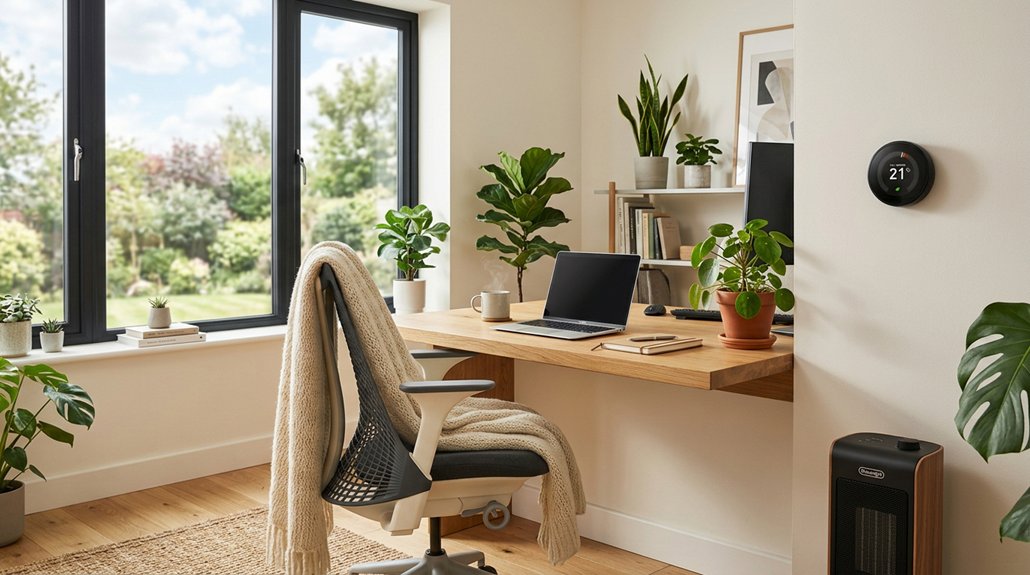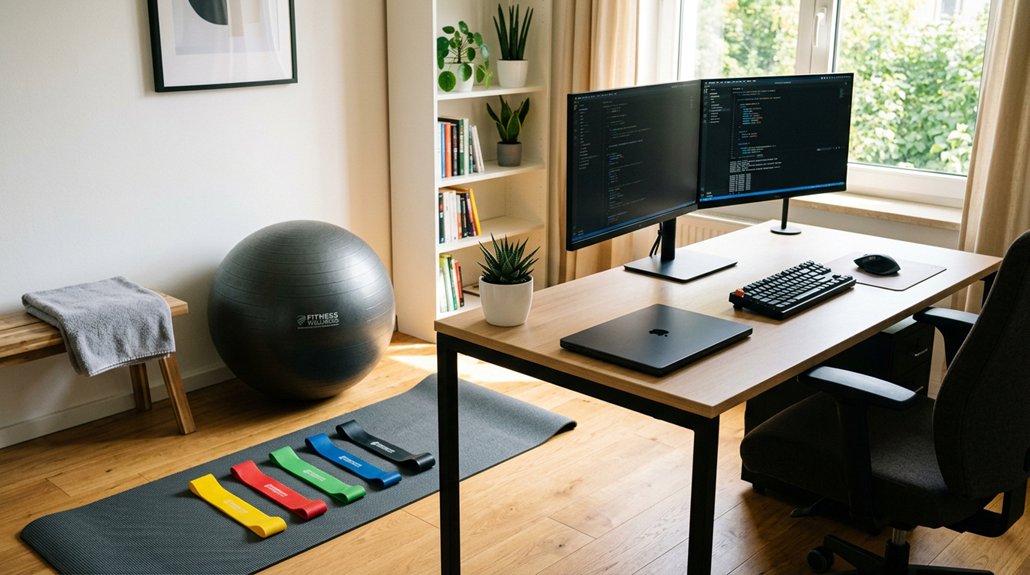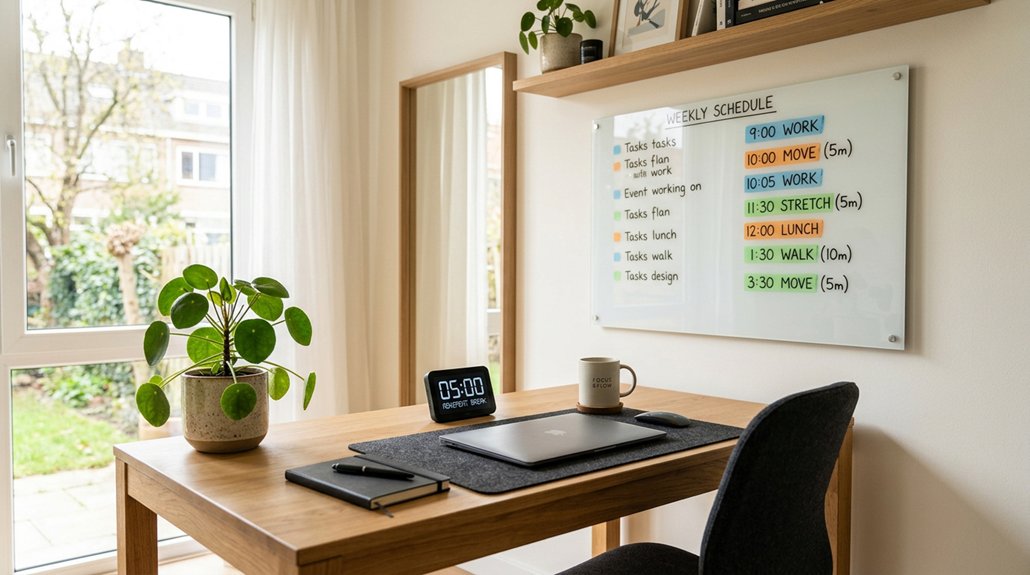
To schedule movement breaks at work, set reminders every hour using digital alarms or calendar alerts to prompt you to stand, stretch, or walk. Use fitness trackers or wellness apps for personalized notifications, and plan your breaks during natural low-energy times like mid-morning or after lunch. Keep your workspace organized to encourage movement, such as placing essential items at a distance. If you want to find easy-to-follow strategies to make this a habit, there’s more to discover below.
Why Movement Breaks Are Essential During Long Work Sessions
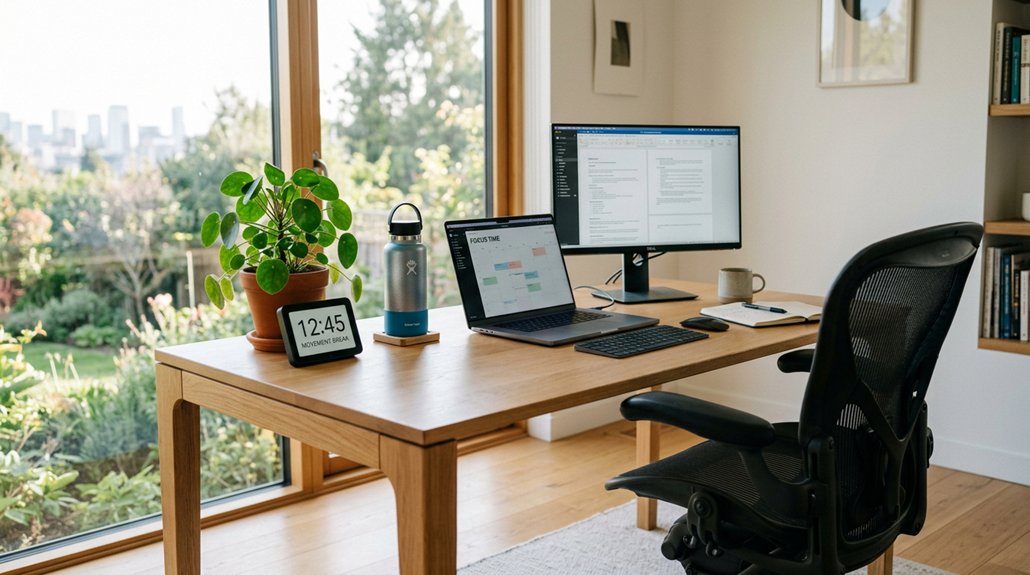
Long periods of sitting can slow blood flow and increase your risk of heart disease, diabetes, and blood clots. That’s why incorporating movement breaks throughout your workday is essential.
Prolonged sitting stiffens muscles, especially hip flexors, shoulders, and neck, leading to discomfort and poor posture. Regular movement breaks help alleviate this tension by stretching tight areas, promoting better physical health.
Brief activity boosts oxygen delivery and flushes out toxins, keeping your energy levels high and your mind focused. Additionally, moving stimulates endorphin release, reducing stress and improving mood. Incorporating active under-desk movement through features like footrest rockers can further support continuous, subtle leg movements that promote circulation even during work hours.
Benefits of Taking Regular Movement Breaks at Work
Taking regular movement breaks at work offers numerous health and productivity benefits. Moving throughout the day improves blood circulation, reducing health risks associated with prolonged sitting like heart disease, diabetes, and blood clots. Short breaks enhance focus, mental alertness, and productivity by fighting fatigue. They also relieve muscle tension, preventing musculoskeletal issues like neck strain, rounded shoulders, and weak glutes. Additionally, movement breaks boost mood and reduce stress by releasing endorphins, promoting overall well-being. Incorporating movement throughout the day can lower absenteeism and healthcare costs linked to sedentary lifestyles. Here’s a visual summary:
| Benefits | Impact | Result |
|---|---|---|
| Improved blood circulation | Reduced health risks | Better cardiovascular health |
| Enhanced focus & alertness | Increased productivity | Quicker task completion |
| Muscle tension relief | Prevention of musculoskeletal issues | Less discomfort |
| Mood & stress improvement | Better mental health | Increased job satisfaction |
A balanced ergonomic setup can further enhance the effectiveness of movement breaks by supporting proper posture during breaks and preventing strain.
When Is the Best Time to Take Movement Breaks?
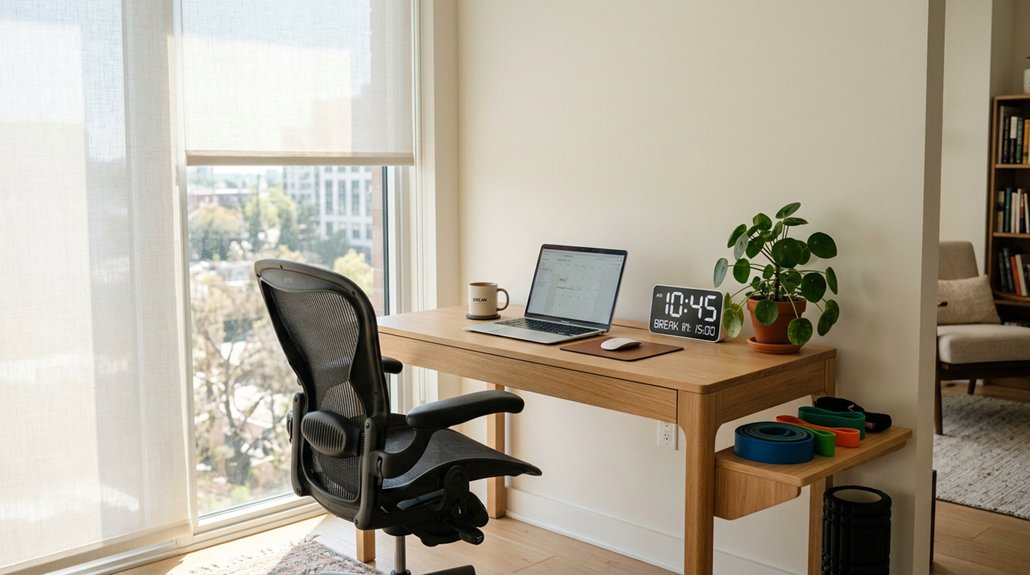
Scheduling movement breaks at ideal times during your workday maximizes their benefits and keeps you energized. The best time to take short breaks is every hour, interrupting prolonged sitting and boosting circulation. Incorporate 2-5 minute movement breaks between meetings or phone calls to sustain focus and energy. Using ergonomic accessories such as adjustable footrests can further enhance comfort during these breaks. Mid-morning, after lunch, and mid-afternoon are prime times, helping you counteract natural dips in alertness. Taking movement breaks before or after high-concentration tasks can reduce muscle tension and mental fatigue, improving your performance. To stay consistent, use calendar reminders or alarms to prompt these breaks. By timing your movement breaks strategically, you guarantee they’re effective, preventing stagnation and supporting your overall productivity throughout the workday.
How to Set Up Your Workspace for Easy Movement
Start by choosing an adjustable desk and chair that let you switch easily between sitting and standing to keep movement flowing. Organize your workspace so you’ll need to reach or stand often, encouraging micro-movements during the day. Keep open space and ergonomic accessories nearby to support light exercises and spontaneous breaks. Incorporate features like memory presets to quickly adjust desk heights and seamlessly alternate between sitting and standing positions.
Adjustable Desk Options
Setting up your workspace with adjustable desk options makes it easy to switch between sitting and standing throughout the day, promoting movement and reducing health risks associated with prolonged sitting. Adjustable standing desks let you change positions seamlessly, encouraging physical movement and better circulation. To maximize comfort, set your desk height so your elbows are at a 90-degree angle, keeping your wrists neutral whether sitting or standing. Use desk converters or electric adjustable desks for easy postural changes. Incorporate reminders or timers to prompt you to stand or move every 30–60 minutes. To enhance standing comfort, pair your adjustable desk with anti-fatigue mats or balance boards. Here’s a quick guide:
| Desk Type | Key Feature | Benefits |
|---|---|---|
| Adjustable standing desks | Smooth height adjustment | Promotes seamless movement |
| Desk converters | Converts existing desk to standing height | Flexible setup |
| Electric adjustable desks | Motorized, easy to change height | Reduces strain |
A recent study highlights how height range options support ergonomic flexibility and user comfort during extended work sessions.
Ergonomic Workspace Arrangement
Creating an ergonomic workspace setup helps you move effortlessly throughout the day and reduces strain. Start by positioning your chair and desk so your feet rest flat on the floor, with knees at or slightly below hip level, and elbows forming a 90-degree angle. This promotes good posture and comfort.
Set your monitor at eye level, about 20–30 inches away, to reduce neck strain and encourage regular head and neck movements. Use an adjustable standing desk or sit-stand converter to alternate between sitting and standing, promoting movement.
Keep frequently used items—phone, mouse, notepad—within easy reach to minimize awkward stretching and promote micro-movements like reaching or twisting. Guarantee open floor space near your desk for short stretches or walking in place, making movement a natural part of your routine. Incorporate a space-saving design in your setup to maximize your small workspace without sacrificing functionality.
Practical Strategies to Incorporate Movement Into Your Workday
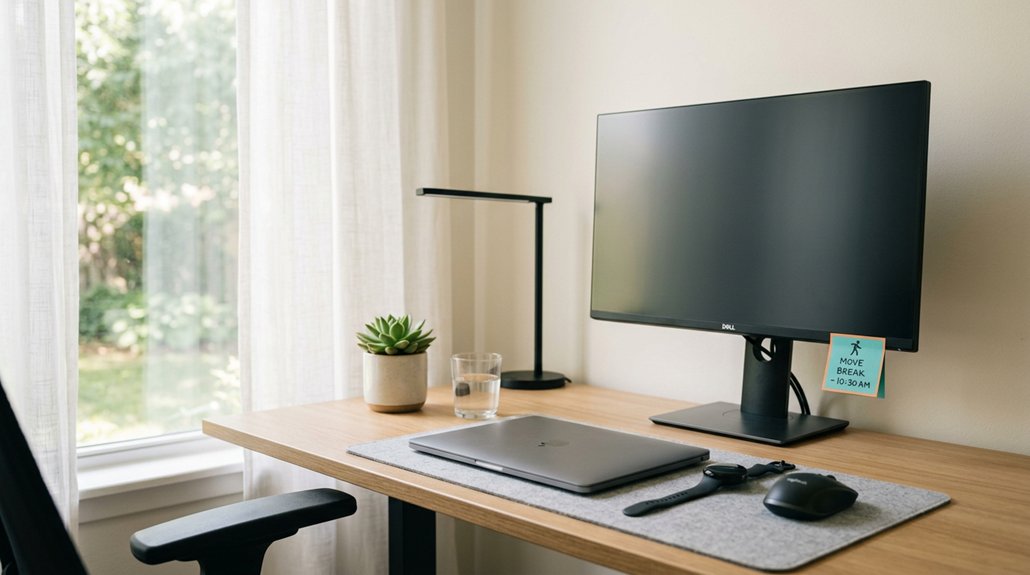
Incorporating movement into your workday is achievable through simple, deliberate actions that fit seamlessly into your routine. To keep your work routine active, set calendar reminders or phone alerts every hour to prompt 2–5 minutes of standing, stretching, or walking.
Incorporate micro-movements like shoulder rolls, ankle circles, or desk twists during phone calls or meetings to reduce static posture. Use standing desks or walking pads to alternate between sitting and standing, allowing natural movement without disrupting workflow.
Plan walking meetings or short group stretch breaks to combine social interaction with physical activity. This “movement snacking” approach, breaking activity into small, manageable chunks throughout the day, stimulates circulation, reduces sedentary risks, and promotes overall well-being, making movement an effortless part of your work routine. Additionally, using under-desk ellipticals can provide a discreet and effective way to stay active during work hours without interrupting your workflow while maintaining quietness and stability.
How to Use Reminders and Alarms to Prompt Breaks
Using reminders and alarms is a simple yet effective way to guarantee you take regular movement breaks throughout your workday. Set digital reminders on your phone or computer to prompt you every 30 to 60 minutes, helping you interrupt prolonged sitting and reduce musculoskeletal risks.
Utilizing posture correction technology from wearable devices can further enhance your awareness and consistency in maintaining good posture during breaks. Use calendar apps to schedule recurring short active breaks of 2–15 minutes, making movement a natural part of your routine. Fitness trackers or wellness apps often feature customizable notifications that encourage micro-movements like stretching, walking, or posture adjustments.
Visual or auditory cues from reminders boost adherence by signaling when to move, improving circulation, reducing fatigue, and boosting energy levels. Incorporating regular reminders with a “movement snacking” approach keeps you physically active without disrupting your workflow.
Movement Activities to Maximize Your Breaks’ Benefits
To get the most out of your breaks, include dynamic stretching exercises like squats or lunges to boost circulation.
Incorporate micro-movements such as ankle circles or chair twists to reduce stiffness and keep joints mobile.
Mixing these activities with quick cardio moves can help you stay energized and healthier throughout the day.
Dynamic Stretching Exercises
Dynamic stretching exercises involve controlled, active movements designed to gently elevate your heart rate and boost flexibility during work breaks. These exercises, like leg swings, arm circles, and torso twists, help improve circulation and reduce muscle tension from prolonged sitting. Incorporating dynamic stretches every hour counteracts tight hip flexors, rounded shoulders, and neck strain. Unlike static stretches, they activate multiple muscle groups, preparing your body for continued activity and reducing injury risk. Regularly scheduled 3–5 minute sessions enhance energy levels and promote better posture. Remember, keeping movements controlled guarantees safety and effectiveness. Here’s a quick comparison of benefits:
| Movement Type | Focus | Benefits |
|---|---|---|
| Dynamic Exercises | Active muscle engagement | Improves circulation and flexibility |
| Static Stretching | Holding stretches, less active | Better for cooling down |
| Micro-Movements | Small adjustments during work | Maintains flexibility throughout day |
| Full-body Stretches | Engaging multiple muscles | Prepares body for continued activity |
Incorporate Micro-Movements Regularly
Incorporating micro-movements into your work routine helps break up static postures and keeps your muscles active throughout the day. Regular micro-movements like shoulder rolls, ankle circles, and chair twists every 30–60 minutes help reduce stiffness and promote circulation.
Short, frequent breaks of 1–2 minutes interrupt prolonged sitting, which breaks help reduce the risk of musculoskeletal pain associated with sedentary work. Combining movements such as wrist flexion/extensions, neck retractions, and chest stretches targets key areas affected by desk work, alleviating tension.
Using gentle, repetitive micro-movements throughout the day can also boost energy levels and mental focus. Scheduling micro-movement reminders hourly supports habit formation and guarantees consistent engagement, maximizing the benefits of your movement breaks.
Best Tech Tools and Apps for Supporting Movement Breaks
Technology offers a variety of tools to help you stay active during the workday. Several apps and platforms support movement breaks, making it easier to combat sitting for long periods.
The Treo platform, for example, offers integrated short movement breaks and workouts, with a free 30-day trial using Org ID: 1074 and Code: 30FREE. Fitness tracker apps and digital reminders help you schedule microbreaks every hour, reducing sedentary risk and boosting circulation. Standing desk software and timer apps prompt you to alternate between sitting and standing, encouraging frequent movement.
Additionally, apps focused on “movement snacking” provide quick bursts of activity that break up long sitting periods, increasing energy and focus. Group wellness platforms also foster social engagement by scheduling and tracking collective movement breaks.
Creating a Workspace That Encourages Movement
To encourage movement, set up your workspace with adjustable ergonomic furniture that easily switches between sitting and standing. Position essential items like printers and water coolers at a distance to invite short walks, and incorporate dynamic seating options that support subtle movements.
Creating designated areas for quick stretches and ensuring ergonomic placement of equipment will motivate you to stay active throughout the day.
Adjustable Ergonomic Furniture
Adjustable ergonomic furniture plays an essential role in creating a workspace that naturally encourages movement throughout the workday. With sit-stand desks and adjustable chairs, you can easily switch between sitting and standing, promoting regular movement breaks. Properly configured ergonomic furniture supports neutral posture, reducing muscle strain and increasing comfort during active periods. Height-adjustable desks can boost standing time by up to 80 minutes daily, lowering risks linked to prolonged sitting. Dynamic seating options like balance ball chairs and wobble stools encourage micro-movements that engage core muscles and prevent static posture. Incorporating easy-adjustability fosters a culture of movement, improving both wellness and productivity.
| Feature | Benefit |
|---|---|
| Sit-stand desks | Easily alternate sitting and standing |
| Adjustable chairs | Supports neutral posture |
| Wobble stools | Promotes subtle micro-movements |
| Height adjustability | Increases movement opportunities |
| Ergonomic setup | Enhances comfort during breaks |
Promote Active Workspace
Creating an active workspace involves thoughtful layout and design choices that naturally encourage movement throughout the day.
Your work environment should include adjustable standing desks and balance ball chairs, making it easy for employees to switch between sitting and standing, boosting regular movement. Design the workspace with enough room for micro-movements like chair twists, ankle circles, and shoulder rolls to reduce risks from static postures.
Place frequently used items, such as printers and trash bins, farther away, prompting taking short, walking breaks and increasing steps. Integrate walking pads or treadmill desks to facilitate light walking while working.
Additionally, create designated areas for stretch breaks and group activities, fostering a culture of wellness and encouraging employees to move more during the workday.
Overcoming Common Barriers to Regular Movement Breaks
Overcoming common barriers to regular movement breaks requires strategic adjustments and cultural shifts within the workplace. Time constraints often seem impossible to navigate, but scheduling micro-movement breaks of just 2–5 minutes each hour easily fits into busy routines without sacrificing productivity.
Gaining management support is essential; when leaders encourage breaks and implement wellness policies, participation naturally increases. Many employees fear that taking breaks appears unprofessional, but normalizing movement as a productivity booster helps reshape perceptions.
Using digital reminders—like calendar alerts or fitness trackers—can combat forgetfulness, ensuring you don’t skip breaks. Additionally, redesigning workspaces with adjustable desks or active seating makes movement more accessible and less disruptive, supporting consistent, healthy habits throughout the day.
Tracking Your Movement to Stay Consistent
Tracking your movement throughout the workday is essential for staying consistent with your activity goals. Using digital tools and fitness trackers that send hourly reminders helps prompt timely movement breaks, ensuring you stick to your plan. Logging your activity in a work calendar or app boosts accountability and keeps you aware of your adherence to hourly or bi-hourly goals. Recording micro-movements like shoulder rolls or desk stretches contributes to reaching daily targets and improving posture. To deepen your understanding, consider this tracking overview:
| Method | Frequency | Benefits |
|---|---|---|
| Digital Reminders | Every hour | Prompts consistent movement |
| Activity Logging | Daily or weekly review | Highlights patterns, boosts motivation |
| Micro-movements | Multiple times a day | Enhances posture, maintains energy |
Regular review of your tracked data supports habit formation and sustained consistency.
Adjusting Your Movement Routine Based on Your Workflow
Adjusting your movement routine to match your workflow requires a flexible approach that aligns activity breaks with your work tasks. Schedule short, frequent microbreaks during low-intensity periods or between meetings to reduce workflow disruption and maintain focus.
Use calendar or app reminders to prompt a 5-minute activity every hour, adjusting the timing based on your productivity peaks and task demands for better engagement. Incorporate active breaks like standing calls or desk stretches during long virtual meetings, which counteract prolonged sitting without interrupting collaboration.
Adapt the length and type of movement—be it walking, stretching, or joint mobility—depending on the upcoming task’s mental or physical intensity. Prioritize flexibility by self-scheduling breaks around deadlines or high-focus periods to keep moving without sacrificing work output.
Building a Movement-Friendly Culture at Work or Home
Creating a movement-friendly culture at work or home encourages consistent activity habits that boost energy, focus, and overall health. Research shows that helping employees or household members incorporate regular movement improves work life and well-being.
Integrating solutions like standing desks, walking pads, and active seating supports frequent movement and better posture. Organizing group activities such as walking meetings, stretch breaks, and lunch walks promotes social interaction and a supportive environment around movement.
Leadership endorsement and visible participation motivate others to follow suit, embedding movement into daily routines. Scheduling reminders and calendar prompts for microbreaks further helps individuals consistently add movement snacks, reducing health risks from prolonged sitting.
Building this culture fosters healthier, more dynamic spaces that make movement a natural part of everyday life.
Frequently Asked Questions
What Is the 3 3 3 Rule for Working?
The 3 3 3 rule encourages you to take movement breaks every three hours, lasting at least three minutes, with three different activities or stretches. This helps reduce strain, boost energy, and improve focus during work.
How Often Should You Take Movement Breaks?
You should take movement breaks every 30 to 60 minutes. Even brief micro-movements throughout the day can help, but aiming for a 5 to 10-minute active break each hour is most effective for circulation and reducing stiffness.
How to Make Active Breaks in the Workplace?
You make active breaks in the workplace by using digital reminders, encouraging walking or stretching during meetings, promoting group stretch sessions, and incorporating standing workstations. These strategies naturally embed movement into your daily routine.
What Are the Activities for Movement Breaks?
You can incorporate neck tension relief exercises, wrist and forearm stretches, chest openers, shoulder blade retractions, and micro-movements like shoulder rolls, ankle circles, or chair twists into your breaks to reduce stiffness and improve posture effectively.