Standing desk anti-fatigue mats matter because they reduce muscle fatigue and boost comfort during long hours of standing. They promote micro-movements in your legs and feet, improving blood circulation and preventing stiffness or swelling. Features like cushioning, non-slip backing, and beveled edges enhance safety and support. Choosing the right size and material guarantees stability and long-lasting comfort. Keep your mats in good condition to maintain benefits—continue exploring for more tips and options.
How Do Anti-Fatigue Mats Reduce Standing Fatigue?
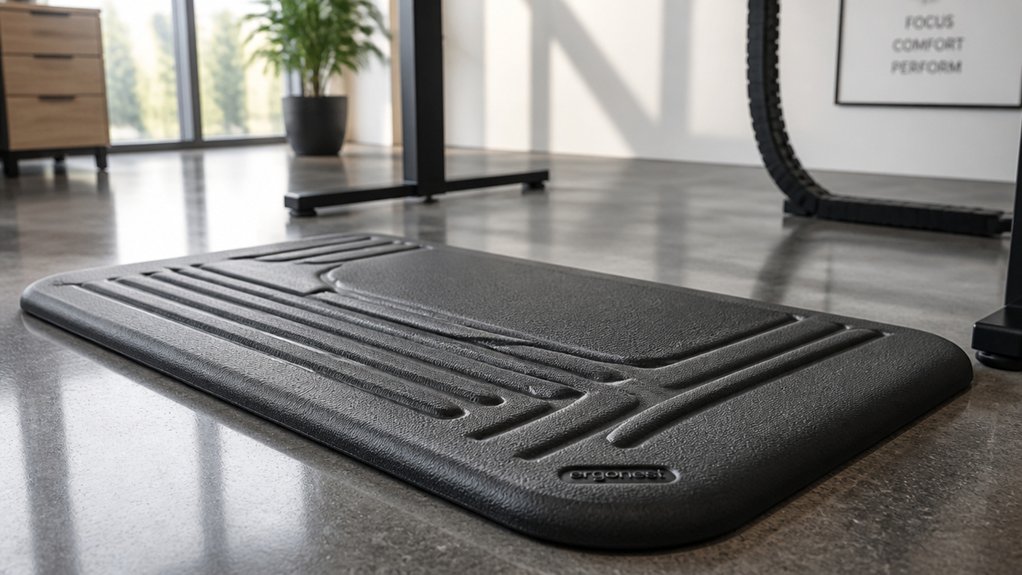
Ever wonder how anti-fatigue mats actually reduce the tiredness you feel after hours of standing? It’s because they provide a cushioned surface that encourages subtle micro-movements in your legs and feet. These tiny shifts prevent muscle locking and stiffness that often come with prolonged standing.
As you move slightly, your muscle pump mechanism activates in your calves, boosting blood flow and helping circulate blood more effectively. This reduces pooling that causes swelling and discomfort.
What Features Make an Anti-Fatigue Mat Comfortable and Supportive
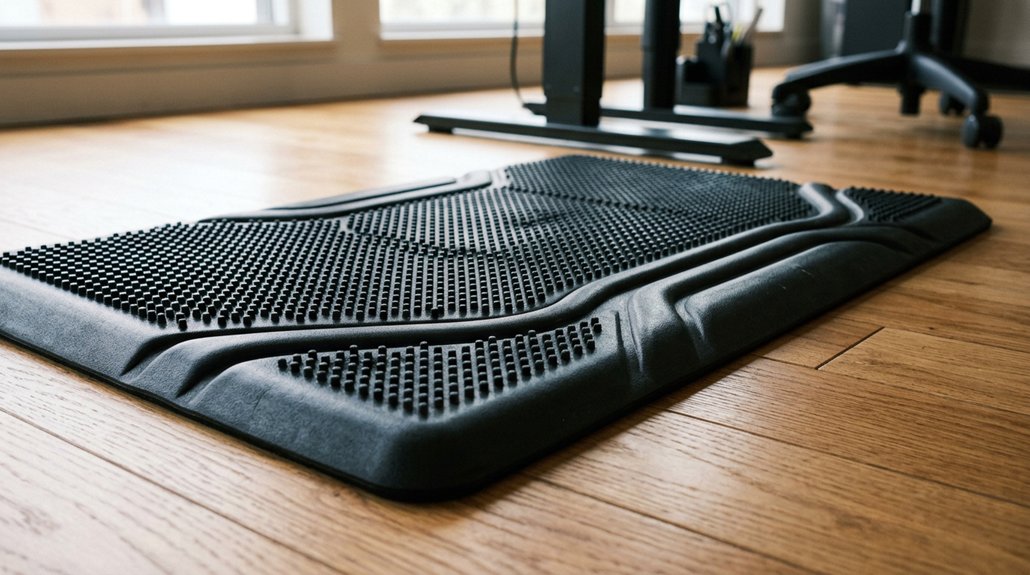
To find an anti-fatigue mat that’s comfortable and supportive, start by considering the materials and density; thick, high-quality foam or polyurethane offers better cushioning. Make sure the size fits your stance and allows for natural shifts, while safety features like beveled edges and non-slip backing keep you secure. Additionally, unique surface textures can boost circulation and reduce fatigue through subtle micro-movements. Ensuring the mat is made from durable materials that resist punctures, tears, and water damage will also help extend its lifespan and maintain consistent support.
Material Composition and Density
The comfort and support of an anti-fatigue mat largely depend on its material composition and density. High-quality anti-fatigue matting combines materials like high-density foam or polyurethane to balance cushioning and firmness, which is essential for comfort during long hours at standing desks.
Foam mats, although soft and affordable initially, tend to compress permanently and lose support, making them less suitable for extended standing. Rubber mats are durable, oil- and chemical-resistant, ideal for industrial settings. Vinyl mats are preferred in water-prone areas like kitchens.
The density of the mat affects how stable and supportive it feels; softer mats offer comfort but can be unstable, while firmer mats support longer standing periods and heavier weights. A thickness of at least 3/4 inch enhances shock absorption and pressure relief. Additionally, choosing mats with high-density foam ensures they maintain their shape and supportive qualities over time.
Size, Shape, and Safety Features
Choosing the right size and shape for an anti-fatigue mat guarantees it fits your workspace comfortably and supports proper footing. A mat should be at least 20×30 inches, covering your natural stance width and allowing free foot movement without instability. Common shapes include rectangular for desks, curved for kitchens, and L-shaped for corners, ensuring ergonomic coverage. Beveled edges are essential; they reduce trip hazards by preventing curling. Non-slip backing or textured surfaces enhance stability, stopping the mat from sliding during extended standing. An ideal mat is flat and secure, avoiding shifting or curling that increases safety risks. Additionally, selecting a mat with non-slip features promotes safety and stability during prolonged use. Here’s a quick overview:
| Size | Shape | Safety Features |
|---|---|---|
| ≥20×30 inches | Rectangular, L-shape, curved | Beveled edges, non-slip backing |
| Fits natural stance | Designed for workspace | Prevents trip hazards, stability |
How to Choose the Right Size and Placement for Safety and Comfort
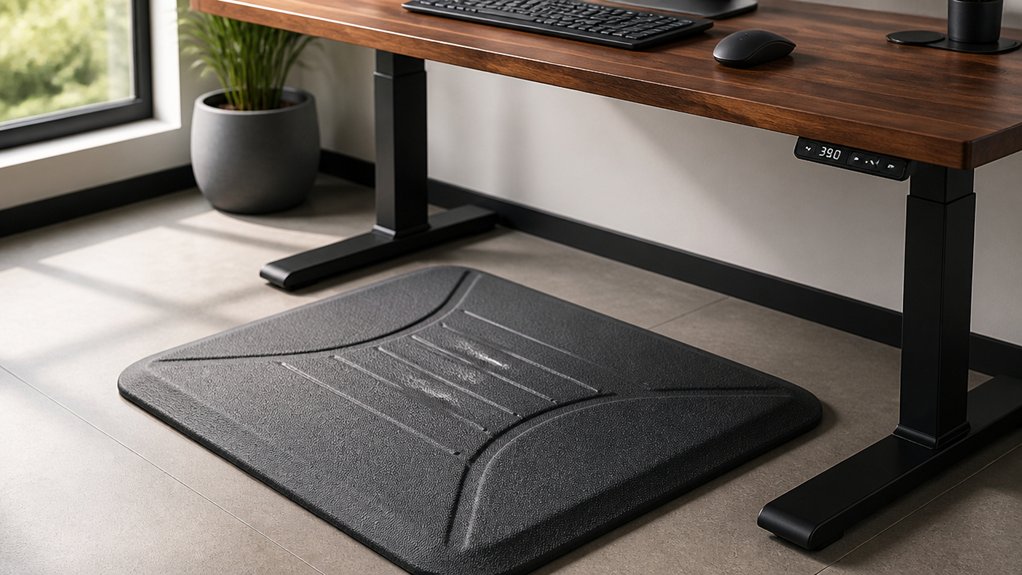
Selecting the right size and placement of an anti-fatigue mat is essential for safety and comfort when using a standing desk. You should choose a standing desk mat that’s at least 20×30 inches to comfortably cover your natural stance and allow movement. The right size helps guarantee stability and reduces fatigue. Additionally, opting for mats made from suitable materials like PVC or TPR ensures they offer both slip resistance and durability for long-term use.
For placement, position the mat directly in front of your desk or workstation to prevent unnatural stances and minimize tripping hazards. Look for mats with non-slip backing and beveled edges, which keep the mat flat and secure, reducing the risk of slipping or curling. Avoid placing your mat in high-traffic areas or where wheeled equipment operates, as these spots can compromise stability and increase accident risks.
Proper size and placement are key to safer, more comfortable standing.
Which Materials and Density Are Best for Standing Desk Pads
Choosing the right material and density for your standing desk pad depends on your environment and comfort needs. Polyurethane and high-density foam provide a good balance of support and cushioning, especially for extended standing periods. Some materials, like gel cushions, combine firm support with soft comfort, offering an alternative for those seeking ergonomic support. While softer mats offer initial comfort, firmer options are better for stability and long-term use.
Material Suitability for Environments
When considering the best materials for standing desk mats, it’s important to evaluate how their properties match your environment. Anti-fatigue mats should suit the setting to maximize comfort and durability.
For office environments, polyurethane mats are ideal since they provide a soft, durable surface that’s easy to clean, ideal for long hours at a hard surface.
High-density foam mats offer firm support, helping to reduce fatigue during extended standing sessions. Rubber mats, though tough and resistant to oils, are better suited for industrial spaces due to their rigidity.
Keep in mind, mats with at least 3/4 inch thickness balance cushioning and stability. To properly support your standing desk routine, choose mats that match your work environment’s demands and enable you to stand comfortably and safely for lengthy periods. Additionally, understanding the foam density and material composition can help you select a mat that offers optimal support and longevity.
Optimal Density for Support
To guarantee your standing desk mat provides ideal support, the material’s density plays a crucial role. Mats designed with high-density polyurethane or firm foam deliver durable, supportive cushioning without being too soft, helping prevent instability during extended periods at your desk.
A thickness of at least 3/4 inch strikes a balance between cushioning and stability, reducing pressure on your heels and forefoot during long shifts. Polyurethane mats offer better comfort and easier cleaning compared to rubber, making them a popular choice.
Soft mats may feel comfortable initially but tend to compress permanently, losing support quickly—suitable only for short-term use. Firm mats encourage micro-movements of your feet and legs, which enhance circulation and reduce fatigue during prolonged standing.
Tips to Keep Your Anti-Fatigue Mat in Top Condition
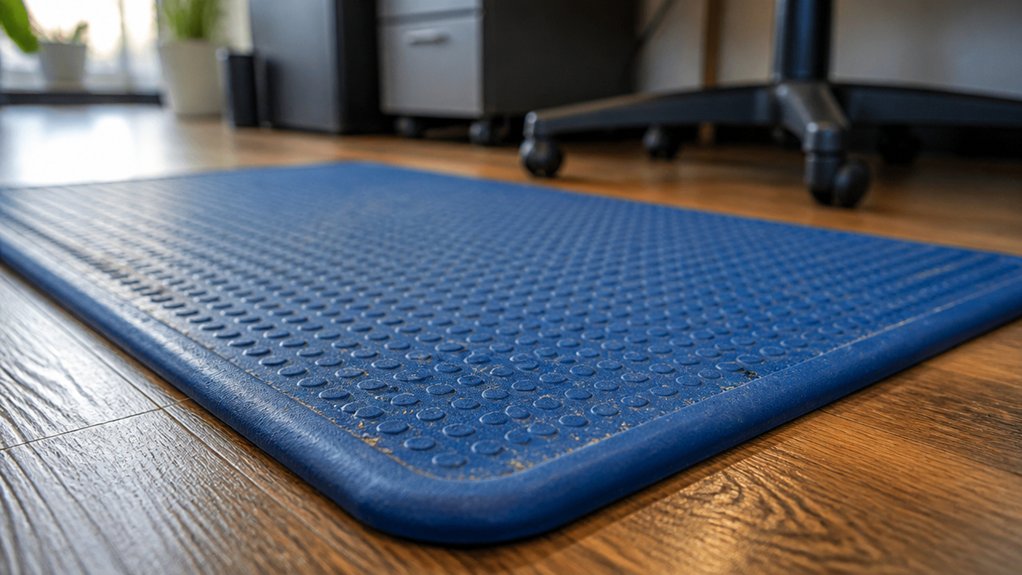
Maintaining your anti-fatigue mat in top condition requires regular care and attention. To keep it effective and safe, start by cleaning the mat with mild soap and water to remove dirt, grease, and food particles that can impair traction and damage the material.
Next, guarantee the edges lie flat and the beveled edges are properly positioned to prevent curling or shifting, which could cause trips or instability.
Finally, frequently inspect the mat for signs of wear, compression, or loss of cushioning. If the mat becomes firm or shows visible damage, consider replacing it to sustain its supportive benefits.
Additionally, avoid placing the mat in high-traffic areas or where wheeled equipment could cause excessive wear or displacement, ensuring your anti-fatigue mat remains in prime condition. Properly supporting ergonomic comfort helps maintain effectiveness and reduces fatigue during prolonged use.
Comparing Top Anti-Fatigue Mats for Your Standing Desk Needs
Choosing the right anti-fatigue mat for your standing desk can greatly enhance comfort and productivity. When comparing top anti-fatigue mats, consider options like the UPLIFT Desk Active Anti-Fatigue Mat, which features high-density foam at least 3/4 inch thick for ideal shock absorption on hard floors.
The Teeter Anti-Fatigue Mat offers a compact size with beveled edges, ensuring safe shifts and secure footing. For durability, iMovR’s EcoLast mats made from polyurethane provide long-lasting comfort and fatigue reduction.
The Topo mat by Ergodriven incorporates a unique terrain design that encourages micro-movements, boosting circulation. Always select mats with beveled edges, appropriate size, and material matching your environment to maximize the ergonomic benefit and reduce fatigue during long standing sessions. Considering ergonomic factors like material and shape can significantly improve your standing experience.
Frequently Asked Questions
Are Anti-Fatigue Mats Worth It for a Standing Desk?
Yes, anti-fatigue mats are worth it because they reduce muscle strain, improve posture, and boost comfort during prolonged standing. They help you stand longer without soreness, maintain productivity, and protect your joints from discomfort and fatigue.
What Are the Disadvantages of Anti Fatigue Mats?
Anti-fatigue mats can wear out, become slippery if poorly maintained, and cause trip hazards if incorrectly placed. They don’t address medical issues like arthritis, and aren’t suitable for high-traffic areas or uneven floors, risking discomfort or injuries.
Do Anti-Fatigue Mats Actually Work?
Yes, anti-fatigue mats work by reducing muscle strain, improving blood flow, and promoting better posture, which can lower discomfort and fatigue by up to 50%. For maximum benefits, guarantee proper mat quality and use supportive footwear.
Does Standing Desk Help With Sciatica?
Standing desks can help with sciatica by promoting better posture, reducing pressure on your lower back, and encouraging movement. Pairing them with anti-fatigue mats and regular breaks optimizes relief and prevents aggravation of your sciatic nerve pain.