To improve your leg circulation at your desk, try doing ankle pumps and circles to stimulate blood flow, and seated leg lifts to activate major muscles. Calf raises can boost circulation in your calves, while thigh squeezes with a soft ball keep your thighs engaged. Tapping your heels and toes or rocking your feet helps prevent pooling. Keep exercising regularly, and you’ll discover more simple ways to stay active throughout your workday.
Why Are Regular Breaks Essential for Better Leg Circulation?
Have you ever wondered why taking regular breaks is essential for your leg health? When you sit for prolonged periods, your leg muscles deactivate, slowing blood flow and impairing venous return.
A powered footrest can encourage active movement and help you incorporate natural rocking motions into your routine, promoting better circulation. Motion and Rocking Mechanism When you break from sitting, muscle contractions in your calf muscle start pumping blood upward, helping maintain healthy circulation. These brief walks or stretches activate the muscles, counteracting gravity’s effects and preventing stagnation.
Regular movement guarantees better circulation, reduces discomfort like leg heaviness and cramping, and protects your veins from long-term damage caused by poor blood flow during desk hours.
What Are the Best Desk Exercises to Improve Your Leg Blood Flow?
Looking for effective ways to boost your leg blood flow while working at your desk? Incorporate simple desk exercises to improve circulation and keep blood moving.
Ankle pumps and circles, done by flexing, pointing, and rotating your ankles 10-20 times per side, stimulate leg veins during sitting.
Seated leg lifts, where you extend one leg straight and hold for 5-10 seconds, activate major leg muscles for better venous return.
Calf raises, lifting heels off the floor 15-20 times, engage the calf muscles, acting as a pump to propel blood upward.
Thigh squeezes with a soft ball, squeezed for 5 seconds and repeated, promote thigh muscle engagement.
Heel and toe taps or rocking movements under your desk provide continuous stimulation, preventing blood pooling during prolonged sitting.
Incorporating balance board accessories can further enhance stability and promote active movement, aiding circulation during desk work.
How Can You Easily Incorporate Movement Into Your Workday?
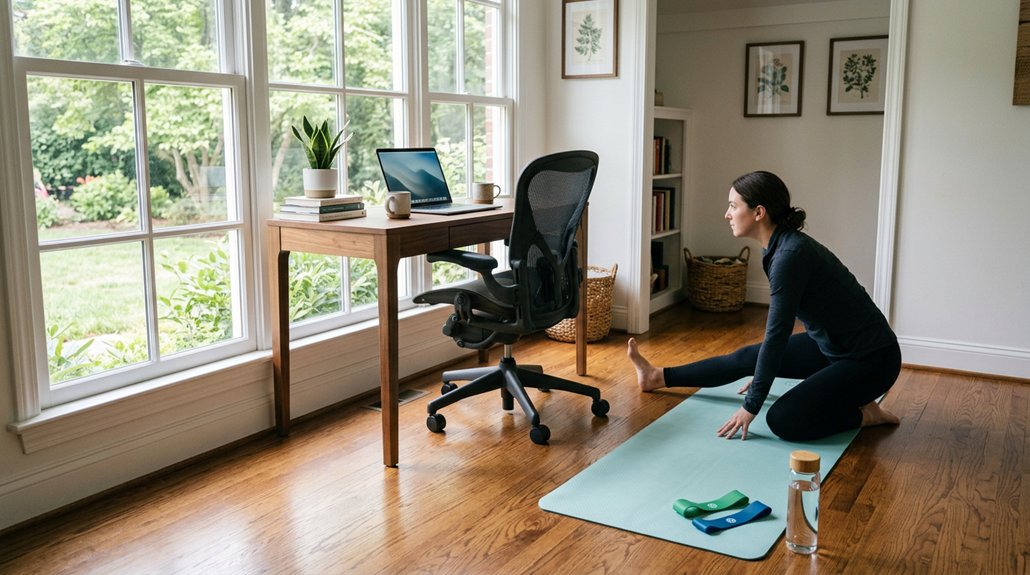
You can easily incorporate movement into your workday by taking short breaks every 30 minutes to stand, stretch, or walk for a few minutes. This activates leg muscles and boosts blood flow, preventing circulation issues. During sitting periods, perform discreet desk exercises like ankle pumps, leg lifts, or calf raises. Using reminders guarantees you don’t forget to move regularly, keeping muscles active and blood circulating smoothly. Additionally, mini-walking tasks such as visiting coworkers or walking to the printer help naturally increase leg movement. To support healthy circulation: compact design helps ensure the equipment fits comfortably under most desks without disrupting your workspace.
What Ergonomic Changes Help Support Healthy Blood Flow?
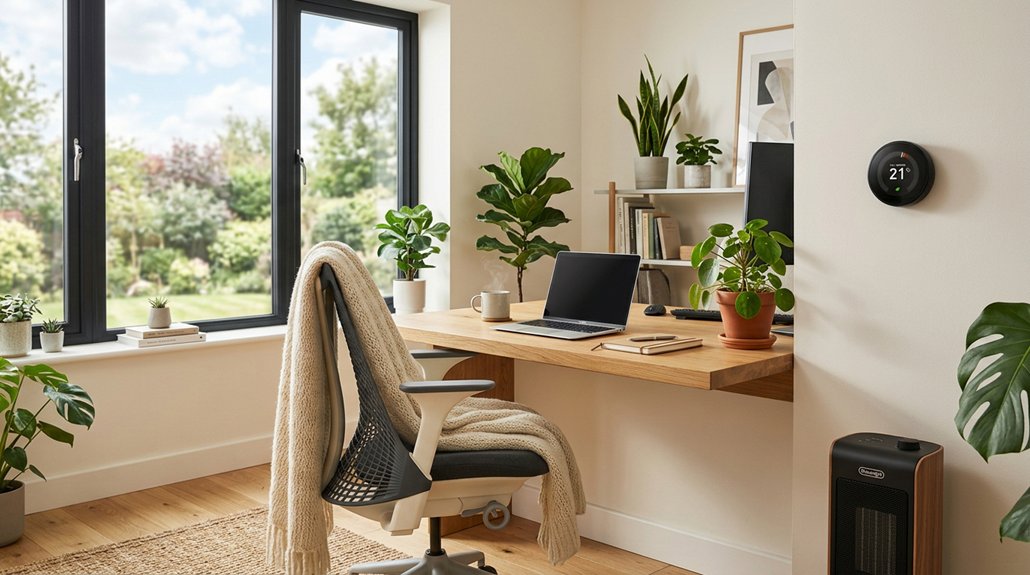
Wondering how to optimize your workspace for better blood flow? Start by adjusting your chair to support your lower back, with knees bent at around 90 degrees and feet flat on the floor or on a footrest. This helps prevent vein compression and keeps blood flowing smoothly.
Use a footrest to slightly elevate your feet, reducing gravitational resistance and encouraging blood back toward your legs. Choose chairs without sharp edges behind the knees to avoid constriction, promoting unrestricted blood flow.
Maintain good ergonomics by keeping elbows close to your body and your screen at eye level, which encourages regular posture changes that support circulation. Incorporating a footrest with massage features can further stimulate circulation and reduce fatigue during long hours of sitting.
Remember to set reminders every 30 to 60 minutes to stand or stretch, supporting healthy blood flow throughout your workday.
How Do You Recognize Signs That You Need Medical Help for Circulation Problems?
Recognizing when blood flow issues require medical attention can save you from long-term health problems. Persistent leg pain, swelling that doesn’t improve with elevation, or skin discoloration may indicate circulation issues like chronic venous insufficiency or PAD. Frequent numbness, tingling, or cold sensations suggest poor circulation needing professional care. Slow-healing cuts, sore ulcers, or varicose veins with discomfort are warning signs. If you notice severe leg cramps, heaviness, or bulging veins worsening, seek help immediately. Below is a table summarizing key signs:
| Sign | Possible Cause | Action |
|---|---|---|
| Swelling that doesn’t improve | Chronic venous or lymphatic issues | Consult healthcare provider |
| Numbness, tingling, cold feet | Peripheral artery disease (PAD) | Seek urgent assessment |
| Slow-healing wounds or ulcers | Vascular insufficiency | Get evaluated promptly |
| Discoloration or varicose veins | Varicose veins, venous issues | Medical check-up |
| Severe cramps or heaviness | Poor circulation | Medical attention needed |
An understanding of vascular health can also aid in early detection and prevention of more serious conditions.
Frequently Asked Questions
How Can I Improve Circulation While Sitting at My Desk?
You can improve circulation while sitting at your desk by performing ankle pumps and circles, extending and lifting your legs regularly, doing calf raises, squeezing your thighs, and taking short standing or walking breaks every half-hour.
How to Stretch Your Legs While Sitting at a Desk?
You can stretch your legs by performing ankle pumps, rotating your ankles, extending your legs, squeezing a ball or knees, and lifting your heels. These moves boost circulation, reduce stiffness, and strengthen your leg muscles while you’re seated.
Can Stretching Improve Circulation in Legs?
Yes, stretching improves leg circulation by activating muscles that push blood upward, reducing vein compression, and preventing blood pooling. Regularly taking breaks to stretch helps maintain healthy circulation, lessen swelling, and counteract the effects of prolonged sitting.
What Is the Best Exercise for Poor Circulation in the Legs?
The best exercise for poor leg circulation is ankle pumps and circles. You should flex, point, and rotate your ankles regularly, combined with seated marching and calf raises, to activate muscles and promote blood flow during your desk work.