To practice 5 mindful breathing exercises with desk stretches, start with diaphragmatic breathing, inhaling deeply through your nose and expanding your belly, then exhaling slowly. Try the 4-7-8 technique to reduce anxiety by inhaling for 4 seconds, holding 7, and exhaling for 8. Incorporate bellows breath for energy, along with simple stretches like neck rolls and shoulder rolls to ease tension. Keep up these routines to stay relaxed and focused—there’s more you can do to enhance your day.
Why Incorporate Breathing and Desk Stretches for Stress Relief
Incorporating mindful breathing and desk stretches into your workday is a simple yet effective way to combat stress and physical discomfort. When you practice breathing exercises like 4-7-8 or diaphragmatic breathing, you improve oxygen flow and activate your parasympathetic nervous system, which promotes calmness.
Sitting at your desk for long periods often causes muscle tension, especially in the neck and shoulders, leading to stiffness and discomfort. Desk stretches targeting these areas offer quick relief, enhancing posture and comfort in less than a minute.
Regularly combining these techniques helps clear your mind, boost focus, and reduces the risk of stress-related health issues. Integrating these small practices into your routine makes managing stress accessible without affecting productivity.
How to Do Easy Breathing Exercises at Your Desk
To practice easy breathing exercises at your desk, start by sitting upright with your feet flat on the floor and your shoulders relaxed. Proper sitting posture helps maximize the benefits of your breathing.
Sit upright with feet flat and shoulders relaxed to enhance your breathing exercises.
Begin with diaphragmatic breathing: inhale deeply through your nose, letting your belly rise, then exhale slowly with pursed lips to help calm your mind.
Try the 4-7-8 technique by inhaling for 4 seconds, holding for 7 seconds, then exhaling for 8 seconds, which helps reduce anxiety. Incorporate quick desk stretches like neck turns and shoulder rolls to release tension from sitting.
Use the Bellows Breath by sitting upright and moving your arms while breathing through your nose to boost energy. Combine steady breathing with gentle posture adjustments, like a chest opener, to improve your sitting posture and support effective breathing. Additionally, maintaining a relaxed but upright posture can reduce strain and support proper lumbar support.
Simple Desk Stretches to Relieve Tension and Improve Posture
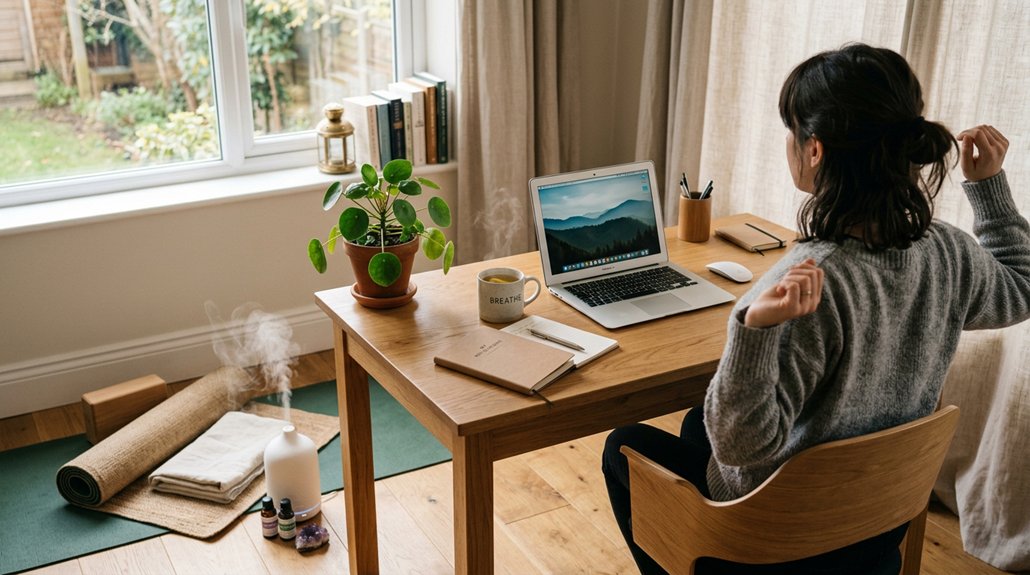
Simple desk stretches can quickly relieve tension and enhance your posture during work breaks. These stretches help improve your musculoskeletal health by targeting muscle strain caused by prolonged typing, scrolling, and leaning into screens.
Neck stretches involve sitting tall, lowering your chin to your chest, and rotating your head to each shoulder, holding each position for 10 seconds. Shoulder rolls, performed by lifting your shoulders to your ears and rolling backward and forward 10 times, ease stiffness and boost shoulder mobility. These simple stretches take less than a minute and require no equipment. Incorporating ergonomic tools like split-layout keyboards can further help maintain a neutral wrist posture and reduce strain over time.
Regular practice helps reduce work stress, alleviate neck and shoulder tension, and support your nervous system. Incorporating these quick moves into your routine promotes better posture and overall comfort.
Create a Quick Routine to Reduce Stress During Work
Create a quick stress-relief routine you can do right at your desk to break up your workday and boost your focus.
Start with 4-7-8 deep breathing: inhale for 4 seconds, hold for 7, and exhale for 8, to manage stress and calm your mind.
Then, do three rounds of neck stretches—chin to chest and gentle head rotations—to ease muscle tension.
Incorporate shoulder rolls, 10 backward and 10 forward, paired with diaphragmatic breathing to improve circulation and loosen stiffness from typing.
Use the Squeeze and Release technique: tense fists and toes for 3 seconds on inhalation, then exhale and relax muscles, quickly releasing stress.
Finish with the Standing Chest Opener stretch to improve posture and reduce upper back tension, leaving you refreshed and ready to focus.
Including these simple exercises with adjustable footrests can further promote ergonomic comfort and help maintain proper posture throughout your workday.
Tips for Setting Up an Ergonomic Home Office for Better Breathing and Movement
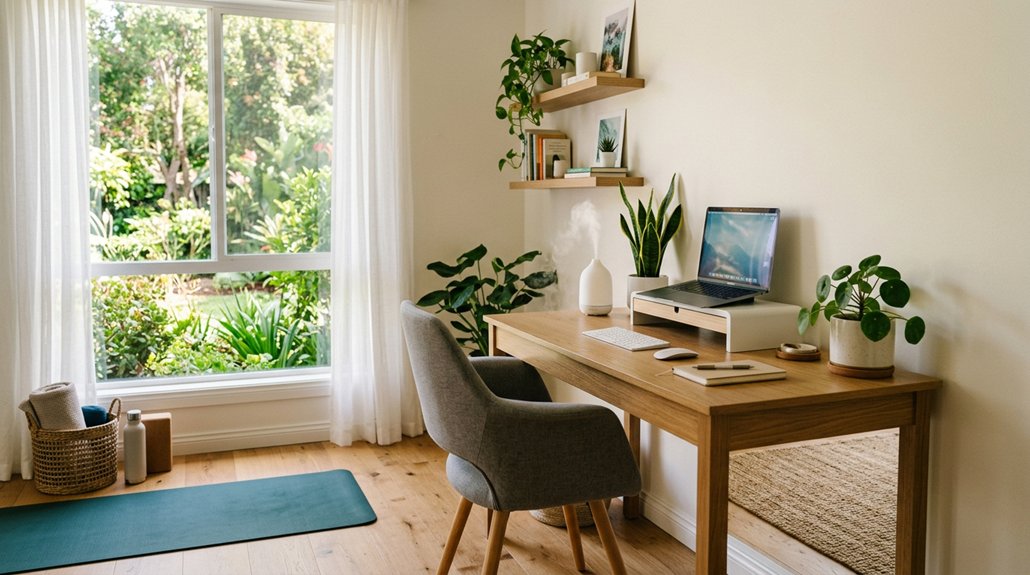
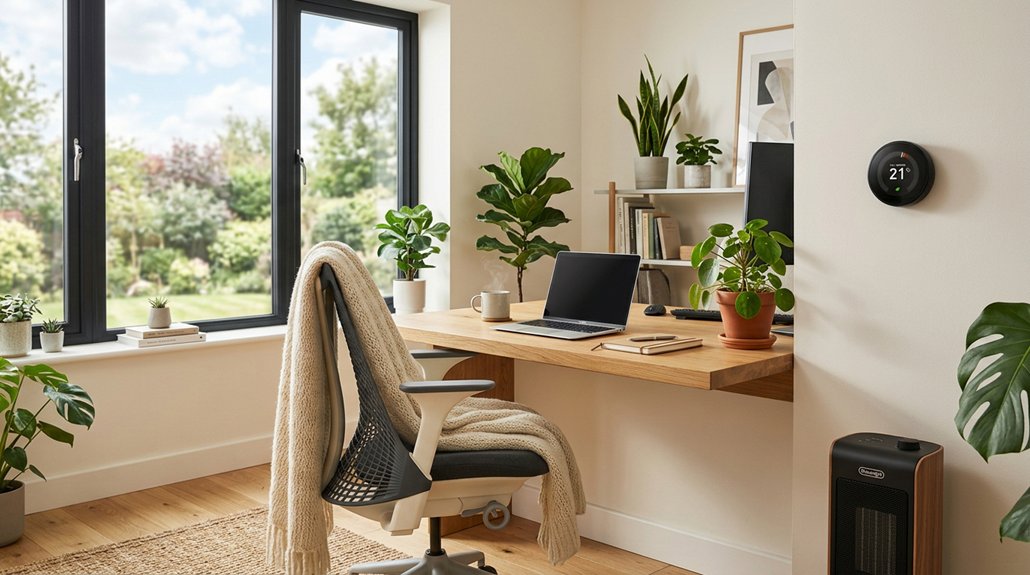
Setting up your home office with the right ergonomic habits can make a significant difference in how well you breathe and move throughout the day. Position your desk and chair so your feet are flat on the floor, with knees at a 90-degree angle, promoting proper posture and diaphragmatic breathing.
Use an adjustable chair with lumbar support to help you improve your lung capacity and reduce muscle tension during long hours. Place your computer screen at eye level, about 20 inches away, to prevent forward head posture that can restrict breathing and cause neck strain.
Make certain your workspace allows for easy arm movement with elbows close to your body and wrists straight. Regular desk stretches, like shoulder rolls and neck stretches, will help you stay relaxed, enhancing oxygen flow and supporting better breathing techniques. Incorporating correct lumbar support into your setup can further maintain spinal alignment, helping to alleviate pressure and facilitate deeper, more effective breaths.
Frequently Asked Questions
Can Breathing Exercises Improve Focus During Long Work Hours?
Yes, breathing exercises can improve your focus during long work hours by calming your mind, reducing stress, and increasing oxygen flow. This helps you stay alert, sharpen concentration, and maintain productivity without feeling overwhelmed.
How Often Should I Perform Desk Stretches Each Day?
You should perform desk stretches every hour to keep your muscles relaxed and circulation flowing. Incorporate stretching breaks into your routine, ideally three to five times daily, to reduce fatigue and improve overall comfort during long work hours.
Are There Specific Breathing Techniques Better for Anxiety Relief?
Yes, deep diaphragmatic breathing and box breathing are best for anxiety relief. You should inhale slowly through your nose, hold the breath, then exhale gently, repeating these steps to calm your mind and reduce stress effectively.
What Are Signs I Need More Frequent Movement Breaks?
You need more movement breaks when you feel persistent stiffness, tension, or discomfort, get distracted easily, experience fatigue or headaches, or notice your posture slipping. These signs show your body benefits from regular movement and stretching.
Can These Exercises Prevent Work-Related Musculoskeletal Issues?
Yes, these exercises help prevent musculoskeletal issues by reducing tension and improving circulation. Regularly practicing mindful breathing and stretching relaxes muscles, corrects posture, and alleviates strain, ultimately supporting your overall musculoskeletal health during work hours.