To light your home office right, position your desk to maximize natural light while minimizing glare, using blinds or shades when needed. Layer your lighting with ambient, task, and accent sources to reduce eye strain and create a cozy workspace. Choose adjustable monitor and desk lamps that minimize shadows, and consider smart lighting for flexibility. For longer work hours, guarantee your space is comfortable and well-lit—keep exploring for more tips to perfect your setup.
Assess Your Natural Light and Manage Glare
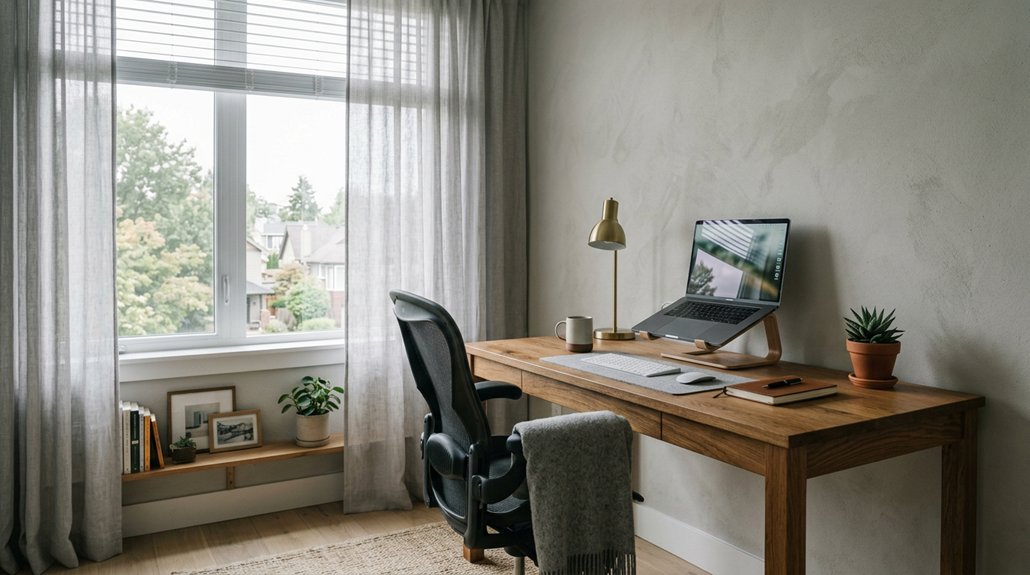
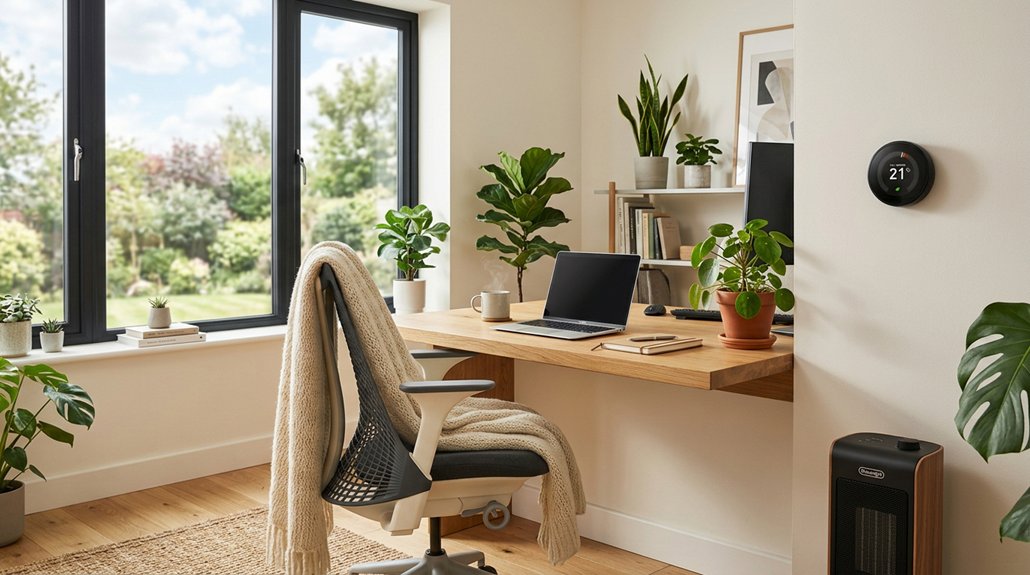
Since natural light can greatly impact your comfort and productivity, it’s important to position your desk thoughtfully. Aim to face a window or place it beside one to maximize natural light and reduce eye strain during long workhours. This setup helps bounce light around your home office, brightening your workspace naturally.
Avoid sitting with your back to or directly facing windows, as you’ll encounter screen glare and awkward shadows on your desk, especially during video calls. Using blinds or solar shades can diffuse harsh sunlight and prevent glare during sunrise or sunset. Incorporating bias lighting behind your monitor can further enhance visual comfort and reduce eye fatigue.
Moderate natural light is best—too much causes discomfort and makes you rely heavily on artificial lighting. Placing your desk perpendicular to the window balances natural light, minimizing glare on your screen and creating a comfortable work environment.
Layer Your Home Office Lighting With Ambient, Task, and Accent Lights
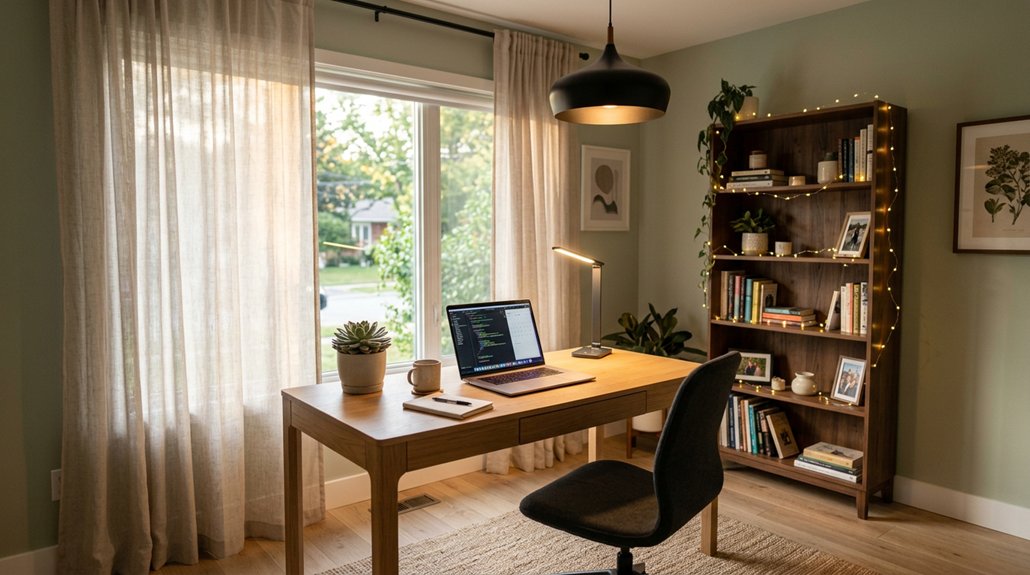
To create a well-lit and comfortable home office, layering your lighting with ambient, task, and accent lights is essential.
Ambient lighting provides overall brightness and is best achieved with diffused overhead lighting such as chandeliers or flush mounts, preferably with dimmable options to adjust brightness.
For focused work, incorporate task lighting through adjustable desk lamps with articulating arms, positioned on the side opposite your dominant hand to avoid shadows and glare.
Accent lighting adds warmth and visual interest by highlighting décor or architectural features using floor lamps, wall sconces, or picture lights.
Combining warm ambient light with cooler task and accent lighting not only improves visual comfort but also creates a balanced, inviting atmosphere, reducing eye strain and enhancing your home office’s aesthetics.
Choose the Best Monitor and Desk Lighting Solutions
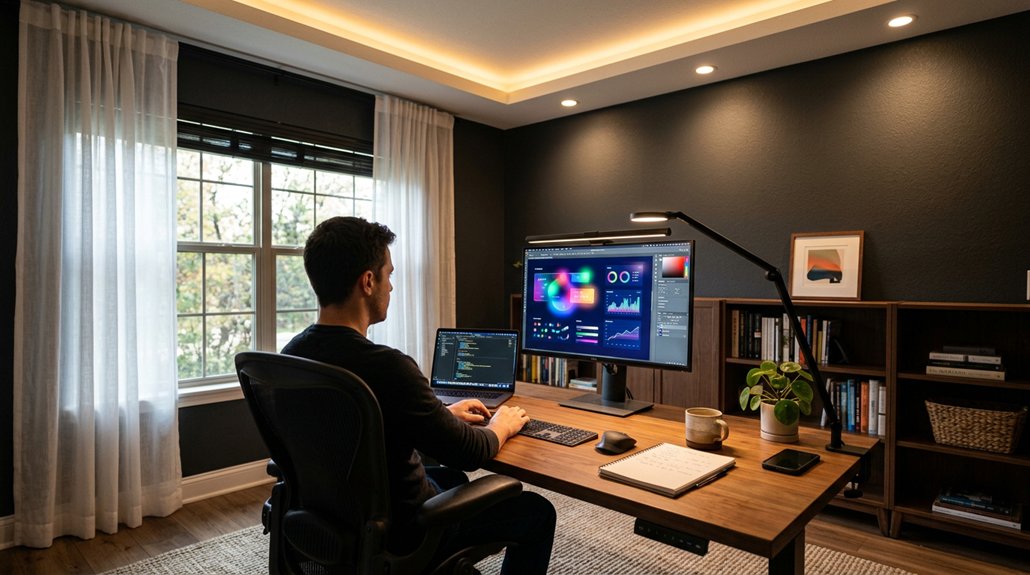
Choosing the right monitor and desk lighting creates a comfortable, productivity-enhancing workspace. To optimize lighting for your home, consider these options:
- Use a monitor lamp or light bar mounted atop your monitor to provide focused, glare-free illumination while saving desk space and supporting adjustable color temperature.
- Select desk lamps or floor lamps with adjustable brightness to reduce glare and cast shadows, ensuring even lighting during work and video calls.
- Opt for lighting with customizable color temperature to reduce blue light exposure at night, helping protect your sleep and maintain focus.
- Position lights carefully to minimize direct screen glare and balance ambient light with side table lamps for better overall illumination.
- Choosing lights with flicker-free technology and high CRI ratings can significantly reduce eye strain and improve visual clarity during extended work hours.
This combination enhances visibility, reduces eye strain, and creates a professional environment at home.
Use Smart, Adjustable Lights for Maximum Flexibility
Smart, adjustable lights provide the flexibility you need to create the ideal lighting environment for your home office. With smart adjustable lights, you control brightness and color temperature precisely, helping you stay focused or relax as needed.
Smart floor lamps and desk lamps with app or voice control let you switch between warm tones for downtime and cooler tones for work tasks. Dimmable options, like smart bulbs or gradient floor lamps, can be programmed to mimic natural light—reducing eye strain over long work hours.
Proper positioning of indirect illumination and task lighting minimizes glare and shadows on screens and work surfaces. Integrating smart LED backlighting enhances video calls and adds a customizable, cozy ambiance. These features guarantee your workspace remains functional and comfortable at all times.
Create a Comfortable and Well-Lit Space for Long Work Hours
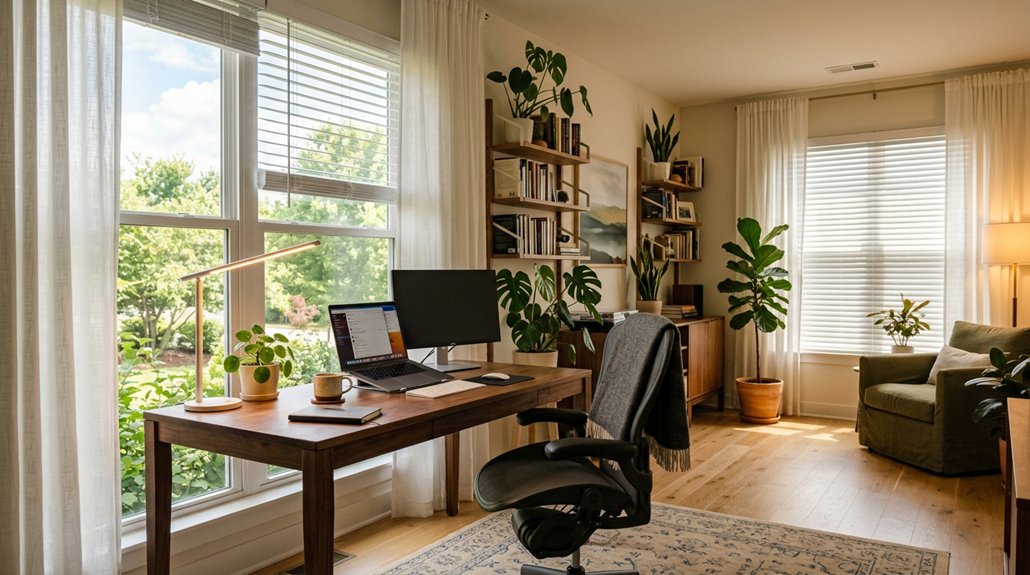
Creating a comfortable and well-lit home office space begins with strategic lighting placement that supports your long work hours. In a small home office, choosing the right light setup can reduce fatigue and improve focus.
- Position your desk near a window or add a corner desk with natural light to enjoy soft, morning illumination while minimizing glare.
- Use paired table lamps on either side of your desk for even task lighting, avoiding shadows during paperwork or computer work.
- Replace harsh overhead fixtures with adjustable lights behind your head or indirect ambient lighting to prevent eye strain.
- Install a monitor lamp or light bar on your screen to evenly light your desk without causing glare, adjusting brightness and color temperature as needed.
This layered lighting approach creates a comfortable, well-balanced environment for extended work periods. Incorporating flicker-free eye-care lighting options can further reduce visual discomfort and support eye health during long hours.
Frequently Asked Questions
How to Properly Light a Home Office?
To properly light your home office, face a window for natural light, use side lamps for soft illumination, avoid harsh overhead lights, add a monitor lamp, and layer multiple adjustable lights to reduce glare, shadows, and eye strain.
What Is the 5 7 Lighting Rule?
The 5 7 lighting rule suggests you use five different light sources around your workspace, creating seven points of light to balance ambient, task, and accent lighting. This setup reduces shadows and glare, boosting comfort and productivity.
What Is the 3 Lighting Rule?
The 3 lighting rule stacks ambient, task, and accent lighting to create a balanced, comfortable workspace. You layer these types to reduce eye strain, improve focus, and add visual interest, making your home office more inviting and functional.
What Is the Best Lighting for a Home Office?
You should combine natural light facing your desk with adjustable task lamps on both sides, soft ambient lighting, and balanced facial lighting to reduce glare, eye strain, and create a comfortable, productive workspace.