Microbreaks and stretching boost your productivity by reducing stress, preventing muscle tension, and sharpening your focus. When you take short breaks, you lower cortisol levels and refresh your mind, helping you stay attentive and creative. Stretching increases blood flow and enhances mental clarity, while movement breaks prevent mental and physical fatigue. If you keep up this simple practice, you’ll discover how small actions can lead to big improvements in your work and well-being.
How Microbreaks and Stretching Boost Your Productivity
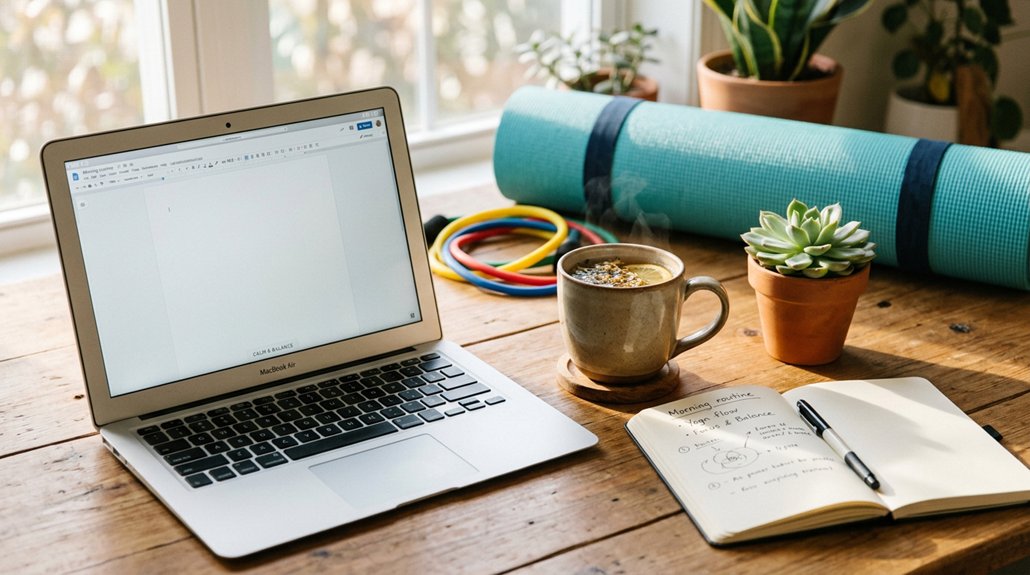
Taking regular microbreaks and incorporating stretching into your routine can greatly boost your productivity. Microbreaks help reduce cortisol levels, lowering stress and making it easier to focus on your tasks.
When you stretch during these breaks, blood circulation improves, which keeps your muscles loose and prevents stiffness. This physical relief reduces fatigue that can slow you down. Short breaks with stretches also interrupt mental fatigue, helping you stay sharp and attentive longer.
Studies show that scheduled microbreaks with stretching increase your motivation and energy levels, resulting in higher-quality work and more creativity. By taking breaks to stretch, you support your body’s comfort and prevent musculoskeletal strain, glove designs, allowing you to work more efficiently for extended periods without feeling drained.
Prevent Muscle Strain With Simple Stretching Exercises
Prevention of muscle strain is easily achieved by incorporating simple stretching exercises into your microbreaks. These quick moves help reduce muscle tension and prevent musculoskeletal strain caused by repetitive motions and poor posture.
Simple stretching during microbreaks eases muscle tension and prevents strain from repetitive motions and poor posture.
By doing stretches like shoulder rolls, neck stretches, or wrist circles every 30 minutes, you improve blood circulation and relieve stiffness. This not only boosts physical comfort but also helps you stay focused longer.
Resistance-based micro-movements, recommended by ergonomists, are even more effective in protecting your muscles from work-related injuries. Consistently taking microbreaks with stretching activities interrupts chronic muscle fatigue.
This promotes overall muscle health and guarantees you maintain high productivity levels. Regularly including these easy stretches keeps vulnerable areas like shoulders and elbows comfortable and reduces discomfort. Incorporating ergonomic supports, such as wrist rests and arm supports, can further enhance ergonomic comfort during long work sessions.
Discover the Cognitive Benefits of Taking Regular Breaks

Taking regular breaks can boost your focus and concentration by giving your brain a chance to recover. These pauses also prevent decision fatigue and spark your creative thinking, making problem-solving easier. A quick stretch or a moment of fresh air can further enhance your mental clarity and reduce fatigue. Inserting microbreaks into your routine helps keep your mind sharp and productive throughout the day.
Enhances Focus and Concentration
Regularly stepping away from your work can greatly boost your focus and concentration. Micro breaks give your brain time for cognitive recovery, preventing mental fatigue that happens after 90-120 minutes of continuous work.
During these pauses, deep breathing and light movement help increase oxygen flow, sharpening focus and reducing cortisol levels. Following the 20-20-20 rule—looking 20 feet away for 20 seconds every 20 minutes—reduces eye strain, which in turn improves mental clarity. These brief interruptions reset your attention span, allowing you to stay engaged longer.
Incorporating scheduled task switching along with micro breaks can also boost creativity by clearing cognitive residue and maintaining mental sharpness. Utilizing ergonomic tools like flicker-free LED lighting can further support eye comfort during focused work sessions.
- Improve mental clarity through deep breathing
- Reduce eye strain with the 20-20-20 rule
- Boost focus by enabling cognitive recovery
Prevents Decision Fatigue
When you break up your work into shorter intervals, you give your brain a chance to reset, which helps prevent decision fatigue. Microbreaks interrupt continuous mental effort, stopping the cognitive overload that kicks in after 90-120 minutes of work.
These breaks taken throughout the day restore focus and mental clarity, reducing errors and boosting decision quality. By shifting tasks briefly and practicing breathing exercises during microbreaks, you clear cognitive residue and sharpen your decision-making process.
Regular short pauses support mental refreshment and fight fatigue, keeping your mind alert. Research shows that adopting three micro-recovery breaks daily helps maintain sharp decision-making in the afternoon, ensuring you stay productive and effective throughout your workday. Memory foam support and ergonomic cushions can also help reduce physical discomfort, enabling longer periods of focused work.
Sparks Creative Thinking
Engaging in short breaks activates the brain’s default mode network, which is key for creative problem-solving and insightful thinking. When you take microbreaks, your subconscious processes information more effectively, sparking new ideas.
Incorporating stretching during these breaks boosts blood circulation and oxygen flow to your brain, fueling increased mental clarity. This refreshed state enhances your ability to think creatively and approach tasks with fresh perspectives.
Regular breaks prevent mental fatigue, helping you sustain high cognitive performance and generate innovative solutions. By stepping away from screens and engaging in intentional pauses, you give your mind the space it needs to innovate. Microbreaks, especially with stretching, are an effective way to unleash your creative potential and keep ideas flowing.
Top Techniques for Effective Microbreaks and Stretches
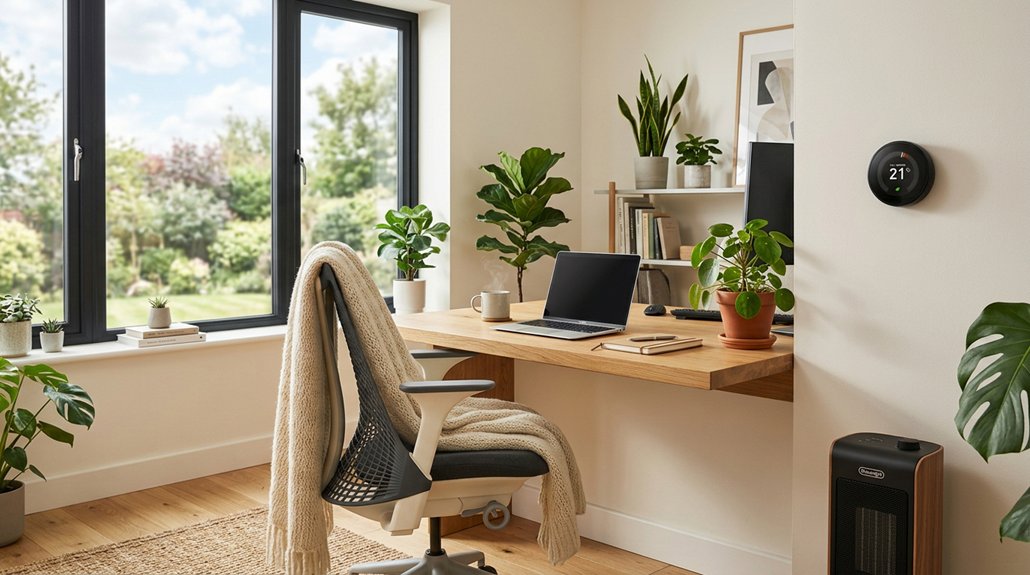
To make microbreaks and stretches truly effective, focus on specific techniques that maximize relaxation and refreshment. Incorporate micro breaks that include stretching, such as shoulder rolls, neck stretches, and wrist circles, to reduce muscle tension and prevent discomfort from sitting too long. Using adjustable thermostats to maintain comfortable warmth levels during stretching can further enhance muscle relaxation. Practice deep breathing exercises like box breathing to calm your nervous system and reduce stress rapidly during breaks. Periodically stepping outside or taking short walks “snacks” your sunlight intake, boosting mood and resetting your circadian rhythms. Remember to hydrate regularly—drinking water before checking emails can combat dehydration-related stress and sharpen focus. These moments to reset not only enhance physical health but also improve productivity, keeping your mind fresh and your body ready for sustained work.
Set Up Your Home Workspace for Movement and Comfort
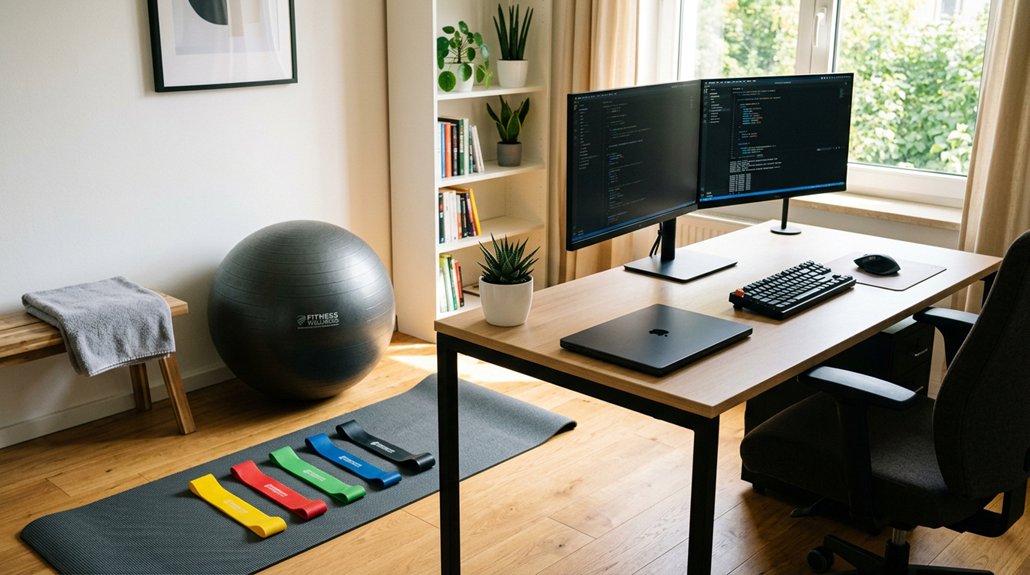
Create a workspace that supports movement and comfort by choosing ergonomic furniture that encourages good posture and easy stretching. Position your desk near natural light to boost mood and remind you to take breaks outside. Keep your area clutter-free and within reach of simple equipment like resistance bands or a yoga mat to make microbreaks quick and effective. Incorporate ergonomic stool features such as height adjustability and stability to promote active sitting and better posture throughout your workday.
Optimize Ergonomic Layout
Setting up your home workspace with ergonomic principles encourages movement and comfort throughout your workday. Properly designed ergonomic home workspaces support good posture, reducing physical fatigue and the risk of strain.
Position your monitor at eye level and keep frequently used items within easy reach to prevent repetitive strain injuries. Incorporating micro breaks with resistance-based microbreak movements helps improve circulation and prevents stiffness. Make sure there’s enough space around your workstation to perform stretches or short walks, boosting overall comfort.
Additionally, optimizing for visual comfort with anti-glare lighting reduces eye strain. An ergonomic layout creates an environment where movement is seamless, encourages frequent micro breaks, and enhances your wellbeing during long hours of work. Incorporating adjustable features like lumbar support and flexible armrests can further enhance comfort and promote healthy posture.
- Adjust your chair and desk for proper height and support
- Arrange your workspace to minimize reaching and twisting
- Use lighting that reduces glare and eyestrain
Incorporate Active Break Zones
Incorporating active break zones into your home workspace encourages you to move regularly, which boosts blood circulation and reduces stiffness. This setup supports microbreaks that can refresh your body and mind, enhancing mental clarity and focus. Designate space for stretching, light exercises, or short walks, promoting movement breaks that break sedentary patterns. Use ergonomic furniture and adjustable desks to prevent strain during movement. Add elements like natural light and fresh air to lift mood and cognition, keeping you energized. Incorporating chairs with adjustable features, such as height and tilt options, can further support posture improvement during these breaks.
Use Comfortable Seating
Comfortable seating plays a crucial role in maintaining your well-being during long work hours. Properly chosen seating, like ergonomically designed chairs, reduces musculoskeletal strain, allowing you to focus longer without discomfort.
These chairs encourage natural posture adjustments, making microbreak movements and stretching part of your daily routine more seamless. Setting up your home workspace with adjustable seating options supports easy shifts between sitting and standing, helping prevent stiffness and improve circulation.
Chairs that promote good circulation and reduce pressure points also boost your energy levels and mental clarity. Incorporating armrest pads can further enhance comfort by providing elbow relief and reducing strain during extended periods of sitting.
- Prioritize ergonomic design for immediate comfort and long-term health
- Use adjustable features to tailor your seating for movement and stretching
- Incorporate comfortable seating into your daily routine to support physical and mental well-being
Easy Activities to Maximize Your Short Breaks
Taking advantage of short, active activities during your breaks can greatly boost your productivity and mental clarity. Micro-stretches like shoulder rolls, neck stretches, and wrist circles prevent tension buildup and improve circulation, helping you sustain focus longer.
Remember the 20-20-20 rule: every 20 minutes, look 20 feet away for 20 seconds to reset your eye strain. Taking a quick walk or stepping outside for just 90 seconds refreshes your mood and resets circadian rhythms, sharpening your thinking.
Deep breathing exercises, such as box breathing, calm your nervous system and lower cortisol levels, aiding emotional regulation. Stay hydrated with a glass of water before tackling the next task—hydration maintains energy and reduces stress.
These simple activities maximize your short breaks and keep you productive throughout the day.
How Microbreaks Enhance Focus, Creativity, and Decisions

Short, active microbreaks do more than just prevent physical tension—they also greatly boost mental functions like focus and creativity. These brief pauses help lower cortisol levels, reducing stress and improving emotional regulation, which sharpens your ability to stay engaged with tasks.
By preventing mental and decision fatigue, microbreaks maintain high performance and enhance decision-making quality. Scheduled task switching during breaks refreshes cognitive networks, sparking new ideas and boosting creative output.
Incorporating shifts like deep breathing before resuming work clears cognitive residue, increasing clarity. Regular micro-recoveries throughout the day help sustain concentration, especially during energy dips in the afternoon, ultimately elevating your productivity and mental sharpness.
- Reduce decision fatigue for better judgment
- Boost cognitive clarity with scheduled pauses
- Increase creativity through cognitive refreshes
Overcome Common Barriers to Taking Breaks at Home
Without clear boundaries between work and relaxation spaces at home, it’s easy to lose track of when to pause and stretch. The lack of physical separation makes it harder to recognize break times, and household chores or family demands distract you. To counter these barriers, setting timed reminders is essential to prompt breaks, despite the absence of workplace social cues. Proactive self-discipline helps reinforce routines, especially since passive break activities like scrolling social media don’t boost circulation. Communicating your break schedule to household members guarantees fewer interruptions. Use this table as a quick guide:
| Barrier | Solution | Benefit |
|---|---|---|
| Lack of physical separation | Set timed reminders | Keeps you on schedule |
| Distractions from chores | Communicate break times | Less interruption |
| Absence of social cues | Self-discipline routines | Maintains motivation |
| Multitasking interruptions | Focus on microbreaks | Recharges mentally |
| Passive activities | Engage in stretch/movement | Improves circulation |
Build a Long-Lasting Habit of Microbreaks and Stretching
To build a lasting habit, set a consistent schedule for microbreaks, like every 30 minutes, to make them routine.
Use reminders or apps to prompt you before fatigue hits, and start with short breaks to ease into the practice.
When leadership supports and models these habits, it becomes easier to stay committed over time.
Establish Routine Consistency
Establishing a consistent routine for microbreaks and stretching turns these small habits into lasting, automatic actions. When you schedule microbreaks like appointments, you reinforce discipline and improve consistency, making breaks a regular part of your day.
This routine helps reduce stress hormone cortisol and prevents mental fatigue, promoting long-term wellbeing. Regular stretching during microbreaks prevents musculoskeletal strain and boosts blood circulation, keeping you physically comfortable throughout the day.
When microbreaks are ingrained into your schedule, they normalize as part of your work culture, decreasing burnout and increasing job satisfaction.
- Schedule microbreaks at the same time daily to build habit formation
- Stick to your stretching routine even during busy periods
- Use reminders to reinforce your consistency and boost productivity
Overcome Break Barriers
Building a habit of microbreaks and stretching requires overcoming common barriers that make it easy to skip or forget these practices. To do this, use reminders like app notifications or emails, helping reinforce habit formation. Fully detaching from work devices during breaks allows for real recovery and mental refreshment, making each pause more effective. Start small—just 30 seconds of stretching or deep breathing—to reduce perceived disruption and build momentum. Visualizing your progress can help:
| Focus Area | Action | Benefit |
|---|---|---|
| Reminders | Set alerts for breaks | Increase break frequency |
| Detachment | Fully disconnect from screens during breaks | Reduce stress, refresh |
| Manageability | Keep activities brief and simple | Easy to adopt |
These strategies help embed microbreaks into your routine for sustained productivity.
Track How Breaks Improve Your Productivity and Health
Tracking how often you take microbreaks and monitoring their effects can greatly boost your productivity and health. When you keep a record, you’ll see how consistent microbreaks lower stress, improve physical comfort, and sharpen cognitive function.
Tracking microbreaks enhances productivity, reduces stress, and boosts physical and mental well-being over time.
Noticing patterns helps you adjust your routine for maximum benefits.
Consider these key points:
- Monitor break frequency and mood, as regular microbreaks increase motivation and reduce mental fatigue.
- Track physical comfort, noting how stretching and movement decrease muscle tension and eye strain.
- Assess productivity and decision-making skills, since lower stress levels and better blood circulation lead to higher work quality.
Practical Tips to Make Microbreaks a Daily Routine
Turning microbreaks into a daily habit is simple with some practical strategies. Schedule these short pauses like meetings, ideally every 30 minutes, to support your mental and physical well-being and boost productivity. Use reminders or apps to prompt quick activities like stretching, deep breathing, or the 20-20-20 eye rule—these help you stay focused and reduce fatigue.
Incorporate movement-focused breaks such as brief walks, shoulder rolls, or wrist circles to improve blood circulation and prevent musculoskeletal strain. During microbreaks, fully detach from screens and devices for maximum cognitive recovery.
Mix in physical, mental, and social activities to keep your motivation high, foster creativity, and sustain your energy throughout the workday. These simple habits can make microbreaks a seamless part of your routine.
Frequently Asked Questions
Why Does Taking Breaks Improve Productivity?
Taking breaks improves your productivity because they lower stress, refresh your focus, prevent mental fatigue, and boost motivation. Moving and stretching during breaks increases blood flow, reduces strain, and helps you stay energized, engaged, and performing at your best.
What Is the 42% Rule for Burnout?
The 42% Rule for burnout states that if you regularly take microbreaks and stretch, your burnout symptoms can reduce by up to 42%. This helps prevent stress buildup, boost energy, and improve overall well-being.
Why Are Microbreaks Important?
You need microbreaks because they lower stress hormones, prevent fatigue, boost circulation, and improve mood. By fully detaching from work during these breaks, you refresh your mind and body, ultimately enhancing focus, motivation, and productivity.
What Is the 3 Hour Rule for Productivity?
The 3 Hour Rule for Productivity advises taking a break around every three hours of focused work. This helps you combat mental fatigue, reduce physical tension, and maintain high levels of concentration, ensuring sustained productivity and better decision-making.