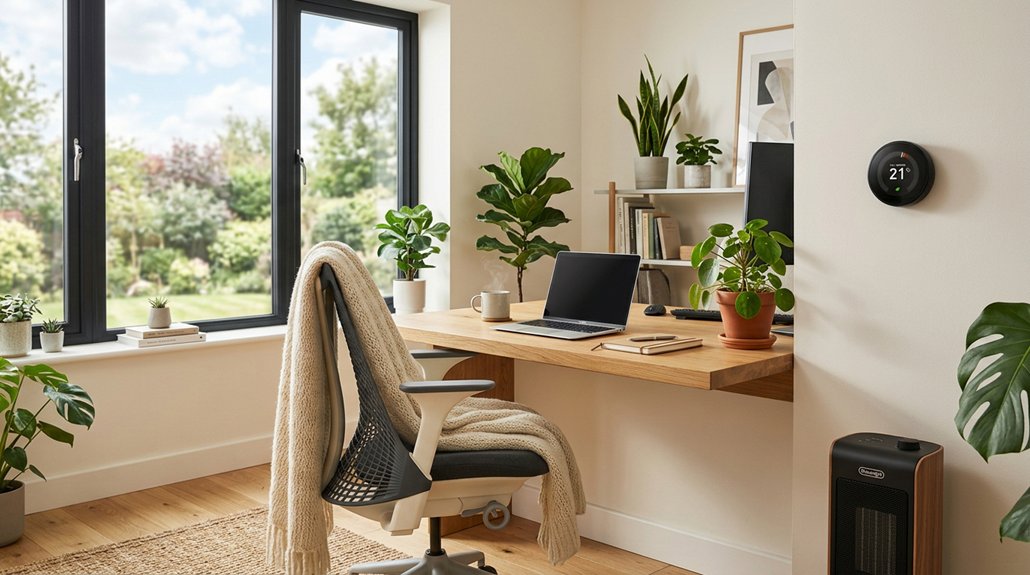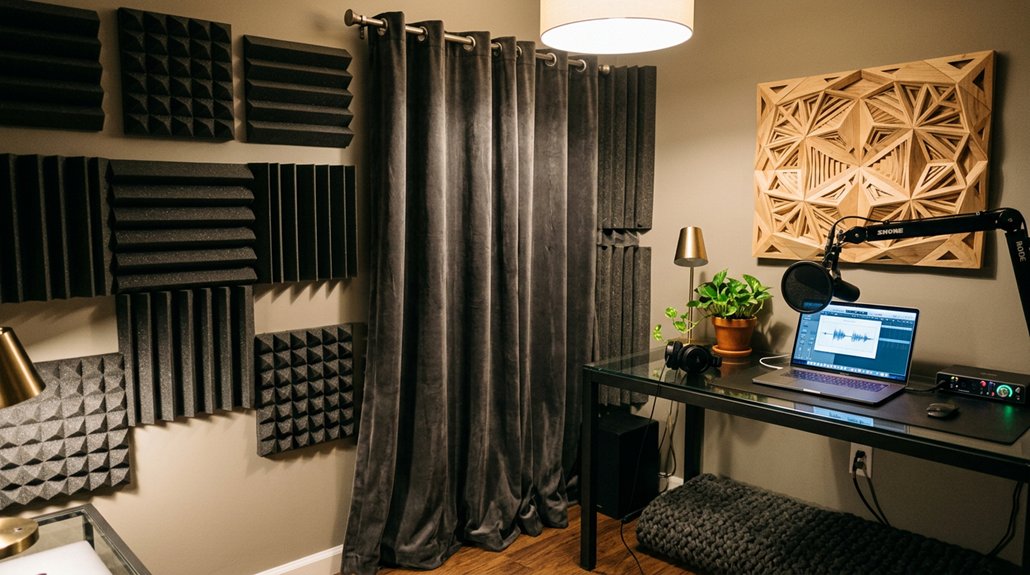
In tiny workspaces, soft materials are your best bet for absorbing sound. Acoustic panels made of foam or PET felt help reduce echo and reverberation, especially when placed behind desks or near reflective surfaces. Rugs, thick curtains, upholstered furniture, and fabric-covered partitions also trap sound waves and cut down noise. Sealing gaps around doors and using soft furnishings can make a big difference. If you want to discover more ways to improve your space’s sound quality, keep exploring.
Why Hard Surfaces Cause Echo and How to Fix It
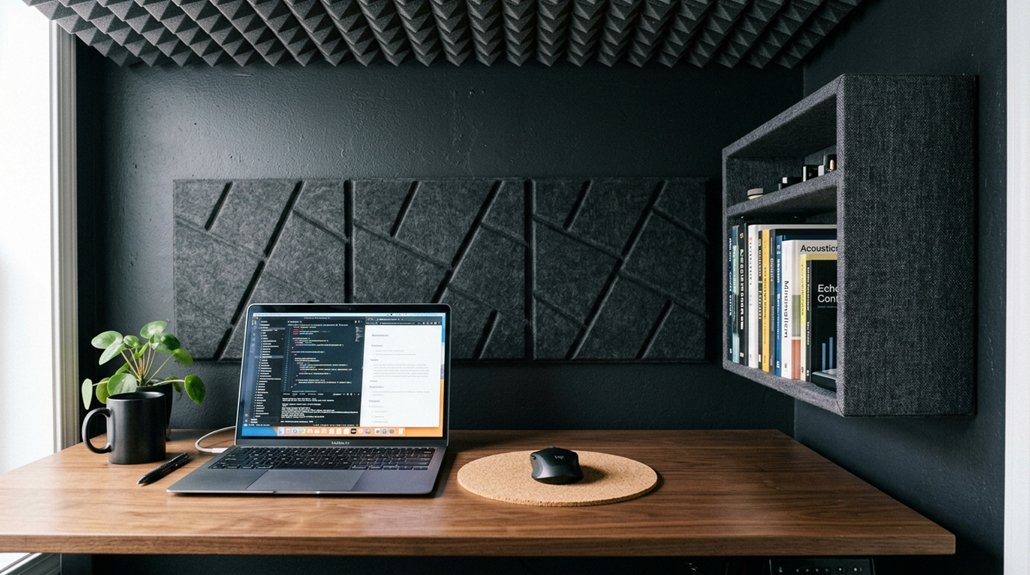
Have you ever noticed echoing sounds in a small room with bare walls? That’s because hard surfaces like walls, floors, and ceilings reflect sound waves instead of absorbing them.
These reflections cause echoes and delayed repetitions, making your space sound cluttered. Without sound absorption, reverb occurs, especially in tiny workspaces with parallel hard surfaces.
To fix this, you can install acoustic foam panels, which have a high noise reduction coefficient (NRC) around 0.7. These panels absorb sound waves effectively, reducing reflections and echo. Additionally, draping blankets or fabric sheets on bare walls or ceilings can help. Strategically placing acoustic foam panels on key areas, like back walls and ceilings, minimizes reflections and makes your workspace much clearer and more comfortable. Using soft, sound-absorbing materials like panels made from recycled polyester fibers or high-density foam also enhances overall noise reduction.
Simple Ways to Absorb Sound With Carpets and Rugs
Adding multiple layers of rugs can greatly cut down on noise reflections and echo in your small workspace. Using a thick rug pad underneath increases sound absorption and cushions footsteps, enhancing the effect. Combining these with plush carpets creates a quieter, more comfortable environment. Incorporating sound-absorbing materials like high-density polyurethane foam or specific rug textures can further enhance noise reduction.
Multiple Rug Layers
Layering multiple rugs is a simple yet effective way to boost sound absorption in tiny workspaces. By adding layers, you increase mass and cushioning, which helps reduce sound reflections and footstep noise, leading to better noise reduction. Dense fibers and heavier rugs trap sound waves more efficiently, preventing them from transmitting through the floor. Even if you already have a carpet, stacking several rugs can further dampen noise, especially when placed over soft underlays. This approach is particularly useful in high-traffic or noisy areas, where it minimizes echo and reverberation. For maximum benefit, combine multiple layers with thick rug pads or underlays. This strategy creates a softer, quieter environment, greatly enhancing acoustic comfort in your small workspace. Using soundproofing materials like dense, multi-layered rugs extends the effectiveness of this method.
Thick Rug Pad Underlay
A thick rug pad underlay acts as an essential enhancer for sound absorption in tiny workspaces. It adds an extra layer beneath your carpets or rugs, effectively absorbing sound and reducing noise transmission through floors. Using a high-density, dense underlay also helps prevent floor scratching and prolongs the lifespan of your flooring and rug. Here are three reasons to take it into account:
- It helps absorb sound waves, lowering reverberation and echo inside your small office.
- It greatly blocks airborne and impact sounds, especially footsteps, in multi-level buildings.
- Its dense, thicker design provides added cushioning while improving overall acoustic performance.
How Acoustic Wall Panels Reduce Echo and Improve Clarity
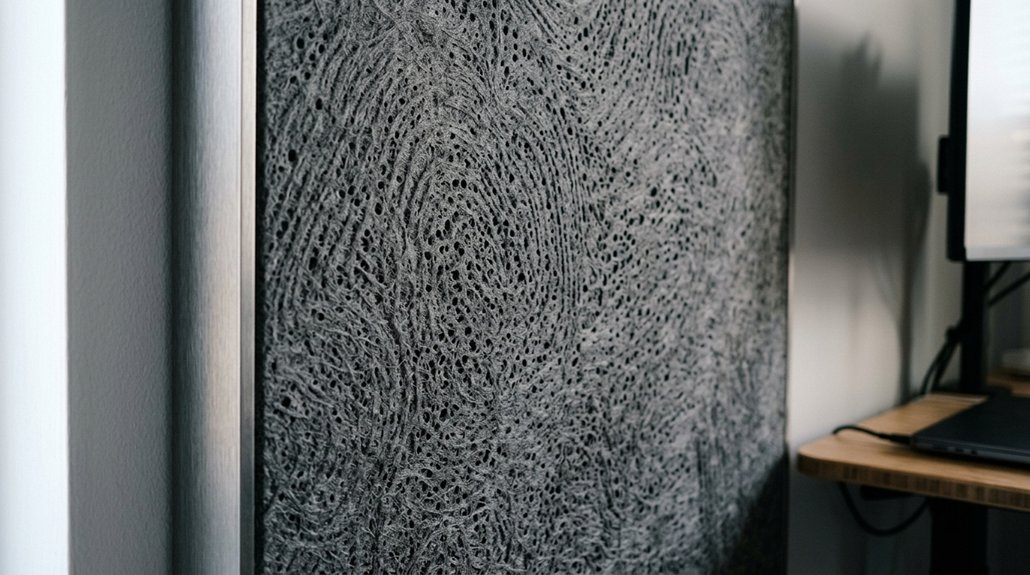
Acoustic wall panels absorb sound waves to cut down on reverberation and echo in small workspaces. When placed strategically behind desks or near reflective surfaces, they prevent sound reflections that muddle speech.
As a result, your conversations become clearer and more understandable.
Absorption of Sound Waves
When sound waves hit hard surfaces in tiny workspaces, they reflect and bounce around, creating echoes that can make speech difficult to understand. Acoustic panels help absorb sound waves, preventing them from reflecting off these surfaces and causing reverberation.
These panels, made from materials like acoustic foam or PET felt, typically have high noise reduction coefficients around 0.7, meaning they absorb about 70% of sound energy. Installing panels on walls behind desks or near reflective surfaces targets primary echo sources.
The porous structure traps airborne sound waves, transforming acoustic energy into small heat amounts. To maximize effectiveness, consider:
- Using panels with linen or fabric coverings for aesthetics
- Placing panels close to sound sources
- Covering key reflective surfaces to improve clarity
- Selecting panels with effective sound absorption coefficients to enhance quietness and speech intelligibility
Enhancing Speech Clarity
Improving speech clarity in small workspaces largely depends on effectively managing echoes and reverberations. Acoustic panels with a high Noise Reduction Coefficient (NRC) of around 0.7 absorb roughly 70% of sound waves, greatly reducing reflections.
Installing 24×36-inch linen-wrapped acoustic foam panels behind your desk and on nearby walls targets key reflection points, helping to enhance speech clarity by minimizing overlapping sound waves. Positioning these panels near noise sources like HVAC vents or reflective surfaces prevents sound reflections that can blur spoken words.
Removing echoes makes indoor acoustics clearer, allowing you to communicate more effectively and reducing listener fatigue. Combining acoustic foam, absorption sheets, or thick fabric blankets as wall treatments can be a budget-friendly way to boost clarity in tiny workspaces.
Soft Furniture and Textiles That Make Your Room Sound Better
Soft furniture and textiles serve as quiet shields in tiny workspaces, actively absorbing sound waves to reduce echo and overall noise levels. Using soft materials helps absorb sound, making your space more comfortable and less echo-prone. A variety of supportive ergonomic features can enhance acoustic comfort by encouraging better posture and reducing strain during long work sessions. To maximize their impact, consider these options:
- Upholstered chairs and sofas to help absorb sound and lessen reverberation.
- Thick drapes or soundproof curtains made from dense fabric to block external noise and reduce indoor reflections.
- Rugs layered over existing flooring, with underlays or rug pads, to help absorb noise and increase soundproofing.
These soft textiles and furniture pieces work together, help absorb unwanted noise, and improve your room’s acoustics. Incorporating them guarantees a quieter, more focused workspace.
Ceiling Treatments to Cut Down Noise Reflection
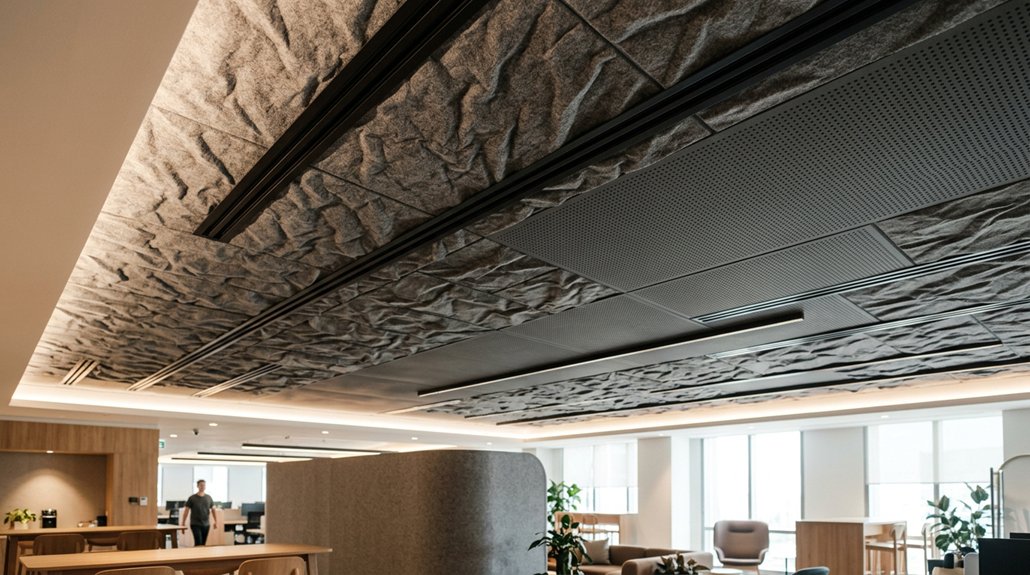
Ceiling treatments like acoustic panels or baffles can dramatically cut down noise reflections in small workspaces. Using materials such as PET felt or high-NRC tiles helps absorb sound and reduce reverberation.
Acoustic Ceiling Baffles
Acoustic ceiling baffles are an effective solution for controlling noise reflections in tiny workspaces. These dense, porous materials absorb airborne noise and reduce reverberation, making your workspace quieter.
Typically made from PET felt, they’re environmentally friendly, fade-resistant, and easy to maintain. Installing acoustic baffles vertically or suspending them from the ceiling helps contain sound within specific areas.
Here are three key benefits:
- They absorb airborne noise, decreasing overall sound levels.
- They minimize sound reflection, improving speech clarity.
- They prevent sound from traveling to adjacent areas, boosting privacy.
Combining acoustic ceiling baffles with integrated lighting enhances space efficiency while optimizing both sound absorption and lighting in your tiny office. Effective soundproofing techniques help create a more comfortable and undisturbed workspace.
Ceiling Panel Options
Choosing the right ceiling panel options can make a noticeable difference in reducing sound reflection and reverberation within tiny workspaces. An acoustic ceiling with panels made from dense, porous materials helps absorb sound and minimize echo, improving overall acoustics. PET felt ceiling panels are an eco-friendly, fade-resistant choice that effectively absorbs sound over the long term. Ceiling tiles with an NRC of 0.5 to 0.6 can absorb 50-60% of sound, greatly reducing reverberation in small rooms. For maximum effect, combine ceiling treatments with acoustic lighting fixtures like pendant or panel lights, which enhance noise absorption while providing illumination. Strategic placement over workstations and collaboration zones guarantees better sound control, contributing to a more productive and private office environment. Additionally, incorporating high-density foam materials into ceiling panels can further optimize sound absorption and create a quieter workspace.
Sound-Absorbing Office Furniture for a Quieter Space
To create a quieter workspace in a tiny office, incorporating sound-absorbing furniture made from soft materials is highly effective. This furniture can greatly reduce sound by absorbing airborne noise and minimizing echoes.
Soft, sound-absorbing furniture reduces noise and echoes, creating a calmer, more comfortable tiny office environment.
Consider these options:
- Upholstered chairs and fabric-covered cubicle panels, which have a high NRC (40-70%) to effectively dampen sound.
- Padded benches and fabric-wrapped storage units that absorb sound waves and decrease reverberation.
- Modular acoustic furniture with built-in sound-absorbing insulation, offering flexible ways to reduce sound without sacrificing space or functionality.
Using soft materials in furniture serves as sound-absorbing insulation, helping to diminish noise levels in confined work areas. This method enhances acoustic comfort and creates a calmer environment.
Door and Window Seals to Block Out External Noise
Sealing gaps around doors and windows is essential for blocking out external noise in small workspaces. You can use weather stripping around door frames to seal gaps that allow sound to leak in.
Door draft stoppers, which slide under the threshold, effectively block sound leaks at the bottom, dramatically improving noise control. Replacing hollow core doors with solid core ones enhances sound resistance due to increased mass and density.
For windows, heavy drapes or soundproof curtains absorb sound waves and reduce outdoor noise infiltration. Proper sealing with weather stripping or caulking around windows minimizes air gaps where noise and drafts can pass through.
These simple measures greatly enhance your workspace’s soundproofing, creating a quieter environment conducive to focus.
Designing Cozy, Focused Corners With Soft Materials
Creating a cozy, focused corner in a small workspace relies heavily on soft materials that absorb sound and reduce echo.
To optimize sound waves, consider these options:
- Use multiple layers of rugs with rug pad underlayment, which blocks airborne noise and dampens footsteps, minimizing reverberation.
- Hang thick drapes or soundproof curtains around your corner to absorb sound waves and reduce external noise infiltration.
- Incorporate soft items like blankets, throw pillows, and fabric-covered furniture to add extra sound-dampening layers, absorbing reflections and muffling ambient sounds.
Using Curtains and Partitions to Reduce Noise and Increase Privacy
Curtains and partitions are effective tools for reducing noise and enhancing privacy in small workspaces. Thick, soundproof curtains absorb sound waves, helping minimize sound reflections and reverberations that can echo in tight areas.
Fabric partitions or room dividers covered in acoustic materials act as physical barriers, blocking and soaking up sound to improve privacy and reduce noise transmission. Multiple layers of curtains or partitions boost sound absorption by adding mass and softness, dampening airborne noise and echoes.
Placing curtains near windows or shared walls helps block external noise sources, while partitions can segment open offices into quiet zones without significant renovations. Combining fabric window treatments with portable acoustic panels maximizes sound absorption and privacy, making tiny workspaces more comfortable and focused.
Smart Room Layouts for Better Sound Control
To improve sound control in tiny workspaces, thoughtfully arranging furniture and workstations plays a crucial role in limiting noise transfer. You should:
- Position furniture to prevent direct sound paths between noisy and quiet areas, reducing sound travel.
- Use room dividers or shelving units strategically as physical and acoustic barriers to lower noise transmission.
- Place soft furnishings like rugs, cushions, and fabric-covered chairs near sound sources to absorb and dampen sound reflections.
Additionally, arrange sound-absorbing panels to reduce reverberation, especially on key walls behind and beside desks. Avoid aligning doors directly opposite each other, which can facilitate easier sound travel.
Arrange sound-absorbing panels behind and beside desks to minimize reverberation and enhance focus.
Proper layout not only controls sound reflections but also creates a more focused and less distracting work environment.
Choosing the Right Materials for Small Space Soundproofing
Choosing the right materials is essential for effectively soundproofing a small workspace, especially when space is limited. Soft materials like thick rugs with padding, heavy drapes, and blankets can greatly reduce noise by decreasing reverberation and echo.
Acoustic foam wall panels with an NRC around 0.7 are highly effective, absorbing up to 70% of sound waves hitting them. Layering fabric-based absorption sheets or blankets on walls and closet doors offers a budget-friendly alternative that still minimizes noise.
Additionally, sealing gaps with weather stripping and door draft stoppers blocks sound leakage, complementing your wall panels. Incorporating sound-absorbing furniture, such as cushioned chairs or fabric-covered partitions, further boosts your soundproofing efforts without taking up much space.
How to Maintain and Improve Your Room’s Acoustic Comfort Over Time
Maintaining and improving your room’s acoustic comfort requires regular attention to your existing soundproofing elements. To guarantee consistent sound absorption, periodically inspect and clean your acoustic panels, fabric wall treatments, and ceiling tiles. This helps preserve their performance over time.
Regularly inspect and clean soundproofing elements to maintain optimal acoustic performance over time.
Additionally, rotate or reposition soft furnishings like rugs to prevent uneven wear and maintain noise reduction. Check door seals and weather stripping for gaps or damage to keep noise infiltration minimal.
Upgrading your acoustic wall by adding more panels or thicker curtains can adapt your space to changing noise levels. Finally, keep your HVAC system’s noise in check by maintaining vibration dampening materials.
These steps help sustain a quiet, comfortable workspace, keeping your acoustic environment optimized as your needs evolve.
Frequently Asked Questions
How to Dampen Sound in a Small Room?
To dampen sound in a small room, add rugs and rug pads, hang thick curtains, seal gaps with weather stripping and draft stoppers, install acoustic panels, and incorporate soft furnishings like cushions and upholstered furniture. These steps reduce echo and noise effectively.
What Is the Best Material to Absorb Sound?
You should use acoustic foam panels or thick fabrics like heavy curtains to absorb sound effectively in tiny workspaces. These materials considerably reduce echo, reverberation, and noise reflections, creating a quieter, more comfortable environment for working or relaxing.
What Material Can Sound Not Pass Through?
You want a material that sound can’t pass through, so choose dense, heavy options like concrete, brick, or solid MDF doors. These block sound effectively. Combining multiple layers, insulation, and sealing gaps enhances your soundproofing.
What Cheap Material Absorbs Sound?
You can use thick blankets, rugs, or DIY sheets made from dense cotton or felt to absorb sound cheaply. Draping blankets, layering rugs, or adding cushions and pillows inside your workspace effectively reduces echo and reverberation without high costs.