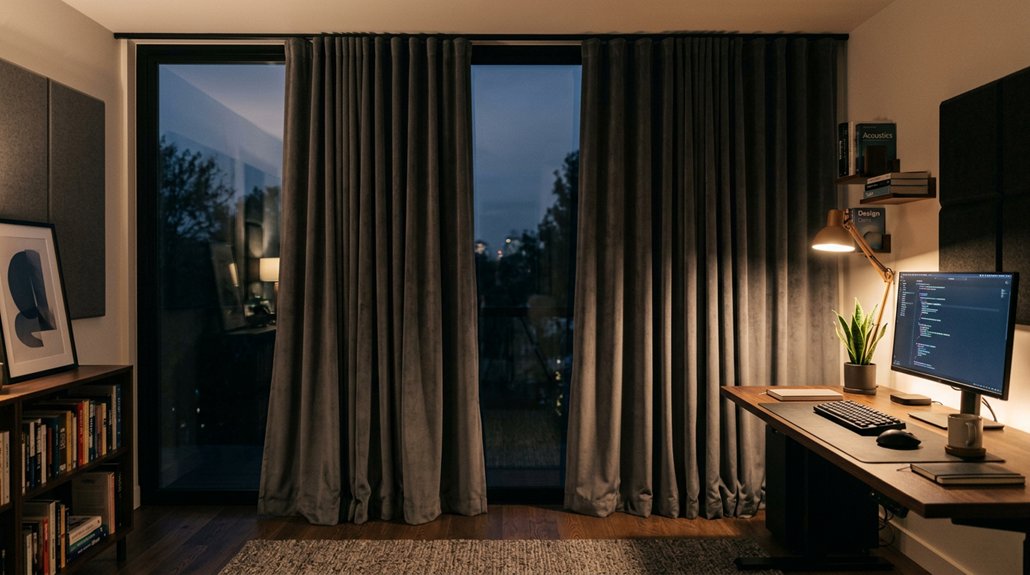
Sound dampening curtains are a great way to improve your home office focus by blocking external noise and reducing echoes. Look for heavy, multi-layered fabrics with blackout and acoustic backing for the best results. Hanging them floor-to-ceiling and wall-to-wall helps seal gaps and maximize noise reduction. With options in various styles and colors, they blend seamlessly into your decor. Keep exploring to discover tips on choosing, installing, and maintaining the right curtains for your space.
Why Your Home Office Needs Soundproof Curtains
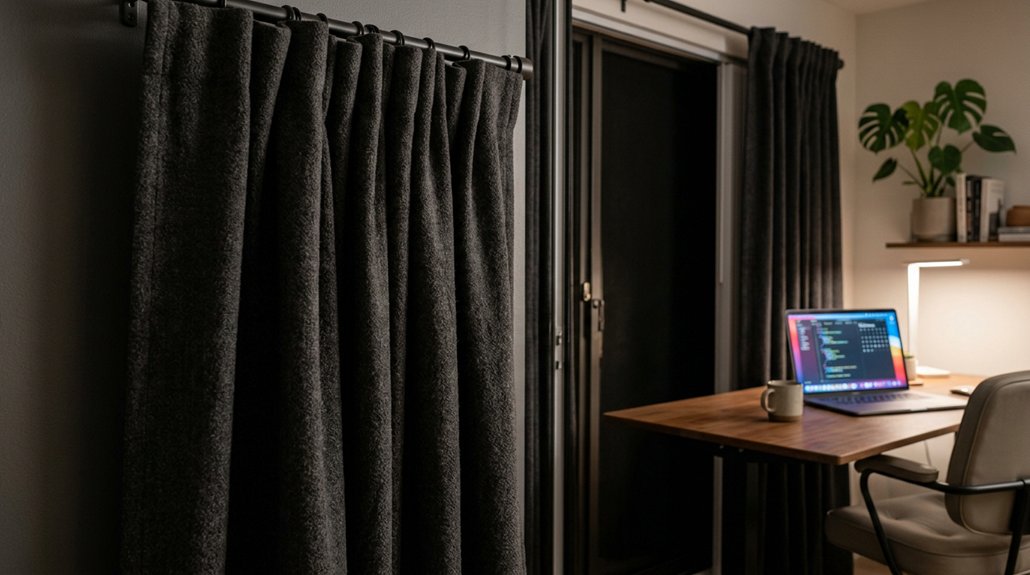
Have you ever been distracted by outside noise or reflections in your home office, making it hard to focus? Soundproof curtains are a simple, effective way to improve your workspace. They use dense, multi-layered fabrics like mass-loaded vinyl and high-density polyester to absorb sound and block outside noise. This noise reduction helps minimize distractions from traffic, neighbors, or street activity. Additionally, sound absorption properties of these curtains can be enhanced with features like blackout linings or acoustic backing, further improving their effectiveness. Thick curtains also reduce echo from hard surfaces and glass windows, which improves call and recording clarity while decreasing listening fatigue. Plus, combining noise reduction with blackout features creates a distraction-free environment by limiting both sound and visual interruptions.
Easy to install and renter-friendly, soundproof curtains are a cost-effective solution to help you stay focused, reduce stress, and optimize your home office.
Key Factors to Consider When Choosing Soundproof Curtains
When choosing soundproof curtains, you should start by evaluating the material density and layers to guarantee strong noise absorption. Make sure the curtains fit your windows snugly and cover the entire area to eliminate sound leaks effectively.
Additionally, consider how easy the installation is and whether the mounting options are durable enough to handle daily use.
Material Density and Layers
Material density and layered construction are essential factors in selecting effective soundproof curtains. The curtain material’s density directly influences noise control, with thicker, denser fabrics better at absorbing sound and reducing echoes. Incorporating multi-layered designs, such as combining dense fabrics with absorptive linings like mass-loaded vinyl or recycled cotton blends, further enhances sound absorption by adding mass and minimizing mid-to-high frequency noise and sound reflections. A curtain with a well-designed core balances visual appeal with acoustic performance. *Selecting panels with fire-resistant materials* ensures safety alongside noise reduction. Higher NRC ratings indicate superior sound absorption, especially in studio-grade options. To maximize noise reduction, choose curtains that fully cover windows and extend from floor to ceiling, ensuring layers work together to prevent sound transmission and create a quieter, more focused home office environment.
Coverage and Size Fit
Choosing the right size and coverage for soundproof curtains is essential to maximizing their noise-reducing potential. To effectively cover large surface areas, your curtains should extend from floor to ceiling and wall to wall, creating a seamless barrier.
Oversized curtain dimensions help prevent sound leakage by sealing gaps around windows, a common weak point for noise. Imagine:
- Full coverage from ceiling to floor, blocking external noise.
- Wide, oversized curtains that seal window edges tightly.
- A fabric fullness between 50% and 200%, increasing fabric density and surface coverage.
Opting for custom sizing guarantees a perfect fit, while multi-layered, dense materials resist sound transmission. Additionally, selecting curtains made of dense, sound-absorbing fabrics enhances their effectiveness in reducing both external noise and internal echoes.
Correctly sized curtains not only block external noise but also contain interior echoes, enhancing your home-office acoustics.
Installation and Flexibility
Selecting installation options that suit your space and lifestyle can greatly impact the effectiveness and convenience of soundproof curtains. With sound dampening curtains, choose versatile solutions like grommets, hooks, or rod pockets for easy, renter-friendly installation. These options allow for flexible placement without permanent fixtures, making adjustments simple and stress-free.
To maximize soundproofing, opt for curtains that can cover large surface areas—wall to wall and from floor to ceiling—ensuring they seal gaps around windows, doors, or walls. Extending the curtains beyond edges helps block sound leakage further and enhances privacy.
When selecting your curtains, prioritize models that can adapt to different layouts and surfaces, giving you control over your acoustic environment without sacrificing convenience or removability. Incorporating modular expansion options can also improve sound attenuation and customization for your space.
How Material Choices Affect Noise Reduction and Acoustics
The effectiveness of sound dampening curtains hinges on the types of fabrics used and how they’re layered. Acoustic Curtains with multi-layered fabrics can greatly influence noise reduction.
Heavy, dense materials like mass-loaded vinyl physically block sound waves, preventing them from passing through. Porous inner layers, such as recycled cotton blends or fiberglass, help absorb mid-to-high frequencies, reducing echoes and improving room acoustics. Think of your curtains as:
- Thick blackout fabrics combined with acoustic cores for dual sound dampening and light blocking.
- Multi-layered fabrics with dense, heavy cores that maximize sound blocking.
- Porous inner layers that absorb sound energy, lowering reverberation.
The Noise Reduction Coefficient (NRC) measures a curtain’s ability to absorb sound, with higher NRC fabrics offering superior acoustic performance. Properly chosen materials optimize both noise reduction and room comfort.
Where and How to Hang Your Curtains for the Best Sound Absorption
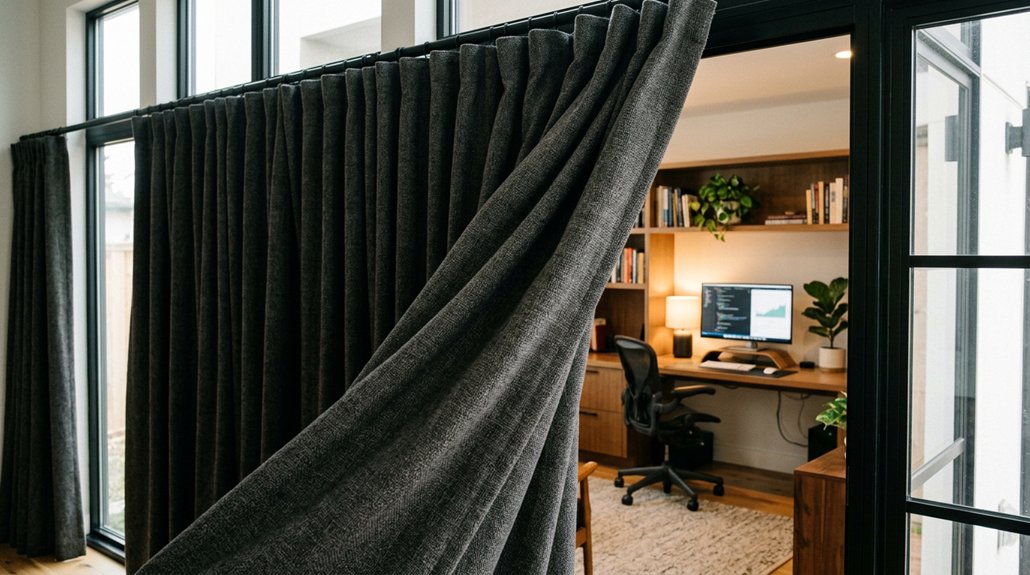
To maximize the sound dampening benefits of your curtains, proper placement is key. Hang sound dampening curtains from floor to ceiling and wall to wall to cover entire surfaces and effectively absorb sound reflections, especially from glass windows. Extend curtains beyond the edges of windows or doors by several inches to seal gaps, helping to reduce sound leakage.
Install curtains on walls adjacent to noise sources or reflective surfaces to diminish echo and soften harsh sound reflections. Use heavy, multi-layered curtains made of dense materials like mass-loaded vinyl or recycled cotton blends for ideal absorption of mid-to-high frequency sounds. Additionally, incorporating sound-absorbing materials into your home office, such as acoustic panels or rugs, can further enhance the overall sound dampening.
Additionally, consider mounting curtains as room dividers or on multiple walls to create dedicated acoustic zones that curb ambient noise and reverberation, enhancing your home office focus.
How Soundproof Curtains Compare to Other Acoustic Treatments
Soundproof curtains stand out because they combine dense, multi-layered fabrics like mass-loaded vinyl and high-density polyester to both absorb sound and block noise. Unlike foam panels that mainly absorb sound reflections, these curtains effectively reduce outside noise infiltration and control indoor echoes by covering large areas from floor to ceiling. Additionally, their adjustable width feature allows for an optimal fit, enhancing noise reduction effectiveness in various spaces.
Here are three ways they compare to other acoustic treatments:
- They provide flexible, removable noise control, unlike rigid wall panels.
- They deliver broader noise reduction by combining absorption and mass-loaded layers.
- They add thermal insulation and light blocking, which many other treatments lack.
With sound-dampening curtains, you get an all-in-one solution that absorbs sound, blocks external noise, and enhances your home office environment.
Tips for Installing and Maintaining Your Soundproof Curtains
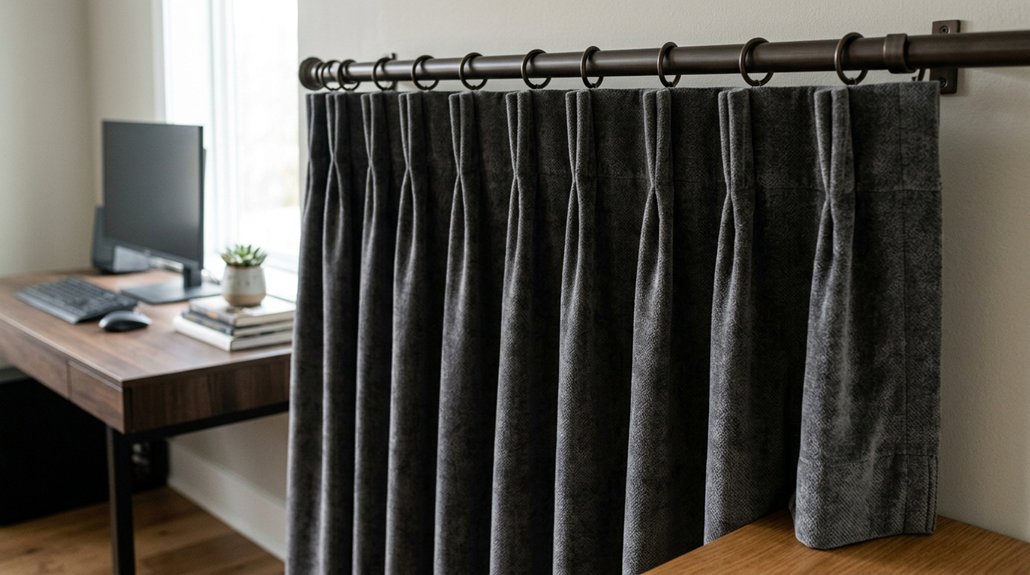
To get the best noise reduction, install your curtains floor-to-ceiling and wall-to-wall, making sure they extend beyond the window frame edges.
Use sturdy hardware to support the weight, and regularly clean them to keep their acoustic properties intact.
Adjust the curtains as needed to seal gaps and maintain ideal soundproofing performance over time.
A tailored fit with non-slip bases helps prevent slipping and ensures consistent contact for optimal noise dampening.
Proper Curtain Hanging Techniques
Properly hanging your soundproof curtains is essential for maximizing their noise-reducing benefits. To optimize sound control, hang curtains from floor to ceiling and wall to wall, minimizing gaps where noise can enter.
Use sturdy curtain rods or tracks with reinforced grommets or hooks to support the heavy, multi-layered fabric, guaranteeing long-term stability. Extend curtains beyond window edges by several inches to prevent sound leakage and enhance overall acoustic performance.
When installing, make sure to fully cover windows, overlapping panels slightly in the middle to block noise and light effectively. Proper hanging techniques help absorb sound and reduce noise levels in your work environment, creating a quieter, more focused space. Ensuring the curtains are made from sound-absorbing materials enhances their effectiveness in reducing noise infiltration.
Regular Cleaning Practices
Maintaining your soundproof curtains is essential for preserving their noise-reducing performance, and regular cleaning plays a key role in that. To keep your acoustic curtain effective, vacuum them weekly with a brush attachment to remove dust without damaging dense fabrics.
Promptly spot clean stains using mild detergent and cold water, safeguarding their blackout capability and sound blocking qualities. Avoid frequent machine washing, as excessive moisture and agitation can weaken multi-layered curtains and layered acoustic materials.
Periodically check grommets, hooks, and hardware to guarantee stability and prevent sagging that might reduce coverage. After cleaning or adjustments, re-hang your curtains fully extended to block gaps.
Consistent care helps maintain the curtains’ full sound absorption and blackout features, ensuring your home office remains quiet and focused.
Adjusting for Optimal Performance
Guaranteeing your soundproof curtains perform at their best requires careful installation and ongoing adjustments.
To optimize sound energy absorption, make certain your curtain is floor-to-ceiling and wall-to-wall, covering all windows and surfaces. This setup minimizes sound wave reflections and gaps.
Consider these tips:
- Use heavy, dense fabrics with multi-layer construction, such as thick blackout layers and mass-loaded vinyl cores, to block external sounds and light effectively.
- Seal edges by extending curtain panels beyond window frames and overlapping layers, reducing sound and light leakage.
- Support the curtain with sturdy hardware like reinforced grommets or rods to prevent wrinkles and maintain a tight fit.
Regularly check and adjust the curtain positioning to sustain dense coverage, preserving its acoustic properties and delivering consistent sound dampening.
Design Options: Styles, Colors, and Functional Features
Sound dampening curtains come in a variety of styles, colors, and functional features that allow you to customize them to fit your space’s aesthetic and acoustic needs. Curtains are designed with dense, multi-layer constructions that enhance sound absorption and thermal insulation.
You can choose from sleek modern, minimalist, and industrial styles to seamlessly match your decor. The available colors range from soft neutrals to bold hues, helping you complement or elevate your room’s look.
Functional features include blackout layers for light control, reinforced grommets, smooth-gliding hooks, and durable fabrics for easy installation and long-term use. Many options offer customizable sizes and fullness, ensuring full coverage from floor to ceiling and wall to wall for maximum sound dampening and visual privacy.
Real-World Examples: Best Practices for Using Soundproof Curtains at Home
Using sound dampening curtains effectively in your home involves more than just selecting the right fabric or style. To maximize noise reduction and absorb sound, make certain your curtains are thick, multi-layered, and extend from floor to ceiling, covering gaps around windows.
For example, consider:
- Installing curtains like RYB HOME that combine heavy fabric with blackout features to block traffic noise and sunlight.
- Using curtains with dense cores, such as mass-loaded vinyl, to reduce echo and improve focus during calls and recordings.
- Reinforcing hanging systems with grommets or metal hooks for stability, especially if you frequently open and close the curtains.
Layering these curtains with additional acoustic treatments creates a quieter home office environment, enhancing concentration and productivity.
Frequently Asked Questions
Do Sound Absorbing Curtains Actually Work?
Yes, sound absorbing curtains work by blocking and absorbing noise, reducing echo, and minimizing external distractions. They create a quieter environment, improving focus, speech clarity, and overall productivity in your home office by lowering sound reflections and leakage.
How to Dampen Sound in Home Office?
You can dampen sound in your home office by installing thick, multi-layered curtains that cover windows and walls, sealing gaps, layering panels, and combining them with other acoustic treatments to reduce noise and echo effectively.
Is There a Curtain That Blocks Sound?
Yes, there are soundproof curtains that block sound effectively. You can choose high-quality, multi-layered curtains like RYB HOME or NICETOWN RoadBlock, which reduce outside noise by up to 95%, creating a quieter, more focused home office environment.
What Are Ikea Sound Deadening Curtains?
Ikea sound deadening curtains are thick, multi-layered blackout fabrics designed to absorb sound and block noise, helping you focus better. They’re easy to install, stylish, and improve your home office’s acoustics by reducing external noise and light.